'They're a selfish bunch': How Abu Dhabi shaped modern Manchester
At a foodbank ten minutes from one of the richest football clubs in the world, Niamh, a young woman in her 20s, has just lost her job.
“I found out five minutes ago,” she says, standing behind a desk just inside the entrance to Feed My City in northeast Manchester.
Run by a charity called the Manchester Sikh Foundation, Niamh was one of the few people employed by the foodbank, which depends on volunteers, two of whom are sitting down next to her as she tries to process the news.
“The council refer people to us, but we don’t get any council funding,” she says, of Manchester City Council. “Anyone can come here and get a hot meal… But we are scrambling to keep afloat. I don’t know if we’ll survive.”
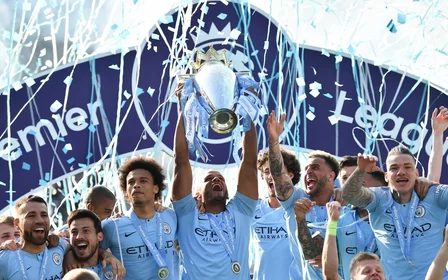
A short walk up the road is the Etihad Stadium, home to Manchester City, the football club owned by Sheikh Mansour bin Zayed al-Nahyan, deputy prime minister and vice president of the United Arab Emirates.
New MEE newsletter: Jerusalem Dispatch
Sign up to get the latest insights and analysis on Israel-Palestine, alongside Turkey Unpacked and other MEE newsletters
Mansour, who has owned the club since 2008 but been to just two games, is a member of Abu Dhabi’s royal family and the brother of the emirate’s ruler Sheikh Mohamed bin Zayed al-Nahyan, who is also the president of the UAE.
“They’ve never helped us,” Niamh says of Manchester City’s owners in Abu Dhabi, who have been described by British Prime Minister Andy Burnham as a “huge partner in the building of modern Manchester”.
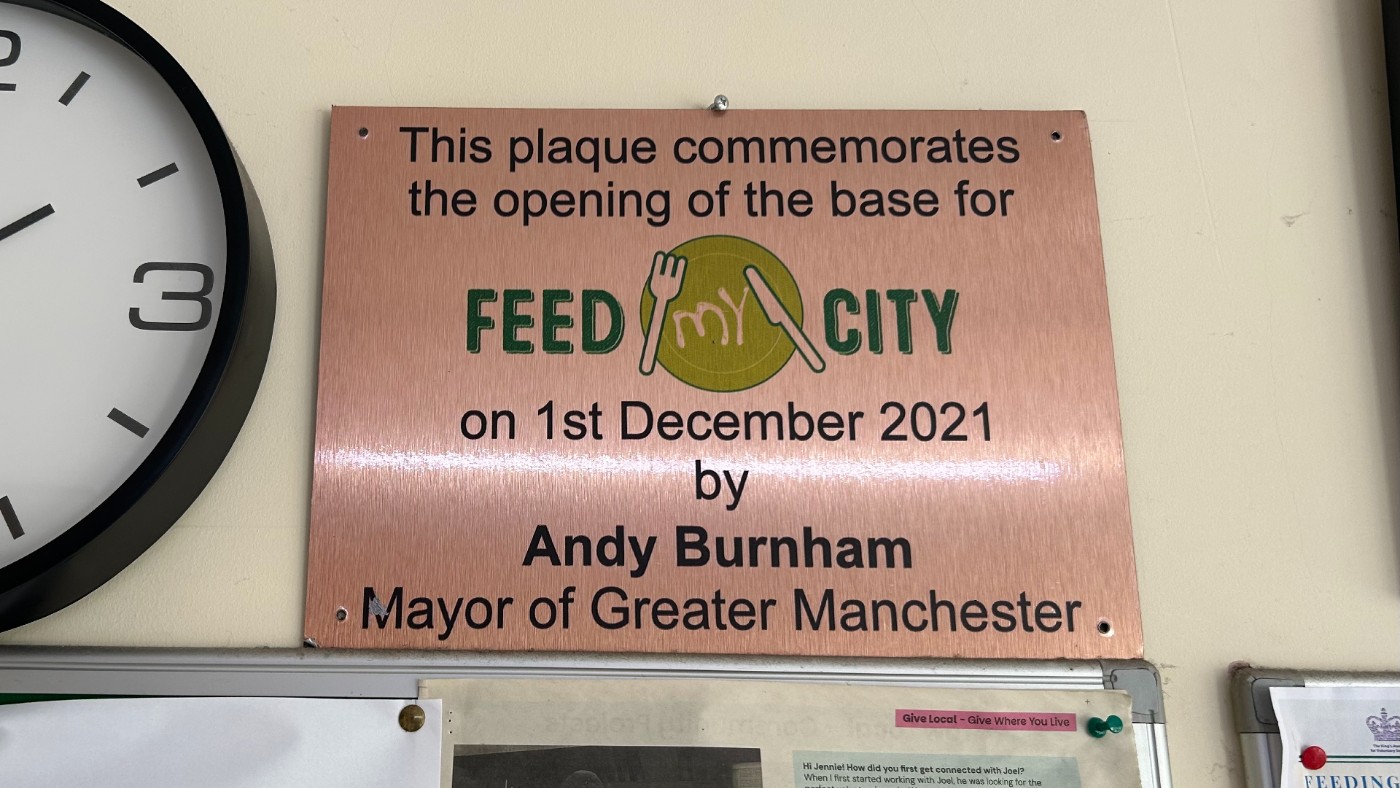
“We’ve never asked them. But we are right here,” Niamh says. In front of her, a plaque on the wall commemorates the opening of the foodbank by Burnham on 1 December 2021, when the Labour politician was mayor of Manchester.
Burnham, a vocal champion of “Manchesterism”, seems like a remote figure to Niamh now. She was engaged with national politics when Jeremy Corbyn was Labour leader before becoming disillusioned with it in the aftermath of his resignation following the 2019 election.
“Honestly, I’m one of many Gen Z’ers who has checked out,” she tells Middle East Eye, referring to the generation now aged between about 14 and 29. “I’m now directly focused on my local community and the difference I can make here.”
Without her job at the foodbank, a cluttered space that sits between a fried chicken shop and a newsagent, Niamh will have to find another outlet for her care and dedication, which places like this are so dependent on.

Half a minute up the hill from Feed My City there’s another foodbank, which can only afford to operate on one Saturday every month from the Living Hope Christian Church.
Next to the church in a food truck selling jerk chicken, Millie Brown, who was born in Jamaica but has lived in this part of Manchester for 20 years, doesn’t mince her words.
“Does this area look like anyone is putting anything into it?” she asks, gesturing toward the dilapidated buildings and rubbish-strewn streets. “The people with money don’t care about this place.”
Brown is a member of the Pentecostal church next door and what money she makes from the jerk chicken stand goes to its foodbank. “They don’t support us,” she says of Manchester City. “Even the fans who come to the area on match days don’t come here.”
The church foodbank has never got any help from Manchester City, which has previously contributed to other foodbanks and whose supporters have a foodbank initiative.
“I don’t mind them,” Brown says of Manchester City’s owners, “but I think they’re a selfish bunch.” Manchester City did not respond to Middle East Eye’s request for comment.
Guilty verdicts for Manchester City
The question of what Manchester City’s owners have or have not done for the city around them is in the spotlight right now, as is the relationships that exist between politicians like Burnham, who has made much of the supposed success of the “Manchester model”, and the UAE.
On 29 September, after a nearly eight-year long investigation, an independent commission found Manchester City guilty of 114 charges relating to serious breaches of the league’s financial rules and a failure to cooperate with the investigation.
City was found to have disguised more than £830m ($1.1bn) in illicit funding, and the commission’s report referred on eight separate occasions to “sham” contracts, agreements, commercial deals and arrangements struck by the club.
As recorded in internal Manchester City communications leaked by Portuguese hacker and activist Rui Pinto in 2018, Simon Pearce, Abu Dhabi’s branding guru, had wrote of the contracts: “We can do what we want.”
The connection between the football club and the image of the UAE was also clear from the start. Garry Cook, who as then-CEO of Manchester City was central to brokering the deal that saw Mansour buy the club, told Abu Dhabi’s representatives: “If you're developing your nation and you're looking to be on a global stage, we are your proxy brand for the nation.”
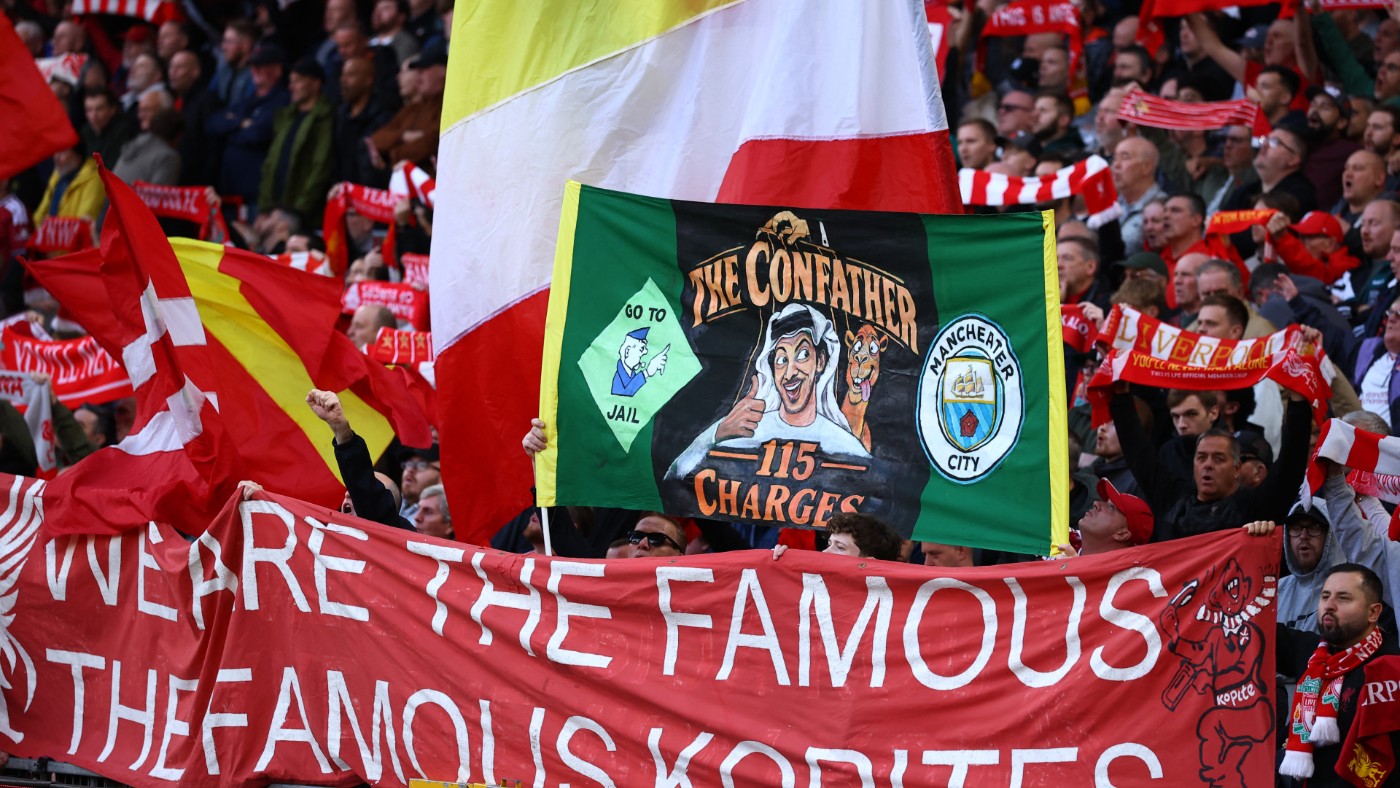
Manchester City has appealed the verdicts and continues to maintain its innocence, saying it has a “comprehensive body of irrefutable evidence” to support this. City Football Group CEO Ferran Soriano has referred to the verdicts as a “Premier League conspiracy theory”.
On the international stage, successive British governments and local leaders in Manchester have been accused of ignoring – or covering for - the UAE’s sponsorship of genocide in Sudan, war in Yemen and human rights abuses at home because of Emirati investment in the UK.
'I don't mind them, but I think they are a selfish bunch'
- Millie Brown, Living Hope Christian Church foodbank
“The UAE has been amazing for Manchester – football aside,” a former British civil servant, who worked on bringing in Emirati and other foreign investment into the UK, tells MEE.
“They won’t leave,” the source says of the Emiratis. “They are serious investors and won’t do things that destroy value. And they will continue investing in the UK – we are a great stable place to invest. But they won’t invest in the volume we have seen for the last 20 years, and that is a loss to the UK economy.”
That investment was referenced by Burnham in his first intervention following the guilty verdicts. The prime minister, who was mayor of Manchester from 2017 to 2026, said he would be “really concerned” to lose Abu Dhabi United Group as owners and praised them for investing in Manchester.
“I do actually thank the City Football Group and the wider ownership for the money that they didn't just put into the Etihad [Stadium] and the campus around it but also into the city,” Burnham said, before having to make clear that football-related disciplinary findings should be handled separately from the UAE’s economic ties to Manchester.
Since then, there have been reports of Emirati officials threatening to cancel investments in the UK over “the Premier League’s actions”.
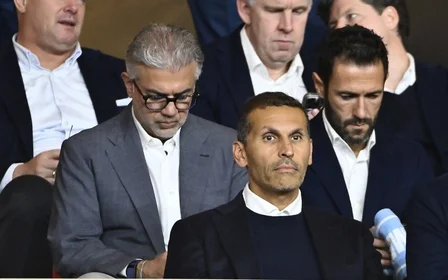
On Monday, the Greater Manchester Combined Authority (GMCA) revealed details of Burnham's meetings with Man City, including with the club's chairman Khaldoon al-Mubarak, but it did not mention two hospitality dinners the then-mayor had with the Emirati executive, which took place at matches in 2017 and 2018.
Manchester Life
Launched in 2014 with a “£1bn” deal between Manchester City Council and the Abu Dhabi United Group (ADUG) – the investment vehicle owned by Mansour – Manchester Life, which did not repond to MEE's request for comment, is the most prominent manifestation of Emirati investment in the city.
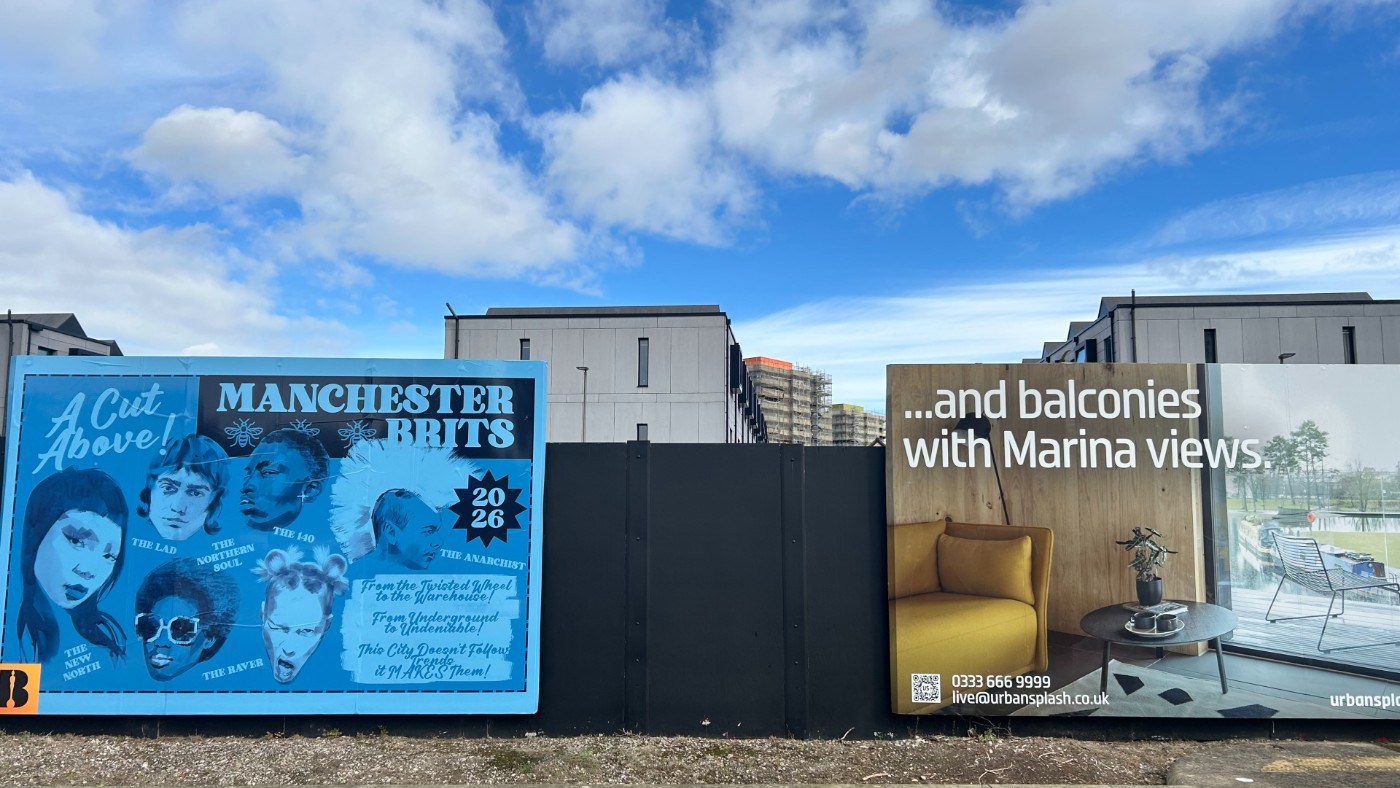
On a bright October afternoon, the marina at the heart of its Ancoats and New Islington development in east Manchester sparkles in the sun.
Young people stroll along the banks of a canal dug to connect two already existing canals and a billboard celebrates a collection of “Manchester Brits” – “the raver”, “the northern soul”, “the lad”.
Two-bedroom flats here in a part of Manchester once described as a “post-industrial wasteland” can be rented for between £1300 and £1600 a month, and residents say you can’t get a one-bedroom flat for less than £1000 a month, in a city in which the average annual salary is about £34,000.
There are no affordable homes in the project, and a 2022 report by Jonathan Silver, Richard Goulding and Adam Leaver of the University of Sheffield, entitled Manchester Offshored, detailed the way in which public leaseholds and assets were transferred to Abu Dhabi-controlled subsidiaries registered in Jersey, a tax haven.

There is a 158-apartment building called Smith’s Yard, named in honour of the pub that was demolished to make way for it. The Smith’s Arms was built in 1775 and was Manchester’s oldest pub when it was bulldozed in 2016 to make way for the flats.
In the lobby of the building a brick facade taken from the pub and bearing its name is on display close to a canvas on which the slogan “For Manchester is the place where people do things” is written in a bubbly font of different colours.
These references to Manchester, its history and its public-facing civic culture as a city that was at the heart of both industrial capitalism and the radical resistance to that, can be found across this constellation of Abu Dhabi-backed new build flats.
There is a co-working space called Colony, blocks of flats called Cotton Field Wharf and another called Weavers Quay, which has a dog drinking station (a small metal bowl) outside it.
Then there’s Bengal Street, named in the Victorian era after the part of south Asia whose cotton industry was systematically destroyed by Britain’s East India Company, a wealthy, mercenary-deploying expansionist imperial force that one European diplomat tells MEE has been an inspiration to the UAE.
The UAE in Sudan
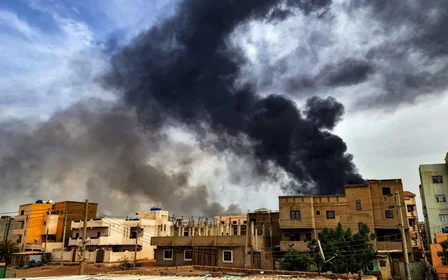
That expansionism is now most clearly on display in Sudan, where the UAE backs the paramilitary Rapid Support Forces (RSF), which has been found to have committed genocide in Darfur by the UN and US.
The UAE continues to deny this support. Middle East Eye has reported on it extensively, and on the “political capture” that has seen the UK shy away from calling Abu Dhabi out on it. The New York Times has reported that Mansour is in regular, direct contact with Mohamed Hamdan Dagalo, the RSF leader better known as Hemedti.
For Mohannad Taha, who lived in Manchester for a decade and started the Manchester4Sudan activist group, it is “easy to decouple the football club from the ownership, which is an oligarchic, corrupt force”.
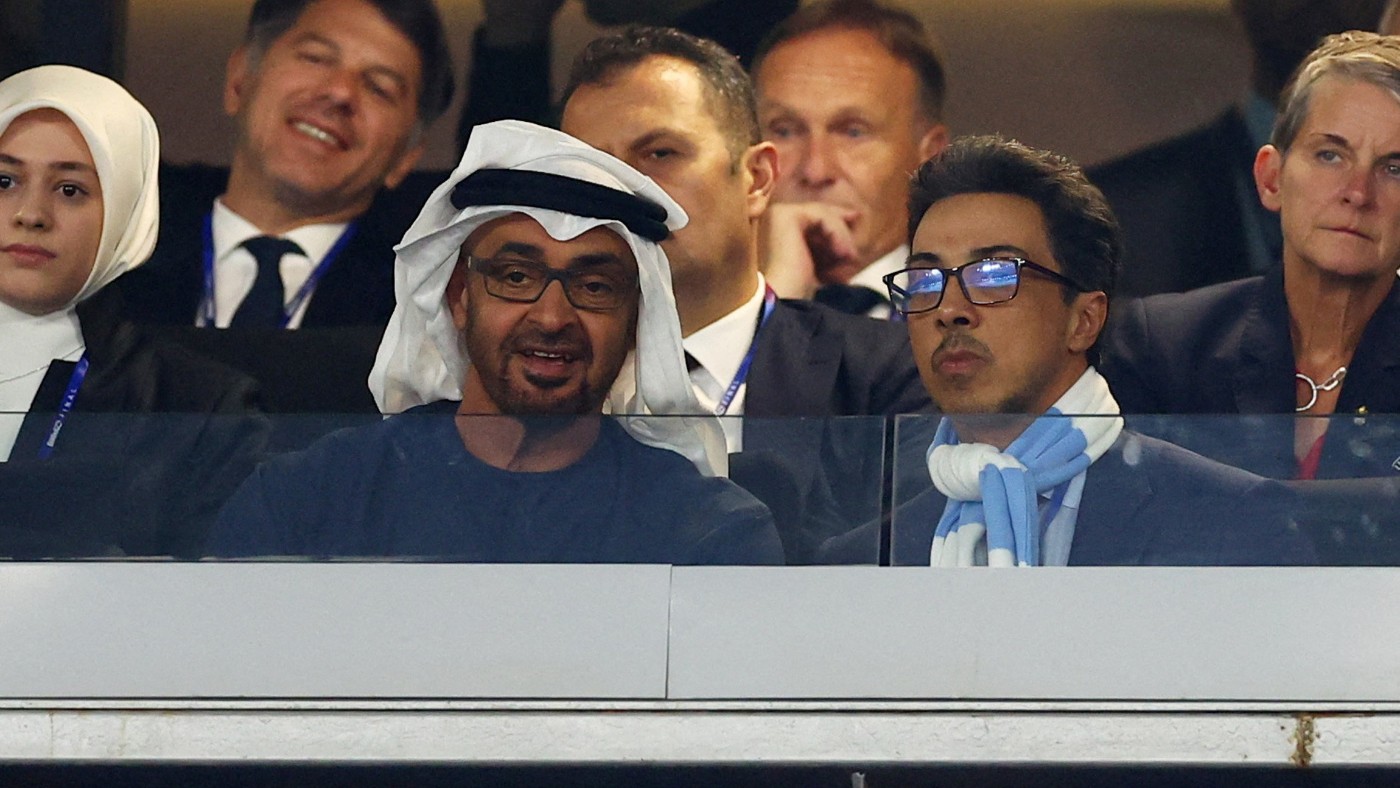
“I think the ownership is 100 percent complicit in what is happening in Sudan. I think the leadership of the club is somewhat complicit, the fans and the players not at all.
“Our leaders are scared to confront Abu Dhabi’s complicity because of investment,” Taha says. Born in Newcastle to Sudanese parents, he is dispirited by what he sees as a failure to link Manchester City’s owners to the war in Sudan, which is the world’s largest humanitarian crisis.
The premier league’s guilty verdicts “felt good in a small sense”, he says, “but then I thought: are people going to make the jump into Sudan?
“If you tackle the Emirati leadership in a principled manner, then you will find them guilty. If you are beholden to them, you will find them not guilty.”
From council estate to new build flats
Looking out over the glistening marina in Ancoats, Isaac Rose, a tenant organiser and author of The Rentier City: Manchester and the Making of the Neoliberal Metropolis, describes what we see in front of us as “the original sin of Manchester”.
“This nice scene was built on a destroyed and flooded council estate,” he tells MEE. "Abu Dhabi is a layer on top of what's already happened." This estate was the Cardroom, named after the card room in local cotton mills and demolished in the early 2000s.
Initially, the Cardroom redevelopment, rebranded as “New Islington” after an old mill in the area but with a deafening echo of the London neighbourhood in which Tony Blair had lived before becoming prime minister, was handed to Urban Splash, a company founded by former 80s raver Tom Bloxham.
'This nice scene was built on a destroyed and flooded council estate. Abu Dhabi is a layer on top of what's already happened'
- Isaac Rose, tenant organiser and author
An intriguingly unfiltered Urban Splash promotional video from 2002 chronicles the company’s attempts to win the estate’s residents round to their vision of urban regeneration.
Bloxham, with cropped bleached blond hair and The Fall’s Jerusalem as soundtrack, enthuses about turning “this dereliction into a world exposition of some of the best areas in the country”.
“Look at this, the canals, aren’t they fantastic, the Ashton, the Rochdale, let’s put in some new canals," he exclaims, "let’s create a new Amsterdam, a new east Manchesterdam, a really special place in the city.”
But as the video demonstrates, selling this vision to the Cardroom estate’s existing residents was another matter.
In the now-demolished Cob o'Coal pub, one asks: “Where are the homes going to be to accommodate us?” There is no answer. “Yous have made your mind up what you’re going to do,” another says. “Let’s have it right. You have.”
In the end, Urban Splash built just one building of significance in New Islington, a construction called Chips, made to resemble a chip.
Then came the financial crash of 2008 and the election in 2010 of the Conservative-Liberal Democrat government which, under Chancellor George Osborne, instituted an austerity policy that would go on to cut over 60 percent of central government funding to local authorities.
Luckily for Manchester though, the local football team had some new oil- and gas-rich owners from the Gulf, and for them the financial crash was an opportunity, not a setback.
Andy Burnham and the Manchester model
While Burnham has, as prime minister, taken credit for the perceived success of Manchester, for Rose and other chroniclers of the city’s fate, the former mayor is a bit-part player in a story that began in the 1980s and was driven by two men, Richard Leese and Howard Bernstein.
“Burnham has staked his reputation on Manchesterism and now we see the compromises that have been involved in that,” Richard Goulding, co-author of the Manchester Offshored report, tells MEE.
“The Manchester model is one in which you can have growth and redistribution without having to make hard political choices,” Goulding says. “What’s embarrassing for Burnham is that he’s been willing to take the credit.”
'Burnham has staked his reputation on Manchesterism and now we see the compromises that have been involved in that'
- Richard Goulding, University of Sheffield
As leader and chief executive of Manchester City Council from the mid-1990s into the 2020s, Leese and Bernstein, both Manchester City fans (Leese is now an honorary president of the club, while Bernstein died in 2024), were the principal architects of the Manchester model, which saw the council aggressively pursue public-private partnerships and outside investment.
Leese, a former maths teacher from Mansfield, was part of a group on the left of the Labour Party that took over Manchester council in the “glorious revolution” of 1984.
But with Margaret Thatcher winning the election of 1987 and Thatcherism cementing itself in Westminster, Leese, who did not respond to MEE’s request for an interview, pursued private investment for his adopted city.
After an IRA bomb – the largest to go off in mainland Britain since the Second World War – went off in Manchester city centre in 1996, Leese and Bernstein set about rebuilding and redeveloping the city they ran.
The City of Manchester stadium was built with public money for the 2002 Commonwealth Games and taken over thereafter by Manchester City Football Club, which renamed it the Etihad Stadium after Mansour’s arrival in 2008.
“The financial crash is so traumatic for them because they’ve spent their life dragging Manchester out of industrialisation,” Rose says of Leese and Bernstein.
For Abu Dhabi – as well as for Qatar and investors from China, Russia and elsewhere – the crash meant that British commodities and state assets could be gobbled up for bargain prices.
In 2013, British ministers set up a secret unit, codenamed Project Falcon, that gave the UAE privileged access to the UK’s political elite, prime land deals and world-famous institutions in academia and the NHS.
Tony Blair acted as a lobbyist for the UAE and Osborne pushed for Emirati investment in non-defence assets. The ownership of Manchester City meant that for Leese and Bernstein, there were investors already tied to their city who were “richer than God”.
“Government doesn’t have the money nor necessarily the ideas to reinvigorate places – and to do so against market economics is both futile and a bad use of the money they do have,” says the former British civil servant. “Almost all major reinvigorations have depended heavily on private capital.”
'All was subjugated to the City, all served the interests of our lucrative status as a safe haven for corrupt, and corrupting wealth'
- Carl Scott, former UK defence attache
In a letter to the Financial Times, Carl Scott, a former UK defence attache in Moscow, described a related realisation he had when he returned to Britain from his posting in 2016: “All was subjugated to the City, all served the interests of our lucrative status as a safe haven for corrupt, and corrupting wealth.”
“We take them as we find them,” said Bernstein, of the club’s owners, meaning that what they might or might not be doing at home or in the Middle East was not of Manchester’s concern. The owners from Abu Dhabi were also incentivised.
The Manchester Offshored report found that nine sites sold to Mansour in the 2014 deal were done so at a fraction of their value, and well below what other plots nearby fetched. This was a deal that produced a “negligible” financial return for the public and in which the family silver was sold off cheap, the researchers concluded.
Reporting from the Manchester Mill and the I Paper has also revealed that Abu Dhabi was given a “sweetheart deal” that afforded it first refusal on a broad stretch of land, and that the local authority has received less than £3m for building almost 1,800 homes under the agreement.
“The deal is always too good to be true. They aren’t running Abu Dhabi United Group as a charity,” says Goulding.
The Manchester of Engels
In his play Comedians, the playwright Trevor Griffiths, who was from Ancoats, has one of his characters - a comedian-turned-teacher who fought in the Second World War - describe the devastation of the German city of Dresden after it was bombed to rubble.
“It reminded me of Ancoats,” the character says. In the 19th century, Friedrich Engels, Karl Marx’s collaborator, described the “350,000 working people of Manchester and its environs” as living, “almost all of them, in wretched, damp, filthy cottages”.
“One day I walked with one of these middleclass gentlemen into Manchester,” Engels writes. “I spoke to him about the disgraceful unhealthy slums and drew his attention to the disgusting condition of that part of town in which factory workers lived.”
The gentleman listens patiently and then, as he and Engels part, tells him: “And yet there is a great deal of money made here.”
Manchester’s redevelopment has, Goulding says, “brought in jobs and increased opportunity. But there is still a lot of severe inequality in the city”.
“Look at the inequality and the foodbanks,” says Rose, who paints a wide, sweeping picture of Manchester that depicts its journey from the forefront of industrial capitalism in the 19th century to the forefront of rentier capitalism in the 21st century.
“It reminds me of Disneyland,” he says, looking out over the Ancoats marina. “There’s a facade that’s really nice, but behind it…”
Waiting at a tram stop a couple of minutes from the Feed My City foodbank, Janet and David, a Manchester City fan in his sixties, say that the owners from Abu Dhabi “have done a lot for the area”.
But David is not defiant, is not revelling – like some fellow fans – in the label “cheat”. “If they’re guilty, we’ve got to take the hit. We can go back to our roots. We’ve been there before, we can do it again.”
Their tram pulls into the station, its destination written on the front: Etihad Campus.
Middle East Eye delivers independent and unrivalled coverage and analysis of the Middle East, North Africa and beyond. To learn more about republishing this content and the associated fees, please fill out this form. More about MEE can be found here.