
Explained: Who will lead Iran now and what happens next?

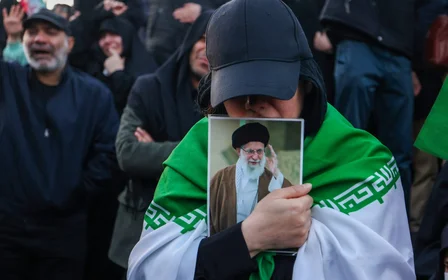
Ali Khamenei, Iran’s supreme leader, is dead. He ruled the country for 36 and a half years, just 10 months fewer than the last Iranian monarch.
His death raises urgent questions about what happens next to Iran’s political system, which is built around the concept of a Marja al-Taqlid.
In Shia Islam, this refers to a senior cleric whom followers turn to for religious guidance and legal rulings.
Under Article 111 of Iran’s constitution, a three-member council will take charge until a new leader is chosen.
The article states that “in the event of the death, resignation or dismissal of the supreme leader, the Assembly of Experts must move quickly to name a new leader. Until then, a council made up of the president, the head of the judiciary and one of the Islamic scholars, fagih, of the Guardian Council - selected by the Expediency Discernment Council - will carry out the leader’s duties”.
New MEE newsletter: Jerusalem Dispatch
Sign up to get the latest insights and analysis on Israel-Palestine, alongside Turkey Unpacked and other MEE newsletters
To understand this article, written after the 1979 revolution, it is important to focus on the assembly and the Expediency Discernment Council.
These refer to two key bodies in Iran’s post-revolution political system: the Assembly of Experts of the Leadership and the Expediency Discernment Council of the Establishment.
On paper, both institutions were created to prevent power from being held by a single person or group.
But over the 47 years since the Islamic Revolution, they have become part of a complex structure that has ensured power remains concentrated in the hands of the supreme leader and the Islamic Revolutionary Guard Corps (IRGC).
Who will rule Iran?
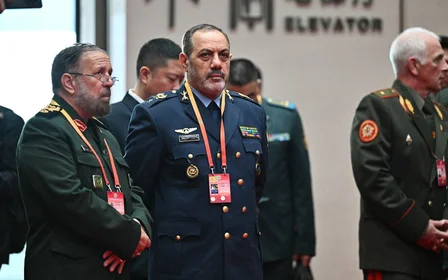
On Sunday, after confirming Khamenei’s death and announcing 40 days of public mourning, a three-member leadership council was formed to carry out the supreme leader’s duties until a new one is appointed.
It includes President Masoud Pezeshkian, Judiciary Chief Gholam-Hossein Mohseni-Ejei and an Islamic scholar from the Guardian Council, a 12-man body that wields influence over various organs of power.
Ayatollah Alireza Arafi, 66, was nominated as that jurist.
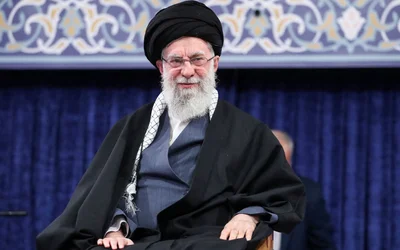
Arafi was not widely known in Iranian politics. However, in the past two years, some figures inside the system have mentioned him as a possible successor to Khamenei.
His father was a cleric close to Ayatollah Ruhollah Khomeini, who became Iran’s first leader after the fall of the shah.
Arafi was directly appointed by Khamenei. Some sources say he chaired monthly informal meetings in the leader’s office, where he addressed religious and legal issues.
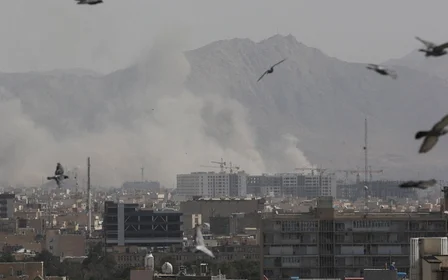
Despite the announcement of the interim leadership council’s formation, some commentators questioned whether Pezeshkian and Mohseni-Ejei were alive and well, with US and Israeli strikes targeting dozens of senior officials.
However, on Sunday evening, state media released a video recording of Pezeshkian saying the council had begun its work.
Mohseni-Ejei has not yet appeared in public since the attacks began. The only public message from him has been a written statement about the attack on Iran and the killing of Khamenei.
How is the future leader chosen?
The Assembly of Experts of the Leadership is responsible for choosing Iran’s leader. By law, at least two-thirds of its current 88 members must agree on the candidate.
All members must be high-ranking Shia scholars. Although they are elected by the public, candidates are carefully selected and vetted. This is because the assembly also has the power to dismiss a sitting leader.
The first vetting filter is the Guardian Council. It has 12 members. Six are Islamic scholars, such as Aarafi, appointed directly by the leader.
The other six are members of parliament, who themselves must pass through the Guardian Council’s approval process before running in elections.
Candidates must also be approved by the Ministry of Intelligence and the intelligence branch of the IRGC, which, in practice, is the military arm of the leader.
The Ministry of Intelligence, while formally under the president, is considered close to the supreme leader. Even the minister must be approved by him.
With this vetting web, anyone who had even a minor disagreement with the leader was blocked from entering the assembly. All 88 current members are seen as trusted by Khamenei.
At the same time, the assembly now faces a serious problem: holding a meeting to begin reviewing possible candidates.
Experts say this has become a major obstacle. Because of widespread attacks by the US and Israel on meetings of military commanders and state officials, it is extremely difficult to gather assembly members in one place to choose the next leader.
Who can become the leader?
Article 5 of Iran’s constitution says the country’s leadership is the responsibility of “a just and pious Islamic scholar, aware of the times, brave, administrative and resourceful”.
Article 109 sets out the conditions in more detail. It lists three main requirements: the ability to issue religious rulings in different areas of Islamic law, justice and piety to lead the Islamic faith, and a correct political and social vision.
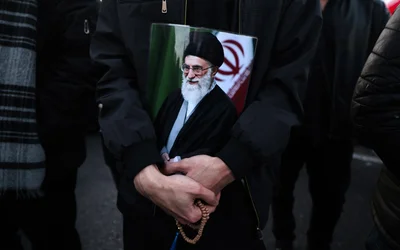
Publicly available sources say Khamenei did not name a successor. But for more than a decade, there has been strong speculation about who might replace him.
In the past 10 years, official reports have said that a three-member secret commission within the Assembly of Experts reviewed senior religious figures for the role. According to these reports, the commission sent the results of its reviews directly to Khamenei.
Meanwhile, several names have been mentioned more than others as possible successors.
They include Arafi; Ayatollah Sadeq Larijani, the former head of the judiciary; Hassan Rouhani, the former president; and Mojtaba Khamenei, the son of Ali Khamenei.
Despite the formal rules and speculation, the IRGC could play a significant yet unwritten role in the process. Any candidate who becomes the leader must be able to work with this powerful military force, which holds wide economic and political influence.
Rival political factions inside Iran will also try to shape the outcome. Different groups of fundamentalists and conservatives are likely to push their preferred candidate.
A similar situation took place in 1989. At that time, Khamenei was chosen as leader through the efforts of his allies, even though he did not hold the highest level of religious authority in Islamic law required of candidates.
Middle East Eye delivers independent and unrivalled coverage and analysis of the Middle East, North Africa and beyond. To learn more about republishing this content and the associated fees, please fill out this form. More about MEE can be found here.