How US law protects Israel’s Qualitative Military Edge

The US has long been Israel's most reliable partner in the Middle East, not least during the attacks on Iran in 2025 and 2026.
At the heart of this relationship has been Washington’s long-standing policy known as Qualitative Military Edge (QME).
Israel has a small population compared to neighbouring states – currently about 10m. QME aims to ensure that the Israeli military will always be qualitatively superior to potential regional rivals which can marshal larger numbers.
Washington has done this by giving billions of dollars of military aid to Israel, as well as allowing US arms manufacturers to sell cutting-edge weaponry to Israel - weaponry that's off-limits to other states in the region that might dent Israel’s military superiority.
QME developed amid the Cold War after the 1967 Arab-Israeli war. The first substantial deal was in 1968, when US President Lyndon B Johnson agreed to sell 50 F-4 Phantom jets to Israel.
New MEE newsletter: Jerusalem Dispatch
Sign up to get the latest insights and analysis on Israel-Palestine, alongside Turkey Unpacked and other MEE newsletters
The supply of arms increased subsequently. With the Soviet Union heavily backing Arab states during their 1973 war, the US provided significant logistical and military support to Israel.
Henry Kissinger, who shaped much of US Cold War foreign policy, said in 1977 that "security of Israel is a moral imperative for all free peoples".
During the 1980s, the two-term administration of US President Ronald Reagan was the first to explicitly use the phrase “qualitative military edge”. In 1981, US Secretary of State Alexander Haig testified to Congress that a “central aspect of US policy since the October 1973 [Arab-Israeli] war has been to ensure that Israel maintains a qualitative military edge.”
During the 1990s, the US sold Saudi Arabia F-15S Strike Eagle warplanes, only with downgraded radar technology to preserve the QME.
Using its power to impose conditions on the buyers of US military technology, Washington also prohibited Riyadh from stationing the warplanes at its Tabuk airbase near Israel.
When did QME become US law?
QME was formally codified into US law in October 2008 under the administration of George W Bush. The Naval Vessel Transfer Act obliges the US to ensure that arms exports to other states in the Middle East do not adversely impact Israel’s QME, which it formally defines as:
“The ability to counter and defeat any credible conventional military threat from any individual state or possible coalition of states or from non-state actors, while sustaining minimal damages and casualties, through the use of superior military means, possessed in sufficient quantity, including weapons, command, control, communication, intelligence, surveillance, and reconnaissance capabilities that in their technical characteristics are superior in capability to those of such other individual or possible coalition of states or non-state actors.”
The act also requires the US to formally assess every four years the extent to which Israel still has a military edge over its neighbours.
The report's frequency was increased to every two years in 2013 by the Israel QME Enhancement Act, signed during the second administration of Barack Obama.
How much military aid does the US give Israel?
The US has donated more than $240bn (adjusted for inflation) in military aid to Israel since the end of the Second World War, making it the largest recipient of US financial support.
Current aid donations are underpinned by a Memorandum of Understanding (MoU) signed by Obama in September 2016, which ringfenced a minimum of $3.8bn of military aid to Israel every year until 2029 - the largest single military aid pledge in US history.
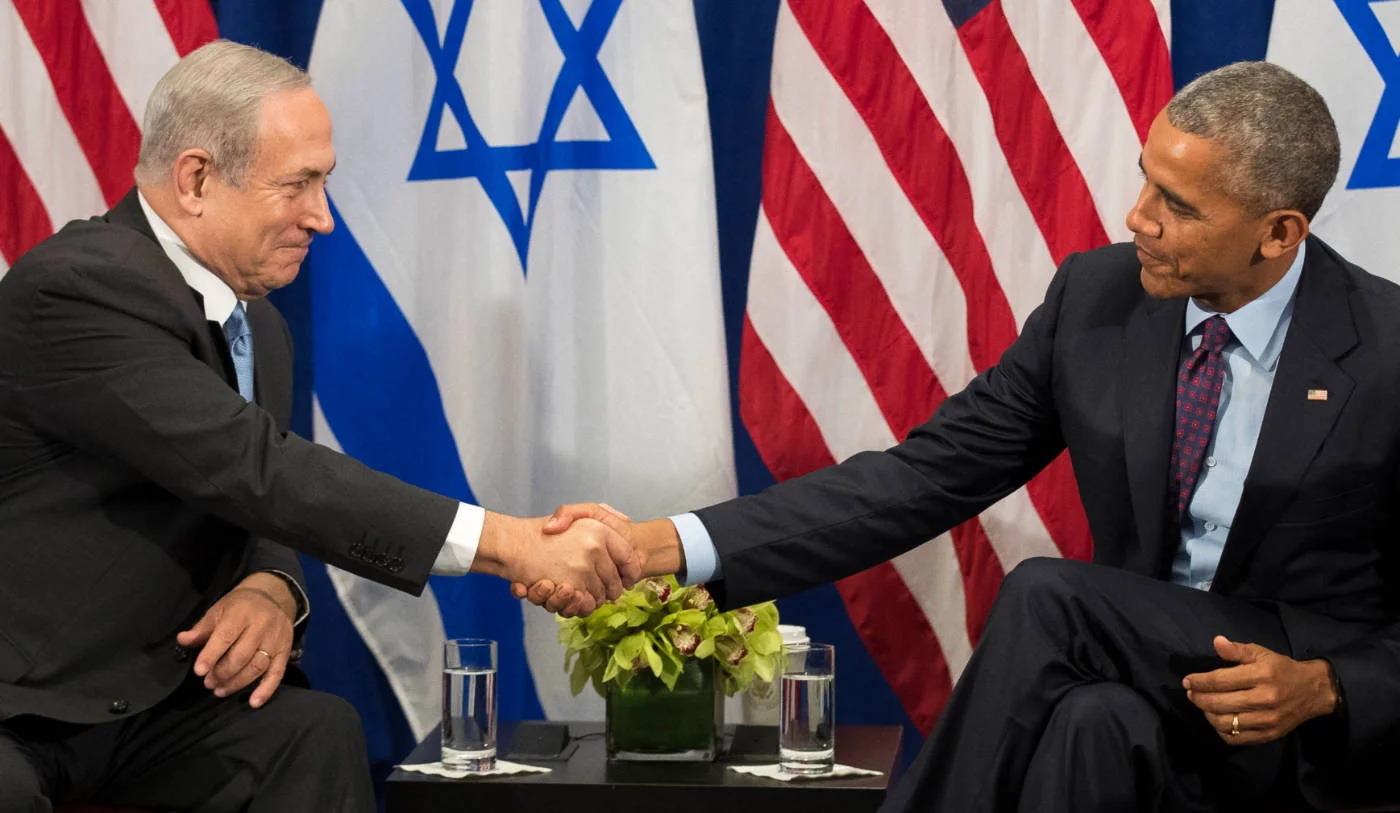

The MoU obliges Israel to spend much of this aid on US-made military goods, ensuring the money flows back into the US economy.
“America’s commitment to Israel’s security is unshakeable,” Obama said in a statement announcing the spending package. “The continued supply of the world’s most advanced weapons technology will ensure that Israel has the ability to defend itself from all manner of threats.”
Since then, the US has given further military contributions following the Hamas-led attacks on 7 October 2023, and during Israel’s genocide in Gaza. In 2024, Washington’s annual contribution to Israel hit a new peak of more than $12.5bn, according to US Congress data.
Which US exports give Israel a military edge?
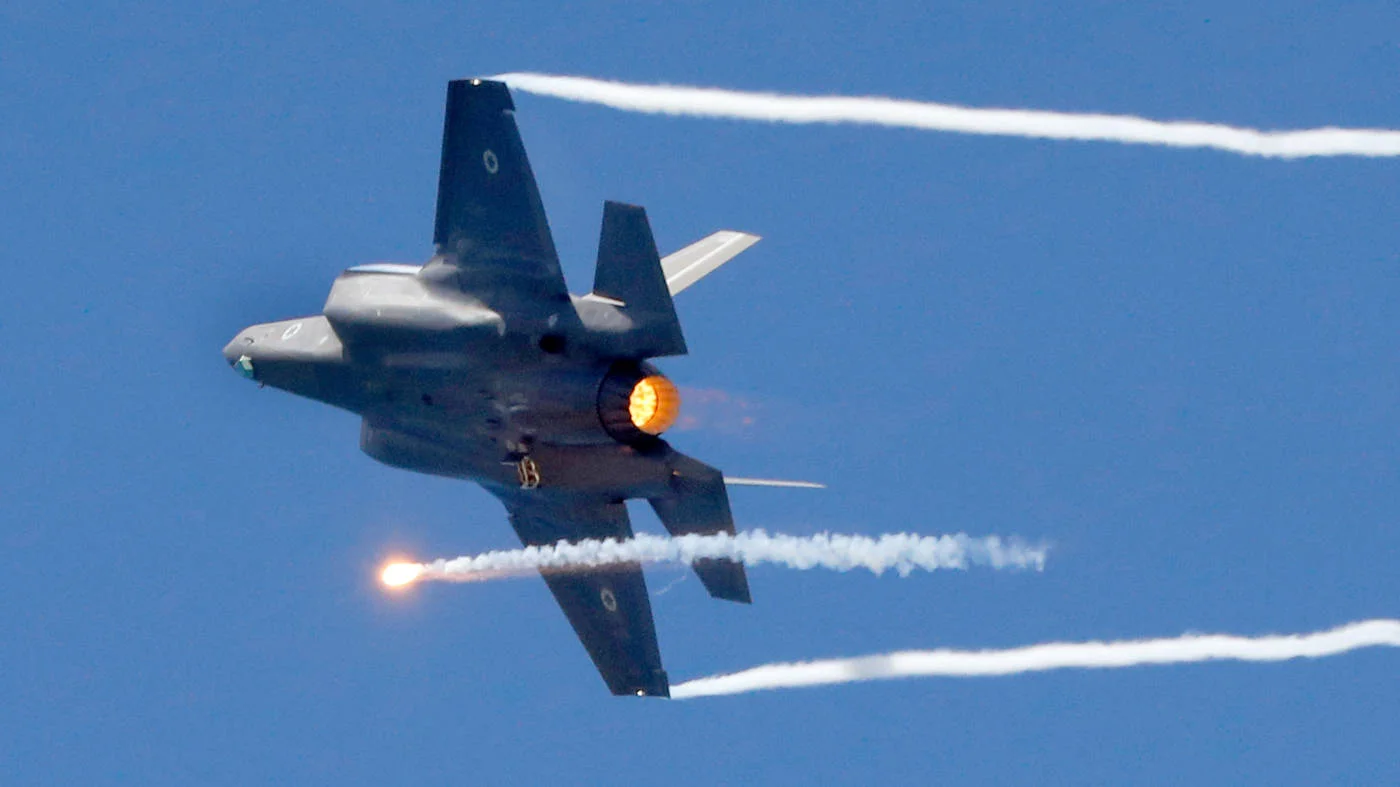
The most significant US export to Israel presently is the F-35 warplane, manufactured by US arms giant Lockheed Martin with additional components supplied by eight other nations, including the UK and Germany.
The jet, the world’s most technologically advanced stealth fighter, is prized for its long range, 360-degree sensors and its ability to go undetected by radar systems. It is also the world’s most expensive warplane: one F-35A costs an average of $82.5m according to Lockheed Martin. Overall, the F-35 program has cost more than $2 trillion.
As principal manufacturer, the US ultimately controls which states get to add the jet to their arsenals. Only 20 countries own the F-35, all of which are members of Nato or have been given Major Non-Nato Ally status by Washington. The US has 1,763 – more than every other country combined.
In 2010, Israel became the first country to buy the jet, taking delivery from 2016. No other air force in Mena owns F-35s: Israel’s custom-made F-35I Adir (“The Mighty One” in Hebrew) is adapted to accommodate Israeli-made electronics and software.
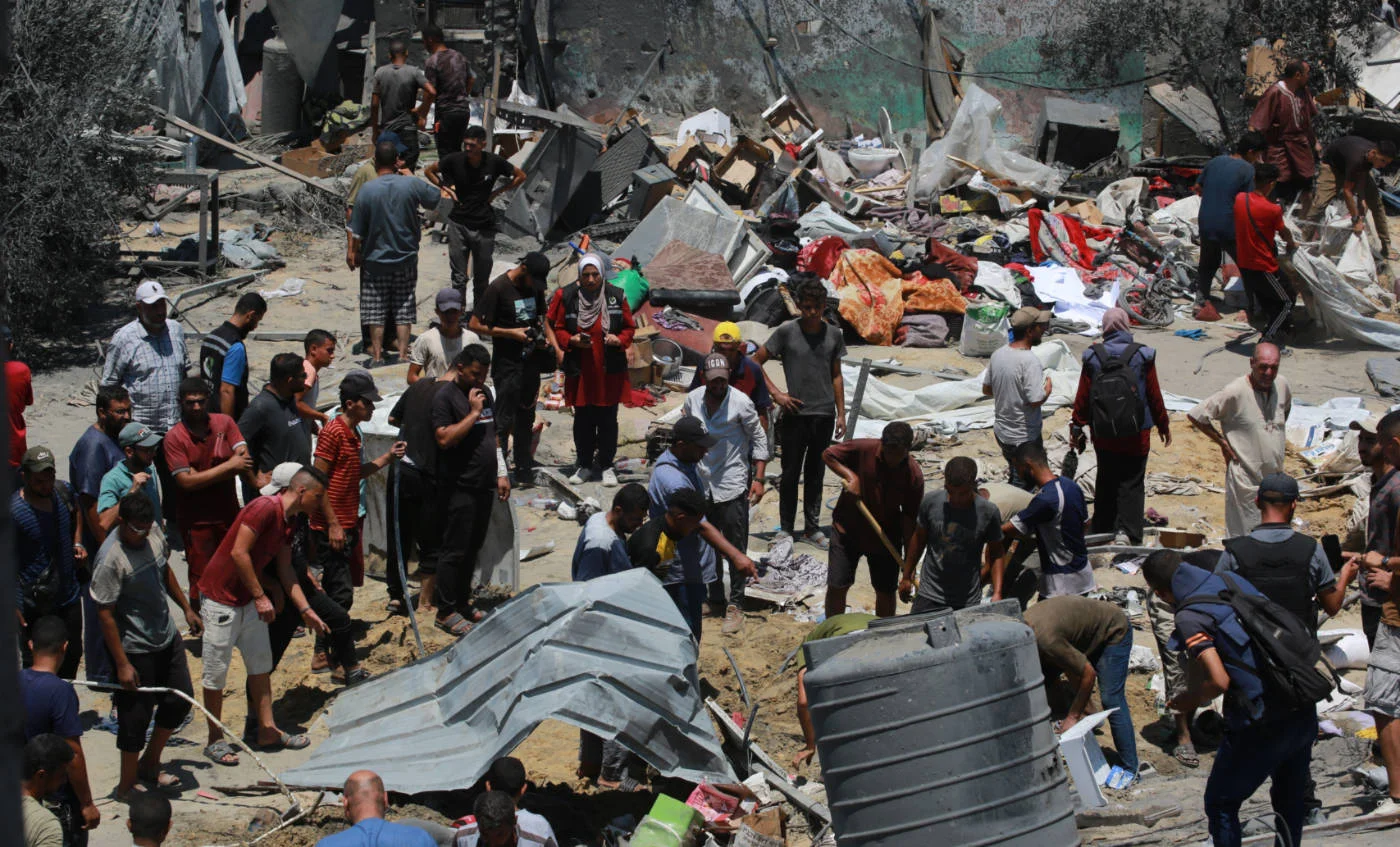
In 2018, Israel became the first country to use the jet in combat with an airstrike on Lebanon. Since then, Israeli F-35s have flown in operations against Iran, Syria, Yemen, Qatar and Gaza, where Israel has killed nearly 73,000 people in what has been described as a genocide by rights groups.
During the June 2025 war between Israel and Iran, the US allowed Israel to modify its F-35A fleet to carry external fuel compartments, MEE reported in June 2025.
Planes could fly non-stop round-trips from Israel to Iran without refuelling, bypassing US airbases in Gulf states or the Caucuses, where host governments may not have allowed the F-35As to land.
The Israeli air force also uses other key US exports such as the F-15, manufactured by McDonnell Douglas, and the F-16, also manufactured by Lockheed Martin.
The US has also contributed billions to the development of Israel’s aerial defence systems, which are considered by military experts to be among the best in the world, including Iron Dome, Arrow and David’s Sling, co-developed by US firm Raytheon.
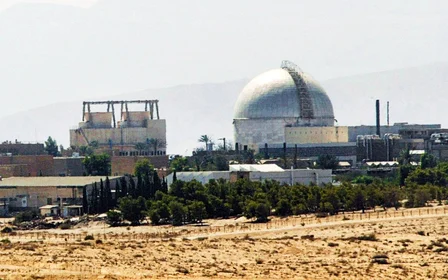
Washington has also turned a blind eye to Israel’s undeclared position as the only nuclear power in the Middle East, which is usually understood to have initially developed without the assistance or knowledge of the US, and was only publicly revealed by an Israeli whistleblower in 1986.
Has anyone in the US opposed aid and armaments to Israel?
Criticism of Washington’s vast military spend on Israel has increased during the genocide in Gaza.
In September 2025, Democrat lawmaker Rashida Tlaib, the only Palestinian member of Congress, said: “The US- backed, US-funded genocide in Gaza is reaching new levels of horror every single day that we do not take action to stop it.”
There is also criticism from the other side of the aisle. In July 2025, Republican Congresswoman Marjorie Taylor Greene proposed a bill amendment to slash $500m of US funds earmarked for Israel’s Iron Dome. It gained support from Tlaib and Democrat Congresswoman Ilhan Omar, but failed after receiving just six votes, compared to 422 against it.
Other prominent conservatives to advocate reducing US aid to Israel include commentator and former Fox News host Tucker Carlson, who has criticised Israeli conduct in Gaza.
Carlson told Israel’s Channel 13 on 20 May: “I don’t think the United States owes Israel anything. I don’t think the US should give Israel anything. I think we should stop all aid to Israel tomorrow.” The White House responded by calling Carlson “a low-IQ person who spreads fake news for cheap publicity”.
How has QME changed under Trump?
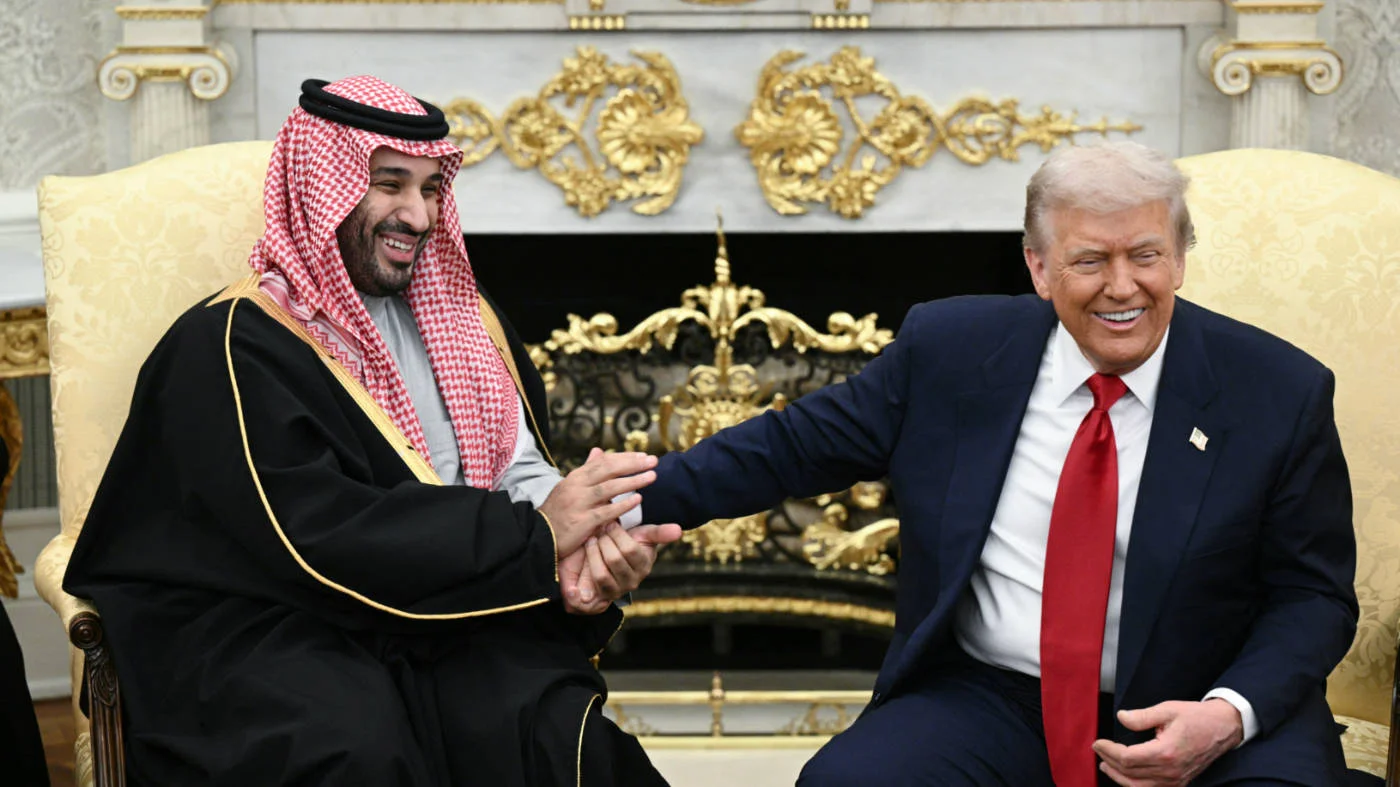
In November, US President Donald Trump announced that the US would sell F-35 warplanes to Saudi Arabia amid a Washington visit by Saudi Crown Prince Mohammed bin Salman, during which billions of dollars of deals were signed.
Trump said at an Oval Office meeting alongside bin Salman: “I know they [Israel] would like you to get planes of reduced calibre. I don’t think that makes you too happy… I think they [Saudi Arabia and Israel] are both at a level where they should get top of the line.”
Israeli Prime Minister Benjamin Netanyahu appeared to contradict Trump on 20 November when he said: “Regarding the F-35, I had a long conversation with Secretary of State Marco Rubio, who reiterated his commitment that the United States will continue to preserve Israel’s qualitative edge in everything related to supplying weapons and military systems to countries in the Middle East.” The sale is also yet to be ratified by Congress.
Kristian Ulrichsen, a fellow at the Rice University’s Baker Institute for Public Policy, told MEE: “A lot may depend on the degree to which the White House has the political capital and will to drive this through in the final years of the Trump era and potentially in the face of heightened Congressional scrutiny, especially if the midterm elections return control of one or both houses to the Democrats.”
In October 2020, during the final months of the first Trump administration, the US announced that it intended to sell up to 50 F-35A to the UAE, as part of a deal worth over $23bn, following the Abraham Accords agreement normalising relations between Israel and the UAE.
But US President Joe Biden paused the F-35 deal upon entering office in January 2021 amid concern about the UAE’s ties with China. When Washington attempted to impose restrictions, the UAE pulled out at the end of the year, and ruled out reopening talks in 2024.
Turkey was similarly blocked from the F-35 program in 2019 after it acquired Russian-made S-400 air defence systems, which the US said created intelligence concerns.
A Nato member and part of the F-35 production line, Turkey had paid around $1.4bn for the jets, six of which are still awaiting delivery. Turkish President Recep Tayyip Erdogan requested Trump reconsider the decision in March 2025.
Israel announced plans to acquire 25 more F-35 jets in May, along with a squadron of F-15IA fighter jets. These, along with 25 F-35s ordered in 2023, will take Israel’s fleet to around 100, making it one of the largest squadrons outside the US.
Urichsen told MEE that he doesn’t see US policy on Israel’s QME changing, despite Trump selling planes to Riyadh. “The US is likely to maintain its commitment to preserving Israel’s QME even as it deepens defence and security ties with the Gulf States,” he said.
Middle East Eye delivers independent and unrivalled coverage and analysis of the Middle East, North Africa and beyond. To learn more about republishing this content and the associated fees, please fill out this form. More about MEE can be found here.