UN General Assembly 2025: Which Middle East leaders are speaking and when?

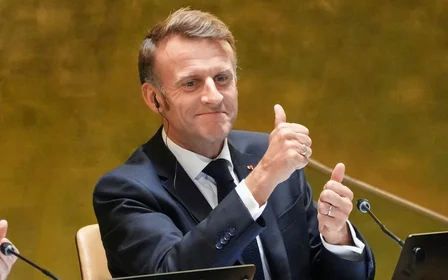
World leaders are gathering in New York this week for the annual United Nations General Assembly (UNGA) debate.
It's the 80th year of the gathering, and it comes at a difficult time for the organisation, with wars raging globally and a budget crisis internally.
More than 150 heads of state and government will take the podium at the UNGA, but the agenda among heads of state from the Middle East will likely to be focused on Israel's genocide in Gaza and its persistent attacks against its neighbours and regional foes.
No gathering in world politics attracts more heavyweights during its first week.
On Tuesday, US President Donald Trump outlined his "vision for the world" and also touched upon how globalist institutions have "significantly decayed the world order".
New MEE newsletter: Jerusalem Dispatch
Sign up to get the latest insights and analysis on Israel-Palestine, alongside Turkey Unpacked and other MEE newsletters
The General Assembly also heard from Turkish President Recep Tayyip Erdogan, in addition to leaders from Jordan and Qatar.
The General Assembly is a core component of the UN with manifold duties, including overseeing voting for new members, choosing non-permanent members of the UN Security Council and playing a part in electing the UN secretary general.
It also gives observer status to non-member states and blocs including Palestine and the European Union, whose speakers can address the assembly.
What's happening this week?
The theme for this year's General Assembly debate is: "Better together: 80 years and more for peace, development and human rights."
But don't expect world leaders to stick to the theme. Most leaders from across the Middle East will promote whatever international issue is at the top of the agenda for their country.
Many speakers will not stick to the allotted 15-minute time slot. Frequently they go over that time limit, although no one will likely beat the performance of the late Cuban leader, Fidel Castro, who clocked up an impressive four hours in September 1960.
What's the schedule?
Morning debating sessions run from 9am EST (that's four hours behind GMT) until 2:45pm. The afternoon session begins at 3pm and ends at 9pm. You can catch live coverage here. An archive of speeches so far this week is being updated onto the United Nations website and a full list of speakers will be updated here.
World leaders have complicated lives, so the running order below may change, especially if, as mentioned above, speakers go over their time.
The position in brackets refers to where in the order of each session the speaker is due to take to the podium.
Tuesday 23 September
Full coverage of speeches, including video.
Morning (9am EST - 2:45pm EST)
- US President Donald Trump (4th)
- Indonesian President Prabowo Subianto (5th)
- Turkish President Recep Tayyip Erdogan (6th)
- Jordan's King Abdullah II (8th)
- Qatar's Emir Sheikh Tamim bin Hamad al-Thani (10th)
- Slovenian President Natasa Pirc Musar (15th)
- South African President Cyril Ramaphosa (17th)
Afternoon (3pm EST - 9pm EST)
- Lebanese President Joseph Aoun (5th)
- French President Emmanuel Macron (6th)
- Colombian President Gustavo Petro Urrego (8th)
- Iraqi President Jamal Rashid (15th)
- Morocco's Head of Government Aziz Akhannouch (18th)
Wednesday 24 September
Full coverage of speeches, including video.
Morning (9am EST - 2:45pm EST)
- Spain's King Don Felipe VI (1st)
- Iranian President Masoud Pezeshkian (4th)
- Syrian President Ahmad al-Sharaa (14th)
Afternoon (3pm EST - 9pm EST)
- Kuwait's Crown Prince Sheikh Sabah Al-Khaled Al-Sabah (16th)
Thursday 25 September
Full coverage of speeches, including video.
Morning (9am EST - 2:45pm EST)
- Somalia's President Hassan Sheikh Mohamud (1st)
- Palestinian Authority President Mahmoud Abbas (3rd)
- Yemen's President of the Presidential Leadership Council, Mohammed Al-Alimi (4th)
Afternoon (3pm EST - 9pm EST)
- Libya's President Mohamed Younis A Menfi (1st)
- Sudan's Transitional Prime Minister Kamil El-Tayeb Idris (13th)
- UK Deputy Prime Minister David Lammy (15th)
Friday 26 September
Full coverage of speeches, including video.
Morning (9am EST - 2:45pm EST)
- Israeli Prime Minister Benjamin Netanyahu (1st)
- Pakistan Prime Minister Shehbaz Sharif (2nd)
- China's Premier of the State Council Li Qiang (3rd)
- Ireland's Taoiseach Micheál Martin (6th)
- Bangladesh's Chief Adviser Muhammad Yunus (7th)
Afternoon (3pm EST - 9pm EST)
- Mali's Prime Minister Abdoulaye Maïga (4th)
- Bahrain's Minister for Foreign Affairs Abdullatif bin Rashid Al Zayani (15th)
Saturday 27 September
Full coverage of speeches, including video.
Morning (9am EST - 2:45pm EST)
- Russia's Foreign Minister Sergey Lavrov (9th)
- India's Minister for External Affairs Subrahmanyam Jaishankar (14th)
- Egypt's Minister for Foreign Affairs Badr Ahmed Mohamed Abdelatty (15th)
Afternoon (3pm EST - 9pm EST)
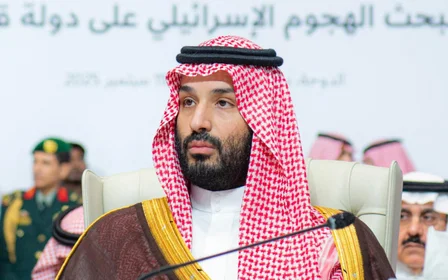
- Saudi Arabia's Minister for Foreign Affairs Prince Faisal bin Farhan Al Saud (2nd)
- Oman's Foreign Minister Sayyid Badr bin Hamad bin Hamood Albusaidi (4th)
- Malaysia's Foreign Affairs Minister Mohamad Hasan (5th)
- Tunisia's Minister of Foreign Affairs Mohamed Ali Nafti (6th)
- UAE Minister for Foreign Affairs Lana Nusseibeh (10th)
Monday 29 September
Full coverage of speeches, including video.
Morning (9am EST - 2:45pm EST)
- Canada's Minister for Foreign Affairs Anita Anand (4th)
- Algeria's Minister of State Ahmed Attaf (6th)
- Holy See's Archbishop Paul Richard Gallagher (9th)
Middle East Eye delivers independent and unrivalled coverage and analysis of the Middle East, North Africa and beyond. To learn more about republishing this content and the associated fees, please fill out this form. More about MEE can be found here.