Under Qassem Soleimani’s instruction, pro-Syrian government forces besieged a number of rebel-held towns and cities, starving them into capitulation.
In the Idlib province, Syria's last opposition redoubt, Syrians displaced from those areas rejoiced upon learning of the Iranian's death and reflecting on the misery he brought them.
Syrians who had to live through the bombings, assassinations and massacres plotted by #Soleimani for years now celebrate his death in Idlib, Syria https://t.co/LHPhLaASxz
Burhan, a civilian who fled the city of Zabadani in the Damascus countryside, blamed Soleimani for the policy of displacing opponents to Syrian President Bashar al-Assad towards northern Syria.
“Soleimani and the militias supported by him are the main cause of all the military campaigns launched by Syrian government forces on the city of Zabadani and the adjacent city of Madaya,” Burhan, who requested that his real name not be used, told MEE's Harun al-Aswad.
“Had it not been for Iranian support, Damascus’ forces would have failed. Hezbollah was leading the battles on the ground while government aircraft were targeting the area with barrel bombs.”
Before fleeing to Idlib, Burhan was displaced to Madaya northwest of Damascus, where he lived under a gruelling siege imposed by Hezbollah.
“We ate cat meat during the siege and residents gave up their cars in exchange for a couple kilogrammes of rice,” he said. “Many died of starvation because of Soleimani and his militia.”
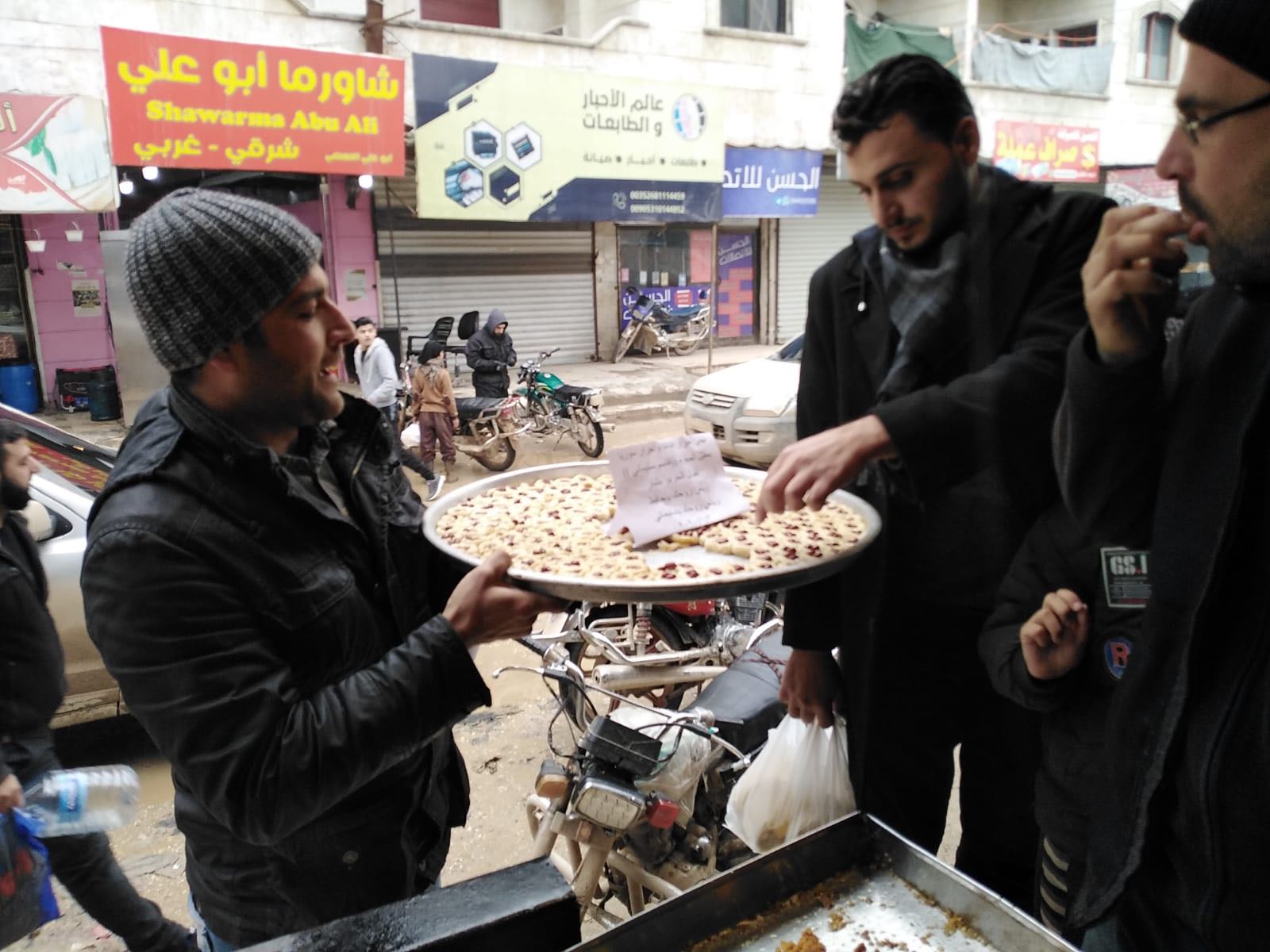
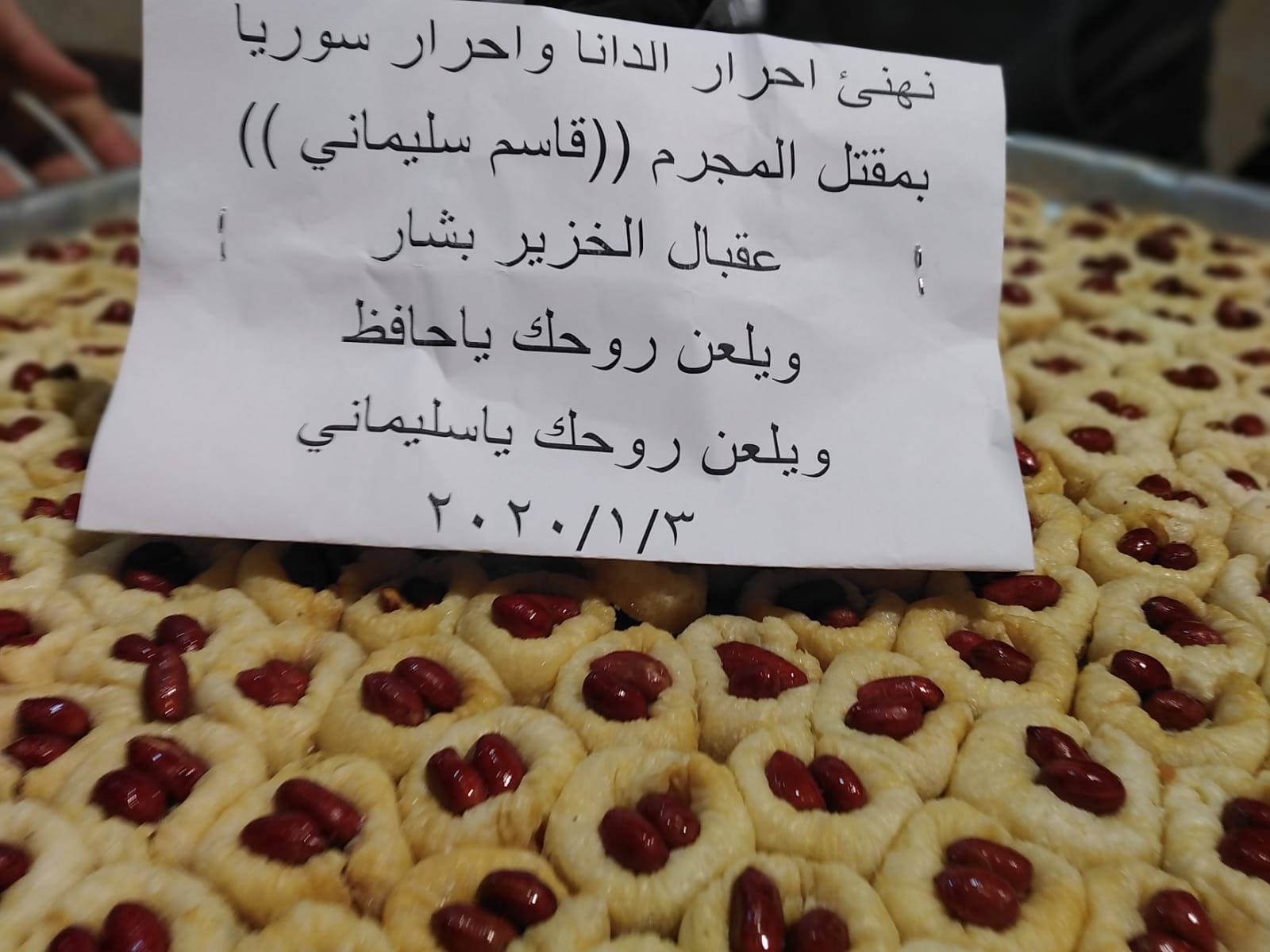
In Idlib on Friday, Syrians were celebrating their foe’s demise by handing out sweets.
Syrians in Idlib eat sweets to celebrate the news of Soleimani's death (MEE/Shawqi al-Dela)
Sweets with a sign reading: "Congratulations the free men of Syria and the world in the killing of the criminal Qassem Soleimani, and wish the pig Bashar al-Assad [be next.]" (MEE/Shawqi al-Dela)
The United Arab Emirates, a key American ally in the region, did not publicly cheer for Qassem Soleimani's death, despite its longstanding animosity with Tehran.
On the contrary, the UAE's minister of state for foreign affairs Anwar Gargash called for a "calm approach" to the crisis, decrying the lack of trust between the parties involved in the region.
"In light of the fast-evolving regional developments, it is a must to advance wisdom and prioritize political solutions to confrontation and escalation," he wrote on Twitter in Arabic on Friday.
"The issues that the region faces are complicated and accumulated, suffering from the lack of trust between the parties involved. Rational action requires a calm approach, free of emotional reactions."
Located across the Gulf from Iran, the UAE, which is home to hundreds of thousands of Iranian expatriates, appears to have moderated its hawkish approach to Iran over the past few months.
Emirati royal Tahnoun bin Zayed, the national security adviser of the country, visited Tehran in October to defuse tensions in the Gulf, Middle East Eye reported at the time, citing a senior security source in the UAE.
Earlier in the year, Abu Dhabi stopped short of accusing Tehran of being behind the sabotage of two oil tankers near its coast, despite statements from US officials blaming Iran directly for the attack.
Early on Friday, Donald Trump berated the Iranian general's character, accusing him of being responsible for the death of millions of people.
"General Qassem Soleimani has killed or badly wounded thousands of Americans over an extended period of time, and was plotting to kill many more...but got caught!" Trump wrote on Twitter.
"He was directly and indirectly responsible for the death of millions of people, including the recent large number of PROTESTERS killed in Iran itself.
"While Iran will never be able to properly admit it, Soleimani was both hated and feared within the country. They are not nearly as saddened as the leaders will let the outside world believe. He should have been taken out many years ago!"
In November 2018, Trump and Soleimani had an indirect interaction - in the virtual world. Trump posted a photo on Twitter proclaiming, "Sanctions are coming". With an icy background and the same font used by the HBO series, Game of Thrones, the post was a play on the show's famous adage, "Winter is coming".
Soleimani responded with his own Game of Thronesque Instagram post - a poster of himself against a dark background saying, "I will stand against you".
Qasem Soleimani, the Commander of the Quds Force, Iran’s external security agency, has posted this image on his Instagram in response to Trump’s tweet. pic.twitter.com/l1zdRIBK9f
Trump's "sanctions are coming" post was announcing the reimposing of sanctions on Iran after The US president had left the Iran nuclear deal in May of that year.
It marked the start of his administration's so-called maximum pressure campaign that would intensify tensions in the region and in turn lead to Soleimani's death.
The US embassy in Baghdad has urged all citizens to depart from Iraq immediately, hours after Qassem Solemani’s killing.
Here’s round up of what other citizens and foreign governments are doing in the wake of Soleimani’s assassination:
In the southern city of Basra, dozens of US citizens working for foreign oil companies were preparing to leave the country. Iraqi officials said the evacuation would not affect operations, production or exports.
The Israeli military is on heightened alert after Prime Minister Benjamin Netanyahu cutting short a trip to Greece following the assassination.
Defence Minister Naftali Bennett met with military and intelligence chiefs for a "situational assessment". He and other members of Netanyahu's security cabinet have been asked not to comment on the high-profile killings, which Israeli media interpreted as a bid to stave off retaliation from Iran's proxies and allies in the region.
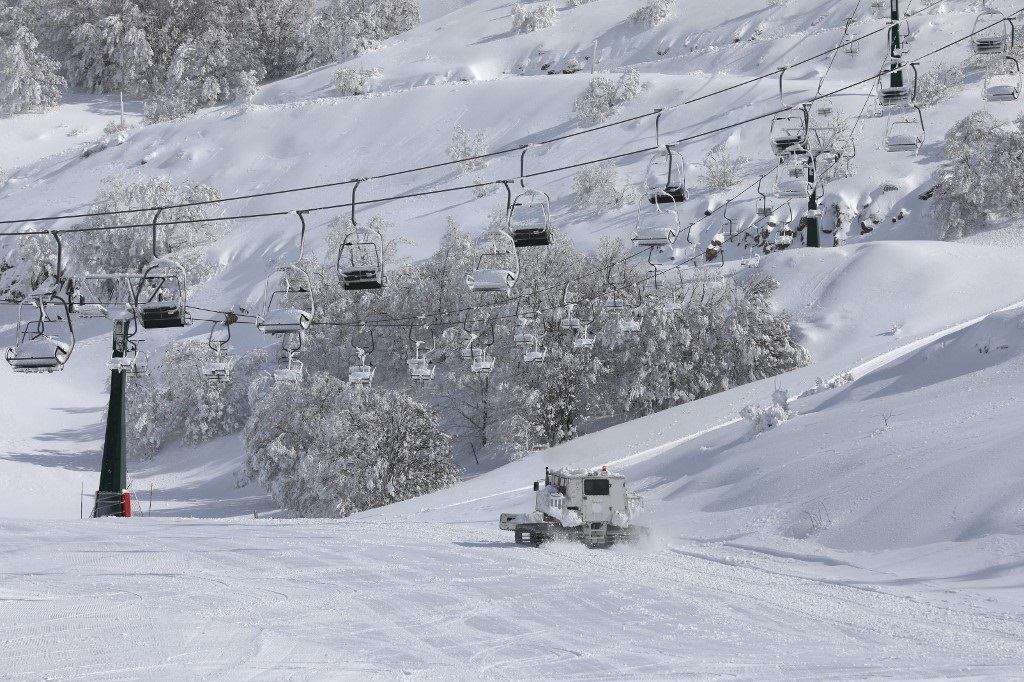
The Mount Hermon ski resort in the Israeli-occupied Golan Heights is closed after Soleimani's assassination (AFP)
Israeli military spokesman Avichay Adraee said the Mount Hermon ski resort in the Israeli-occupied Golan Heights close to the fortified frontier with Syria, had been closed "following an assessment of the situation".
France urged its citizens in Iran to stay away from public gatherings and “to behave with prudence and discretion and abstain from taking pictures in public places” and the Netherlands told Dutch nationals to leave Baghdad “in a safe manner” if possible.
Soleimani’s assassination took Arab newspapers by surprise, so the news hasn’t made it to any of their front pages today. But the topic has been heavily covered on their websites nonetheless.
Iraqi daily Baghdad Today has published several pieces on the killing, but one stands out: An open letter by the leader of Asaib Ahl al-Haq, asking his paramilitary group to prepare for a battle to end the US presence in Iraq and “putting an end to Israel”.
Joyful in its coverage tone, Saudi newspaper Asharq al-Awsat, meanwhile, ran a piece about Soleimani being groomed as the next Iranian president.
“He was a planned Iranian president and public preparation started last year - only Donal Trump aborted this project by killing him,” the paper wrote.
That image of Soleimani preparing for office was refuted by news presenter Ghassan Bin Jiddo on Lebanese-linked Al-Mayadeen TV, however.
Soleimani, Bin Jiddo said, was aware that Iranian generals, politicians and even officials in the office of Khameini, wanted him to run for presidency.
“But he said to them, ‘I was not made for this world, my wish that the Axis of Resistance liberates this region and my biggest wish is to be in the heart of al-Quds [Jerusalem] and liberate it, or to be martyrs, this is my biggest wish,” Bin Jiddo said.
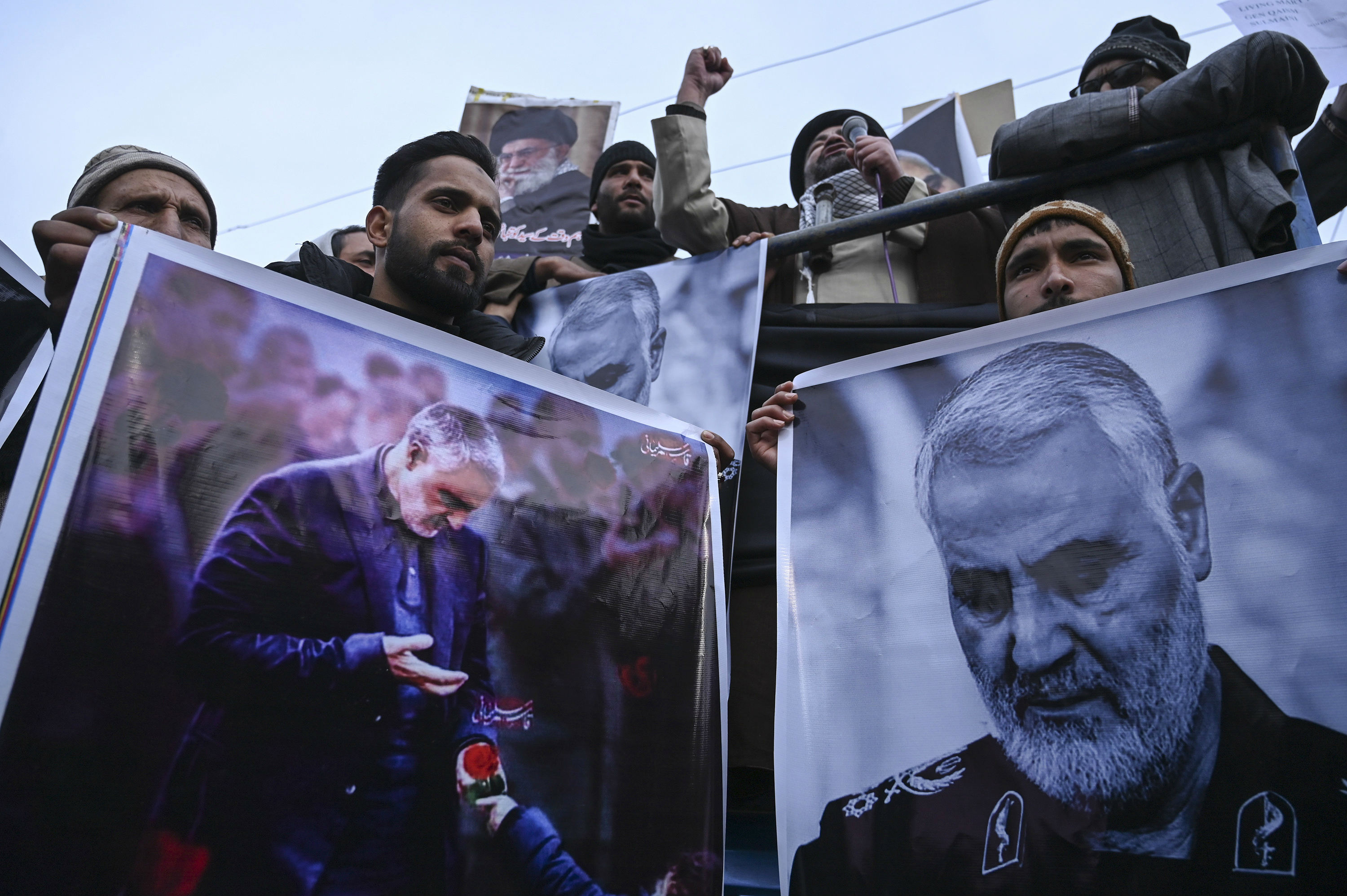
Protesters shout slogans against the United States and Israel as they hold posters with the image of top Iranian commander Qasem Soleimani (AFP)
For Iran-leaning Lebanese daily Al-Akhbar, Soleimani’s death was an opportunity to remind of the major role he played in Hezbollah’s 2006 war with Israel, alongside Hezbollah commander Imad Mughniyeh.
It also listed his roles in supporting the “Iraqi resistance against the American and British occupation in Iraq”, building the “architecture of defence lines around Damascus”, and supporting Bashar al-Assad in battles such as that which took Aleppo. It also noted how he helped develop the capabilities of the Palestinian Hamas and Islamic Jihad movements in Gaza.
According to London-based pan-Arab paper Al-Araby Al-Jadeed, the assassination “changed the rules of the game and opened a public conflict with Iran”.
“What increased the dangerous feeling of this critical escalation and its results, is that the US administration rushed to announce its responsibility for the killing, as it is declaring war, or at least opening a wide confrontation with Iran,” the paper wrote.
According to Nicola Pedde, director of the Rome and Brussels based IGS-Institute for Global Studies think tank, Soleimani’s killing is a counterintuitive move for the United States.
“Soleimani is the opposite of the western stereotype you find portrayed in the US and Israel,” he tells Middle East Eye.
“He was a nationalist and a strategist, not a fanatic. The only person on the ground who had the capacity to understand US thinking and undertake informal talks.”
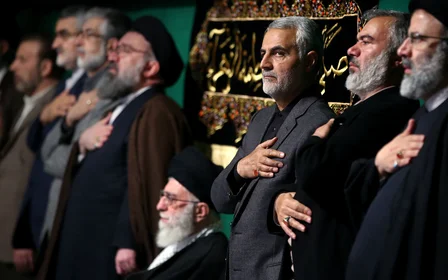
Qassem Soleimani represented a nationalist and strategist faction in the Revolutionary Guard (AFP)
The general, Pedde says, represented a rationalist ideology that is prevalent in the first generation of Iranian leaders.
“The second generation in the Revolutionary Guard are much more concerned with pursuing their economic interests. Soleimani was the last barrier holding back that faction, and his death has exposed Supreme Leader Ali Khameini,” he says.
“That is why Soleimani was so popular with the youth, he was seen as someone who wasn’t corrupt, a real nationalist.”
For Nader Entessar and Kaveh Afrasiabi, any analysis of Soleimani’s assassination must take into account Trump’s domestic considerations, the two academics write for Middle East Eye.
“But it would be a mistake to reduce the sum of US President Donald Trump’s intentions behind the recent air strikes -and most importantly a miscalculated risk like Soleimani's assassination - to the external circumstances in Iraq and the region, and to overlook the distinct possibility that Trump is drawing from the old playbook of instigating a foreign crisis as a diversion from the domestic perils to his presidency. This recalls how Bill Clinton, back in 1998, ordered an air strike on Iraq on the eve of an important impeachment vote.”
While the attack might distract from Trumps’ troubles at home, they warn, the tactic might seriously backfire.
“Sadly, as his misguided policies with respect to both Iran and Iraq clearly show, Trump is not only repeating the impeachment ploy of his predecessor, but he is also on the verge of recycling the errors of the Bush-era wars in the Middle East.”
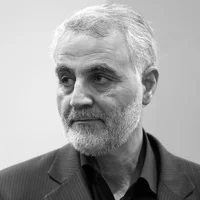
He will be remembered as a national hero by some and a shadowy foe by others, but whatever one’s take, Qassem Soleimani was a key force behind the spread of Iran’s influence across the Middle East over the past decade.
He came from a poor village in eastern Iran, taking up construction work as a 13-year-old to pay off a loan his father had taken out, Soleimani would prove himself as a unit commander in the Iran-Iraq war in the 1980s where his bravery was first noted.
He rose rapidly through the ranks of Iran's Revolutionary Guards to become chief of the elite Quds Force in 1998, a post in which he would increase Tehran’s foothold across the region – and become a target for the Israelis, the Saudis and, finally, the Americans.
Brigadier General Esmail Ghaani, the Quds force's deputy leader, has been named as Soleimani's replacement by Iran's supreme leader.
The Quds forces' programme "will be unchanged from the time of his predecessor", Ali Khameini said in a statement carried by Iranian state news.
That makes Ghaani, who has been deputy head since 1997, the continuity candidate, and he will be seeking to continue Soleimani's legacy of expanding Iranian influence and undermining Tehran's allies abroad.
The new commander of the #IRGC Quds force Ismail Ghaani was born on Aug. 8, 1957, he was #Qassemsoleimani's deputy for years, added to the US Specially Designated Nationals in 2012, accused the US of financing #ISIS and described the war in #Syria as an existential war to #Iranpic.twitter.com/UCH3FrLFG1
In Iraq, Azhar al-Rubaie is speaking to Iraqis who are both happy to hear of Soleimani’s death and wary of its consequences.
For Mohammed al-Alwan, a 24-year-old from Basra, Soleimani’s assassination is “not only a victory for Iraqis, but also for the international community”.
“I was so happy when I heard that the world's biggest criminal had been killed, as he killed many Iraqis once he intervened Iraq’s affairs and sent his militias to the country,” Alwan says.
Alwan says he feels the same way about Soleimani’s death as he did when he heard Osama bin Laden and Abu Bakr al-Baghdadi had been killed. But, he warns, Soleimani’s death will not end Iranian influence in Iraq.
“We also have to get rid of his hands in Iraq. If we do not, they will grow and replace him with a new figure to continue Soleimani’s objectives in the country,” he says.
— Firas W. Alsarray - فراس السراي (@firasalsarrai) January 3, 2020
Another Basra-based Iraqi, Haider Laith, says: “I have two moods, I am happy and sad at the same time.”
“Firstly, I am happy that we are taking our first steps towards curbing Iranian influence in Iraq. Secondly, I am sad that Iran will respond to the US in Iraq, and use it as a war and conflict zone again,” the 22-year-old says.
Laith, like hundreds of thousands of other Iraqis, has for months been in the streets protesting against the government, corruption and Iranian influence. Several hundreds of protesters have been killed in a crackdown by Iran-backed militias and Iraqi security forces.
“Iran also will try to take revenge upon the protesters, who were happy after receiving the news on this historic day.”
Syrian journalist Danny Makki took to Twitter to outline just how important a figure Soleimani is for Iran.
Qassem Suleimani was more than just a General or a military leader, he was Iran's ultimate symbol of power, strength & influence in the Middle East, rushing between Lebanon, Iraq and Syria, his assassination is not just an escalation, its effectively a declaration of war.
US Secretary of State Mike Pompeo, meanwhile, shared a widely circulated video purportedly showing Iraqis celebrating the Iranian's death - a reminder that he was as reviled as admired across the region.
Iraqis — Iraqis — dancing in the street for freedom; thankful that General Soleimani is no more. pic.twitter.com/huFcae3ap4
And Donald Trump? Well the man who ordered the strike has been noticeably silent, except for a low-resolution image of the US flag he shared on Twitter soon after the assassination.
Moqtada al-Sadr, the cleric-turned-politician who fought US troops in the tumultuous years following the Iraq war, has announced he is reforming his Mahdi Army militia.
Taking to Twitter, Sadr ordered "fighters, particularly those from the Mahdi Army, to be ready" following the assassination, and eulogised Soleimani. The Mahdi Army disbanded in 2008 following years of bloody conflict with US troops.
These days Sadr stands at the head of the Iraqi parliament's largest bloc, and with his votes combined with the Hashd al-Shaabi militia's political bloc we could see a law being passed ordering US forces' expulsion from the country.
Iranian Supreme Leader Ali Khameini, who was close to Soleimani, has vowed "severe revenge" awaits the general's killers.
"Severe revenge awaits the criminals whose dirty hands were tainted with his blood and the blood of all the martyrs of last night's incident," he said, announcing three days of mourning.
"The martyr, Soleimani, was an international resistance figure, and all those who loved him are calling for revenge for his blood."
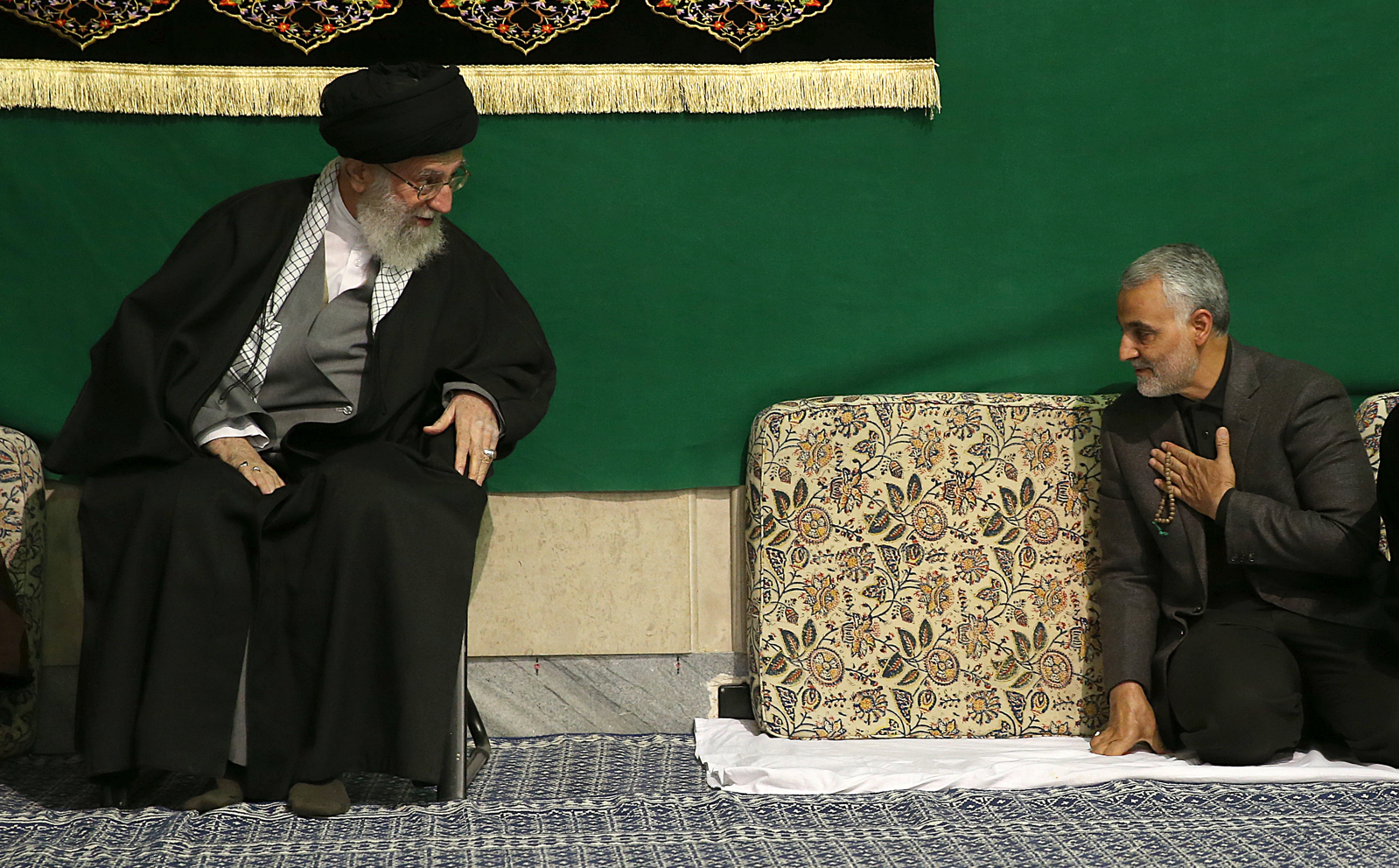
Iran's supreme leader Ayatollah Ali Khamenei with Qassem Soleimani (AFP)
Javad Zarif, Iran's foreign minister, called the assassination an "act of international terrorism".
"The US' act of international terrorism, targeting & assassinating General Soleimani-THE most effective force fighting Daesh [Islamic State], Al Nusrah, Al Qaeda et al-is extremely dangerous & a foolish escalation," Zarif said.
Hezbollah leader Hassan Nasrallah said: "Meting out the appropriate punishment to these criminal assassins... will be the responsibility and task of all resistance fighters worldwide."
Meanwhile a Syrian foreign ministry spokesperson said the killing was "a serious escalation of the situation" in the Middle East and likened the US' methods to those "of criminal gangs".
Good morning and welcome to Middle East Eye's liveblog tracking all the reactions and latest updates following the assassination of Qassem Soleimani, the powerful leader of Iran's Quds force.
Soleimani and Abu Mahdi al-Muhandis, the deputy leader of Iraq's Iran-backed Hashd al-Shaabi militia grouping, were hit by a missile strike on Baghdad airport overnight.
The assassinations are likely to have a profound effect on the region, where Soleimani has helped spread Iranian influence with bloody results.