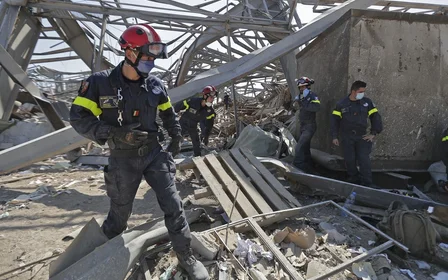

Beirut explosion: Egypt to move 'dangerous materials' from airports

Egypt is moving “dangerous materials” stored at airports nationwide to safer places after the massive explosion that hit the Lebanese capital last week.
According to the civil aviation ministry, authorities are "taking precautionary measures with regards to dangerous materials, either immediately releasing them or transferring them to safe storage spaces well outside the range of airports and residential areas".
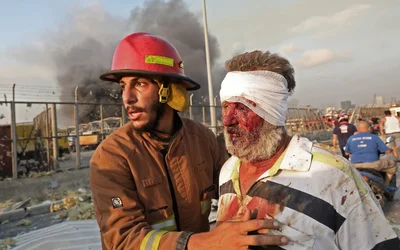
The statement referred to materials held in "cargo bays and storage warehouses in Cairo's airport and all airports nationwide", without specifying which kind of materials would be moved.
The statement came after the devastating explosion that hit Beirut’s port on Tuesday, apparently due to negligence and corruption, which left at least 159 people dead, over 6,000 injured and 300,000 homeless.
The huge chemical explosion left a 43-metre deep crater, according to a security official.
The blast, which was felt across the country and from as far as the island of Cyprus, more than 250km away, was recorded by the sensors of the American Institute of Geophysics (USGS) as having the power of a magnitude 3.3 earthquake.
"A committee will conduct a comprehensive evaluation of all procedures applied inside the storage areas… in order to address any risks before they arise," Egypt's Minister of Civil Aviation Mohamed Manar was quoted as saying.
Middle East Eye propose une couverture et une analyse indépendantes et incomparables du Moyen-Orient, de l’Afrique du Nord et d’autres régions du monde. Pour en savoir plus sur la reprise de ce contenu et les frais qui s’appliquent, veuillez remplir ce formulaire [en anglais]. Pour en savoir plus sur MEE, cliquez ici [en anglais].