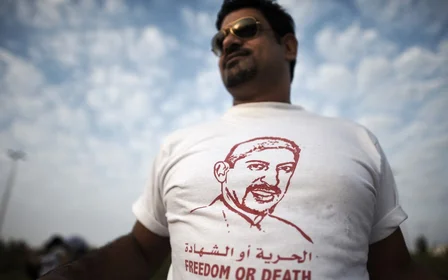

Human rights groups urge Biden to intervene for release of Bahraini activist

Over a dozen human rights organisations penned a letter to United States President Joe Biden, calling on the US government to press the Bahraini authorities to immediately release Abdul-Hadi al-Khawaja.
Abdul-Hadi, 61, is one of Bahrain’s prominent human rights defenders. He was imprisoned in 2011 after leading peaceful protests calling for fundamental freedoms in the kingdom.
“Respect for human rights is inextricably linked to US national security interests, and the ongoing detention and possible death of a prominent Bahraini human rights defender in state custody threaten those interests. Al-Khawaja’s precarious situation demands an urgent response,” the letter states.
“We respectfully request that the United States leverage its close security partnership and urge Bahraini authorities to release Al-Khawaja immediately and unconditionally, and in the meantime, ensure he is provided with life-saving medical care to prevent an imminent tragedy.”
The signatories include organisations like Amnesty International, Human Rights Watch, and the International Service for Human Rights.
The Bahraini-Danish man is currently staging a hunger strike to protest against his incarceration and the persistent refusal to provide him with essential medical care during his detention.

In February, he was transferred to the clinic at Jau Prison for an urgent heart issue, his daughter Maryam al-Khawaja, from the #FreeAlKhawaja campaign, said.
According to his daughter, the doctor recommended that Abdul-Hadi be urgently moved to a cardiologist's care, but “they refused to book the necessary appointment”.
Maryam said “a plain-clothed man” at the medical facility insisted his hands be cuffed and that he be taken back to prison. According to his daughter, Abdul-Hadi believes the refusal to book his appointment was done to punish him because he had protested against being chained.
Last year, Abdul-Hadi was hit with new charges, including allegations that he insulted a prison guard and broke a plastic chair when denied the right to call his daughters from prison.
In January, the High Criminal Second Court of Appeal upheld the charge of breaking the chair.
Middle East Eye propose une couverture et une analyse indépendantes et incomparables du Moyen-Orient, de l’Afrique du Nord et d’autres régions du monde. Pour en savoir plus sur la reprise de ce contenu et les frais qui s’appliquent, veuillez remplir ce formulaire [en anglais]. Pour en savoir plus sur MEE, cliquez ici [en anglais].