
Israel-Palestine live: Thousands in state of panic as Israel continues to strike hospitals

Mises à jour du direct
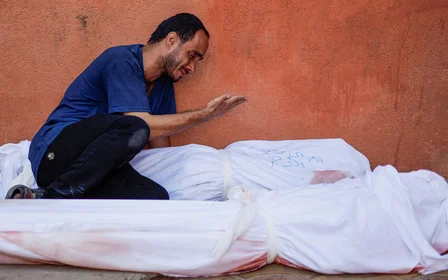
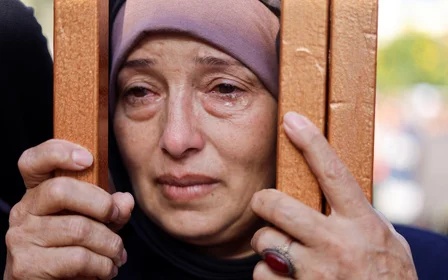
Palestinians living abroad say they are gripped with fear and anguish after losing contact with extended family members in Gaza, after Israel severed communications with the outside world when it destroyed phone and internet services in the embattled territory.
Already in darkness after most electricity was cut off, more than 2.3 million Palestinians were thrown into complete isolation on Friday when Israel knocked out communications services as its air and ground forces stepped up their attacks on the Gaza Strip.
Middle East Eye lost all contact with all its journalists in Gaza on Friday, making it increasingly challenging to document news from the ground.
Abeer Ayyoub, a freelance journalist and long-time contributor to MEE, describes being left in the dark about the well-being and whereabouts of her loved ones following the heaviest night of bombing yet:
My siblings and I had been discussing the possibility of an imminent ceasefire on our family WhatsApp group but suddenly, they all stopped responding to my messages.
At first, I assumed it was due to the blackout they've been experiencing since day 3 of the war, with internet and phone services limited in Gaza because of heavy bombardment that hit telecommunications providers.
Prior to last night, I could reach my family once every two or three days, while some were unreachable since the latest hostilities began.
But the situation became terrifying when news reports indicated that Israeli air strikes had not ceased for hours. Israel later announced its intention to begin a ground invasion in certain areas along the barrier fence with Gaza.
For the full story, click on the link below.
Read more: Gaza blackout leaves loved ones in the dark

The United Nations Relief and Works Agency (Unrwa) Commissioner General Phillipe Lazzarini wrote an open letter to staff, saying: "I am constantly hoping that this hell on earth will soon come to an end and that you and your families are safe.
"I keep hoping that I will soon see you and listen to you as you tell me about the pain you have all gone through. I try to brush away the thought that we have already lost 53 colleagues and that many of you have lost relatives and loved ones. May they all rest in peace," he added.
Israeli Prime Minister Benjamin Netanyahu’s office says he will meet this evening with the families of those taken captive by Hamas on 7 October, following an increase in pressure and criticism of his handling of the situation.
The families have demanded that he and other Israeli leaders hold face-to-face talks with them.
The announcement from the Prime Minister’s Office of the upcoming meeting comes after Defense Minister Yoav Gallant said that he would meet with representatives of the families on 29 October.
Speaking to hundreds of thousands at a pro-Palestine rally in Istanbul, Turkey's President Recep Tayyip Erdogan said: "Hamas is not a terrorist organisation, but Israel is the occupier."
He also said that he will tell the world that "Israel are war criminals."
"The main culprit behind the massacre unfolding in Gaza is the West," he added.
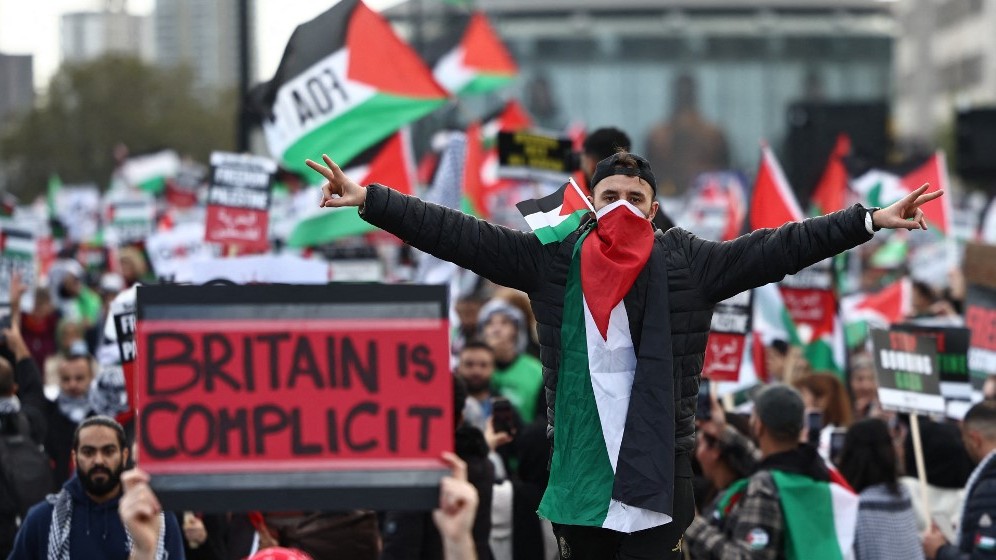
Tens of thousands of pro-Palestine supporters poured onto the streets of central London on Saturday to demand Israel halt its bombing campaign and siege of the Gaza Strip after the heaviest night of bombing yet.
At the rally, organised by the Palestine Solidarity Campaign (PSC) and other groups, protesters could be heard chanting "Free Palestine" and "End the genocide" as they moved from the Embankment towards Westminster after passing near Prime Minister Rishi Sunak's Downing Street office.
"We are marching today in the most horrendous of situations," said Ben Jamal, the director of PSC.
"Up to yesterday, we knew that over 8,000 Palestinians had already been killed in Gaza, including more than 3,000 children," he said. "But last night Israel launched a major bombardment and cut off all communications. This is an act of pure barbarism.
"So we are marching today, not knowing how many Palestinians are dead, how many children now lie under the rubble."
Read more: Tens of thousands protest in London to demand Gaza ceasefire
A spokesperson for Gaza's health ministry told reporters on Saturday that Israel's bombardment overnight had turned the enclave into a "ball of fire".
Ashraf al-Qudra said the heavy Israeli bombardment had killed at least 377 more Palestinians in designated safe areas.
His statement to the press came shortly after new figures released by the ministry putting the death toll since 7 October at 7,703.
Qudra added that the Gaza Strip's health system was paralysed and called for international help, as well as for medical students and retired nurses to come forward.
At least 7,703 people have been killed since Israel began attacking the Gaza Strip following Hamas's operation in southern Israel on 7 October, according to the enclave's health ministry
The ministry added that more than 3,500 children were among the dead.
The new death toll comes after a night that has seen some of the heaviest Israeli bombings the Strip has ever experienced.
The Israeli military said one of its drones struck a “terrorist cell” in Lebanon that had tried launching anti-tank missiles across the border.
“The IDF thwarted a surface-to-air missile that was fired from Lebanon toward an IDF UAV (unmanned aerial vehicle). In response, the IDF is striking the origin of the missile’s fire," said the army on social media.
Sporadic violence between Israel and the Lebanese Hezbollah movement has been ongoing since the bombardment of Gaza began, and a number of foreign countries have called on their citizens to leave Lebanon.
On Saturday, Lebanese authorities also issued precautionary guidance for evacuating Beirut International Airport and its surrounding facilities in case of emergency.
The guidance was issued for the Beirut Rafic Hariri International Airport, which lies on the southern fringe of the capital city.
The central bus station of Israel's Ashkelon was deserted, like almost the entire city these days.
Two old men of Ethiopian origin stood near the ticket office, staring at the list of destinations. But they did not approach to buy tickets.
On a bench at the platform for the bus to Jerusalem sat a woman in her 70s, hunched over and radiating restlessness.
Sima, a widow born in Ashkelon, said she'd accepted an offer from Ashkelon's welfare services to evacuate to Jerusalem.
This morning, just as she was boarding a bus, she discovered that due to stress she had forgotten some of her medication and other important items.
"I ran to my apartment, I took what I needed, and now I'm here waiting for the bus to Jerusalem, dying of fear that there will be more missiles before it arrives," she told Middle East Eye, taking nervous glances at the sky as if trying to spot another Palestinian rocket before it arrives.
Read more: Ashkelon a ghost city as Gaza's rockets rain down
Abeer Ayyoub, a journalist originally from Gaza now based in Turkey, had managed to remain in contact with her family back home despite the ongoing bombardment from Israel.
Last night, however, Israel shut off virtually all communication in the besieged enclave and began what some say is the heaviest assault since the latest round of violence began on 7 October.
She explained to Middle East Eye the fear, anxiety and concern for her family's safety that she experienced over the past 12 hours:
"My siblings and I had been discussing the possibility of an imminent ceasefire on our family WhatsApp group. Suddenly, they all stopped responding to my messages. At first, I assumed it was due to the blackout they'd been experiencing since day 3 of the war, with internet and phone services cut off in Gaza because of heavy bombardment that hit telecommunications providers.
"Prior to that night, I could reach my family once every two or three days, but some of them had been entirely out of reach since the war began. The situation became even more terrifying when news reports indicated that the heavy bombardments had not ceased for hours. Israel later announced its intention to begin a ground invasion in certain areas along the Gaza borders.
"I knew that no one could reach their families in Gaza, but I kept trying to call each of my family members, hoping they might somehow get their phones connected. I attempted to reach them for hours, but no one was reachable. My husband, Abdullah, also has family in Khanyunis, and he was worried about them, although he appeared calmer than I was.
"With phones not working, it became challenging for TV journalists to pinpoint the locations of the explosions. We had to rely on rumours circulating on social media, as there were individuals claiming to have internet access via Israeli SIM cards that only worked near the borders. Only one of my friends had a connection due to having an American SIM card, and she tried to reassure me that there were no bombings near my house, but she couldn't be certain.
"With nine siblings and many nieces and nephews living in different areas, I felt overwhelmed. Yara, my niece, lived in the northern Gaza Strip and had refused to evacuate her house. I was most worried about her and searched for her husband's family name among the list of people killed in that area.
"I couldn't help but think about the children and how they were coping. Fatin, who had evacuated to Al-Nusirat camp after her house in Al-Burij was destroyed, had two children with constant fevers due to fear. How were they managing? Siham lived near the seaport, an area hit by numerous artillery shells. Was she still alive, and had she lost any of her children? God forbid.
"Throughout the night, Abdullah and I watched Al-Jazeera, witnessing explosions throughout the Gaza Strip. However, we had no information on the exact locations of these bombings, and even Al-Jazeera's reporters were unable to provide precise details, only mentioning the general area within Gaza.
"Upon waking up the following morning, I found numerous messages from friends worldwide asking if I had been able to reach my family. Regrettably, I couldn't respond to any of them as I was overwhelmed. I began scouring the news for information on casualties, hoping not to find any of my relatives' names among the reports. I shared an Instagram story with my friends, stating that I couldn't contact my family, but 'all I know is that none of them has been reported killed so far.'"
A Palestinian man who was killed by Israeli settlers earlier on Saturday had been picking olives on his land at the time of the attack, according to locals.
The Palestinian Ministry of Health announced that Bilal Muhammad Saleh, 40, was killed by gunfire to the chest while picking olives.
He was transferred to Salfit Governmental Hospital in critical condition, then his death was announced.
Nader Asfour, a resident of Bilal Saleh's hometown Al-Sawiya, told Middle East Eye that the settlers suddenly attacked the families picking olives on their lands located between the towns of Al-Sawiya and Qabalan, south of Nablus.
The settlers were armed and started shooting directly at the residents, which led to Bilal being wounded in the chest and then his death.
“His family didn’t find a way to transport him other than the ladder they use to pick olives, due to the difficulty of vehicles and ambulance crews reaching the area,” he added.
This area has witnessed many attacks by settlers under the protection of the Israeli army, and their latest attack on Saturday is one of dozens.
“All our lands are besieged and we can’t reach them. The Israeli army closed all the roads, and every time we tried to open them, the soldiers came and closed them again. We didn’t go to pick olive trees this year because of all these restrictions,” Asfour said.
Bilal Saleh tried with his family to go several times to their land to pick olives, but the permanent presence of settlers on the outskirts of the town had prevented them from doing so.
Today they decided again to try to reach their trees, and as soon as they entered their lands and began picking olives, the settlers attacked them and shot them without any reason, Asfour said.
"The army is present on the nearby mountains and monitoring everything. The people were on their lands carrying nothing but ladders and bags to collect olives. The settlers attacked them brutally."
Since 7 October, Israel has closed dozens of side roads with bulldozers and placed dirt barriers to prevent Palestinians from using them.
Settlers' attacks have increased in the area as they try expand their settlements, most notably south of the city of Nablus.
Groups of settlers have also attacked Palestinian olive pickers in the villages of Battir west of Bethlehem, Deir Jarir east of Ramallah, and Deir Istiya and Haris, near Salfit, forcing them to leave their lands at gunpoint.
Six Palestinians were killed by settlers' bullets in the village of Qusra, south of Nablus, on 13 and 14 October after their homes and property were attacked.
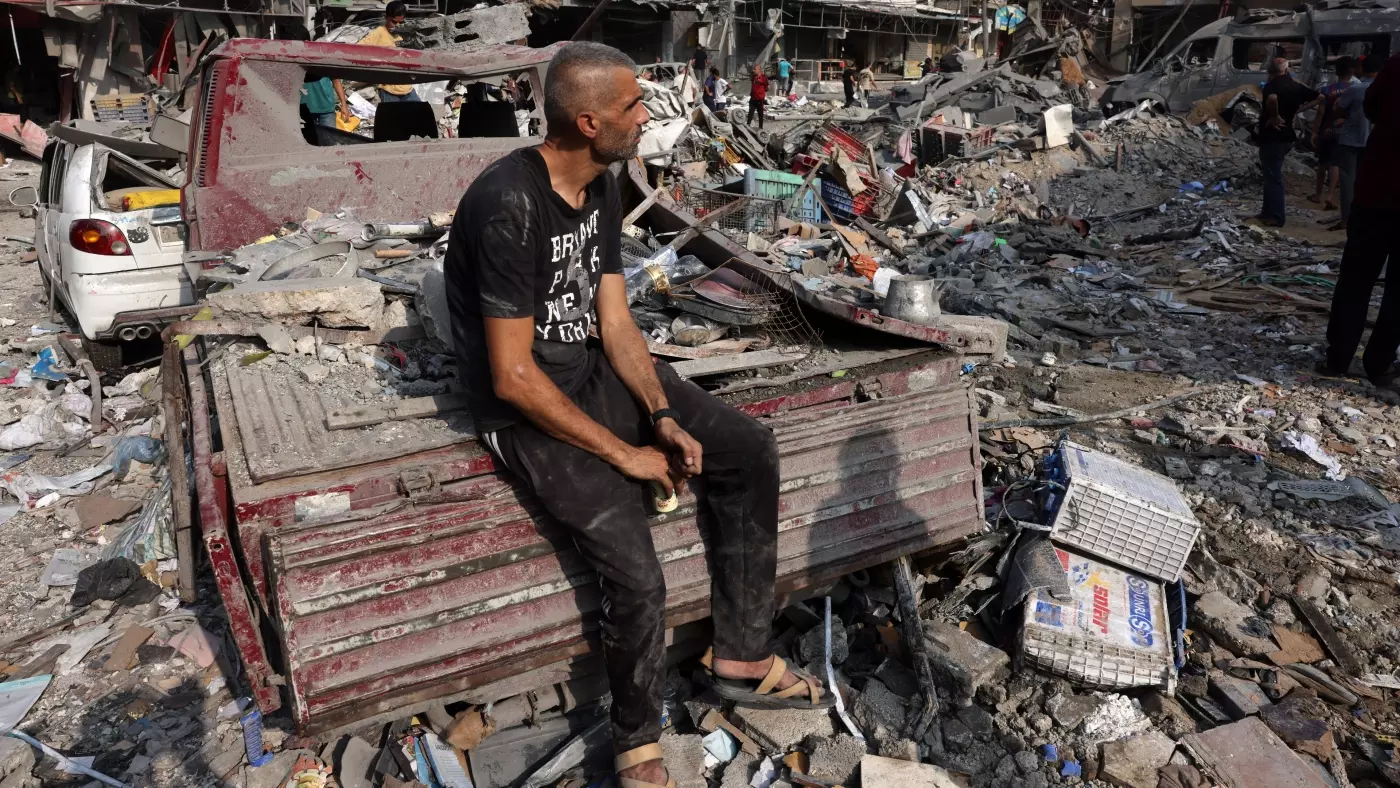
Hundreds of building in the Gaza Strip have been "completely destroyed" overnight by Israel's bombardment, the enclave's civil defence said on Saturday.
Numerous reports have suggested Israeli air strikes overnight have been some of the most intense seen in weeks.
A Palestinian man was shot dead by a settler near the city of Nablus in the occupied West Bank, the Palestinian health ministry said on Saturday.
Bilal Muhammad Saleh, 40, was killed after an Israeli settler opened fire at him in the town of Al-Sawiya, according to the ministry.
A rights group said settlers had attacked farmers near the town on Saturday morning:
The Israeli army said its ground operation was ongoing in the Gaza Strip, with the military "advancing through the stages of the war".
Spokesman Daniel Hagari said in a statement on Saturday "infantry, armored, engineering and artillery forces are participating in the [military] activity, accompanied by heavy [air] fire."
"The forces are still on the ground and continue the fighting," he added.
He also said the commanders of Hamas's naval and air forces had been killed in joint army and intelligence operations.
"Their elimination brings good progress in the stages of the war and helps the forces fight a weaker enemy," he said.
The World Health Organisation continues to be out of touch with its staff and health facilities in Gaza, the organisation's chief said on Saturday.
"The blackout is also making it impossible for ambulances to reach the injured," Tedros Adhanom Ghebreyesus wrote in a post on social media.
"The evacuation of patients is not possible under such circumstances, nor to find safe shelter."