
Ships carrying Russian goods most attacked by Yemen’s Houthis, says report

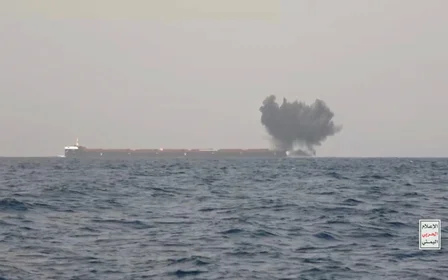
Vessels carrying Russian goods have been attacked by Yemen’s Houthi movement more than any other shipments from other parts of the world, according to a recent report by Bloomberg.
According to the report, the attacks have been carried out despite several previous safe-passage promises given by the Houthis, known officially as Ansar Allah, to Moscow earlier this year.
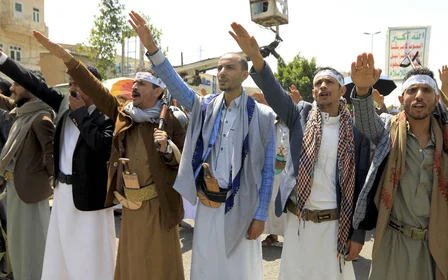
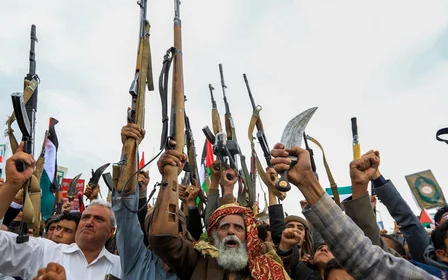
In January and March, the Yemeni group said it would not attack Russian and Chinese vessels amid their continuous targeting of global trade shipping, which is aimed at putting pressure on Israel to bring its war on Gaza to a halt.
Mohammad al-Bukhaiti, spokesman for Yemen’s Houthis, said in an interview with Russian newspaper Izvestia back in January that Russian and Chinese trade vessels do not need to fear attacks in the southern Red Sea.
Similar promises were made two months later, following talks held in Oman between Chinese and Russian officials with Mohammed Abdel Salam, a senior Houthi official
In return, Moscow and Beijing have promised to offer some “political support” to the Yemeni group that controls most population centres in Yemen, including the capital.
According to Bloomberg, no Russian-owned ships have been attacked, but there is no assurance for safe passages to international vessels shipping Moscow’s goods through the Red Sea.
It said that 19 percent of the 83 ships that were listed by the UK as being attacked by Houthis in the Red Sea and Gulf of Aden had Russia “as their most recent port call”.
In June, a ship carrying coal sank after it had departed from the Russian port of Ust-Luga.
Since its invasion of Ukraine in 2022, Russian energy products and other commodities are sold through third parties and foreign-flagged vessels to evade western sanctions in order for Moscow to continue financing its war in Ukraine.
To avoid these attacks, a number of ships have continued to use satellite signals to clearly demonstrate their affiliation to Russia, including signs that read “Russia crew” and “Russian on board”.
Middle East Eye propose une couverture et une analyse indépendantes et incomparables du Moyen-Orient, de l’Afrique du Nord et d’autres régions du monde. Pour en savoir plus sur la reprise de ce contenu et les frais qui s’appliquent, veuillez remplir ce formulaire [en anglais]. Pour en savoir plus sur MEE, cliquez ici [en anglais].