
US expects Gaza ceasefire talks to continue as Israel awaits Iranian retaliation

US President Joe Biden on Monday spoke to European leaders to discuss a ceasefire in Gaza and de-escalating tensions in the Middle East, as Washington and Israel have been bracing for an Iranian response to last month's killing of Hamas leader Ismail Haniyeh in Tehran.
The White House released a joint statement of the call with the leaders of Germany, France, Italy, and the UK in which they endorsed a call for a renewal of talks for a ceasefire between Hamas and Israel.
They "stressed there is no further time to lose", the statement said.
But despite the call for a cessation of hostilities, the statement added that the countries would also support Israel against any Iranian threat.
On 31 May, Biden released the details of a three-stage ceasefire agreement. The deal appeared identical in framework to a ceasefire deal that Hamas had rejected earlier in the month but that Israel rejected and responded with a military incursion into the southern Gaza city of Rafah.
Since releasing the details of the agreement, the Biden administration has been trying to inject new momentum into negotiations. The US, Egypt, and Qatar are scheduled to mediate a new round of ceasefire negotiations on Thursday.
Hamas urged mediators to focus on implementing the ceasefire deal currently on the table rather than initiating new talks. Hamas did not confirm whether it would participate or boycott the meeting.
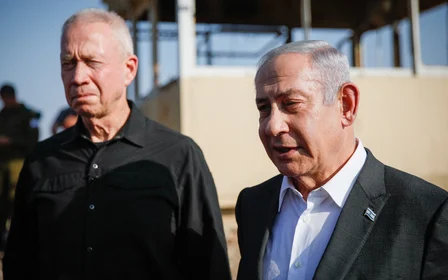
Israeli Prime Minister Benjamin Netanyahu said he would send a negotiations team to the summit.
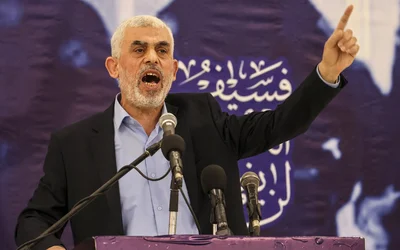
The Biden administration has laid the blame for the ceasefire delay on Hamas, but the group's former leader, Haniyeh, had for months blamed Israel for the delay in the negotiations. Haniyeh was assassinated last month while visiting Tehran, in what Hamas said was an Israeli strike.
Iran has vowed to respond to the attack on its soil, and for the past two weeks, the region has braced itself for a possible expansion of the Israeli war on Gaza.
White House national security spokesperson John Kirby said on Monday that the US is prepared for attacks by Tehran or Iran-backed groups as soon as this week.
"We share the same concerns and expectations that our Israeli counterparts have with respect to potential timing here. Could be this week," Kirby told reporters on Monday.
"We have to be prepared for what could be a significant set of attacks," he said.
In response to the possible Iranian retaliation, the US has deployed a nuclear submarine and aircraft carrier to the Middle East, further raising fears of an all-out war between the US and Iran.
Meanwhile, Israel's military has launched a number of major air strikes across Gaza over the past week, including one that killed more than 100 Palestinians while they were doing dawn prayers in Gaza City.
Middle East Eye propose une couverture et une analyse indépendantes et incomparables du Moyen-Orient, de l’Afrique du Nord et d’autres régions du monde. Pour en savoir plus sur la reprise de ce contenu et les frais qui s’appliquent, veuillez remplir ce formulaire [en anglais]. Pour en savoir plus sur MEE, cliquez ici [en anglais].