Op-Ed video: Why the genocide in Gaza is an American one

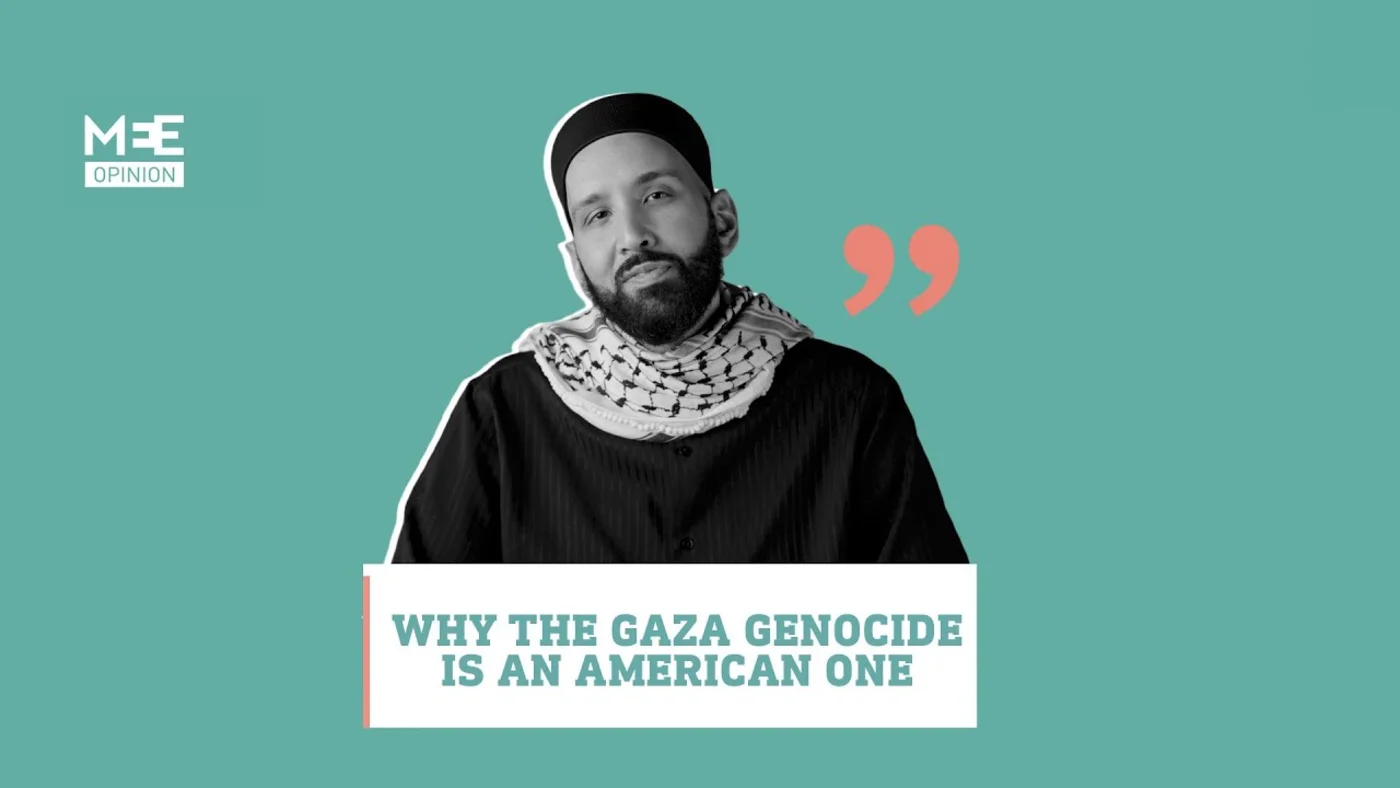
The US has long been complicit in the murder of thousands of people globally, but with Israel's genocide on Gaza being live streamed, the world finally sees it for what it is, says Omar Suleiman, a world renowned Muslim scholar and human rights activist.
With a defence budget greater than the next 10 countries combined, the US naturally remains an international hegemon, Suleiman told MEE.
"But it's not the benevolent empire it once sold itself as to the globe. Now, as it transitions from post-9/11 forever wars, yet continues to engage in, finance and manufacture the weapons of a genocide, America’s decades-long spiritual decline has hit rock bottom," he said.
The religious scholar said that a man recently approached him after a lecture, asking: "What makes Gaza different?" The man was referring to the simultaneous international attention and inaction on the occupation's barbarity in Gaza.
"Of course, there are religious implications - Muslims naturally revere Palestine as a holy land, as do Jews and Christians," Suleiman said.
"But there are historical implications, too, including an extensive history of over seven decades of Israeli occupation of Palestinian territories, the continuous building of illegal Israeli settlements in the West Bank, as well as an ever-growing list of Israeli human rights abuses," he added.
But the biggest difference, according to Suleiman, is that every detail of this genocide is being broadcast.
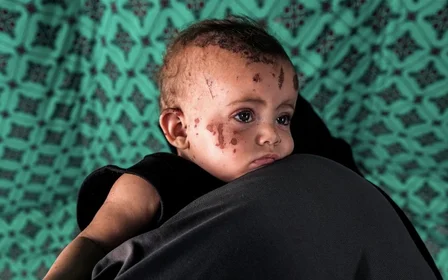
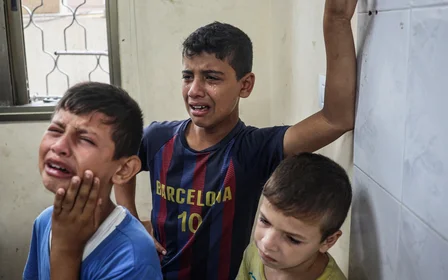
"It's televised on your phone, your computer screen, your social media. A healthy conscience can’t simply ignore the mutilated bodies of tens of thousands of dead Palestinian children," he said.
"It is an American backing of Israeli war crimes and human rights abuses that allows the occupation to continue its ongoing genocide, and it is this sinister defence of Israeli terror - often at the expense of its own citizens - that is putting the final nail in the coffin of America’s spiritual death."
The views expressed in this video belong to the author and do not necessarily reflect the editorial policy of Middle East Eye.
Middle East Eye propose une couverture et une analyse indépendantes et incomparables du Moyen-Orient, de l’Afrique du Nord et d’autres régions du monde. Pour en savoir plus sur la reprise de ce contenu et les frais qui s’appliquent, veuillez remplir ce formulaire [en anglais]. Pour en savoir plus sur MEE, cliquez ici [en anglais].