Lebanon: Israeli forces shoot at UN peacekeepers, wounding two

Two UN peacekeepers in Lebanon have been wounded by Israeli fire, the mission said on Thursday, as Israel's military ground operations in the country continued.
In a statement, the United Nations Interim Force in Lebanon (Unifil) said two of its members were wounded after a Merkava tank fired towards an observation tower at Unifil headquarters in Naqoura, "directly hitting it and causing them to fall".
"[Israeli] soldiers also fired on UN position (UNP) 1-31 in Labbouneh, hitting the entrance to the bunker where peacekeepers were sheltering, and damaging vehicles and a communications system," said the peacekeeping mission.
"An IDF drone was observed flying inside the UN position up to the bunker entrance."
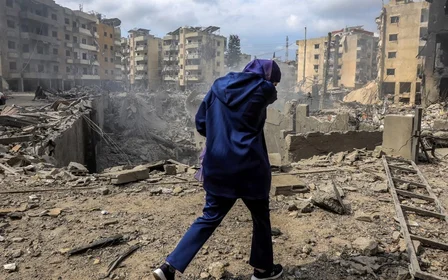
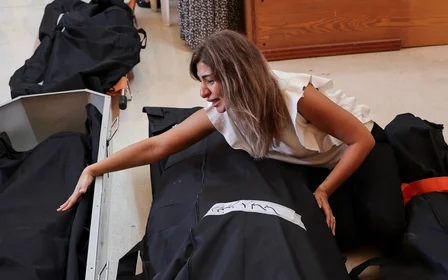
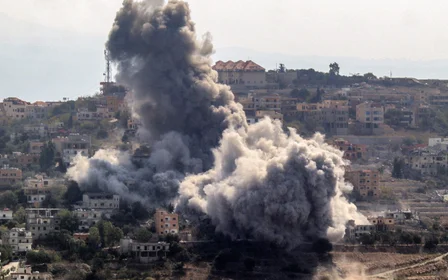
Israeli attacks in Lebanon over the past month, including a bombing campaign and ground invasion, have killed over 1,200 people and displaced one million.
One attack on the village of Ain al-Delb in southern Lebanon last week saw 71 people killed and over 58 wounded, the single deadliest strike on record since Israel and Hezbollah began fighting on 8 October 2023.
The ground invasion has focused on southern Lebanon, where Unifil - which has around 10,000 officers - has operated since 1978.
Since the last Israel-Hezbollah war in 2006, Unifil is the only military force apart from the Lebanese army that should be deployed between the Israeli border and the Litani River, 30 kilometres north of the border, under UN Resolution 1701.
Following its invasion, Israel ordered a number of Unifil outposts to evacuate, which the organisation refused.
"Unifil peacekeepers are present in south Lebanon to support a return to stability under Security Council mandate," said the organisation on Thursday.
"Any deliberate attack on peacekeepers is a grave violation of international humanitarian law and of Security Council resolution 1701."
'A dire humanitarian situation'
Israel's attack on Lebanon has raised concerns about the possibility of a wider regional war, dragging in Iran and the US.
On Thursday, Lebanese Prime Minister Najib Mikati said that there have been intensified diplomatic communications in the past hours, prior to a UN Security Council meeting that will discuss the escalations in the Middle East, according to Reuters.
"There are contacts taking place between the United States and France with the aim of reviving a ceasefire declaration for a specific period in order to resume the search for political solutions," he was quoted as saying.

The Israeli military said on Thursday it had killed two senior Hezbollah members, whom it claims intended to carry out attacks in northern Israel.
In a statement, the Israeli army said Ahmed Mustafa Al Hajj Ali, Hezbollah commander of the Hula region, and Mohammad Ali Hamdan, the commander of the anti-tank unit in Meiss El Jabal region, were targeted by two separate air strikes in southern Lebanon.
Hezbollah did not comment on the Israeli claims.
A number of Israeli politicians have mooted the possibility of creating a buffer zone in southern Lebanon to prevent Hezbollah returning to the region and being able to continue carrying out attacks into northern Israel.
This has has brought back memories of Israel's previous occupation of southern Lebanon, which lasted from 1982 to 2000.
David Wood, Lebanon analyst for the International Crisis Group, told Middle East Eye that trying to establish a new military occupation would expose Israeli soldiers to serious risks of constant ambushes and other attacks without necessary preventing Hezbollah attacks.
"The IDF could find itself bogged down in Lebanon for months, if not years, trying to maintain such a security zone," he said.
"Of course, an occupation would also prolong the displacement of residents from southern Lebanon, who already face a dire humanitarian situation."
Middle East Eye propose une couverture et une analyse indépendantes et incomparables du Moyen-Orient, de l’Afrique du Nord et d’autres régions du monde. Pour en savoir plus sur la reprise de ce contenu et les frais qui s’appliquent, veuillez remplir ce formulaire [en anglais]. Pour en savoir plus sur MEE, cliquez ici [en anglais].