
Israel bombs Syria following days of threats against new rulers

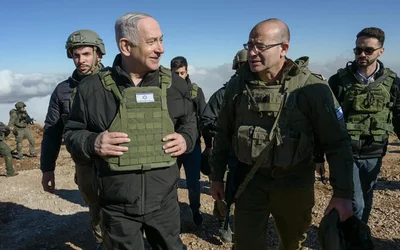
The Israeli army carried out a series of air strikes on Tuesday on what it said were military bases in Syria, days following Prime Minister Benjamin Netnayahu’s demand for a “complete demilitarisation” of the country’s south.
According to local Syrian media, the strikes hit the town of Kiswah, south of Damascus, and several parts of the Daraa province.
Low-flying Israeli jets could still be heard over Damascus after the strikes.
Israeli Defence Minister Israel Katz confirmed the strikes, saying his country “will not allow southern Syria to become southern Lebanon”.
“Any attempt by the Syrian regime forces and the country’s terrorist organisations to establish themselves in the security zone in southern Syria will be met with fire,” he added.
At least two people were killed in the attacks, according to the Syrian Observatory for Human Rights, a UK-based monitor.
Protests broke out in southern Syria and Damascus overnight, condemning the attacks and asking the country’s new leader, Ahmad al-Sharaa, to respond.
The protests follow days of demonstrations in the south, demanding an end to Israeli attacks and insisting on the unity of Syrian lands.
Hours before the strikes, Sharaa had concluded a national unity conference in Damascus in which he decried Israel’s incursions into Syria that started right after the fall of president Bashar al-Assad in December.
Sharaa also rejected “the provocative statements of the Israeli prime minister”.
Syria’s government said that Israel was violating the country’s sovereignty and called on the international community to pressure it “to stop the aggression”, demanding an “immediate and unconditional withdrawal”.
Aside from verbal condemnations, Syria’s new administration has not engaged militarily with Israel.
Israel carried out heavy air strikes against all types of Syrian military infrastructure since December, leaving the new rulers already battered from 14 years of civil war, with little capacity to face it in a war.
Middle East Eye propose une couverture et une analyse indépendantes et incomparables du Moyen-Orient, de l’Afrique du Nord et d’autres régions du monde. Pour en savoir plus sur la reprise de ce contenu et les frais qui s’appliquent, veuillez remplir ce formulaire [en anglais]. Pour en savoir plus sur MEE, cliquez ici [en anglais].