
No Other Land shows Israeli occupation cannot be whitewashed


The uproar surrounding the documentary No Other Land is unsurprising. Films that document the occupation and expose its unbearable human consequences always provoke harsh reactions from the Israeli establishment.
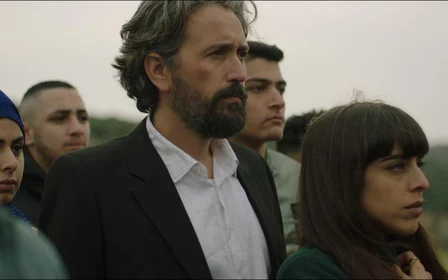
The film focuses on the daily realities of Palestinians in the Masafer Yatta area - one that includes home demolitions, family expulsions, dispossession and land theft.
The film reflects what is happening on the ground, but for many in Israel, the mere presentation of reality is seen as a crime.
Attacks on the film have been led by Israeli Culture Minister Miki Zohar, who accused the film of "defamation" and "distorting Israel's image". This is a familiar argument: any documentation of the occupation is framed as defamation, and any depiction of reality deemed incitement.
But there is no other way to portray the occupation; one cannot describe the expulsion of families from Masafer Yatta without exposing the injustices at its core.
There is no way to document soldiers preventing residents from accessing water or electricity without understanding that this is a policy of control, discrimination and oppression.
Criticism of the film has extended beyond the political establishment, with journalists and cultural figures in Israel attacking as a “traitor” one of the film’s directors, Yuval Abraham, who is Israeli.
Silencing the truth
This is a recurring pattern: any Israeli who dares to expose the crimes of the occupation is immediately shunned and denounced.
This silencing is not coincidental. The occupation persists not only because of soldiers in the field, but also due to the public denial and demonisation of anyone who dares to reveal the truth.
Follow Middle East Eye's live coverage of the Israel-Palestine war
Criticism has not come only from right-wing Israelis. Some Palestinians have argued that the collaboration between Yuval Abraham and Basel Adra - one of the film’s Palestinian co-directors - constitutes “normalisation” with the occupation. This is a mistaken claim.
As Palestinians struggle against the occupation, they need the support of courageous Israelis who are willing to take personal risks to expose these injustices. Films like No Other Land are not tools of normalisation; they are tools of resistance.
Ultimately, the problem is not No Other Land. The problem is the occupation itself. Its ugliness cannot be concealed
The film’s Oscar win for best documentary makes a significant political and cultural statement. International recognition of the film indicates that the world sees what Israel is trying to hide. This is precisely why the Israeli establishment is so outraged.
It is not just the film itself that angers them; it is the fact that the story of Masafer Yatta is reaching global audiences.
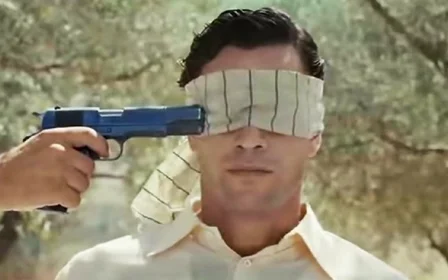
They would prefer that the world consume productions like Fauda, a series that glorifies the Shin Bet and portrays the occupation from the perspective of the oppressor.
Ultimately, the problem is not No Other Land. The problem is the occupation itself.
Its ugliness cannot be concealed, its consequences cannot be whitewashed, and its human costs cannot be ignored. We should thank Adra, Abraham and their co-directors for having the courage to tell the truth.
The views expressed in this article belong to the author and do not necessarily reflect the editorial policy of Middle East Eye.
Middle East Eye propose une couverture et une analyse indépendantes et incomparables du Moyen-Orient, de l’Afrique du Nord et d’autres régions du monde. Pour en savoir plus sur la reprise de ce contenu et les frais qui s’appliquent, veuillez remplir ce formulaire [en anglais]. Pour en savoir plus sur MEE, cliquez ici [en anglais].