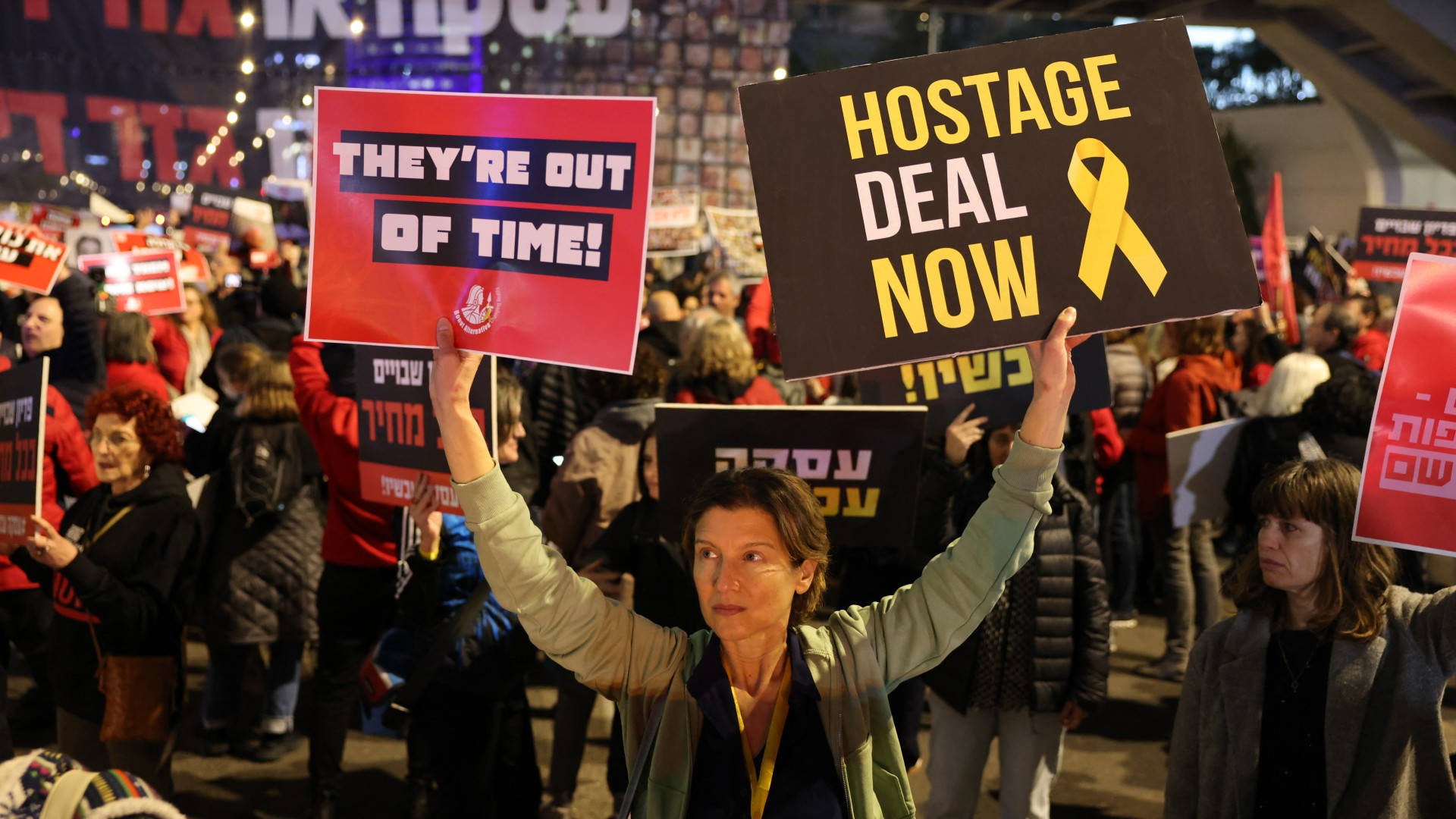
Families of Israeli captives are beginning to turn on Netanyahu

Late one evening last week, Einav Tzangauker, whose son was taken captive in Gaza by Hamas following the 7 October attack, set up a small tent in the middle of Kaplan Street in Tel Aviv, a major transportation artery in the Mediterranean city.
Police tried to convince her to clear the road, located between the Ministry of Defense and government offices. Traffic jams began to form.
It was a cold and rainy winter evening, but Tzangauker didn't give in.
"I will stay here until my son returns from Gaza," she told Middle East Eye. "If I can't sleep and live already for 100 days, nobody [in the government] should sleep either."
The policemen, quite embarrassed, hesitated and finally allowed her to stay there for the night.
In less than an hour, other Israelis who witnessed the incident brought mattresses, hot drinks, blankets and other items so that, as one of them said, "she would be as warm and as comfortable as possible in these circumstances".
The families of the 136 abductees still held in war-ravaged Gaza have been holding regular protests across the country as disagreements grow over Prime Minister Benjamin Netanyahu's strategy for releasing the captives and the future of Gaza after the war ends.
Read more: Families of Israeli captives are beginning to turn on Netanyahu