France's recognition of Palestinian state: A 'symbolic' move with questionable effectiveness

The decision came after years of hesitation. It was constantly discussed, but never implemented.
On 24 July, French President Emmanuel Macron finally confirmed in a letter addressed to Palestinian Authority President Mahmoud Abbas that France will recognise the state of Palestine at the United Nations General Assembly in September.
The announcement provoked the ire of Israeli Prime Minister Benjamin Netanyahu, who "strongly condemned" a decision that "rewards terrorism".
The United States, Israel's main supporter, considered it a "reckless decision [that] only serves Hamas propaganda and sets back peace".
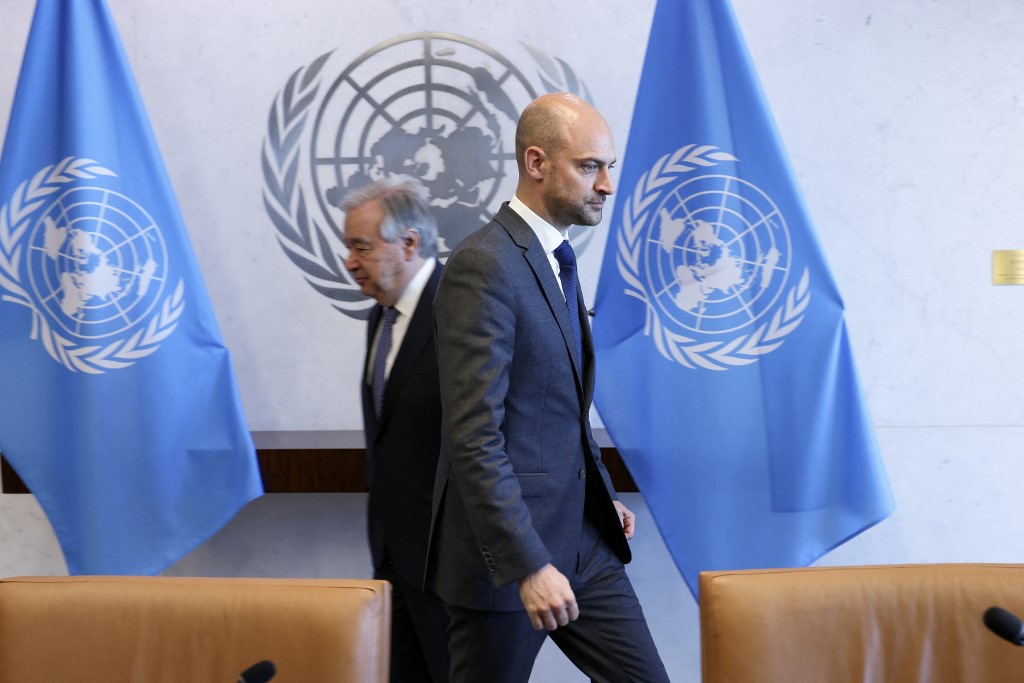
The French president did not choose the date of his announcement randomly. Days later, on 28 and 29 July, a conference co-chaired by France and Saudi Arabia devoted to a two-state solution to the Israeli-Palestinian conflict was held at the UN.
On this occasion, the French authorities hoped to convince other states to commit to the same path. And their gamble appears to have paid off, at least partially.
On 29 July, British Prime Minister Keir Starmer announced that the United Kingdom will recognise a Palestinian state by September unless Israel agrees to a ceasefire in the Gaza Strip by then and "commit to a long-term sustainable peace reviving the prospect of a two-state solution".
The same day, 15 western countries led by France launched a "New York Call" stating their willingness to move toward recognition of a Palestinian state.
Read more: France's recognition of Palestinian state: A 'symbolic' move with questionable effectiveness