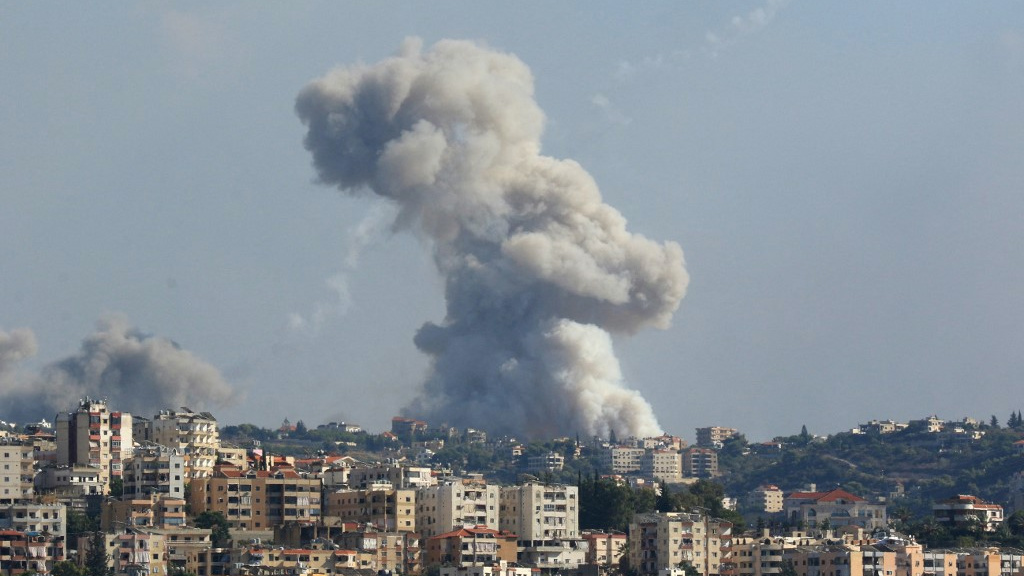
Opinion: After a difficult summer, a campaign of terror begins

The escalation of Israel’s aggression against Lebanon this week appears to have ushered the country into a new phase of conflict, after Hezbollah’s nearly year-long war of attrition.
Israel signalled its preparedness for a broader and more comprehensive conflict in late July, with the killing of Hezbollah commander Fuad Shukr.
This month, by blowing up communications devices across Lebanon and killing hundreds of people - including women and children - in a series of air strikes, Israel’s objectives appear to have expanded significantly beyond the mere containment of Hezbollah along the border.
This war is no longer just about dissuading Hezbollah from taking action to support Palestinians in Gaza. Rather, Israel wants to dismantle Hezbollah entirely.
This strategic shift is unfolding in a context where Israeli public opinion is largely in favour of military action against Lebanon, while Lebanese society remains divided over the war.
In the wake of Shukr’s assassination, as Hezbollah grappled with a precarious calculus on how to retaliate without inciting an all-out war, Israel interpreted this hesitation as indicative of Hezbollah’s military frailty and lack of strategic clarity.
This month’s pager attacks abruptly concluded a tumultuous summer, paving the way for a campaign of terror this autumn.
Read more: After a difficult summer, a campaign of terror begins by Wissam Saade