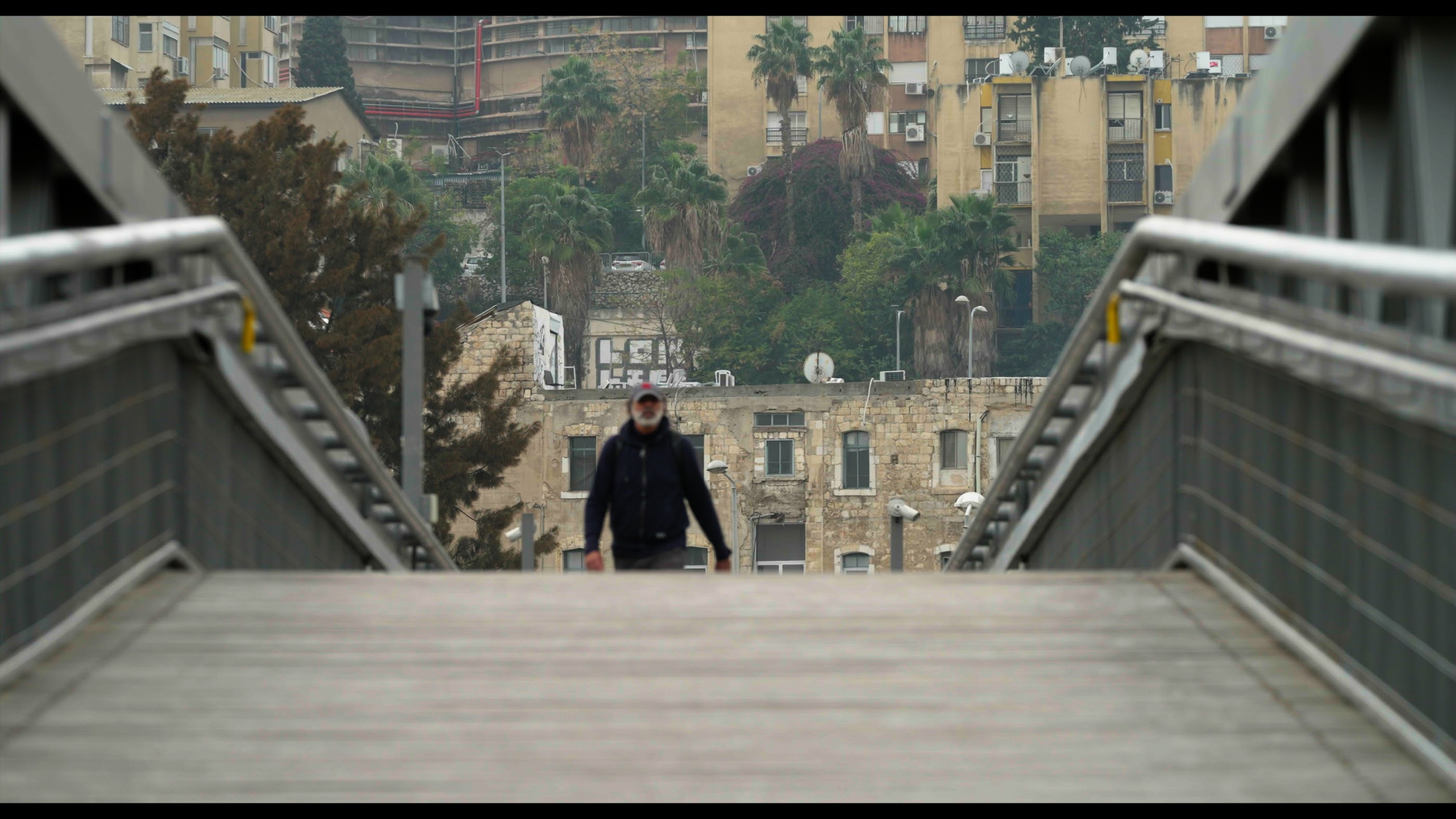
Opinion: Hidden Haifa, How Palestinian collective memory became powerful archival evidence

What do we do with ourselves in the midst of a genocide?
Palestinians in Gaza are being slaughtered in the tens of thousands, while Israeli settlers are burning olive trees in the West Bank and stealing their lands.
Our sacrosanct precincts in the Noble Sanctuary, or Al-Aqsa Mosque, are being desecrated by repulsive Israeli politicians.
Ancient mosques and churches are being destroyed as pages of the Holy Quran are torn and defiled by repugnant thugs in Israeli military uniforms. Our brothers and sisters are tortured and raped in Israeli dungeons, beheaded in their homes, and buried under tonnes of rubble.
It is in this context and mood that Nizar Hassan called me from Nazareth in occupied Palestine to tell me he had just finished a new film he wanted me to see.
In Hidden Haifa (Haifa al-Makhfiyyah), the eminent Palestinian filmmaker visually reclaims Palestine through its mostly deserted streets, empty and abandoned buildings, and old Arabic film posters.
READ MORE: Hidden Haifa, How Palestinian collective memory became powerful archival evidence, opinion by Hamid Dabashi