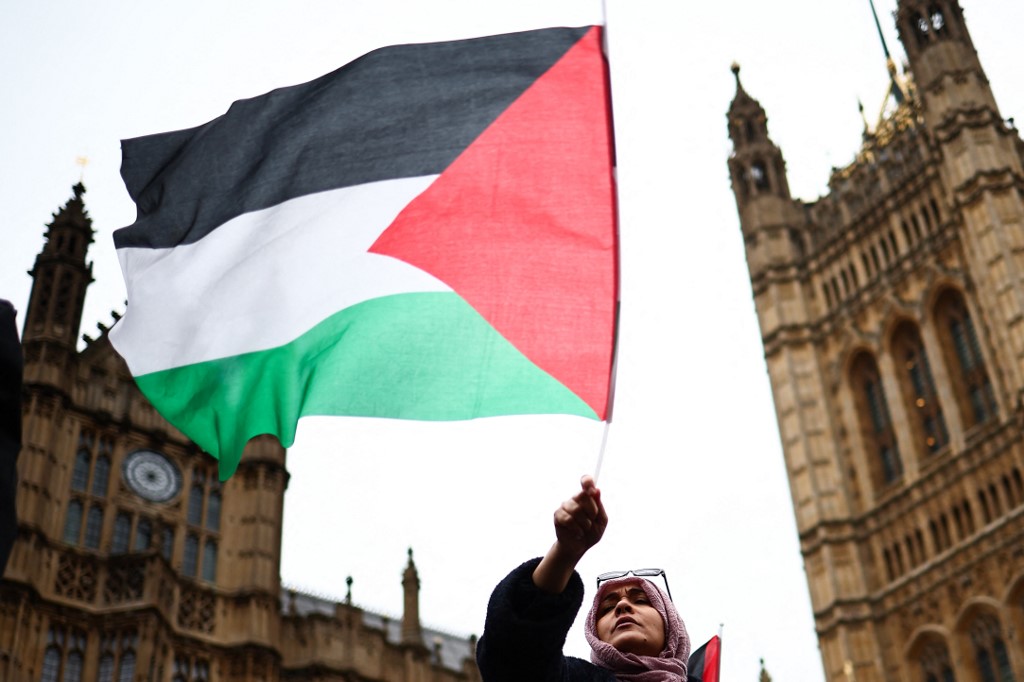
Opinion: The loneliness of grief for Palestinians in the UK

"We store our sorrows in jars, lest the soldiers see them and celebrate the siege." Mahmoud Darwish, The Butterfly’s Burden.
Trauma and grief are deeply affected by the way the wider community responds. Denial, dissociation, or victim-blaming exacerbate trauma and intensify feelings of isolation.
Helplessness, lack of agency and silencing likewise remain key, as does the question of whether victims attain justice and perpetrators are held to account.
Amid the intense and accelerating suffering endured by Palestinians in Gaza, all these factors remain crucial to prospects for recovery.
They are also relevant for the approximately 20,000 Palestinians living in the UK, many with families in Gaza. They either have suffered - or expect at any minute to suffer - unbearable loss; with as many as 40, 50 or more members of their extended families, including children and babies, killed.
Experiencing these horrors at one remove from a place of safety can bring about feelings of extreme impotence as well as guilt and shame at being safe, warm, sheltered and fed.
Helplessness includes being unable to do much beyond phoning and, if lucky, receiving the - never reassuring enough - reply: “We are alive… for now.”
Not having received the worst of news means dreading the moment when the phone’s "ping" heralds catastrophe.
Mourning for dead or missing family members is hardly even possible when in a state of such hyper-alertness about the fate of those still alive. Knowledge of the extreme privations they suffer through homelessness and accelerating levels of starvation and disease creates another level of agony, as does trying to bring family members to the UK, facing indifference and obstruction from the Home Office.
Read more: The loneliness of grief for Palestinians in the UK by Gwyn Daniel