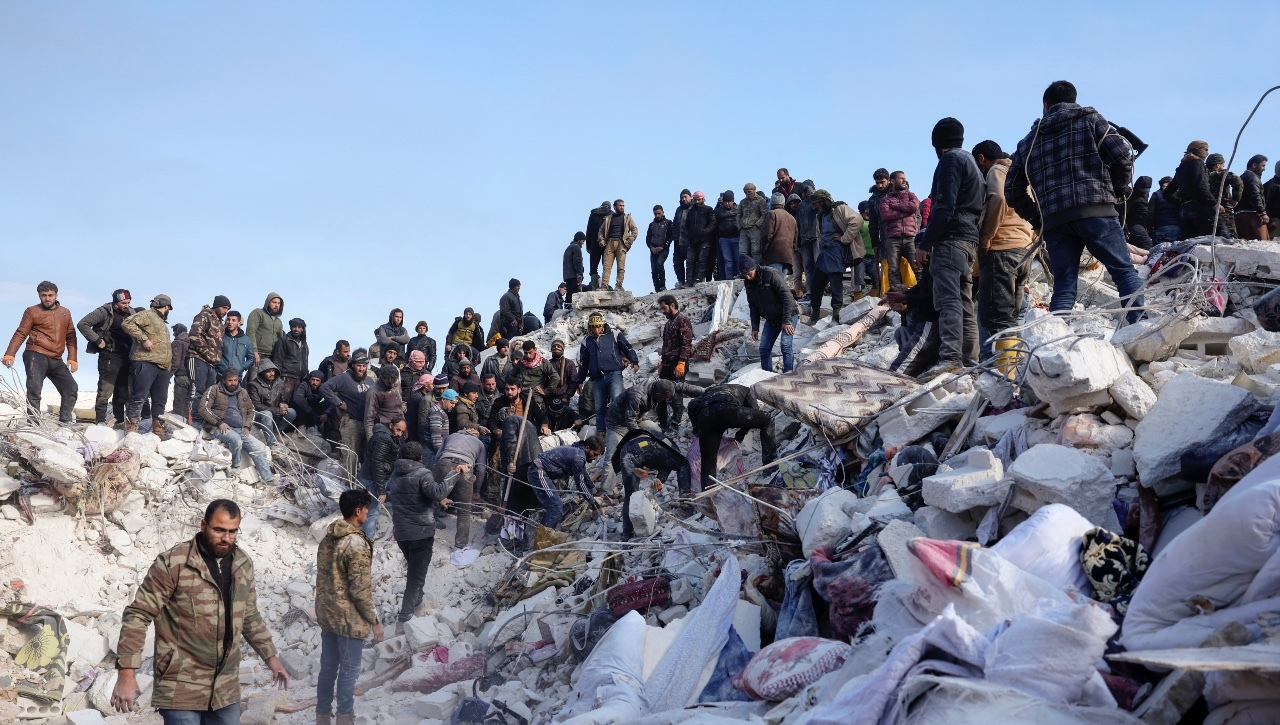

Growing calls to open border crossing for aid to reach Syria

The only international aid corridor from Turkey into Syria has been disrupted because of earthquake damage, compounding an already dire humanitarian situation and laying the groundwork for potential wrangling between the Syrian government and the international community.
The Bab al-Hawa border crossing is the sole lifeline for millions of people in Syria's northwest, as they live in areas the Syrian government does not control. Normally, more than 1,000 truckloads of aid pass through the crossing each month.
The quakes underscore the fragility of getting aid into Syria and have already led to some calls for the US and EU to ease stringent sanctions that have been imposed since the outbreak of war in 2011.
Syria and its Russian backers have gradually managed to shut down other border crossings in Jordan, Iraq and Turkey.
The US and European Union imposed stringent sanctions on Syria following a civil war that started in 2011 but have also carved out substantial humanitarian exemptions.
“The sanctions aren’t hindering our efforts,” Amany Qaddour, regional director of Syria Relief and Development, told MEE, emphasising that getting aid into the northwest was a logistical and capacity-based challenge.
On Monday, Syria's UN ambassador, Bassam Sabbagh, said the current situation called for international donors to work to coordinate efforts with the Syrian government, redirecting aid that moves cross-border via Turkey.
But the US has ruled out changing course. In Turkey "we have a partner in the government; in Syria, we have a partner in the form of NGOs on the ground who are providing humanitarian support,” State Department spokesperson Ned Price said.
Syria earthquake: Growing calls to open border crossing for aid to reach Syria