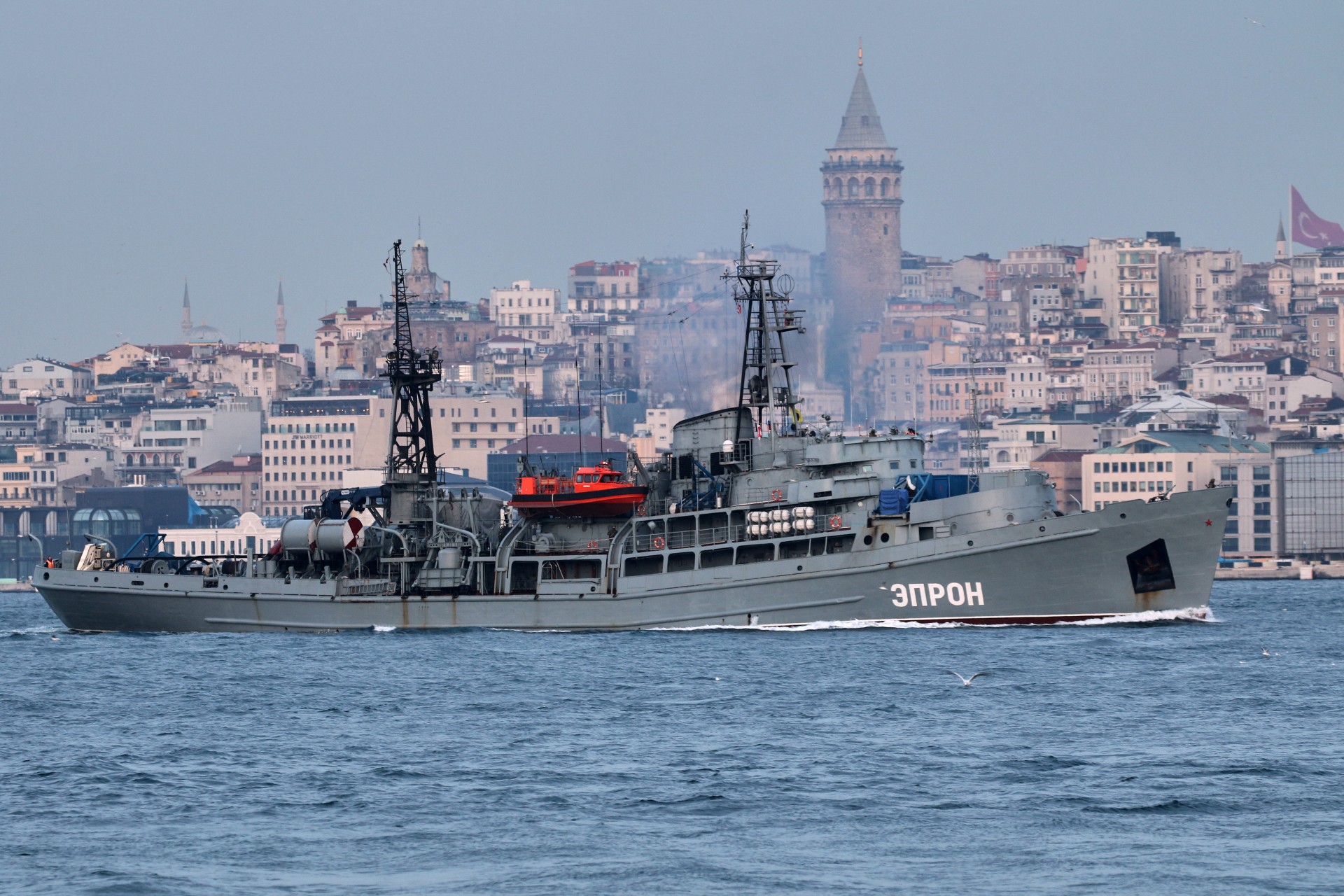
Why Turkey isn't likely to close the Bosphorus following invasion

Soon after Russian troops began attacking Ukraine, Kyiv asked Turkey to close its waterways and airspace to Russia, something you shouldn't expect to see happening anytime soon.
There are a raft of legal and political reasons why Turkey is highly unlikely to respond to the Russian invasion by closing the Bosphorus and Dardanelles waterway that provides access to the Black Sea.
Ankara has complete sovereignty over the straits. Yet it is a party to a legally binding international treaty, the Montreux Convention, that regulates its decision to deny access to the crucial waterways.
Omer Celik, spokesperson for Turkey's ruling AKP, appeared to downplay suggestions that the Russians could be cut off. "Turkey will use its power over the issues that could escalate the situation to establish peace. Every application by different states is judged by their merits and criteria," he said about the Ukrainian request.
The Montreux Convention, which was signed by Turkey, the United Kingdom, the Soviet Union and six other states in 1936, clearly allows warships belonging to the Black Sea countries to sail through the straits without any intervention. The convention only limits the timing and the size of the ships.
Russia-Ukraine war: Why Turkey isn't likely to close the Bosphorus