Israel-Palestine live: Biden urges Egypt, Qatar to press Hamas for hostage deal

Live Updates
Spanish Prime Minister Pedro Sanchez said to Al Jazeera TV on Thursday that the European Union ought to consider whether its strategic partnership with Israel should persist if the EU determines that Israel has violated humanitarian law in its war in Gaza.
"In the case of the EU, the situation would be that there's an open door to have a debate within the European Council in order to see if we continue with this strategic relation or not. But this is something for which we first need to have the assessment of the European Commission," Sanchez told Al Jazeera.
Sanchez also repeated his appeal for a lasting ceasefire in Gaza and for the global community to acknowledge Palestine as an independent state with complete membership in the United Nations.
Egypt had presented a proposal for a ceasefire, but it contained nothing new, a senior Hamas leader said on Thursday.
He added that mediators from the US and Egypt were keen on sustaining the ceasefire efforts, despite acknowledging a significant divide between the conflicting parties.
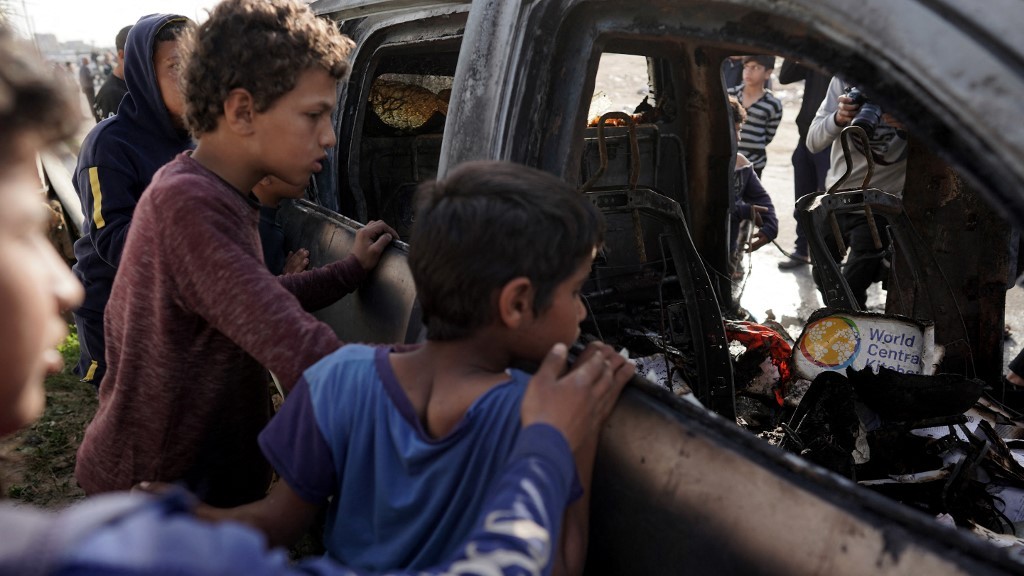
World Central Kitchen and American Near East Refugee Aid (Anera) were the two largest NGOs providing hot meals to starving Palestinians. But Israel's attack on Monday forced them to suspend their work.
Since the beginning of the 7 October war, WCK has provided at least 43 million meals to Palestinians in Gaza through aid delivered by land, sea and air.
It announced the suspension of its work after the killing of its entire operations team in Gaza in three Israeli air strikes on Monday.
On Tuesday, Anera, one of the largest and longest-established aid groups operating in Gaza, announced that it was also pausing its work, as it was no longer feasible for its staff to deliver aid without significant risk to their safety.
From its seven community kitchens in Rafah, Khan Younis, the centre of Gaza, and Jabalia in the north, Anera provided over 22 million meals to families in Gaza prior to 1 April, said Liz Demarest, Anera’s vice president of communications.
“For many, our kitchens were their sole source of sustenance,” Demarest told Middle East Eye.
“We recognise that pausing our operations, along with other organisations, will create critical gaps in relief efforts, particularly in the north, where they are facing famine,” she said. “The ultimate responsibility to prevent starvation in Gaza lies with Israel.”
Read more: How Israel's Gaza aid convoy attack brings Palestinians closer to famine

The Palestine Red Crescent Society posted a statement on X mourning, "Half a year of fear, losses, and displacement," adding that Gaza's healthcare system is "on the brink of collapse" and urging the international community to "take action now to end the suffering in Gaza."
"We cannot afford to wait any longer. Civilians, humanitarians, and medical workers must be protected."
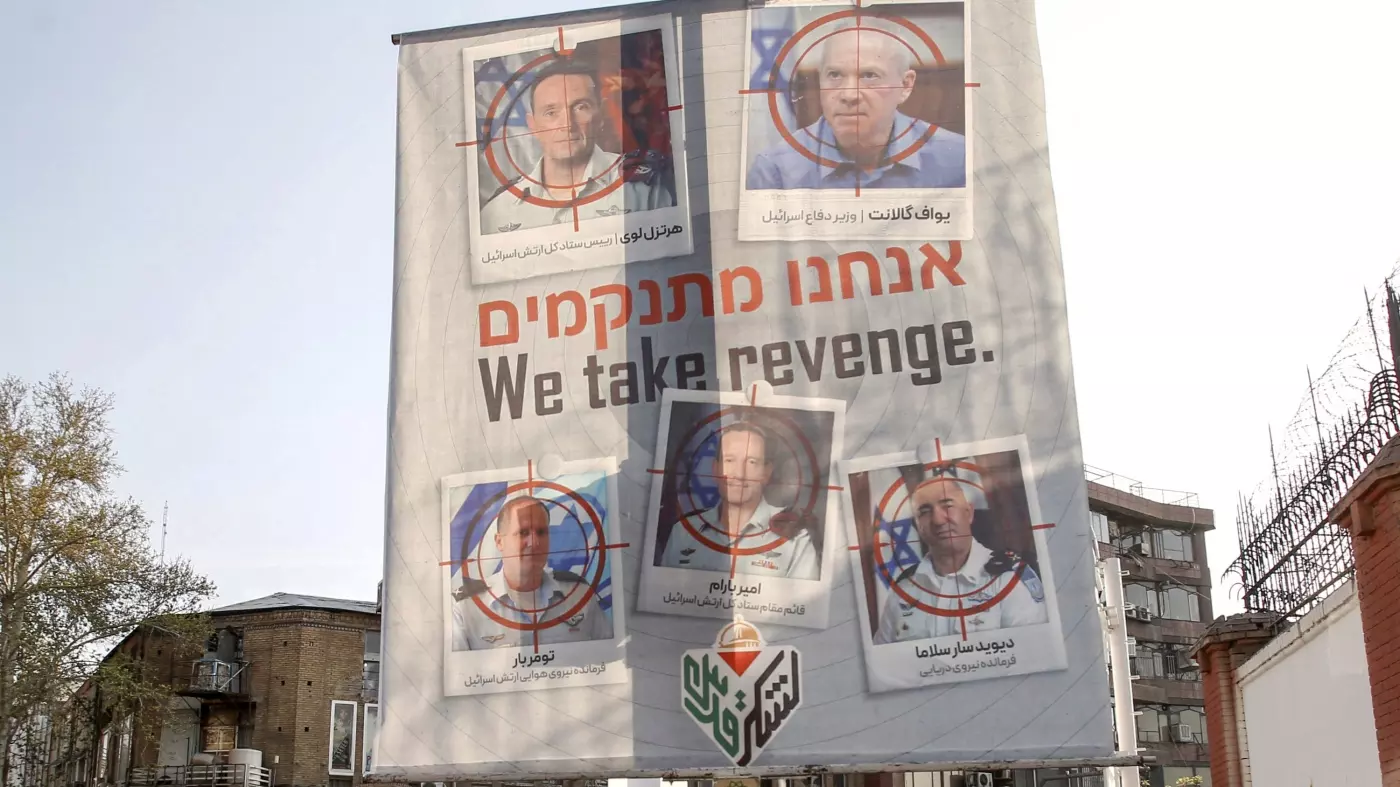
An Israeli army spokesperson has told Israelis that home front guidelines remain unchanged, despite a high military alert following Iran's promise of a reprisal for the Israeli air strike on its embassy in Damascus.
In a post on X, Daniel Hagari said that “There is no need to buy generators, gather food and withdraw money from ATMs.
“As we have done until today, we will immediately update any change, should there be one, in an official and orderly manner.”
The Israeli military is planning to bolster its air defences, including missile systems and intereceptors, mobilise reservists and halt combat leave for soldiers, Israeli media has reported.
The move is thought to be in preparation for retaliation promised by Iran following an Israeli air strike on Iran's embassy in Damascus, according to Israeli media.
On Monday, Israeli Defence Minister Yoav Gallant said that the military is operating "everywhere, every day, in order to prevent our enemies from gaining strength and in order to make it clear to anyone who threatens us – all over the Middle East – that the price for such action will be a big one."
There has been no progress in Gaza ceasefire talks despite Hamas showing flexibility, according to one of its officials.
Osama Hamdan said Prime Minister Benjamin Netanyahu was placing obstacles hindering an agreement, and that the Israeli premier was "not interested" in releasing Israeli captives.
"The occupation government is still evading, and negotiations are stuck in a vicious circle", Hamdan said during a press conference in Beirut on Thursday.
The Israeli military's investigation into air strikes that killed seven aid workers in the Gaza Strip could take weeks, according to a government spokesperson.
"In the coming weeks, as the findings become clear, we will be transparent and share the results with the public," Israeli government spokesperson Raquela Karamson said in a briefing on Thursday.
An Israeli attack on the Iranian embassy in Syria has escalated tensions to unprecedented levels, increasing already high concerns about a potential regional conflict between Iran and Israel.
While Israel has previously targeted and assassinated Iranian generals in Syria within informal compounds, this time it has taken the covert conflict into overt warfare with Iran by striking the embassy, killing commander Mohammad Reza Zahedi and other senior members of the Islamic Revolutionary Guard Corps (IRGC).
Iran’s Supreme Leader Ayatollah Ali Khamenei has vowed a decisive retaliation, warning Israel that it will regret the attack.
Iran's approach in confronting Israel's aggression has been characterised by restraint, until now. However, Tehran is now facing both increasing domestic pressure to respond, given the significance of the strike, and the dilemma of how to retaliate without risking an all-out war with Israel and yet maintaining its image of deterrence.
"Iran has thus far refrained from direct retaliation, fearing it would escalate into a broader conflict involving the US, precisely what Tel Aviv desires. Iran is cognisant of this and is wary of falling into [Israeli Prime Minister] Benjamin Netanyahu's trap," a reformist analyst told Middle East Eye, on condition of anonymity.
Read more: How will Iran respond to Israel's attack on its embassy in Damascus?
Lebanon's Prime Minister Najib Mikati has declared an agricultural disaster in southern Lebanon due to "massive destruction" caused by Israeli bombardment.
He made the comments during a cabinet meeting on Thursday, following meetings with several foreign ambassadors in which he informed them of the situation south of the country and the support Lebanon needs.
Mikati said that 800 hectares of farmland were "completely damaged," 340,000 heads of livestock killed and 75 percent of farmers in the south had completely lost their source of income.
He added that around 313 people had been killed since the war began, 1,000 wounded and 100,000 internally displaced people.
Alan Duncan, a British peer and former Conservative foreign minister, has called for Security Minister Tom Tugendhat to be sacked over comments he has previously made about illegal Israeli settlements.
Speaking to LBC radio on Thursday, Duncan said that it was time to "flush out extremists... some of whom are at the very top of government," who do not condemn settlements and are therefore "not supporters of international law".
He said Lord Staurt Polak and Lord Eric Pickles, senior figures in Conservative Friends of Israel, should be removed from the House of Lords for "exercising the interests of another country".
"The Conservative Friends of Israel has been doing the bidding of Netanyahu, bypassing all proper process of government to exercise undue influence at the top of government," Duncan said.
On Tugendhat, he said that the minister condemned the UN Security Council for its official criticism of Israel's building of settlements in occupied Palestine.
"How can you have a security minister in the British government who does not believe in international law, when all this is going on? I think he should be sacked."
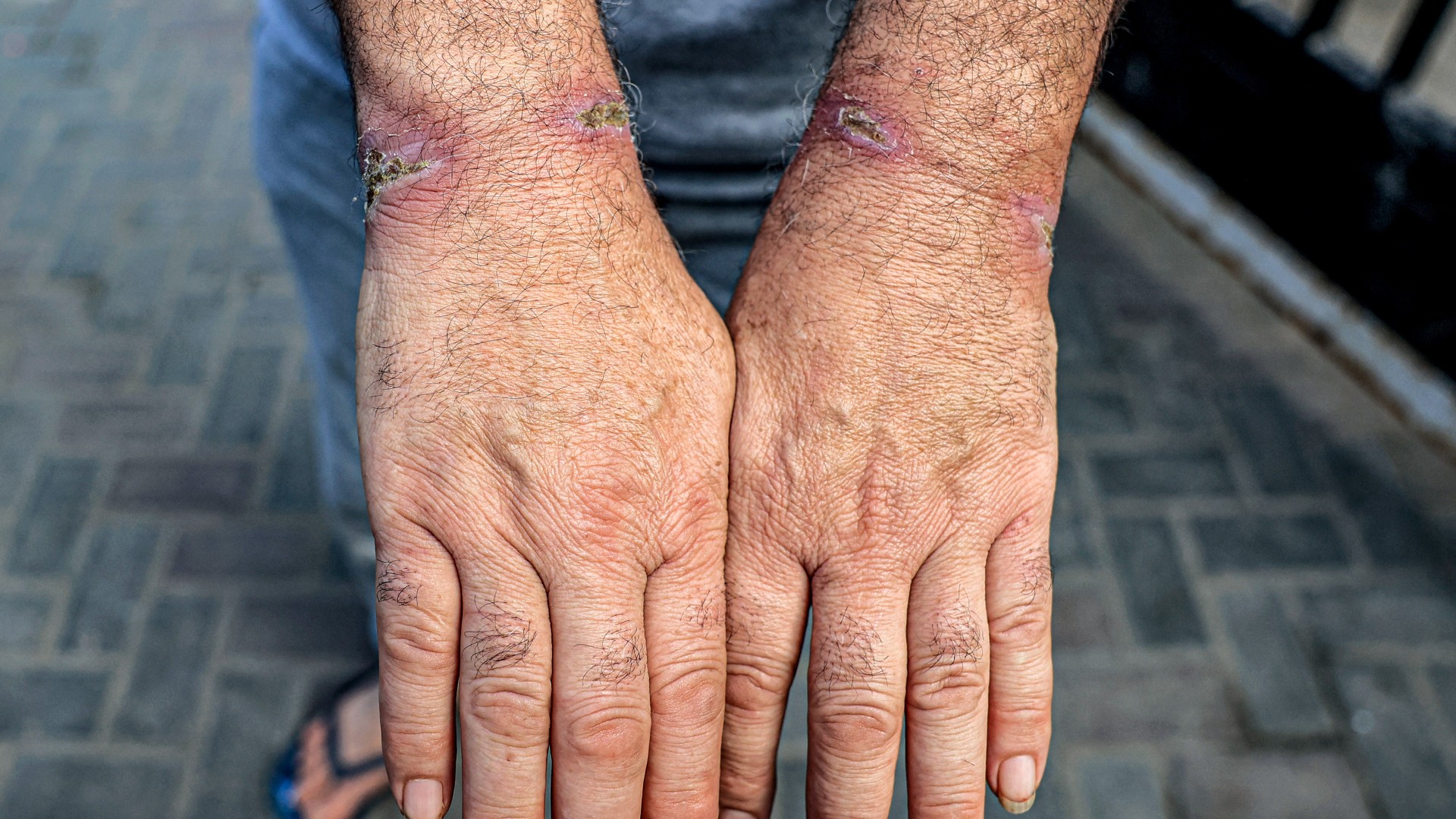
A doctor at an Israeli field hospital where Palestinians detained from Gaza are held has described harrowing details of conditions, including limb amputation due to handcuff injuries and prisoners forced to defecate in nappies.
The unnamed doctor working at the Sde Teiman facility, between Gaza and Bersheeba in the Negev desert, wrote about the experiences in a letter to Israel's defence minister, health minister and the legal adviser to the government. The letter was reported on Thursday by Haaretz.
Sde Teiman was established following the outbreak of war last year, as a temporary facility to detain those accused of participating in Hamas's attack on southern Israel on 7 October.
Many of those detained have no connection to Hamas, and have been released after interrogation.
The doctor said that the hospital at the facility does not receive a regular supply of medicine and equipment.
They also said that all patients are handcuffed on all four limbs for the entire day, with their eyes covered, and fed with a straw, regardless of how dangerous they are. Many are forced to defecate wearing a nappy.
Read more: Israeli doctor at detention facility says grim conditions 'break the law'
Egyptian activists are reporting that several journalists and activists have been arrested by security forces following the latest solidarity protest with Gaza, which took place yesterday in front of Egypt's journalists syndicate.
So far, six people have reportedly been arrested, with some of them appearing in front of Egypt's State Security Prosecution.
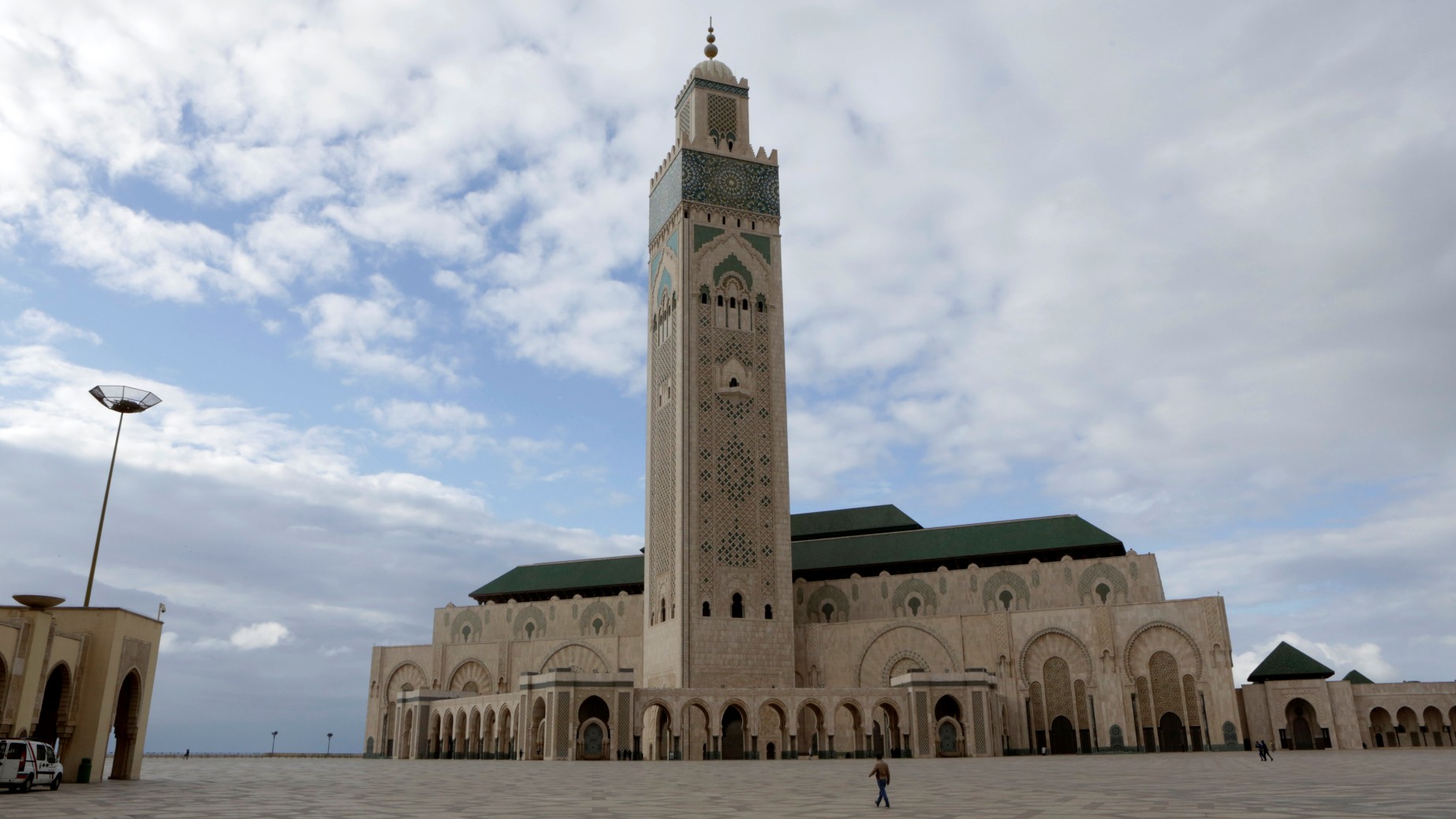
For nearly a decade, whenever the call to Isha prayer has rung out, Abdul Ahad* has made a beeline for the front row at his local mosque, in particular the "sweet spot" just to the right of the imam.
Praying in the first saff (row) is an extremely rewardable act in Islam, he says, and performing congregational prayers in such a place during the holy month of Ramadan is even more so in the sight of God.
But this year, the 27-year-old says his prayer routine has changed drastically - and it's not because of a crisis of faith.
Since the war in Gaza erupted, Abdul Ahad, like many other young Moroccans, has been outraged by his country's reluctance to condemn Israel's deadly offensive, which has claimed more than 32,000 lives and displaced nearly all of the enclave's population.
Anger, he says, has also grown against the religious establishment over its refusal to express support for those suffering in Gaza and engage in one of the easiest forms of solidarity: prayers and supplication.
READ MORE: Young Moroccans are turning away from mosques over Gaza silence
Polish Prime Minister Donald Tusk said that Israel should apologise and pay compensations to the family of the slain Polish aid worker Damian Sobol, who was killed along with six others in an Israeli strike on a World Central Kitchen (WCK) convoy in Gaza on 1 April.
“We will expect … an immediate explanation of the circumstances and compensation for the victims’ relatives,” Tusk said at a news conference.