Israel-Palestine live: US vice president calls for ‘immediate’ six-week ceasefire

Live Updates
A "unity march" led by families of Israeli hostages gathered up to 15,000 people while heading towards its final destination, Jerusalem.
The march started in Re'im, at the site of the Nova music festival which was attacked by Hamas on 7 October last year, initiating the present Israel-Gaza conflict.
It has now been more than one month since the International Court of Justice (ICJ) delivered an interim ruling calling on Israel to take measures to prevent acts of genocide in Gaza.
The provisional measures were announced on 26 January, weeks after South Africa had taken Israel to the Hague-based court over accusation of genocide against Palestinians.
The court did not order Israel to halt its military operations in Gaza, one of South Africa's key demands. It also did not rule on whether Israel was committing genocide, and will likely not do so for some time.
However, it did rule on several provisional measures, voted for by the vast majority of the court's seventeen judges.
Over the past month, actions taken by Israel in Gaza appear to defy several of the provisional measures. Middle East Eye takes a look below.
READ MORE: How Israel defied ICJ provisional measures, one month on


NBC News quoted American officials saying the US had carried out an operation dropping 66 aid packages, containing 38,000 meals, into Gaza.
Aid organizations say that air-dropping operations fall short of supplying the required amount of aid, especially in northern Gaza.
Since the war in Gaza began in October, Mohammed Hamed has not touched a drop of his favourite soft drink, Mountain Dew.
"I used to drink Mountain Dew almost every day, a day would not go without it, but now I have stopped," he told Middle East Eye.
As an Omani who is committed to boycotting western goods over the suppport of the US and its allies for Israel in its war on Gaza, he now buys Thai drinks and Kinsa, a Saudi drink brand.
He has also changed his shopping habits, and now boycotts western supermarkets in Oman in solidarity with the Palestinians.
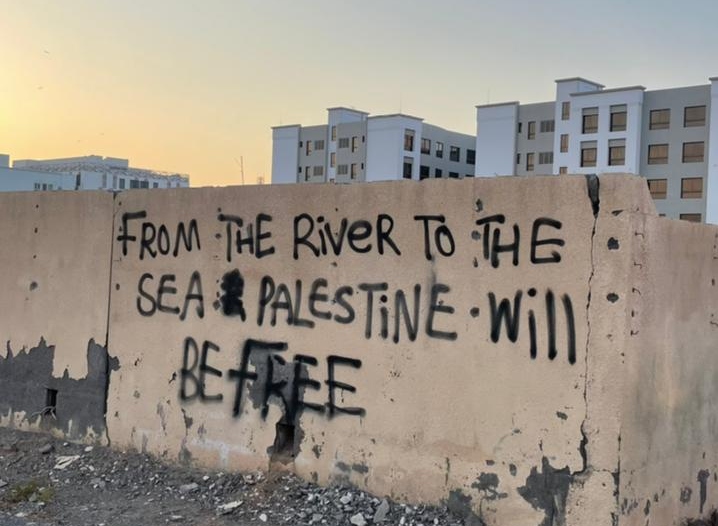
The boycott campaign in Oman since the start of the Israeli war on Gaza has led to a drop in sales for major US companies including McDonald's and Starbucks, and the emergence of alternative consumer brands sourced from non-western and Muslim countries.
READ MORE: Omanis boycott western brands and fast-food chains as many turn against West
Al Jazeera's correspondent in Gaza City said the death toll due to hunger has risen to 13 children in the Kamal Adwan Hospital.
Lebanon's Foreign Minister Abdallah Bou Habib said his country is ready for indirect negotiations with Israel "because the alternative is the expansion of the war into a regional war".
Gaza's health ministry says an Israeli air strike “targeting displaced persons’ tents” killed at least 11 people, including children, and injured over 50 near the Emirati Maternity Hospital in Rafah City.
Al Jazeera reports that the head of the paramedic unit at the hospital, Abdel Fattah Abu Marhi, was killed in the strike.
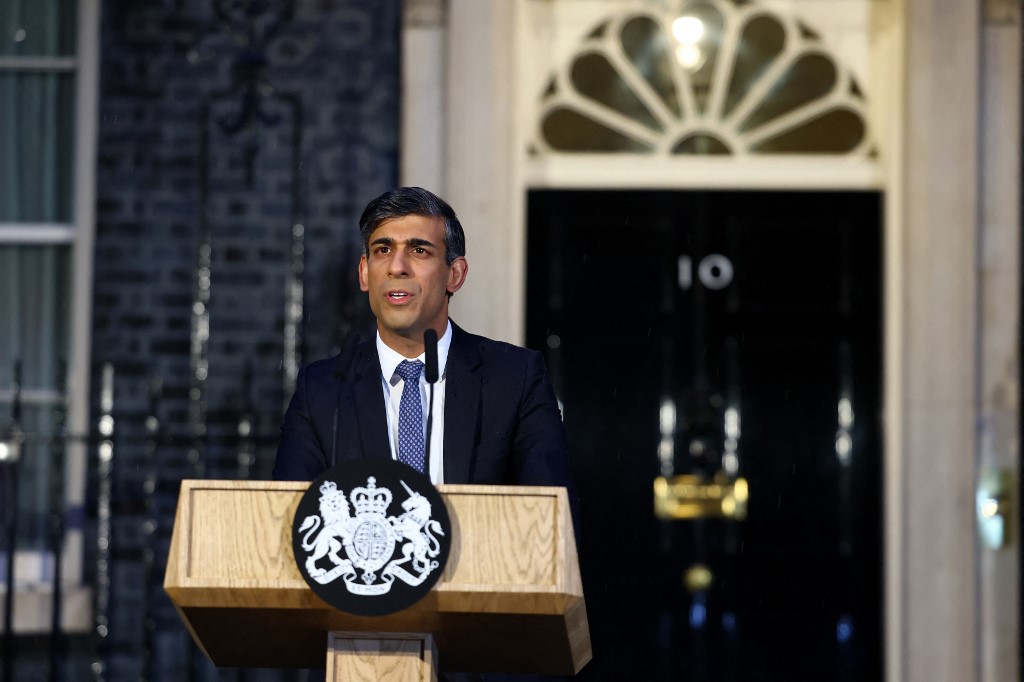
Pro-Palestine groups have hit back at UK Prime Minister Rish Sunak after he claimed Gaza demonstrations were indicative of "extremists" undermining British democracy.
In an impromptu speech on Downing Street on Friday, Sunak said the UK's "streets have been hijacked by small groups" that are threatening to "tear us apart", calling on the police to adopt a tougher stance toward Gaza protests.
"We have seen a shocking increase in extremist disruption and criminality. What started as protests on our streets has descended into intimidation, threats, and planned acts of violence," he said.
The speech, which came a surprise to many, was condemned by opposition politicians and campaigners, who said it appeared to threaten restrictions on the right to protest.
READ MORE: Pro-Palestine groups and politicians hit back at Rishi Sunak's 'extremism' speech
French Foreign Minister Stephane Sejourne says Israel is the party responsible for the dire conditions that led to the aid convoy attack in Gaza City in Thursday.
Speaking to French newspaper Le Monde, Sejourne said: "The humanitarian crisis in Gaza has been catastrophic for several weeks, even months. And this creates indefensible and unjustifiable situations for which Israelis are responsible."
He called on Israel to listen, as he says his government's demands to increase passage points and aid deliveries have not been met by Israeli authorities.
"Responsibility for blocking aid clearly lies with Israel," he said.
Delegations from the Israeli government and Hamas are planning to meet in Cairo on Sunday for an indirect round of negotiations.
Al Jazeera Arabic says the talks will focus on a potential truce and exchange of Israeli captives for Palestinian prisoners.
The Times of Israel reported that the Israeli delegation's presence depends on Hamas's response to the hostage deal outline.
Israeli forces reportedly shelled a group of people trying to pick herbs to deal with the extreme starvation in Beit Hanoun in northern Gaza, killing three civilians and injuring seven.
Two survivors from Thursday's Gaza City aid-seekers massacre shared their testimonies with Middle East Eye's correspondent in Gaza City.
Mustapha Hassan said he and his relatives waited from 6pm the night before as news of an aid truck approaching came to light.
"At around 3:40am, a tank and a drone approached people and started shooting at random," he said. "The shooting and shelling were insane, a level I had never witnessed since the beginning of the war."
Hassan said the tank came back 15 minutes later with aid trucks, which people rushed towards. He was able to get one flour bag before Israeli forces started shooting again.
"Tens of young men fell in front of me in seconds," he said.
He rushed to the bus that had transported him and his relatives to the al-Rasheed roundabout, only to find it filled with injured people being transported to hospitals.
"I put the flour bag in the bus and started helping them," he said. "We tried to only get those injured in the bus, because there was not enough room to put the martyrs in."
Hassan was the only one amongst his relatives who was able to get a bag. The violence at the scene was too strong for him to try going back for more.
"When I got home and held the bag of flour to give it to my mother, I started crying after seeing that a big part of the bag was red due to the blood of the injured who, like me, tried to provide food for their families."
Ibrahim Ayman, 22, was also at the scene. He said people kept trying to reach the aid despite constant shooting, which killed many people.
Ayman and his friend hid in a partially damaged apartment, fearing that Israeli forces might find them.
"In front of the building my friend and I were hiding in were at least 20 martyrs, along with several injured people bleeding and screaming from pain," he told MEE.
When he reached his home, his parents were breaking down, worried that he might have been killed.
"After the horror I saw today, I will not go get aid again," he said. "Even if my family and I will die of hunger."
In contrast, Hassan said he will keep on going to the streets whenever he hears of an aid truck arriving.
"Because death from hunger is equivalent to death from gunfire," he said.
Hezbollah announced the killing of five of its members this morning in separate Israeli air strikes on southern Lebanon, bringing the total death toll of Hezbollah fighters to 227 since the start of the Gaza war.
Since the Second World War, Britain has remained the unflinching junior partner of US imperialism. The latest Anglo-American bombing campaign in Yemen is no exception.
British aggression towards Yemen, however, predates US designs. It is rooted in the twin practices of piracy and colonialism on which the British empire itself was built.
The current attitudes of the British and the Yemenis towards each other are still shaped by the legacy of this violent history. Its shadow looms large over the strategies employed by western imperialism to conduct maritime warfare in our times. The lessons of this history inform contemporary Yemeni resistance.
Opinion by Hicham Safieddine
READ MORE: Rea Sea attacks are rooted in western colonialism and piracy

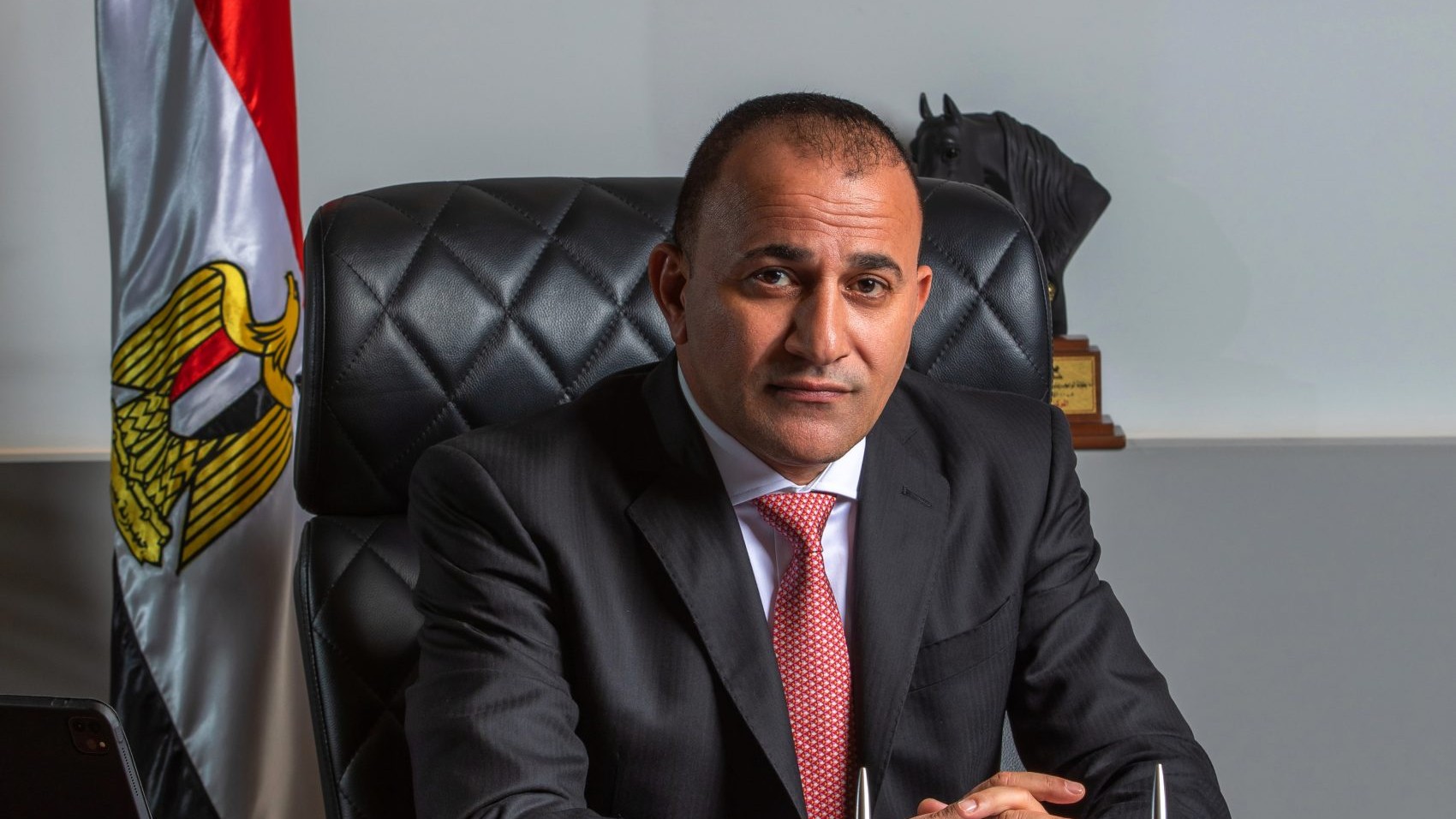
About 15 years ago, Sinai tribal leader Ibrahim Organi was in jail, suffering what he described as "severe torture" by senior police officers.
The same man, now 50 years old, is currently considered one of the closest allies to President Abdel Fattah el-Sisi and the Egyptian military. He owns a gigantic business empire spanning construction, quarry mining, travel, hospitality and private security.
Since the Gaza war broke out on 7 October, during which Israel has imposed a strict blockade on the Palestinian enclave, Organi has wielded significant influence on the movement of people and goods between Gaza and neighbouring Egypt through his companies.
"Never in the history of Egypt has there been a militia so promoted and publicised like Organi's," said Mohannad Sabry, a security analyst and Sinai expert.
Two Sinai tribal sources downplayed Organi's potential as a challenger of the state. "For us, he is a front for the state," said Masaad Abu Fajr, from the Romaylat tribe. "He has committed war crimes, but his actions reflect the state, not the Sinai residents."
The state policy, according to Sabry, is to "make money out of the dire situation in Gaza".
"The state is outsourcing this business to someone who can do it on their behalf. Organi is a front. He's a name. It could be replaced on any given day," he said.
READ MORE: Meet Ibrahim al-Organi, the Sinai tribal leader under scrutiny over Gaza war