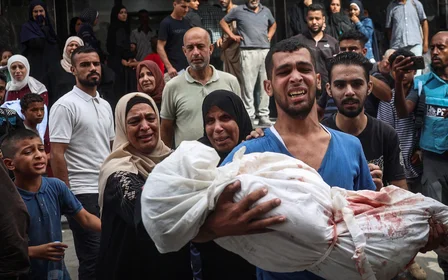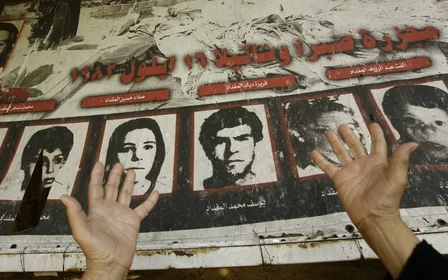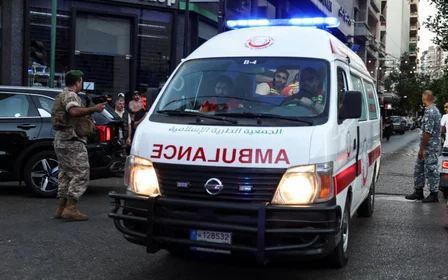

Live: Israel ramps up strikes on Gaza after Iran attack

Live Updates
Iran's leadership issued carefully crafted statements following Israel's assassination of Hezbollah leader Hassan Nasrallah, with conservatives and moderates bitterly divided on how to respond to the killing.
Shock waves from Friday's air strike that killed Nasrallah reverberated across Iran over the course of the weekend, with ordinary Iranians fearing an all-out war between the Lebanese movement and Israel that could engulf the Islamic Republic.
Initially, Iranian news websites were hesitant to report on the assassination, with many having to turn to the Telegram messaging app, known for its lax content moderation policies, to find out the latest information on leader’s fate.
Then, early on Saturday, Hezbollah confirmed that its powerful and long-serving leader was killed in Friday's strikes on Beirut.
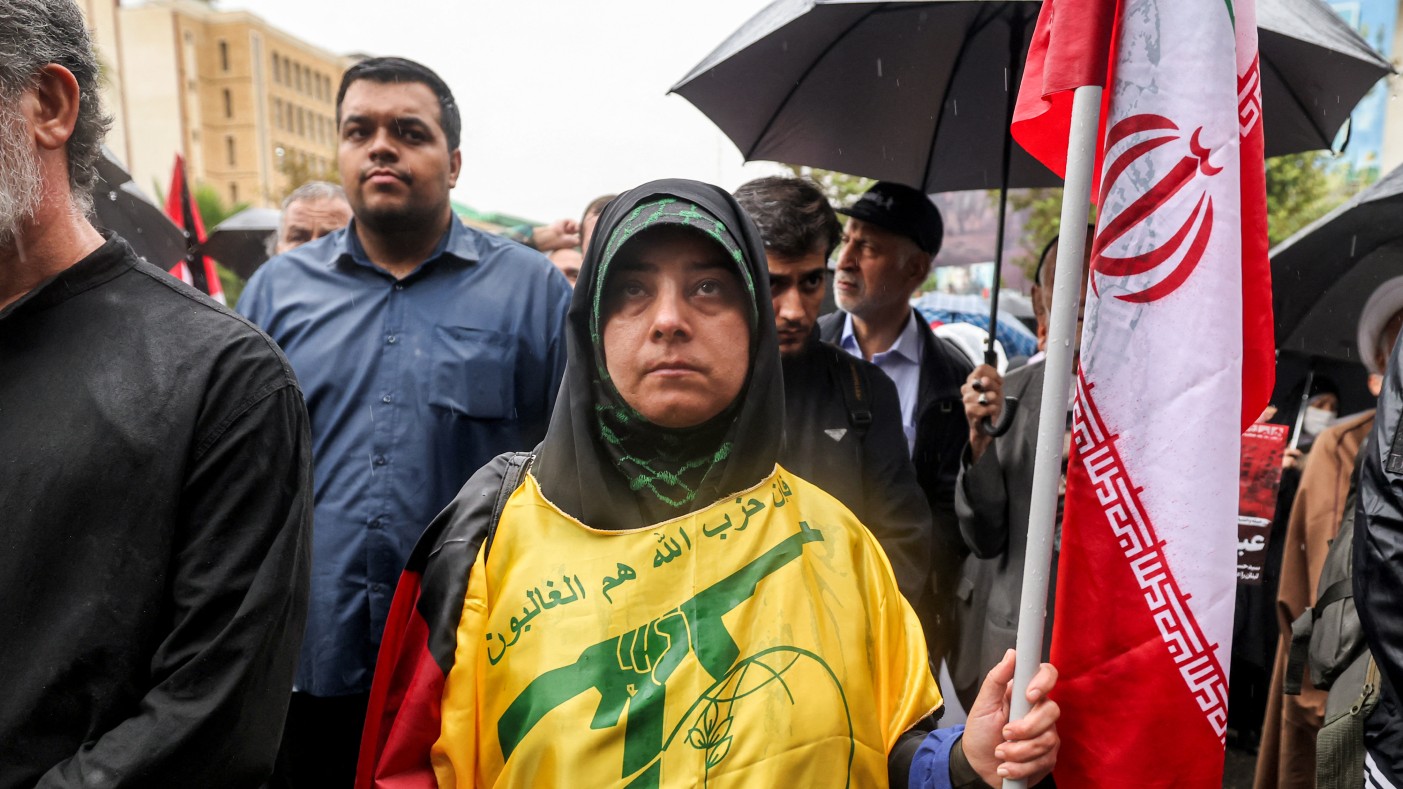
Both Supreme Leader Ayatollah Ali Khamenei and President Masoud Pezeshkian issued carefully worded statements over the killing, with neither indicating whether Tehran would directly become involved in the conflict.
Read more: How will Iran respond to the assassination of Hezbollah leader Hassan Nasrallah?

The Biden administration is worried that Iran plans a retaliation attack on Israel in the wake of Israel’s killing of Hezbollah leader Hassan Nasrallah and is working with Israel on defences, a US official told CNN Sunday night.
The official noted that joint defences are being set up to prevent an attack, along with adjustments to the US military posture.
Saudi Arabia said it is following with "great concern" the developments taking place in the Republic of Lebanon Monday, calling for the country's "sovereignty and territorial integrity" to be respected.
The statement marked the Kingdom's first comment since Israel's killing of Hezbollah chief Hassan Nasrallah but making no mention of him.
#Statement | The Kingdom of Saudi Arabia is following with great concern the developments taking place in the Republic of Lebanon, and stresses the need to preserve Lebanon's sovereignty and territorial integrity. pic.twitter.com/N5Uvbj429I
— Foreign Ministry 🇸🇦 (@KSAmofaEN) September 29, 2024
Hamas said that its leader in Lebanon Fateh Sherif Abu el-Amin was killed along with his wife, son, and daughter, in a strike that targeted their house in a Palestinian refugee camp in the southern city of Tyre in the early hours of Monday.
"Fatah Sharif Abu al-Amine, the leader of Hamas... in Lebanon and member of the movement's leadership abroad" was killed in a strike on his "home in the Al-Bass camp in south Lebanon", a statement by the group said.
Good morning, Middle East Eye readers,
Here are the latest updates from Israel's wars in Gaza and Lebanon:
-
An Israeli strike early Monday hit an apartment building in the Kola district of Beirut, killing four people and marking the first Israeli strike within Beirut’s city limits in the escalating hostilities, AFP reported citing a Lebanese security official.
-
The Palestinian group, the Popular Front for the Liberation of Palestine (PFLP), said three of its leaders were killed in the strike that targeted Beirut's Kola district.
-
The Israeli military stated that its fighter jets launched fresh strikes in Lebanon's Bekaa region. At least five people were killed following Israeli strikes in the town of Sahmar in the western Bekaa Valley, according to Al Jazeera.
-
Israeli forces arrested five men in the occupied West Bank city of Nablus during a raid on the camps, Wafa reported.
-
Israeli airstrikes killed two people at Abu Jaafar School, which was sheltering displaced individuals in northern Gaza, and two others — a woman and her child — in Deir el-Balah, Wafa News Agency reported.
Our live coverage from Gaza will shortly be closing until tomorrow morning.
Here are some of the day's key developments:
-
At least 41,595 people have been killed and 96,251 wounded in Israeli attacks on Gaza since October of last year, according to the Palestinian health ministry
-
Medical sources reported to Al Jazeera that at least 28 Palestinians have died across the Gaza Strip since dawn today
-
Children in northern Gaza came together to collect donations in support of Lebanon, singing songs of solidarity and waving Lebanese flags
-
The Lebanese health ministry has reported that Israeli air strikes on Sunday killed at least 109 individuals and left 364 others wounded across the country
-
Israeli attacks may have forced up to 1 million people to flee parts of Lebanon, potentially triggering the worst displacement crisis in the country's history, Prime Minister Najib Mikati said on Sunday
-
Fourteen medics have been killed over two days of Israeli strikes in eastern and southern Lebanon, as well as in Beirut, the Lebanese health ministry said in a statement on Sunday
-
Pope Francis criticised Israeli attacks in Lebanon that go "beyond morality" on Sunday. His comments came in response to questions about Israeli air strikes that killed Hezbollah leader Hassan Nasrallah, along with civilians
-
Lebanon’s health ministry reported that an Israeli air strike on the southern city of Ain el-Delb killed at least 24 people
-
The Israeli military confirmed it carried out air strikes on Yemen's port city of Hodeidah. The attack involved "dozens of air force aircraft", according to an army statement
-
Republican Senator Lindsey Graham, an ally of both Donald Trump and Benjamin Netanyahu, warned during an interview on CNN that Iran might decide "it's better to have a nuclear weapon" after witnessing the damage to its regional allies, Hezbollah and Hamas
The UN Refugee Agency (Unhcr) has described the situation for civilians impacted by Israeli air strikes in Lebanon as "dire."
In a post on X, the agency revealed that more than 70,000 people have fled the country since the escalation began.
Earlier, Lebanese Prime Minister Najib Mikati had noted that there could be nearly 1 million internally displaced people within Lebanon itself, as many flee Israeli bombardments across various regions.
The Lebanese health ministry has reported that Israeli air strikes on Sunday killed at least 109 individuals and left 364 others wounded across the country.
Hezbollah has refuted media claims that they have chosen Hashem Safieddine as a successor to Hassan Nasrallah as their chief.
In a statement, the group denied the reports circulating in the media, clarifying that no such decision had been made regarding leadership.
The Ministry of Public Health’s Emergency Operations Center reported that Israeli air strikes over the past 24 hours targeted towns in Lebanon’s Bekaa region, resulting in nine deaths and 42 injuries.
The strikes caused significant damage and casualties across the area, with emergency responders working to provide aid to those affected.
The Lebanese Ministry of Public Health has reported that Israeli air raids in the southern district of Bint Jbeil resulted in five deaths.
Three individuals were killed in the town of Aita al-Shaab, while two more lost their lives in as-Sawana, both located within the Bint Jbeil district.
The ministry also noted that 10 others were injured across nearby towns due to the strikes.
Senator Mark Kelly, chair of the Senate Armed Services Airland subcommittee, has publicly confirmed that Israel used a US-manufactured one ton Mark 84 series bomb in the air strike that killed Hezbollah leader Hassan Nasrallah. This statement marks the first official acknowledgment regarding the specific munition deployed in the operation.
Speaking on NBC, Kelly said, "We see more use of guided munitions, JDAMs, and we continue to provide those weapons. That one ton bomb that was used, that's a Mark 84 series bomb, to take out Nasrallah."
The bomb, known for its substantial destructive capacity, has drawn criticism from those concerned about its use in densely populated areas. Critics argue that such powerful weapons pose unacceptable risks to civilians and should not be used in urban or densely inhabited regions.
Niku Jafarnia, a Yemen researcher at Human Rights Watch (HRW), stated on X that 80 percent of humanitarian aid to Yemen flows through the ports of Hodeidah, Ras Isa, and as-Salif.
Israel recently conducted air strikes on Hodeidah and Ras Isa, resulting in at least four deaths.
“The majority of [Yemen’s] population suffers from hunger,” Jafarnia noted. He added that Israel’s attack on the port of Hodeidah in July could be classified as a potential war crime, according to an HRW report, due to the “humanitarian significance” of the targeted locations.
80% of aid in #Yemen enters through Hudaydah, Ras Issa, + Salif ports. The majority of the population suffers from hunger. @hrw found that Israel's last attack on Hudaydah port (in July) was possibly a war crime because of the humanitarian significance. https://t.co/hip6GrpNef. https://t.co/xHesQLSMzg
— Niku Jafarnia (@NikuJafarnia) September 29, 2024
Behind the arguments put forward by Israel to justify its deadly escalation in Lebanon lie strategic objectives.
The war of attrition that Hezbollah has imposed over the past 11 months has exhausted Israel on military, economic, and psychological fronts.
Israeli, American, and western experts have repeatedly highlighted this situation since the Lebanese Shia party opened the Lebanese-Israeli front on 8 October 2023.
In recent weeks, Israel has managed to shift the balance of power through a series of operations that culminated on 27 September with the assassination of the party's Secretary-General, Hassan Nasrallah, along with an unknown number of political and military leaders.
Read more: Israel's true objective in Lebanon: Dismantling Hezbollah’s ballistic arsenal

Iranian President Masoud Pezeshkian stated that the assurances given by American and European leaders to establish a ceasefire in return for Iran's non-response to the killing of Ismail Haniyeh, the head of the political bureau of the Hamas, were outright lies, according to a report by the Associated Press.