Live: Israel ramps up strikes on Gaza after Iran attack

Live Updates
Israeli forces arrested an elderly couple during a raid on the town of Azzun, east of Qalqilya, in the occupied West Bank, according to the Wafa news agency.
The Israeli military also conducted a raid in the village of Arrana, northeast of Jenin, leading to clashes with Palestinian resistance groups.
A Palestinian man was shot in the abdomen during the confrontation and has been hospitalised. His condition is reported to be moderate.
Good morning Middle East Eye readers,
Here are the latest updates from the Israeli wars in Gaza and Lebanon:
- Israeli airstrikes have killed 92 people and wounded 153 others in Lebanon over the past 24 hours, bringing the death toll to over 700 since Monday
- Despite increasing calls for de-escalation, Israeli Prime Minister Benjamin Netanyahu has vowed to continue “full force” attacks against Hezbollah until it stops firing rockets across the border
- The White House claims that a US-led international call for a ceasefire in Lebanon was “coordinated” with Israel, even though Israel has rejected the truce and committed to ongoing military action
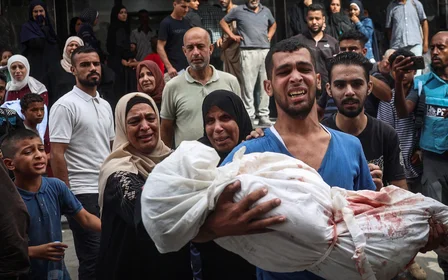
- In Gaza, Israeli forces targeted the Hafsa al-Faluja school in northern Jabalia, killing at least 15 Palestinians.
- A total of 36 people have been killed in Gaza in the past 24 hours
- Meanwhile, Israel is poised to receive an $8.7 billion military aid package from the US, despite its disregard for international demands for a ceasefire in both Gaza and Lebanon
Hello Middle East Eye readers. On Thursday, Israel again intensified its air strikes across Lebanon, after Prime Minister Benjamin outright rejected a US-French proposal for a temporary truce between Israel and Hezbollah.
Israel began again to attack the southern Beirut suburbs with air raids, killing another senior Hezbollah commander.
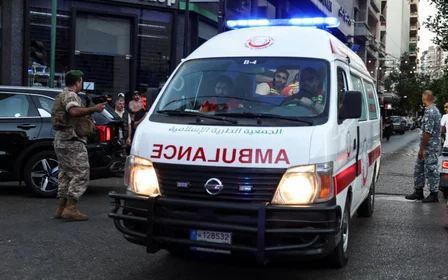
There are different reports regarding Thursday's death toll inside Lebanon, but roughly speaking around 90 people were killed by Israeli strikes, while more than 150 were injured.
The Biden administration is continuing to push for a dialogue with Israel to push its truce proposal, while Israel's air force chief has said that he is preparing for the possibility of aiding Israeli ground forces in the advent of an invasion of Lebanon.
Since Monday, more than 700 people in Lebanon have been killed by the Israeli air strikes, while the Lebanese minister put the number of displaced people at around 250,000.
Hezbollah continued to respond with volleys of rockets at Israeli military installations and settlements. It's unclear how much damage those attacks have caused.
Here's what else you need to know from today's developments:
-
Hezbollah confirmed that Muhammad Hussein Surur, a commander of the group's aerial units, was killed by an Israeli air strike in Beirut's southern suburbs Thursday.
-
A missile was fired towards Tel Aviv from Yemen, and was intercepted by Israel's military. This is the second missile attack on Israel from Yemen this month.
-
A major Israeli air strike on a school in the Jabalia refugee camp in Gaza killed 15 people.
-
Another Israeli strike targeting a residential building in the Jabalia refugee camp in northern Gaza killed four people — a man, his wife and their two children with disabilities.
-
Norwegian police issued an international search request for a man linked to the sale of pagers to Hezbollah that exploded last week.
-
Israeli Prime Minister Benjamin Netanyahu reversed his position regarding a temporary truce agreement with Lebanon's Hezbollah, citing political pressure from his government, according to a Haaretz report.
-
Israel said it secured an $8.7bn aid package from the US to support its military. The package includes $3.5bn for essential wartime procurement and $5.2bn designated for air defence systems including the Iron Dome and an advanced laser system. MEE exclusively reported that Israel had submitted the request package on Tuesday.
The Lebanese movement confirmed that Muhammad Hussein Surur, a commander of Hezbollah's aerial units, was killed by an Israeli air strike in Beirut's southern suburbs Thursday.
Surur, who joined Hezbollah in 1986, was in charge of the group's aerial forces since 2020.
Multiple reports, as well as Israel's military, say a missile was fired towards Tel Aviv from Yemen.
Earlier this month, Yemen's Houthi movement said it struck Israel with a hypersonic missile. Israel denied the missile was hypersonic, but the missile penetrated Israeli air space, caused an explosion and sparked a fire.
In July, the Houthi movement, officially known as Ansar Allah, claimed a deadly drone attack on Tel Aviv that killed one person.
The Lebanese health ministry has said that 48 people have been killed and 73 others wounded in Israeli air strikes in the areas of the Beqaa Valley and Mount Lebanon.
An Israeli strike targeting a residential building in the Jabalia refugee camp in northern Gaza killed four people.
Those killed by the strike were a man, his wife and their two children with disabilities, according to the Palestinian civil defence.
The Lebanese movement said that it fired a missile salvo at the Mishar base in northern Israel. It did not say whether the missiles reached their target.
Earlier, Hezbollah said it fired 50 missiles at the Kiryat Ata settlement, located just east of Haifa.
Israel's current threats to invade Lebanon have the shadow of the inconclusive 2006 war hanging over them.
Lebanon, home to hundreds of thousands of Palestinian refugees, has been invaded by Israel repeatedly since its southern neighbour was established in 1948.
Now, after a week of bombardment in Lebanon which has killed more than 650 people, the Israeli government and military are suggesting that a ground invasion is imminent.
Hezbollah, which was formed during Israel's 18-year occupation of Lebanon's south from 1982 until 2000, has repeatedly fired rockets into northern Israel since October 2023 in solidarity with Palestinians being bombarded in the Gaza Strip.
During the past few weeks, Israel has stepped up its operations against Hezbollah and Lebanon, including the widely reported detonation of thousands of pagers and walkie-talkies used in the country on 17 and 18 September that left at least 42 dead and thousands injured.
On Wednesday, Israel's General Herzi Halevi told soldiers that Israel’s air strikes on Lebanon were being conducted “to prepare the ground for your possible entry”.
But Israel has not invaded Lebanon since the summer of 2006, when it was forced to pull back - the only time the state has been defeated by an Arab armed opposition.
To read about Israel's 2006 war with Hezbollah and why it remains important today, click on the full story below.
Why did Israel's war with Hezbollah in 2006 matter so much?
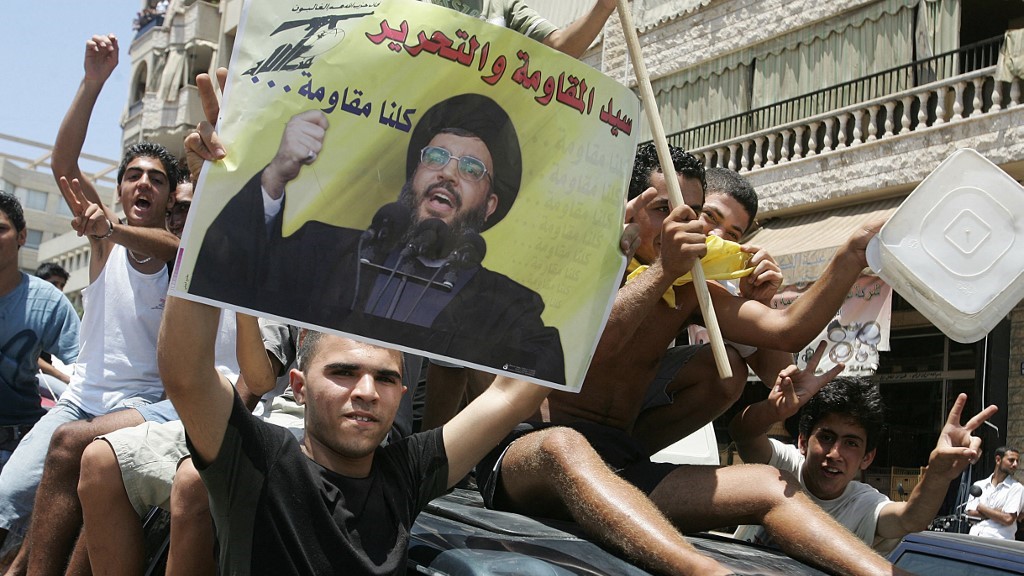
American and Israeli officials are holding talks in New York on the sidelines of the UN General Assembly, after Israel rejected a temporary truce agreement with Hezbollah that was proposed by the Biden administration.
White House spokesperson Karine Jean-Pierre confirmed the talks.
Israel's air force chief said his branch of the country's military is preparing to assist troops in a possible ground invasion of Lebanon.
"We are preparing shoulder to shoulder with Northern Command for a ground manoeuvre. Prepared, if activated. This is a decision to be made above us," he told soldiers, in a video distributed by the Israeli military.
Israel has called up reservists to the northern border with Lebanon, and the country's army chief told troops to be on alert in the case of a ground invasion of Lebanon.
Israeli Prime Minister Benjamin Netanyahu reversed his position regarding a temporary truce agreement with Lebanon's Hezbollah, diplomatic sources told Haaretz.
On Wednesday night, the US presented a joint proposal created with France for a 21-day truce agreement between Israel and Hezbollah.
A senior US official said the truce was communicated with both sides in the conflict.
Haaretz reported that Netanyahu had made verbal commitments to the US, but then backtracked on them after facing criticism from factions within his governing coalition.
"The Americans faced something similar with Netanyahu during negotiations over the hostage deal in Gaza," a senior western diplomat told Haaretz.
"He got spooked by the backlash from his own government and made a U-turn midway."
Footage shows the destruction in the southern Lebanese town of Saksakiyeh on Thursday, the day after an Israeli strike.
— Middle East Eye (@MiddleEastEye) September 26, 2024
Israeli aerial bombardments around Lebanon have killed hundreds of people this week, while Hezbollah has hit back with barrages of rockets. pic.twitter.com/9U1GlmLjjF
At least 60 people were killed today in Lebanon from more than 115 Israeli air raids targeting towns in southern Lebanon, the country's National News Agency reported.
Israel has vowed to continue its strikes on Lebanon despite a US-French attempt to broker a temporary truce between the two sides.
The Lebanese movement said it attacked the Israeli city of Safed with a barrage of 80 missiles.
Safed, a town in the Upper Galilee, has seen dozens of Hezbollah rockets land over the past several days, as fighting between the Lebanese group and Israel has escalated, following hundreds of Israeli air strikes on Lebanon that were launched on Monday.
Reports showed fires breaking out in Safed due to the rocket fire.