Live: Israel kills more than 430 Palestinians on Tuesday

Live Updates
An Israeli air strike carried out in southern Lebanon has killed Hezbollah’s chief of its southern aerial defence unit, Hassan Abbas Izz al-Din, the Israeli army said on Tuesday.
It issued a statement saying that he was rebuilding the unit and supplying it with weapons that threaten Israeli aerial vehicles.
The United States on Tuesday announced it is mediating talks between Lebanon and Israel to resolve outstanding disputes, including the release of Lebanese detainees and land border disputes.
The US deputy special envoy for Near Eastern Affairs, Morgan Ortagus, released a statement saying the two sides are committed to maintaining the ceasefire agreement, and that five Lebanese captives have been released.
Israel has agreed to release five Lebanese captives held during its war with Hezbollah, a statement from Prime Minister Benjamin Netanyahu's office said on Tuesday.
"In coordination with the United States and as a gesture to Lebanon's new president, Israel has agreed to release five Lebanese detainees," the statement read.
Egypt's foreign ministry on Tuesday released a statement denouncing Israel's latest decision to cut off power supply from the Gaza Strip as a "new violation of international humanitarian law".
The ministry said the move, announced Sunday, came as a continuation of Israel's "policies of collective punishment".
Cairo called on the international community to "take the necessary measures to stop these violations", following earlier statements from Qatar, Saudi Arabia and Jordan.
Around 3,500 people have left the Gaza Strip via the Rafah crossing with Egypt since the end of January, including more than 2,000 people requiring medical treatment, the European Union's foreign policy chief Kaja Kallas said on Tuesday during a UN Security Council meeting.
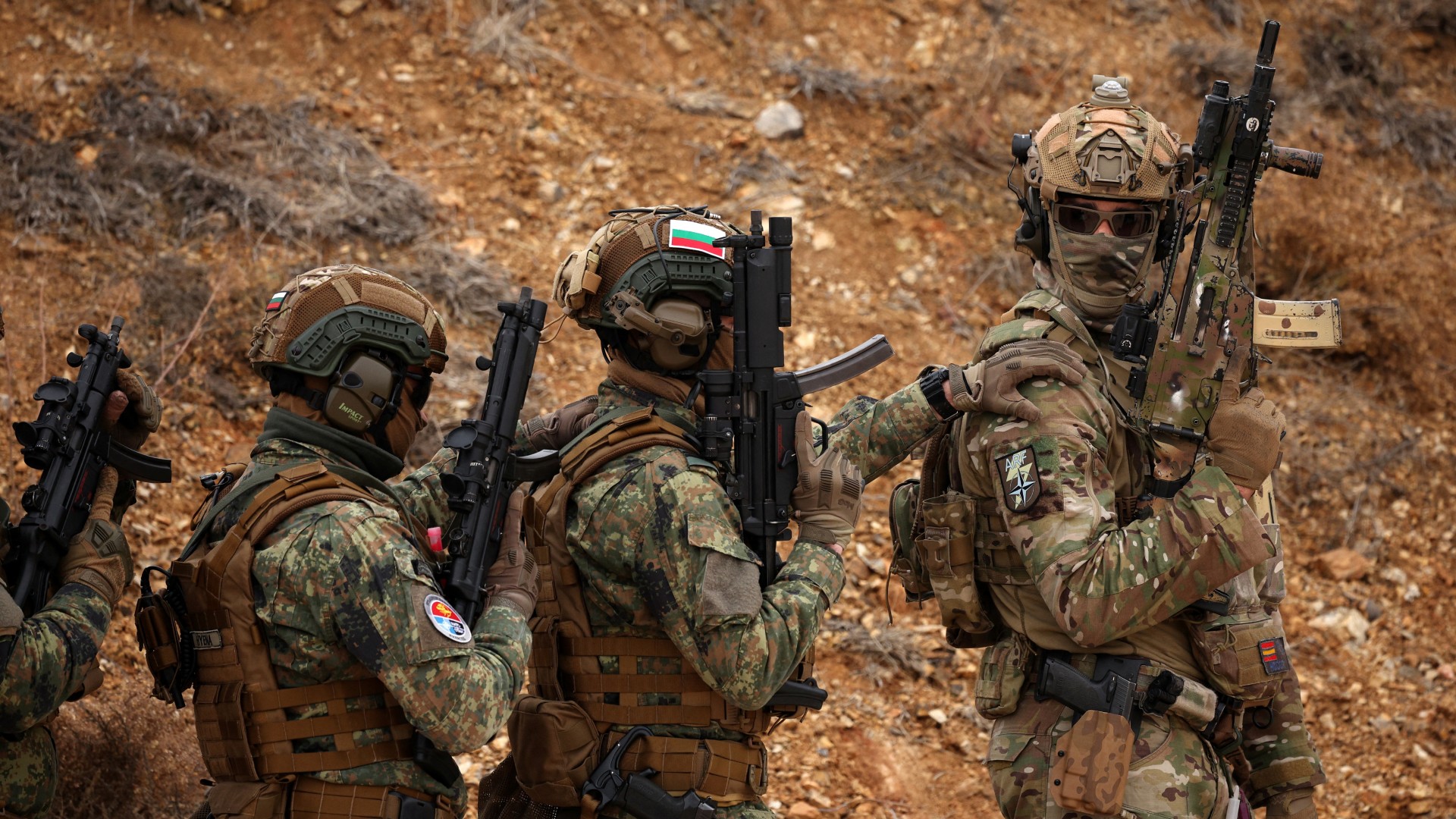
Turkey will block any new cooperation, including military drills, between Israel and Nato until a permanent ceasefire is reached in Gaza, Turkish official sources told Middle East Eye on Monday.
Israeli newspaper Yedioth Ahronoth reported over the weekend that Turkey has blocked Israel from taking part in Nato's annual exercise on "resilience and emergency preparedness" in Bulgaria, which will be held in September.
Two Israeli sources confirmed to MEE that Ankara had blocked their country's participation in the drill.
Read more:
Turkey blocking Israel-Nato military drills until permanent Gaza truce

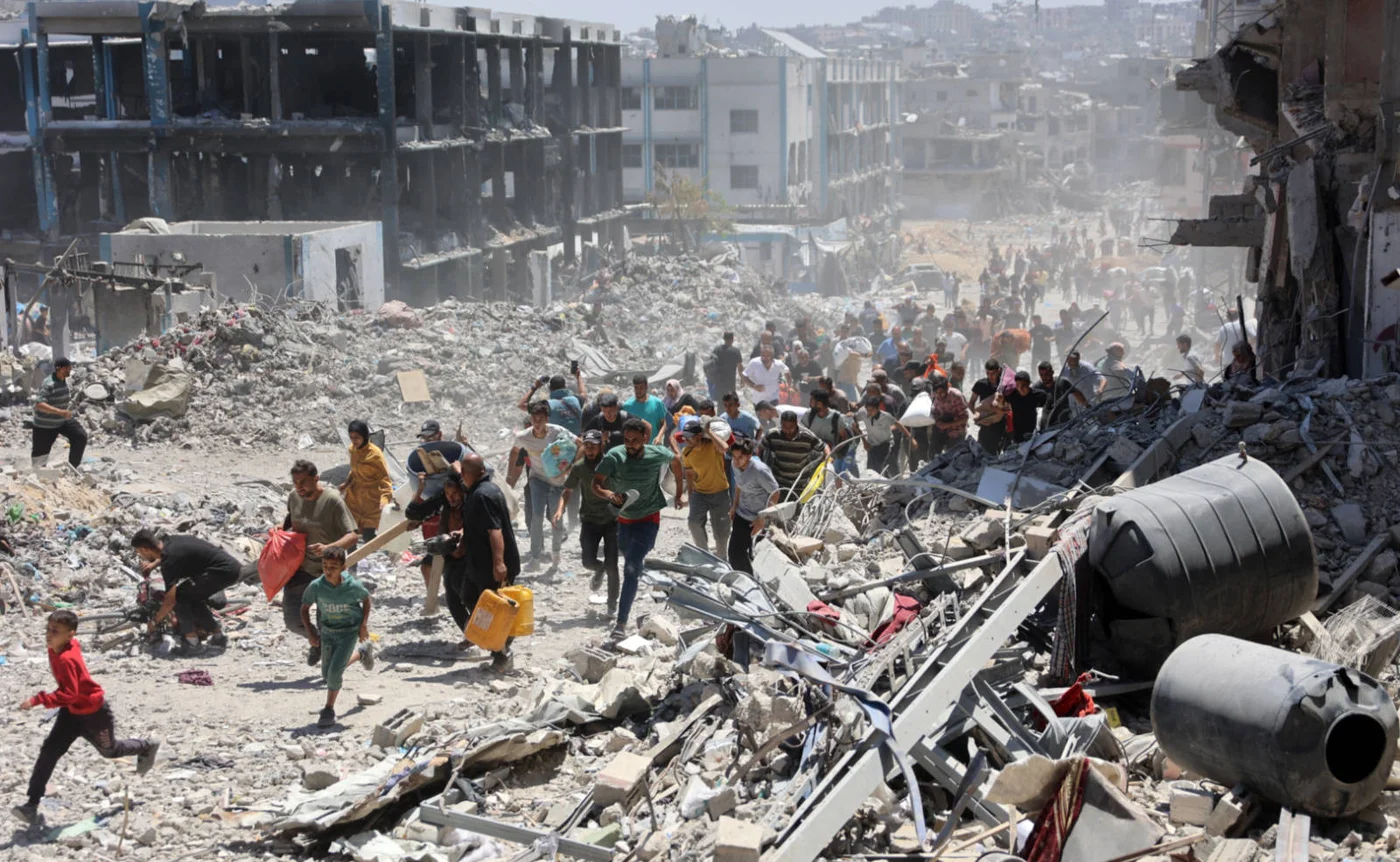
A total of 36 Palestinian deaths - four newly killed and 32 bodies recovered - were recorded during the past 24 hours, and 14 wounded people arrived in hospitals, the Palestinian health ministry in Gaza has said in a statment.
This brings the confirmed number of people killed in Israeli attacks in Gaza since 7 October to at least 48,503, with 111,927 others wounded, the ministry added.
An Israeli air attack has killed four people near the Netzarim Corridor in central Gaza, Al Jazeera is reporting, citing medical sources.
The attack comes after an earlier drone strike killed a woman near Rafah city.
In December 2023, South Africa accused Israel before the International Court of Justice (ICJ) for its war on Gaza. More than a year later, and the ICJ, the world's highest court, is still hearing the case.
In the meantime, international human rights groups, scholars, and UN experts have come up with their own judgments that genocide has been committed in the Palestinian enclave, where at least 48,440 people were killed between 7 October 2023 and 5 March 2025, according to the Palestinian health ministry.
But what is "genocide"? And how does international law define and prosecute this most serious of crimes?
What is the definition of genocide?
The definition of genocide focuses on the destruction, or intent to destroy, in whole or in part, a national, ethnic, racial, or religious group. It is one of the most serious international crimes, alongside crimes against humanity, and war crimes. They are collectively known as “core international crimes” or “atrocity crimes”.
Genocide is widely recognised as “the crime of all crimes”: it doesn't need to be part of a war between countries, and can exist, for example, as part of an internal domestic policy against an identifiable group.
What makes genocide different?
What differentiates crimes from each other is their core elements: the mens rea (the mental element of intent or knowledge); and the actus reus (the prohibited acts themselves).
For genocide, the intention is specific: to destroy, in whole or in part, a national, ethnic, racial, or religious group. Other actions that lead up to genocide are also prohibited and considered substantive crimes under the 1948 Genocide Convention - more on that below.
Read more: Israel’s war on Gaza: What is the meaning of genocide?
At least three Palestinians, including two young men and a 58-year-old woman, Faiza Ibrahim Abu Ghali, have been killed today during Israel’s military raid of Jenin in the occupied West Bank, now in its 50th day.
The identities of the two young men have not yet been revealed.
The Israeli army has issued a statement claiming that its soldiers and special forces killed three Palestinian fighters.
The deaths bring the total number of Palestinians killed since the beginning of the raid to 34, according to a ministry toll.
Israeli settlers on Tuesday attacked the village of Haribat al-Nabi in Masafer Yatta, south of Hebron in the occupied West Bank. They assaulted Palestinians and their property, Wafa news agency is reporting.
According to local sources, settlers ransacked homes and beat and assaulted residents with stones and pepper spray. Several residents sustained injuries
The United Nations Children's Fund (Unicef) has warned that the severe water shortage in Gaza has reached critical levels, with only one in 10 people currently able to access safe drinking water.
Some 600,000 people regained access to drinking water in November 2024, but it was cut off again, Gaza Unicef official Rosalia Poulin reported.
The situation has deteriorated further after Israeli forces yesterday shut off electricity supplies in Gaza, which disrupted vital water desalination operations.
The Israeli occupation forces launched a large-scale military campaign in the town of Azzun, east of Qalqilya, in the occupied West Bank at dawn on Tuesday, Wafa news agency is reporting.
Two young men sustained injuries and dozens more were detained.
Israeli forces also searched and ransacked several homes.
Israeli forces besieged a house in Jenin’s Khallet al-Sawha neighbourhood in the occupied West Bank overnight, killed a Palestinian man and took away the body, Quds News Network is reporting.
The man is yet to be identified.
Saudi Arabia, Qatar and Jordan on Tuesday condemned Israel's decision to cut electricity supplies in the Gaza Strip and urged the international community to take action.
The Saudi foreign ministry condemned “in the strongest terms the Israeli occupation authorities' use of collective punishment against Palestinians in the Gaza Strip by cutting off electricity to the region,” according to a statement.
Qatar, which acts as a mediator between Israel and Hamas, also “strongly condemned the Israeli occupation's act of cutting off electricity in the Gaza Strip, considering it a flagrant violation of international humanitarian law,” a statement by the foreign ministry reads.
Jordan denounced “a clear continuation of the policy of starvation and siege imposed by Israel on the Palestinians,” in a statement issued by the Ministry of Foreign Affairs. A spokesman for the ministry, Soufiane al-Qoudaha, called on the international community to “assume its responsibilities” and “force Israel (...) to restore electricity” in the Gaza Strip.