Live: Iran holds funeral for top military, nuclear figures killed in Israeli strikes

Live Updates
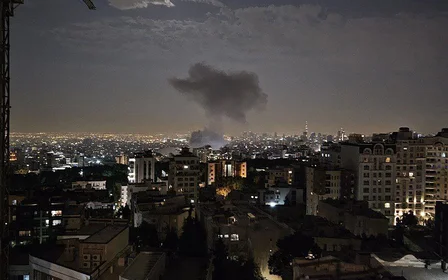
Israeli forces announced that they are striking “military infrastructure” in western and central Iran, according to a report by Al Jazeera.
A senior Iranian official has told Reuters that Tehran is prepared to discuss limits on its uranium enrichment programme, but made clear that demands for “zero enrichment” are off the table.
“Such a demand would be undoubtedly rejected, especially now, under Israel’s attacks,” the official said on Friday.
While Iran currently refuses to engage directly with the United States, the official stressed that it sees a growing role for European powers - particularly the E3 group of Britain, France, and Germany.
“We need to hear the E3’s initiative on the nuclear issue,” the official added, suggesting that any progress will depend on Europe's diplomatic approach amid rising regional tensions.
Israel’s ambassador to the United Nations in Geneva has strongly objected to Iran’s Foreign Minister Abbas Araghchi addressing the UN Human Rights Council, just hours before key diplomatic talks with European leaders aimed at calming the Israel-Iran conflict.
In a letter seen by Reuters, Israeli envoy Daniel Meron criticised the council’s decision, writing: “Affording the Iranian foreign minister the floor before this body continues to undermine the council's credibility and constitutes a blatant betrayal of the many victims of this regime worldwide.”
Meron accused Tehran of using the platform to “promote the regime's despotic campaign,” calling the move a blow to the council’s integrity.
Despite Israel’s protest, the council confirmed Araghchi would speak, followed by talks with the EU’s foreign policy chief and officials from the UK, France, and Germany.
Earlier in the week, Iran’s UN ambassador described Israel’s military strikes as a “war against humanity”. Israel launched the attacks last Friday, saying it intended to block Iran from acquiring nuclear weapons - claims Tehran denies, insisting its nuclear programme is for peaceful purposes.
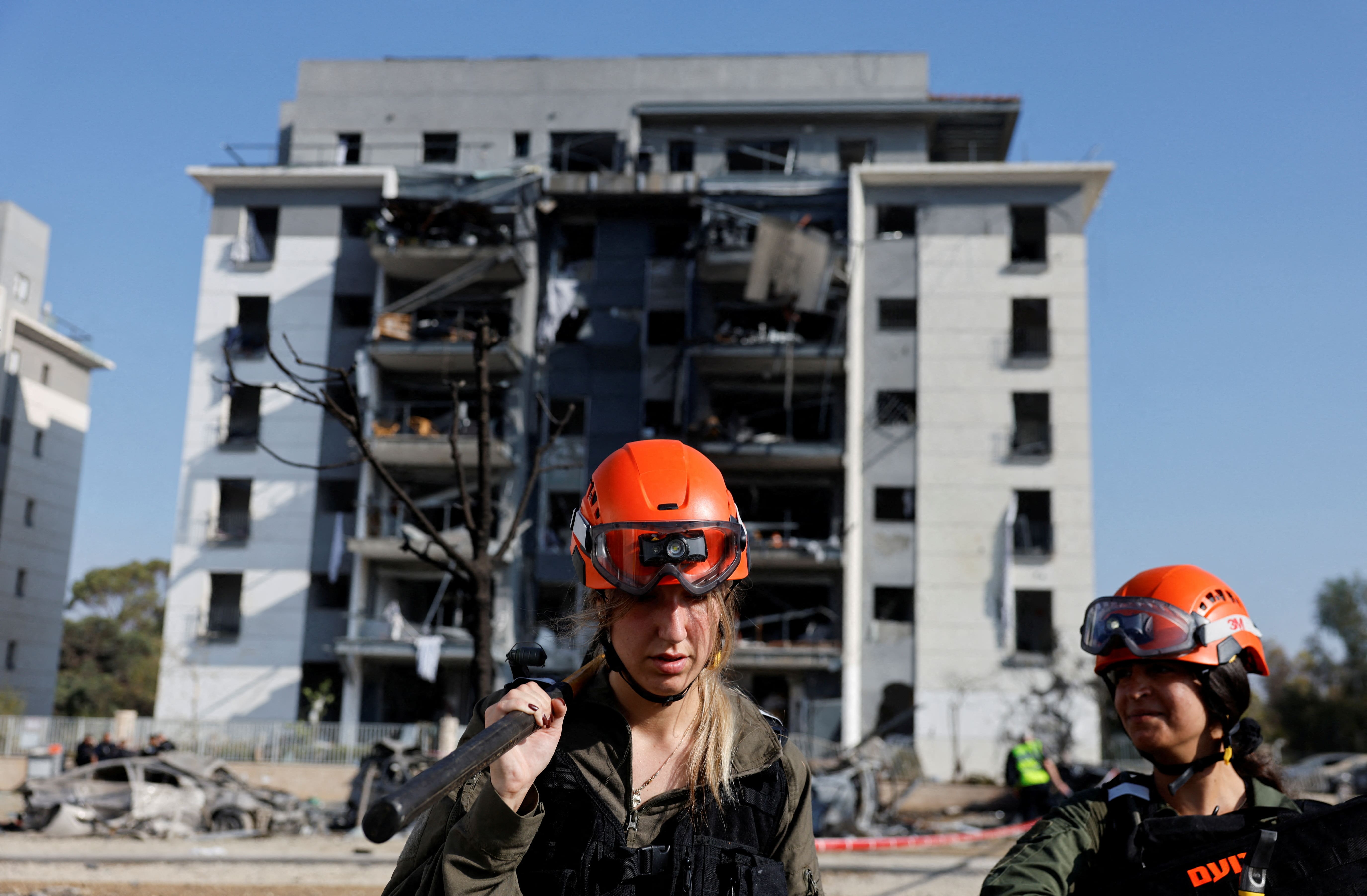
Iran on Friday directly struck targets in southern Israel, including a technology centre, a Microsoft office and military infrastructure, wounding at least seven Israelis.
One of the main targets was the Gav Yam Negev Advanced Technologies Park, which reportedly houses active military and cyber facilities.
The latest attack from Iran consisted of just one to three missiles, according to Israeli media, with the military failing to intercept one that struck Beersheba.
Circulating footage shows a small crater left amongst cars set ablaze in the car park of a residential building.
The Iranian attack damaged several houses and sparked a large fire in the area.
Read more: Iran strikes technology park in Israel, Microsoft building damaged
Turkish President Recep Tayyip Erdogan has cautioned that escalating conflict between Israel and Iran may lead to a spike in migration affecting both Europe and the wider region.
“The spiral of violence triggered by Israel’s attacks could harm the region and Europe in terms of migration and the possibility of nuclear leakage,” Erdogan said, according to a statement from his office.
The remarks came during a phone call with German Chancellor Friedrich Merz, where Erdogan expressed concern over the broader fallout of the conflict.
The Israeli military has said it carried out a series of air raids early on Friday targeting missile-related infrastructure inside Iran, the Israeli daily Haaretz reported.
According to the Israeli army, more than 25 aircraft were involved in the operation, which hit over 35 locations believed to be used for missile storage and launches.
The strikes reportedly took place in the provinces of Tabriz and Kermanshah in western Iran.
A German government spokesperson has said that Iran is expected to be discussed at next week’s Nato summit.
Speaking at a press briefing on Friday, the spokesperson declined to address speculation about potential military plans, saying: “We do not comment on allies' possible attack plans.”
The remarks follow US President Donald Trump’s statement that he would decide within two weeks whether the United States would attack Iran.
An Iranian diplomat speaking in Berlin on Friday said Tehran is open to engaging with both the East and the West through a balanced and pragmatic approach, despite pressure from Washington.
“Iran has shown that it is willing to pursue a wise, balanced and pragmatic policy in its dealings with Europe,” the diplomat said, speaking on condition of anonymity to Reuters.
They added that Iran could serve as a “chess piece for Europe to ease the dual pressure between East and West,” suggesting Tehran could play a stabilising role in a shifting global landscape.
On Thursday morning, Iranian missiles struck Soroka hospital in Beersheba, triggering expressions of outrage from Israeli officials.
National Security Minister Itamar Ben Gvir likened the Iranian regime to “Nazis who fire missiles at hospitals, the elderly and children”. President Isaac Herzog evoked imagery of a baby in intensive care and a doctor rushing between beds.
Culture Minister Miki Zohar declared on social media that “only the scum of the earth fires missiles at hospitalized children and elderly people in their sick beds”. The chair of Israel’s medical association, Zion Hagay, decried the strike as a war crime and urged the international medical community to condemn it.
This swift and unified condemnation by Israeli political and medical leadership underscores a striking contradiction: these same actors not only ignored but openly justified the destruction of Gaza’s hospitals over the past two years.
Since 7 October 2023, Israeli air strikes and ground invasions have decimated Gaza’s healthcare infrastructure. The World Health Organisation has recorded around 700 attacks on healthcare facilities. Major hospitals - al-Shifa, Nasser and the Indonesian hospital, among others - have been besieged, bombed and dismantled.
Read more: Bombing hospitals is a red line - unless Israel is doing it

Former White House strategist Steve Bannon was seen at the White House on Thursday, where he had lunch with US President Donald Trump, according to a senior official. The meeting had been scheduled weeks ago but was delayed after Bannon fell ill with the flu.
Despite a brief rift following his 2017 departure, Bannon has remained one of Trump’s most loyal outside advisers.
Speaking at a Christian Science Monitor event, Bannon voiced strong opposition to US involvement in a conflict with Iran. “My mantra right now: The Israelis have to finish what they started,” he said. “We can’t do this again. We’ll tear the country apart. We can’t have another Iraq.”
He has echoed this position on his “War Room” podcast, reflecting a segment of the MAGA movement urging Trump to steer clear of war, arguing such a move contradicts his “America First” foreign policy.
Russia’s nuclear agency chief, Alexei Likhachev, has confirmed that Russian experts are continuing their work at Iran’s Bushehr nuclear plant, describing the situation there as “normal and under control”.
Speaking on Friday, Likhachev said he hoped Moscow’s warnings to Israel not to target the facility had reached Israeli leaders.
Russia, which maintains close relations with Tehran, has repeatedly cautioned against any US military involvement in support of Israel.
Two leaders obsessed by their political legacies, and one also by his own cult of personality, are escalating the already highly tense situation in the Middle East to dangerous new peaks.
Israel’s unprovoked attack on Iran this month marks the riskiest chapter yet of a dream that Israeli Prime Minister Benjamin Netanyahu has been chasing for four decades: regime change in Tehran.
Israel seems determined to modify in its favour, once and for all, the overall strategic balance of the Middle East. Its ongoing quest to destroy Hamas and ethnically cleanse Gaza must be framed in this context, alongside the decapitation of Hezbollah’s political and military leadership in Lebanon.
To a certain extent, the collapse of the Assad regime in Syria fits into the same strategy, even if the final chapter of the Syrian ordeal has not been written yet - and it may not necessarily be positive for Israel.
Now Netanyahu has decided to attack Iran - not with a ground invasion, which would be militarily impossible, but through precision air strikes to eliminate the nation’s military leadership and the capabilities that Israel deems most dangerous to its own existence, including nuclear and ballistic-missile sites.
Read more: Will Trump abandon 'America First' to join Israel's war on Iran?

Israel’s Defence Minister Israel Katz has warned that Hezbollah will be eliminated if it launches attacks on Israel in support of Iran.
Writing on X, Katz accused the group's leader of following Tehran’s orders and issued a stark threat.
“The Hezbollah secretary general is not learning a lesson from his predecessors and is threatening to act against Israel in accordance with the Iranian dictator’s orders,” he wrote.
“I suggest that the Lebanese proxy be careful and understand that Israel has lost patience with terrorists who threaten it.
“If there will be terrorism, there will be no Hezbollah.”
Hezbollah may join the war between Israel and Iran if the United States intervenes directly, or if Iran’s supreme leader is killed, sources close to the Lebanese group have told Middle East Eye.
On 14 June, Hassan Fadlallah, a Hezbollah lawmaker, stated: “Iran knows how to defend itself.”
The comments were widely interpreted in Lebanese political circles as a sign that the war-weary group did not want to intervene in support of its Iranian allies. A Hezbollah official also told Reuters last week that the group “will not initiate an attack on Israel in response to strikes on Iran”.
However, sources close to the party have said to MEE that the Reuters report is inaccurate.
One source said that Hezbollah had ideological “red lines”, namely direct American military involvement in the war, or the assassination of Ayatollah Ali Khamenei.
Read more: Khamenei assassination could draw Hezbollah into Israel-Iran hostilities, say sources

Iranian state media has issued an update on the condition of Ali Shamkhani, a senior adviser to Supreme Leader Ayatollah Ali Khamenei, who was seriously injured in an Israeli strike last week.
Tasnim news agency reported that Shamkhani’s health has stabilised, crediting continuous medical care by doctors for his recovery.
In a message addressed to Khamenei and the Iranian people, Shamkhani declared, “I am alive and ready to sacrifice myself.”