
Live: Iran holds funeral for top military, nuclear figures killed in Israeli strikes

Live Updates
Defence Minister Israel Katz has said that Israeli air force jets have destroyed Iran's "internal security headquarters", shortly after the army announced it was striking Tehran.
"Air Force jets have just destroyed the internal security headquarters of the Iranian regime - the main arm of repression of the Iranian dictator," Katz said, adding that Israel would "strike symbols of governance and hit the Ayatollah regime wherever it may be".
Last week, the International Atomic Energy Agency (IAEA) said that Iran had breached its obligations under the Non-Proliferation Treaty.
It was a development that Tehran strongly condemned, and claimed provided a pretext for Israel's surprise assault.
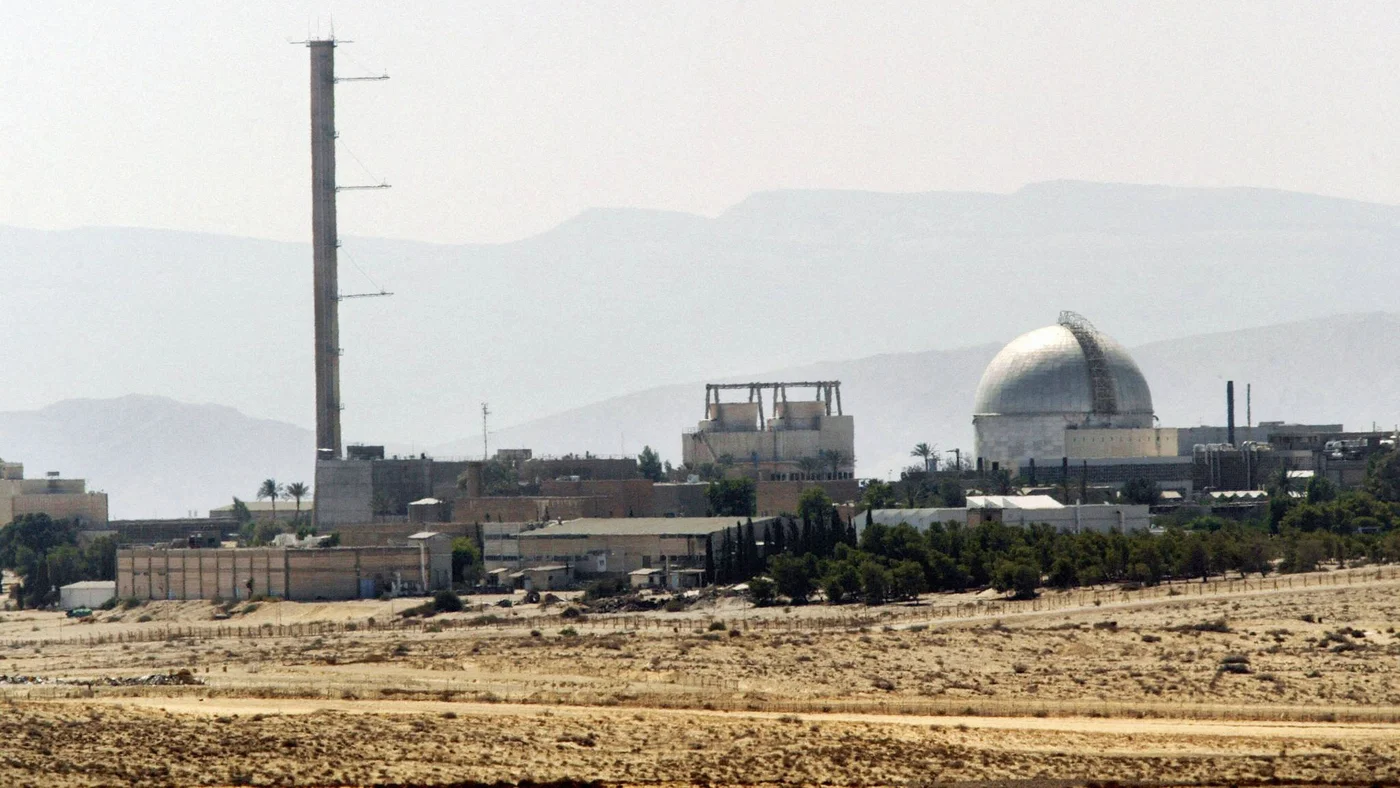
But what do we know about Israel's own nuclear weapons?
Unlike Iran, Israel has not signed the NPT, and is one of only five countries not to be party to the 1968 treaty. This means that the IAEA has no way to monitor or verify Israel's nuclear arsenal.
Little is known about Israel’s nuclear programme, which it has a policy of neither confirming nor denying.
However, declassified documents, investigative research and whistleblower revelations from the 1980s have pointed to what it has.
Read more: What do we know about Israel's own nuclear weapons?

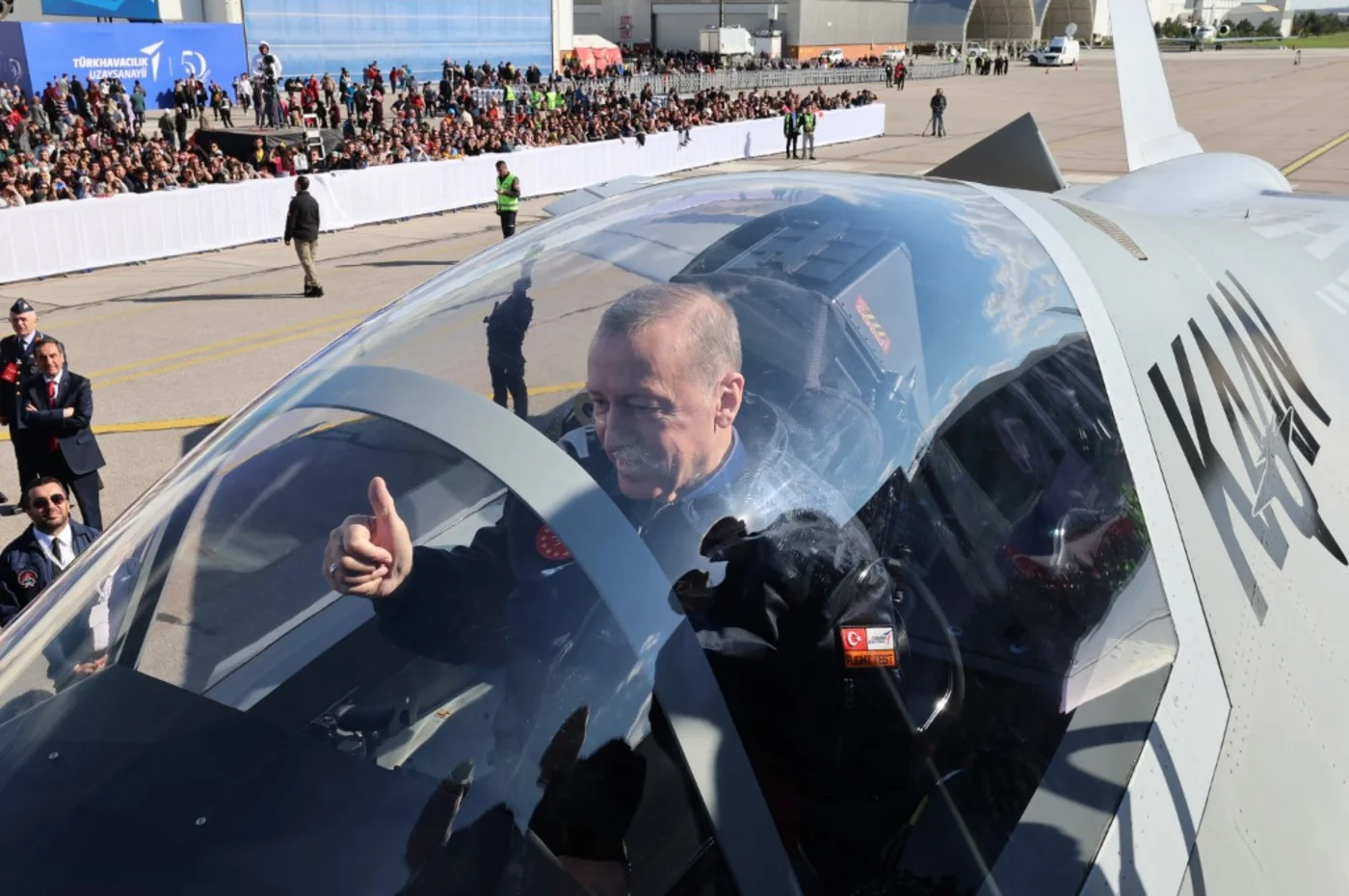
Turkish President Recep Tayyip Erdogan announced on Wednesday that his country's defence industry would become fully independent, producing its own warplanes, tanks, drones and frigates, as Israel and Iran traded strikes for a sixth day.
"We will further increase our domestic and national production rate, which we have raised from 20 percent to 80 percent," Erdogan said at a Justice and Development Party (AKP) parliamentary group meeting.
"We will continue with patience, determination, perseverance, and firm steps until we achieve our goal of full independence in the defence industry," he added.
Addressing Israeli attacks on Iran and rising tensions in the region, Erdogan said Turkish officials were on high alert and preparing contingency plans for all possible risks.
"We will raise our deterrence to such a level that not only will no one attack us, but no one will even dare to think of it," he said, adding that Turkey had recently completed a number of national defence projects, including air defence systems, warships, cruise missiles, armed drones, and helicopters.
Read more: Erdogan vows fully independent defence industry amid Israel-Iran conflict
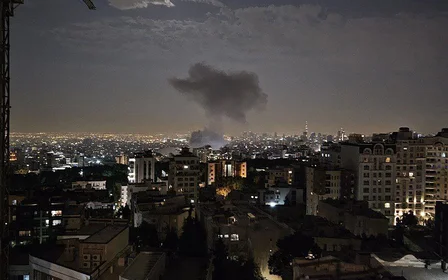
A series of strong blasts have been heard in east Tehran, according to AFP on Wednesday.
At least five columns of smoke could be seen in the east and southeast of the Iranian capital, according to an AFP journalist, who reported the blasts were heard around 3:50pm local time.
Israel's military has said that public safety guidelines that have mandated school closures and other restrictions would ease in some parts of Israel from 6pm local time.
Parts of the occupied-Golan Heights and the occupied West Bank, in addition to areas in southern Israel near Gaza and in Eilat, would be changed from "essential activity" to "limited activity" or "partial activity".
The changes would be in effect until 8pm on 20 June, the military said.
The Israeli army posted on X: “This morning, Air Force fighter jets completed a wave of strikes against military targets in western Iran, under the direction of the Intelligence Branch.”
“Approximately 25 fighter jets attacked more than 40 missile infrastructures aimed at the State of Israel, missile storage sites, and military operatives of the Iranian regime,” the statement added.
The Israeli statement could not be independently be verified.
Turkish President Recep Tayyip Erdogan declared on Wednesday that Iran has the “legitimate” right to protect itself amid Israel’s ongoing bombing campaign, AFP reports.
“It is a very natural, legitimate and legal right for Iran to defend itself against Israel’s thuggery and state terrorism,” Erdogan said, a day after calling Israeli Prime Minister Benjamin Netanyahu “the biggest threat to the security of the region”.
“These attacks took place during the Iranian nuclear negotiations,” he added.
“Israel, which possesses nuclear weapons and ignores international rules, launched a terrorist act before the talks concluded.”
Erdogan warned that Turkey is closely monitoring Israel’s assaults on Iran, with all government institutions on high alert for any fallout.
“We are preparing for every possible scenario. Nobody should dare to test us,” he said.
On Monday, Erdoğan ordered the defence industry to boost production of medium- and long-range missiles to “increase its level of deterrence” amid the air war between Israel and Iran.
More now from Khamenei's remarks.
He says that "wise people who know Iran, its people, and its history never speak to this nation in the language of threats, because Iranians are not those who surrender."
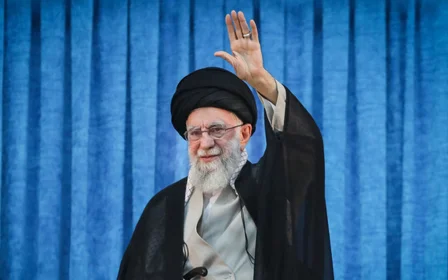
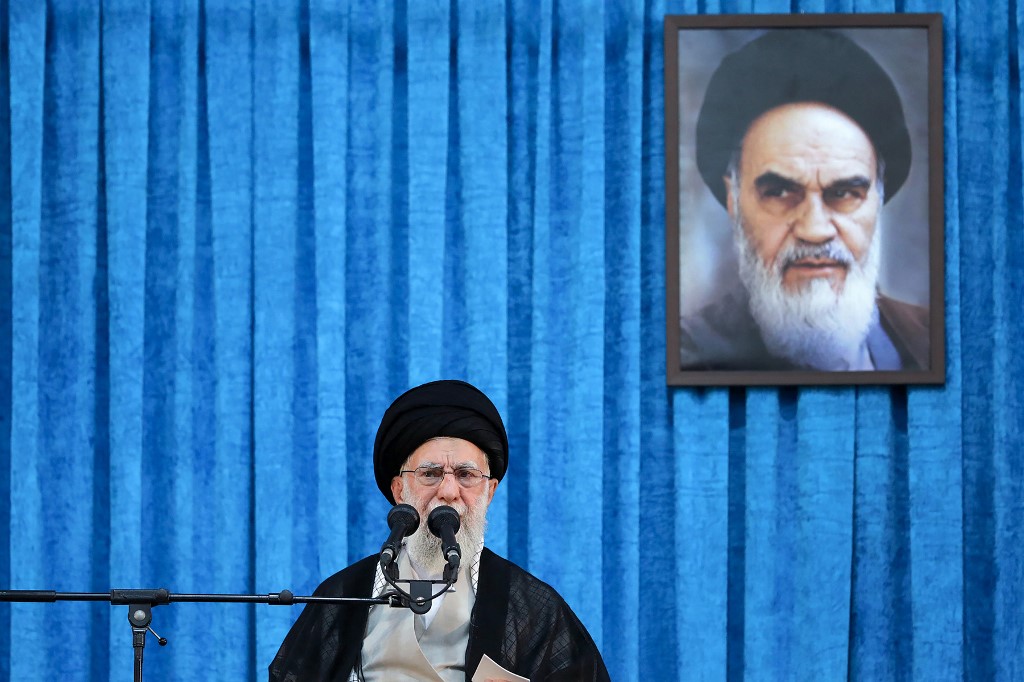
Iran’s Supreme Leader Ali Khamenei is now delivering a televised address, according to Mehr News Agency.
In his speech, Khamenei said Iran “will stand firm against an imposed war, just as it will stand firm against an imposed peace,” as reported by Tasnim.
“This nation will not surrender to anyone in the face of imposition,” he added.
Khamenei also referred to remarks made by US President Donald Trump, stressing that “those who know Iran and its history know that Iranians do not answer well to the language of threat”.
He warned: “The Americans should know that any US military intervention will undoubtedly be accompanied by irreparable damage.”
We’ll bring more from his address as it comes in.
Here are the main points from Al Jazeera’s interview with Esmaeil Baghaei, a senior Iranian official and government spokesman:
-
Any direct involvement by another country in the conflict between Iran and Israel would risk triggering a broader war, “engulfing the region and beyond,” Baghaei warned.
-
He said Iran is currently limiting its military response to Israeli targets and trusts neighbouring states will not allow their territory to be used by the US for strikes against Iran.
-
When asked about the possibility of talks with Washington, he said, “Diplomacy never ends,” but stressed that Iran no longer trusts the US.
-
Baghaei also noted that Tehran is in contact with global powers, including Russia, and expects UN Security Council members to work toward a resolution condemning the Israeli attacks.
On Saturday, the horrors of war resurfaced in Mohammad's mind.
He watched from the sidewalk as his nine-year-old daughter, sitting in a car with his wife, three-year-old son, and his wife’s family, turned her head and peered out of the window to say goodbye.
In that moment, he was taken back 37 years to the Iran-Iraq war, to the day he had been riding in a car with his mother and sister, fleeing missile strikes on the capital, Tehran.
Today, Iran is once again under heavy bombardment with Israeli air strikes targeting residential areas, civilian buildings, hospitals, media offices and military sites.
The capital, he says, now bears a resemblance to how it looked in 1987, during the final year of the eight-year war that Iraq began with the backing of the US and other western powers.
Read more: Israeli attacks reawaken trauma from Gulf war as Iranians flee Tehran

Iranian state media says Supreme Leader Ayatollah Ali Khamenei is set to make a televised address within minutes.
We’ll bring you the key points from his speech as soon as it airs.
The International Atomic Energy Agency has confirmed that Israeli strikes targeted two key centrifuge production sites in Iran - one at the Tehran Research Centre and the other in Karaj.
In a post on X, the UN agency said a building used to produce and test advanced centrifuge rotors was struck at the Tehran facility. Meanwhile, in Karaj, two structures used for manufacturing various centrifuge parts were destroyed.
The IAEA has information that two centrifuge production facilities in Iran, the TESA Karaj workshop and the Tehran Research Center, were hit. Both sites were previously under IAEA monitoring and verification as part of the JCPOA.
— IAEA - International Atomic Energy Agency ⚛️ (@iaeaorg) June 18, 2025
Iranian state television has urged the public to delete WhatsApp and Instagram from their phones, saying that the platforms are collecting user data to send to Israel.
WhatsApp, which is owned by Meta, rejected the allegations, calling the claims “false”.
The former US intelligence whistleblower, Edward Snowden, has blasted Meta's data practices, calling the platform a “surveillance company” profiting from the exploitation of users’ private lives.
The exiled NSA whistleblower has accused Meta of acting as an accomplice in mass surveillance rather than a victim of data abuse.
“Facebook makes their money by exploiting and selling intimate details about the private lives of millions, far beyond the scant details you voluntarily post,” Snowden said in 2019.
He added: “Businesses that make money by collecting and selling detailed records of private lives were once plainly described as 'surveillance companies'. Their rebranding as 'social media' is the most successful deception since the Department of War became the Department of Defense.”
Snowden, who exposed the scale of US government surveillance in 2013, has lived in Russia under asylum since fleeing prosecution.
Iran’s ambassador to the United Nations in Geneva, Ali Bahreini, warned on Wednesday that Tehran would react “seriously and strongly, without restraint” to Israeli attacks on its soil.
Bahreini accused Israel of launching unprovoked strikes that indiscriminately hit civilian areas without warning. He also said the United States has shielded Israel from accountability, while European nations have offered political cover based on what he called unfounded accusations.
He further warned that if Iran determines the US played a role in the attacks, it would treat that as direct aggression and respond accordingly.