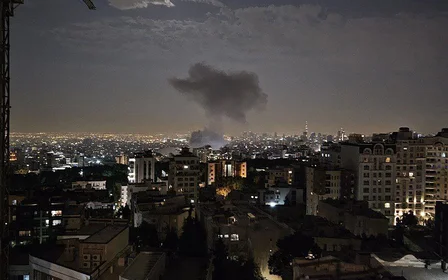
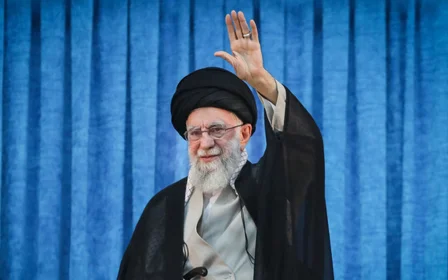
Live: Iran holds funeral for top military, nuclear figures killed in Israeli strikes

Live Updates
Qatar has issued a strong rebuke of Israel’s recent strike on Iranian nuclear facilities, calling the move reckless and dangerous.
Speaking at a press conference in Doha, foreign ministry spokesman Majed al-Ansari warned that Israel’s actions would have “very dire repercussions” for the region.
Ansari said the Israeli attack came at a moment when Iran had been pursuing a “positive diplomatic path” with the United States, with several regional actors supporting the talks.
He described the escalation as “an uncalculated measure” that risked undermining fragile progress in regional diplomacy.
Qatar, which has long played a mediating role, remains engaged in efforts to de-escalate tensions. “We believe the US is still committed to reaching an agreement,” Ansari said, adding that Doha would continue to push for a ceasefire between Israel and Iran.
The United States intelligence community does not believe Iran is actively pursuing a nuclear weapon, casting doubt on Israel’s justification for its recent strikes on Iranian territory, CNN reported on Tuesday.
Despite Israel’s claims that Tehran was nearing a critical threshold in its nuclear ambitions, four sources familiar with classified US assessments told CNN that intelligence reports indicate otherwise.
Washington believes Iran remains as far as three years away from being able to produce and deliver a nuclear warhead.
A US official told reporters that, despite Israel’s military campaign - including damage to Iran’s Natanz enrichment site - the strikes have likely delayed Iran’s programme by only a few months.
Fordow, Iran’s second and more fortified enrichment facility, has reportedly been left unscathed, raising further questions about the strategic value of Israel’s actions.
For three decades, Israeli Prime Minister Benjamin Netanyahu has been telling the world that Iran is on the cusp of joining the nuclear weapons club. He has obsessed about bombing it, engaging in a full-scale war, and bringing about regime change.
In 2002, Netanyahu pressed the US and others to invade Iraq, on the falsehood that it had a nuclear weapons programme. He proclaimed how much safer the region would be in evidence to the US Congress.
“If you take out Saddam, Saddam’s regime, I guarantee you that it will have enormous positive reverberations on the region,” Netanyahu said. “And I think that people sitting right next door in Iran, young people, and many others, will say the time of such regimes, of such despots is gone.”
As ever, it is best to ignore Netanyahu’s advice.
The Anglo-US war on Iraq and its subsequent occupation ended Washington’s period as the world’s sole hyper-power. It paved the way for Iran to dominate not just Iraq, but Syria and Lebanon too.
Read more: Israel's war on Iran: Why the UK must stay out

Israel's Foreign Minister Israel Katz has issued a stark warning to Iran’s Supreme Leader Ayatollah Ali Khamenei, comparing him to former Iraqi President Saddam Hussein, who was toppled and executed following the 2003 US-led invasion.
“I warn the Iranian dictator against continuing to commit war crimes and launching missiles at Israeli civilians,” Katz said, according to Israeli media reports.
He added: “He would do well to remember the fate of the dictator in the country neighbouring Iran who chose this same path against the state of Israel.”
Katz also reiterated threats to continue Israeli strikes on Tehran, urging residents of the Iranian capital to leave, as Iran reported dozens of civilians killed and hundreds wounded since Israel’s attacks began on Friday.
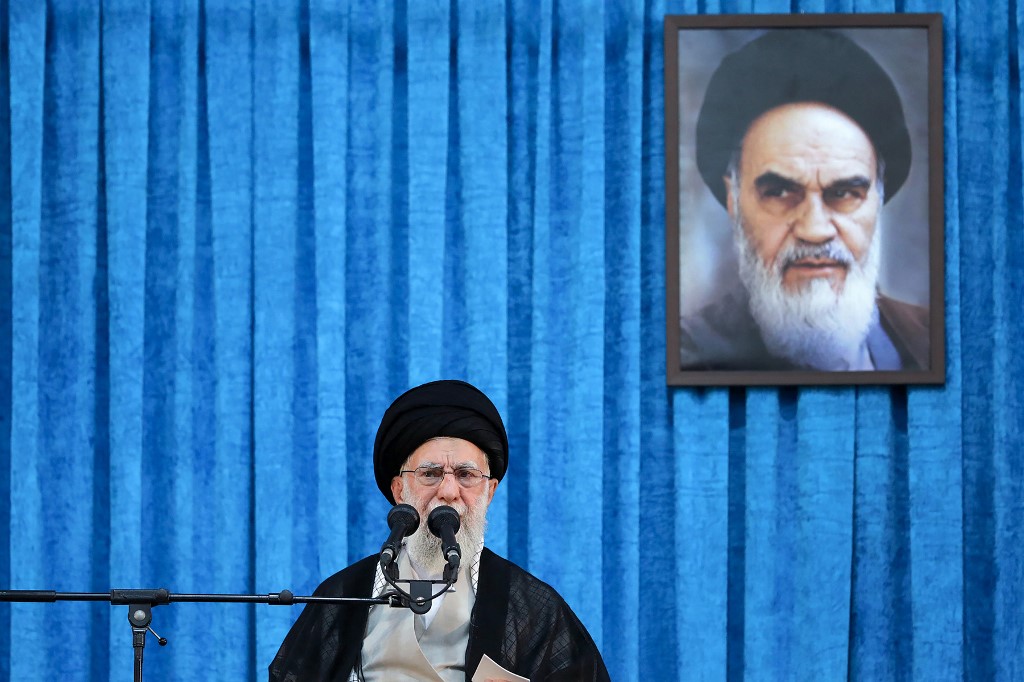

Iranian state media says air defence systems have been activated over western Tehran in response to “hostile targets.”
Meanwhile, Israeli media is reporting that Israeli forces have launched strikes on western Iran, though there has been no official confirmation from either side.
This is a report from Reuters and is a developing story.
Iran’s deputy health minister has announced that all doctors and nurses currently on leave must return to duty immediately.
“All leave for doctors and nurses has been cancelled, and they have been asked to be continuously present at medical centres to not only provide services but also play an effective role in boosting the morale and psychological stability of treatment teams,” Seyed Sajjad Razavi said.
“The Ministry of Health stands with you and is ready to provide support and assistance should any need arise,” he added, according to remarks published by the Tasnim news agency.
He said that medical centres and universities have received specialised protocols on how to treat victims of mass-casualty events.
Turkey’s Energy Minister Alparslan Bayraktar said late on Monday that the country does not anticipate any disruption to its oil and gas supplies amid the ongoing conflict between Israel and Iran.
Speaking to reporters, Bayraktar noted that while energy prices may continue to rise, Turkey’s domestic demand will be met without issue.
He added that Turkey might need to find alternatives to Gulf crude oil, which accounts for 20 percent of its supply, if shipping through the Strait of Hormuz is blocked.
However, Ankara remains confident its overall energy security will hold steady.
Flights carrying evacuees from Israel have landed in Slovakia and the Czech Republic as the war between Iran and Israel intensifies, officials confirmed on Tuesday. These countries are among the first in Europe to bring their citizens home from the Middle East, Reuters reported.
Slovak authorities said the initial evacuation flight arrived in Bratislava late on Monday with 73 people aboard, including 25 Slovak tourists and five relatives of Slovak diplomats stationed in Tel Aviv.
Slovak Foreign Minister Juraj Blanar added that the country also helped evacuate citizens from other nations, including 15 Poles, 14 Czechs, nine Austrians, two Slovenians and one person each from Estonia, Spain and Malaysia.
He said another evacuation flight was being prepared for Tuesday, carrying Slovak, Czech, Austrian, Hungarian, Latvian and French nationals.
Hungarian Foreign Minister Peter Szijjarto confirmed Slovakia assisted in evacuating seven Hungarians.
Czech Defence Minister Jana Cernochova said a flight carrying 66 evacuees had landed near Prague.
Poland announced it was organising the evacuation of about 200 citizens from Israel through Jordan.
Thailand has ordered its military to ready evacuation flights for citizens in Israel and Iran, as fighting between the two countries enters a fifth day, according to government spokesperson Jirayu Houngsub.
Speaking after a cabinet meeting, Houngsub said Bangkok had coordinated with the military to prepare aircraft for immediate deployment.
Roughly 40,000 Thai nationals are currently in Israel, many employed in agriculture through a state-backed labour scheme, while around 300 reside in Iran.
Thai embassies in both countries have finalised evacuation plans, he added.
Meanwhile, the Thai embassy in Tehran has opened a temporary shelter outside the capital for its citizens, according to an official Facebook post.
China has blamed Donald Trump for escalating the crisis between Iran and Israel, accusing the US president of worsening an already volatile situation after he called on residents of Tehran to evacuate immediately.
Responding to a question about Trump's remarks at a routine press briefing, foreign ministry spokesperson Guo Jiakun said: “Fanning the flames, pouring oil, making threats and mounting pressure will not help to promote the de-escalation of the situation, but will only intensify and widen the conflict.”
Israel is using its ballistic missile interceptors at a rapid clip after four days of war with Iran, a senior US official familiar with efforts to resupply Israel told Middle East Eye.
In some quarters of the US government, there are concerns that a direct US strike on Iran could lead to bigger Iranian retaliation against Israel that would drain the US’ global stockpile of missile interceptors to a “horrendous” level, the official said.
Israel relies on a three-tiered air defence system, and Iran’s attacks are challenging its most sophisticated defences.
The Iron Dome is used to shoot down short-range rockets and drones fired by groups like Hamas and Hezbollah. The second level is David’s Sling, which can intercept heavier rockets along with some ballistic missiles. The Arrow 2 and 3 systems are used to down ballistic missiles, with the latter able to shoot down exoatmospheric hypersonic missiles.
Replenishing the Arrow systems has been a perennial problem for Israel.
Read more: Israel and US exhausting supplies of ballistic missile interceptors, source says

An Israeli projectile hit a checkpoint in the central Iranian city of Kashan this morning, killing at least three people and injuring four others, according to the Mehr news agency.
The outlet quoted Akbar Salehi, the deputy security chief for the governor of Isfahan province.
Local agencies Tasnim and ISNA also confirmed the deaths but did not provide additional information.
The reported strike adds to the rising toll from Israel’s ongoing assault on Iran, which has killed over 220 people so far, including at least 70 women and children.
US President Donald Trump has said he wants Iran to abandon its nuclear ambitions completely, describing his goal as a “real end” to the nuclear issue, according to remarks shared by CBS News reporter Jennifer Jacobs on X. Iran denies that it's seeking nuclear weapons.
Speaking aboard Air Force One during his late-night departure from the G7 summit in Canada, Trump predicted that Israel would continue its military campaign against Iran.
“You're going to find out over the next two days. You're going to find out. Nobody's slowed up so far,” he was quoted as saying.
Asked whether he might dispatch Middle East Envoy Steve Witkoff or Vice President JD Vance to meet Iranian officials, Trump replied, “I may,” but added that it would depend on “what happens when I get back.”
Director of National Intelligence Tulsi Gabbard told lawmakers in May that Iran is not currently building a nuclear weapon.
Testifying before the Senate Intelligence Committee, Gabbard said: “The intelligence community continues to assess that Iran is not building a nuclear weapon, and Supreme Leader Ayatollah Ali Khamenei has not authorised the nuclear weapons programme he suspended in 2003.”
Loud explosions were heard over Tel Aviv and Jerusalem on Tuesday, shortly after air raid sirens echoed across several Israeli cities, according to Agence France-Presse (AFP).
The Israeli military confirmed that missiles had been launched from Iran and said its air force was actively working to intercept the incoming projectiles.
“A short while ago, sirens sounded in several areas across Israel following the identification of missiles launched from Iran toward the State of Israel,” the military said in a statement.
It added that forces were “operating to intercept and strike where necessary to eliminate the threat.”
Speaking to the US broadcaster ABC News on Monday, Israeli Prime Minister Benjamin Netanyahu was asked about reports that US President Donald Trump nixed an Israeli plan to assassinate Iran's supreme leader, Ayatollah Ali Khamenei.
"It's not going to escalate the conflict, it's going to end the conflict," Netanyahu insisted, not denying Trump's rejection nor such Israeli plans.
Israel, he said, is "doing what we need to do".
Not long after, two leading voices in the "Make America Great Again" movement - Steve Bannon, a former adviser to Trump during his first term, and Tucker Carlson, a former Fox News pundit - said all signs from the White House pointed to regime change in Iran, as they assessed the administration's moves since Israel launched its first air strikes on Tehran on Friday.
Read more: Netanyahu wants regime change in Iran. Is Trump on board?