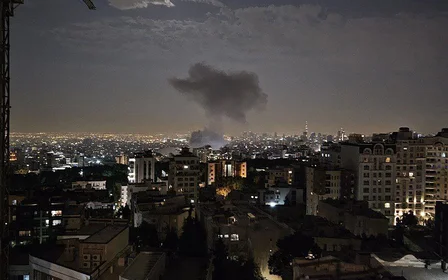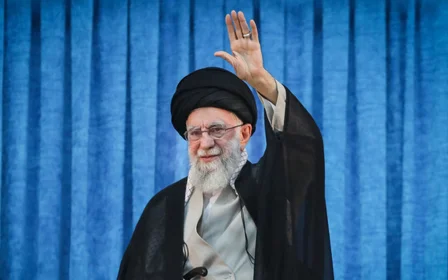

Live: Iran holds funeral for top military, nuclear figures killed in Israeli strikes

Live Updates
Iran’s military intends to keep up its attacks on Israel following overnight strikes, according to a report by the semi-official Fars news agency.
Quoting a senior military source, the outlet said: “This confrontation will not end with last night's limited actions and Iran's strikes will continue, and this action will be very painful and regrettable for the aggressors.”
The unnamed official warned that the response was far from over and suggested further retaliation may follow.
Two prominent American lawmakers have called for restraint amid rising tensions following Israel’s strike on Iran.
Senator Rand Paul warned that a war with Iran would not serve US interests, saying: “It would destabilise the region, cost countless lives, and drain our resources for generations.”
He added that diplomacy should take precedence over military confrontation, calling dialogue with adversaries “the strength of a confident nation seeking peace”.
Congressman Chuy Garcia condemned the Israeli attacks, calling them “acts of diplomatic sabotage” that risk triggering wider conflict.
He also urged Washington to end the flow of offensive weapons to Israel, especially those being used in Gaza, and called for a renewed push towards negotiations.
War with Iran is not in America’s interest. It would destabilize the region, cost countless lives, and drain our resources for generations.
— Senator Rand Paul (@SenRandPaul) June 13, 2025
We should pursue diplomacy, not destruction. Engaging in dialogue with adversaries is not weakness; it’s the strength of a confident nation…
Netanyahu’s strikes on Iran are acts of diplomatic sabotage that risk escalation, endangering civilians in both countries & across the region.
— Congressman Chuy García (@RepChuyGarcia) June 13, 2025
The US must stop supplying offensive weapons to Israel, which also continue to be used against Gaza, & urgently recommit to…
The New York Times was allegedly told by Iranian officials that Israel’s surprise air strike on Thursday night significantly disrupted Tehran’s planned military response.
According to the report, Iran initially intended to fire up to 1,000 ballistic missiles at Israel to overwhelm its air defences and cause maximum damage.
Two members of the Islamic Revolutionary Guard Corps said the Israeli attack on missile facilities prevented forces from retrieving and positioning the weapons for launch.
The officials admitted they had disregarded safety protocols, including avoiding large gatherings, because they believed any Israeli response would come only after upcoming nuclear talks with the United States set for Sunday.
The newspaper said it interviewed more than six Iranian officials, including two IRGC members, to compile its report. The NYT report could not be independently verified.
Oman’s Foreign Minister Badr Albusaidi has spoken with several international counterparts as part of Muscat’s efforts to defuse rising tensions in the Middle East, according to the Foreign Ministry.
In a statement shared on social media, the ministry said the region’s latest crisis had been “triggered by Israel’s direct attacks on Iranian territory.”
During the calls, Albusaidi reportedly emphasised “the importance of halting the aggression … in order to prevent further bloodshed, destruction, and loss of life, and to safeguard the security, stability, and the supreme interests of the region and its peoples”.
On Friday, Albusaidi also condemned the Israeli assault on Iran, calling it “illegal, unjustifiable and a grave threat to regional stability.”
Israel’s unilateral attack on Iran is illegal, unjustifiable and a grave threat to regional stability. I condemn it and urge the global community to come together to reject Israeli aggression and support de-escalation and diplomacy with one voice.
— Badr Albusaidi - بدر البوسعيدي (@badralbusaidi) June 13, 2025
A missile launched from Yemen by the Iran-aligned Houthi movement injured five Palestinians, including three children, in the Israeli-occupied West Bank, the Palestinian Red Crescent has reported.
Earlier, local sources confirmed that the missile struck the Palestinian town of Sa’ir. The Israeli military said it did not activate any interceptors in response to the launch.
Sirens reportedly rang out in Jerusalem and across several Israeli settlements in the southern West Bank shortly before the explosion, according to local media outlets.
Israeli strikes on Iranian nuclear, military and civilian sites:
-
Israel launched missile attacks on Iranian nuclear and military facilities early Friday, killing senior officials and prompting retaliatory strikes.
-
Israeli Prime Minister Benjamin Netanyahu vowed the operation would continue "as many days as needed," claiming Iran was nearing a "point of no return" in its nuclear programme.
-
Key targets included the underground Natanz nuclear facility, struck multiple times. The IAEA confirmed no radiation leaks were detected.
-
Iran reported limited damage at Fordo and Isfahan nuclear sites.
Senior Iranian commanders killed
-
Among the dead were: Hossein Salami, head of the Revolutionary Guards; Mohammad Bagheri, armed forces chief of staff; Amirali Hajizadeh, aerospace commander overseeing ballistic missiles.
-
Iran’s UN envoy said 78 killed, 320 wounded in initial Israeli strikes.
Iran’s retaliatory attacks
-
Iran fired dozens of missiles at Israel late Friday and early Saturday.
-
Most drones intercepted, but rocket strikes injured 21 along Israel’s coast.
-
Earlier, 34 were wounded in Gush Dan, with one woman later dying from injuries.
International response & US involvement
-
UN Security Council held emergency talks; Antonio Guterres urged de-escalation: "Peace and diplomacy must prevail."
-
Iran’s foreign minister called Israeli strikes "a declaration of war" and demanded UN action.
-
US President Donald Trump said Israel briefed him beforehand but denied direct involvement. He warned Iran: "Next attacks will be even more brutal."
-
Oil prices surged, with fears over disruptions to Strait of Hormuz oil shipments.
Nuclear programme & diplomacy
-
Iran enriches uranium at 60 percent purity—below weapons-grade but beyond 2015 deal limits.
-
US-Iran talks in Oman, set for Sunday, likely canceled amid tensions.
Regional fallout
-
Airspace closures in Israel, Iran, Iraq, Jordan, and Syria.
-
Airlines cancel flights, reroute around conflict zones.
China has sharply criticised Israel for what it called violations of Iran’s sovereignty, security, and territorial integrity, during an emergency UN Security Council session.
Speaking on Thursday evening, Beijing’s envoy to the UN, Fu Cong, said his government was “seriously concerned” that the current escalation could derail ongoing talks over Iran’s nuclear programme.
He urged Israel to halt all military operations immediately, warning that further escalation could deepen instability across the region.
Fu also stressed that Iran’s right to peaceful nuclear energy, as outlined under the Non-Proliferation Treaty, must be respected.
China remains one of Iran’s closest partners, especially in the energy and infrastructure sectors. Just last month, Beijing hosted senior diplomats from Iran and Russia for discussions on nuclear issues and called for an end to sanctions on Tehran
Jordan has reopened its airspace following a brief suspension triggered by escalating tensions between Iran and Israel.
The country’s civil aviation commission announced that flights resumed at 7:30am local time (05:30 GMT) on Saturday, after a precautionary closure the previous day.
A top adviser to the commander of Iran’s Islamic Revolutionary Guard Corps has warned that Tehran will keep up its missile strikes on Israel for as long as it deems necessary.
Brigadier General Ahmad Vahidi told state television that the latest operation targeted 150 sites across Israel and was executed in several waves.
“Based on our assessment of the situation, this operation will continue as long as needed,” he said.
“The Israelis now realise they miscalculated and should expect consequences — this is only the beginning.”
Iran said the missiles, launched less than 24 hours after it was struck, hit military installations and caused extensive damage.
The US quietly delivered hundreds of Hellfire missiles to Israel before its unprecedented attack on Iran on Friday, Middle East Eye can reveal.
The US sent around 300 Hellfire missiles to Israel on Tuesday in a large-scale stock-up of supplies before its attack, and as the Trump administration was saying it was ready to continue engaging Iran in nuclear talks.
The transfer of such a large quantity of Hellfires suggests that the Trump administration was well-informed of Israel’s plans to attack the Islamic Republic of Iran, two US officials told MEE on the condition of anonymity.
The US’s delivery of Hellfires or other large quantities of weapons in the lead up to Friday’s attack has not been previously reported.
The US military helped shoot down Iranian missiles that were headed towards Israel, two US officials told Reuters on Friday.
Read more: Exclusive: US quietly sent hundreds of Hellfire missiles to Israel before Iran attack

The death toll from the Iranian missile strike on central Israel has climbed to two, according to reports by the Israeli broadcasting authority and The Associated Press.
The attack also left at least 19 others wounded, marking a sharp escalation in the ongoing hostilities between the two countries.
Iran’s air defence forces have reportedly intercepted and brought down several Israeli drones near the country’s northwestern border, according to state media.
The drones were shot down in the Salmas region, which lies close to the border with Turkey, with Iranian outlets accusing Israel of carrying out an “espionage mission.”
State TV claimed the drones were repelled after entering Iranian airspace, though no footage or further official confirmation has been released so far.
Iran has blamed the United States for Israel’s recent attack on its territory, accusing Washington of giving the green light for the strike.
Foreign Ministry spokesman Esmaeil Baqaei, speaking to the semi-official Tasnim news outlet, said the assault would not have taken place without American approval.
“The other side [the US] acted in a way that makes dialogue meaningless,” Baqaei said, referring to recent diplomatic efforts between Tehran and Washington over Iran’s nuclear programme.
“You cannot claim to negotiate and at the same time divide work by allowing the Zionist regime [Israel] to target Iran’s territory,” he added.
Hello and welcome to Middle East Eye's live coverage as we track the latest developments after Israel launched strikes against Iran, marking a major escalation in regional tensions.
Here are some of the latest developments:
-
Iran launches missile strikes on Israel in retaliation for Israeli attacks on Tehran, which killed dozens, including military leaders and nuclear scientists, and wounded hundreds.
-
Explosions reported in Iran, with footage from Tasnim News Agency showing fires at Mehrabad International Airport in Tehran.
-
Israeli media confirms first fatality: A woman critically wounded in Iran’s initial missile barrage has died, according to Kan public broadcaster.
-
UN chief urges restraint: Antonio Guterres calls for de-escalation, stating, “peace and diplomacy must prevail”.
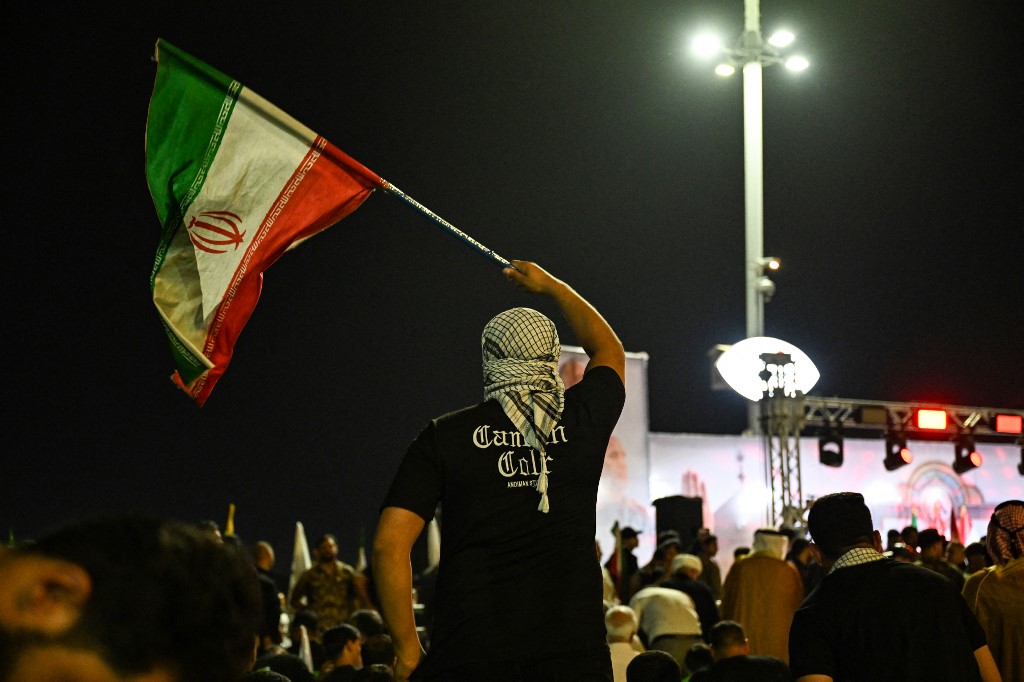

Loud explosions were heard in Tel Aviv and Jerusalem minutes after Iran had warned that it was launching a new wave of missile attacks, Reuters reported on Friday (early hours of Saturday morning local time in Israel).
Iran is retaliating after Israel launched unprovoked military air strikes on Iran's nuclear facilities in the early hours of Friday morning and killed almost 80 people.