LIVE BLOG: Israeli Elections

Israeli polls opened on Tuesday as voters determine whether Israelis still want incumbent Prime Minister Benjamin Netanyahu as leader, or will seek change after six years.
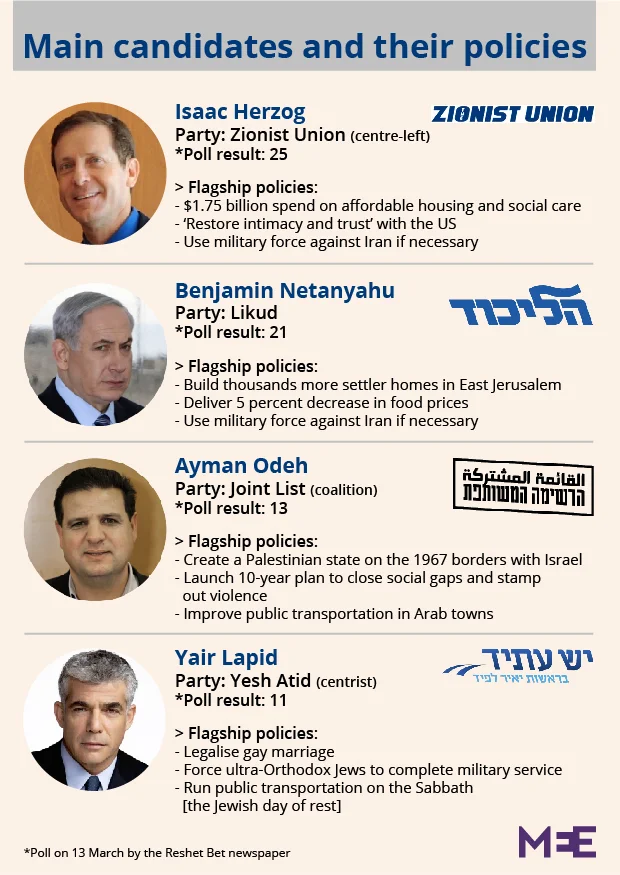
With final opinion polls giving centre-left Zionist Union, led by Labor head Isaac Herzog a 3-4 seat lead over Netanyahu, the election could be a nail biter - although whoever wins will depend entirely on the remaining Knesset members and their parties to form the next government.
It is unlikely that the make up of the next government will be clear for at least several days, potentially weeks, but polls have also predicted that the Joint List party, which includes many politicians who are Palestinian citizens of Israel who have been on the political margins for years, is likely to become the third-largest faction in the Knesset and bring the minority into the decision-making mainstream.
Some observers have noted that the focus on the elections has drifted from hard issues - like the economy and security - to focus squarely on whether voters want to keep Netanyahu or not.
Others accentuate the identity politics that underline the Israeli political scene and say that beyond social issues or a Netanyahu referendum, voters will be motivated by their religious and ethnic affiliations.
And then there are a whole segment of Palestinian citizens of Israel who are boycotting the election altogether, many telling Middle East Eye that they believe voting normalises a system of discrimination that does not see them as equal citizens of Israel in comparison to their Jewish Israeli neighbours.
Nearly 6 million voters will be able cast their vote until 8pm GMT. We'll be following developments here with commentary and news. Stay with us for updates throughout the day.
Live Updates
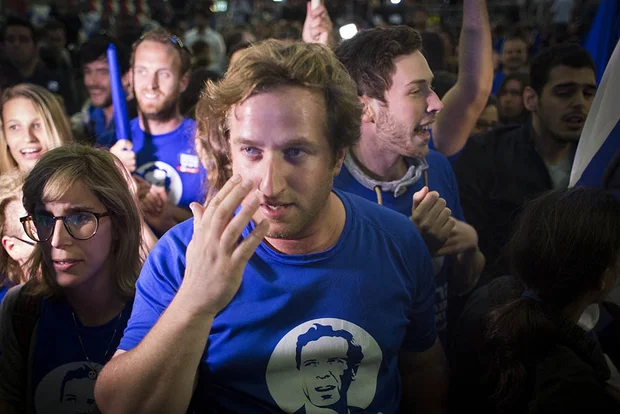
“This is a victory and means that the situation will improve and we [Zionist Union] will be able to form a government,” Oren Pasternak, a field activist from Zionist Union, told MEE.
“According to the polls, the Israeli public does not want Netanyahu as a prime minister. We started the campaign with 12 seats in the polls so for us this is a big success. We remain optimistic and have a lot of energy for the rest of the evening.”
MEE's Meron Rapoport gives his initial reactions to the exit polls and Israel's future:
Israeli Prime Benjamin Netanyahu claimed a "major victory" after exit polls showed his rightwing Likud neck-and-neck with the centre-left Zionist Union in Tuesday's general election.
"Against all odds: a great victory for the Likud. A major victory for the people of Israel!" he wrote on his official Twitter account.
Hilik Bar, Labor’s general secretary, said on stage at the Zionist Union rally:
“The Zionist Union party will tomorrow be the biggest party in Israel. And Bibi, you will see that Hertzog will unite all of the people who think you failed. You (Bibi) speak about Daesh (IS) and Iran but not about the cost of living.”
“In half an hour the next prime minister (Hertzog) will come here. The right-wing block, which until today was bigger and stronger, lost.”
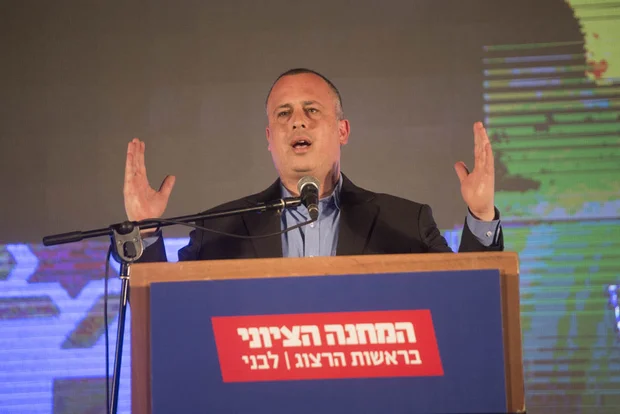
Shelly Yachimovich, second on the Zionist Union list and former leader of the Labor Party, has slammed Netanyahu for his warning to voters over the high turnout of Arabs in the election.
Answering a question from a voter on Facebook, Yachimovich said: “No Western leader would dare utter such a racist comment. Imagine a prime minister/president in any democracy who would warn that his rule is in jeopardy because, e.g., ‘Black voters are coming in droves to the polling stations’ … Horrendous, isn’t it? In any case, I think what worries Bibi is that Israeli citizens are moving in droves to the ballots, and quite simply want to democratically topple him.”
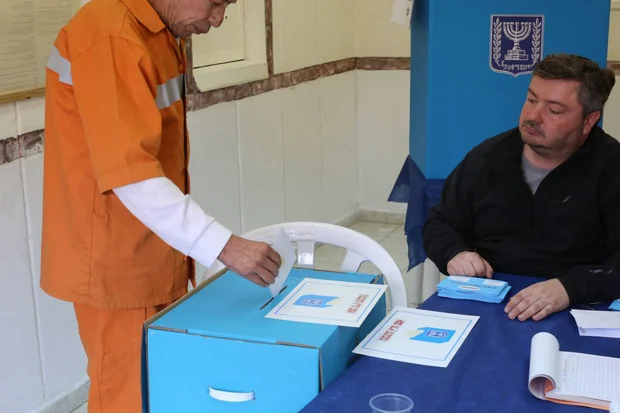
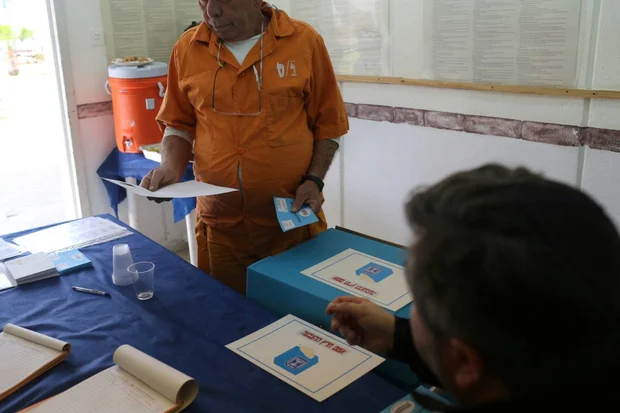
In Maasiyahu prison in the city of Ramle, both Jewish and Palestinian citizens of Israel are voting. All prisoners are there reportedly for criminal offences.
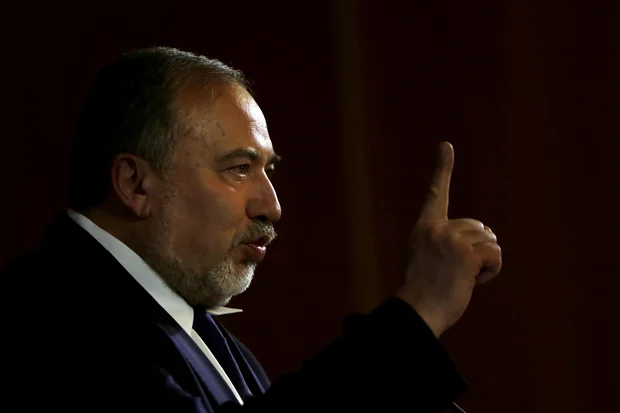
Israeli Foreign Minister Avigdor Lieberman said that toppling the Palestinian movement Hamas should be the top priority of the next Israeli government.
"Hamas continues to dig tunnels and upgrade rockets because the Israeli leadership is weak," Lieberman said.
"This is why Israel has to change its way of dealing with this terrorist movement [Hamas]," he added, according to Israel Public Radio.
Lieberman said Israel could only sign an agreement with Hamas to prevent any future military confrontations when the group's leaders were eliminated.
In online magazine +972, Noam Sheizaf offers a roundup of what to watch for as the election results unfold, including several potential coalition makeups:
- If the opposition (Zionist Camp, Meretz, Joint List and Yesh Atid) can get 60 seats or more, Netanyahu will find it difficult - or impossible - to form a government and is likely to retire from politics immediately
- If Netanyahu, the Right (Jewish Home Party, Yahad and Yisrael Beitenu) and ultra-orthodox parties (Shas and United Torah Judaism) can get to 60, Netanayhu, of course, will find the task of forming a government easier. He will also take power away from Moshe Kahlon of the centrist Kalanu party which Kahlon, a former Likud minister, formed last year. Kahlon, who is expected to get 10 seats and has not named who he will support, is looking like this election's kingmaker.
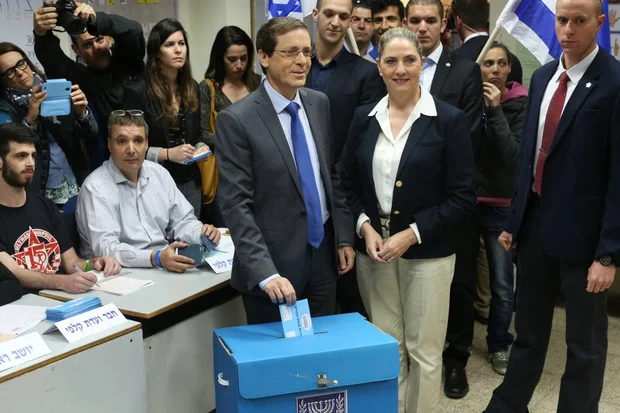
"This is a party for democracy. We have to remember Israel is a democracy and the people will decide who will lead them," Isaac Herzog, head of the Zionist Union, told MEE as he cast his vote, with his wife Michal Herzog, at a north Tel Aviv polling station near his home.
"These elections are between hope and change or desperation and disappointment. Who ever want change hope and a better future for Israel should vote for the Zionist Union."
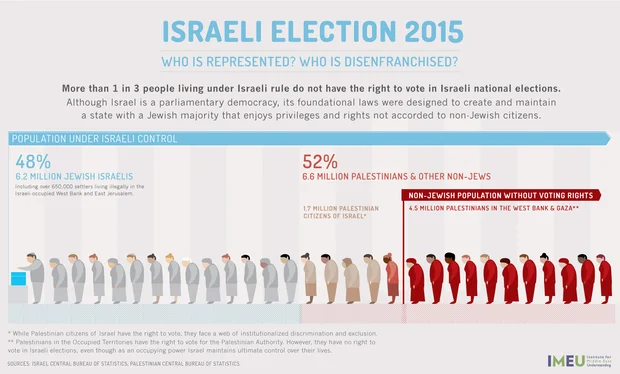
(Source: http://imeu.org/)
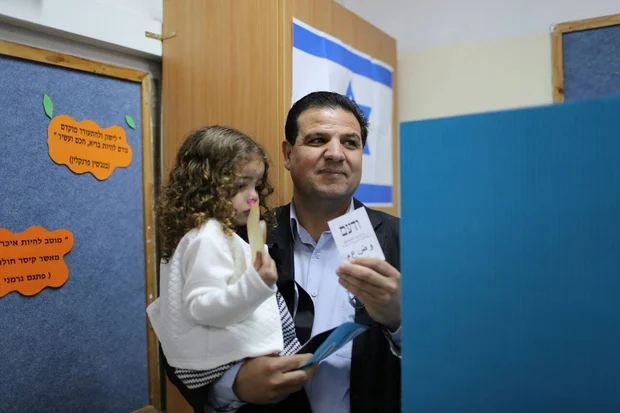
Ayman Odeh, leader of the Joint List - which has brought Palestinian political parties in Israel together for the first time - votes in today's election near his house.
Odeh, who is also the leader of the Jewish-Palestinian communist Hadah party, drew wide attention last month when he reproached Foreign Minister Avigdor Lieberman for failing to use his name in live televised debates, writes MEE's Meron Rapoport.
"I'm an Arab and I have a name. It's Ayman Odeh," he told Lieberman.
Latest polls show the Joint List is likely to become the third-largest faction in the Knesset, which would bring Palestinian citizens of Israel out of the Israeli political sidelines.
While some are reporting that it appears there is a larger turnout than usual of Palestinian citizens of Israel today as a result of the Joint List, it is not without its critics amongst the Palestinian community.
"Practically speaking, they cannot do anything to influence the Knesset, not even symbolically," Fida Shehadeh, a boycott campaigner in Lod, told MEE this week.
Chairman of Yisrael Beiteinu, Avigdor Lieberman, has warned that only a vote for his party can ensure that the Islamic State (IS) does not gain a foothold in Israel.
"Whoever wants to prevent an ISIS branch and an al-Qaida cell in Israel must vote for Yisrael Beiteinu," he said, while touring polling stations in Ashkelon.
"There is a political expectation that Netanyahu will lose out in these elections and the left will win instead," former Labor Party MP and host of a twice-daily Channel 2 political show, Daniel Ben-Simon told MEE.
"There is a sense that a Iot people are sick of Netanyahu after such a long time and they want a change."
"Everyone is expecting a change ... [possibly] a left wing and centre party coalition government," added Ben-Simon.
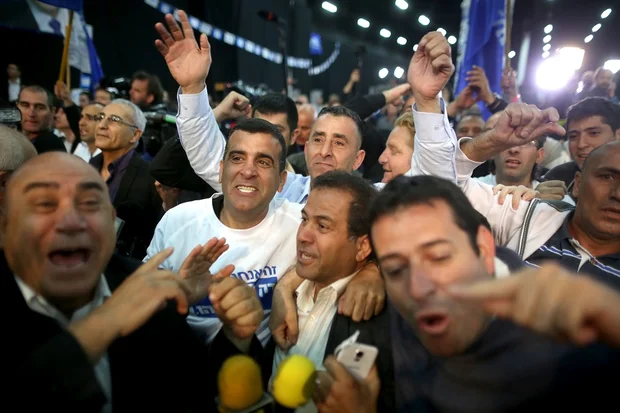
Supporters of Prime Minister Benjamin Netanyahu celebrate the first exit poll results.