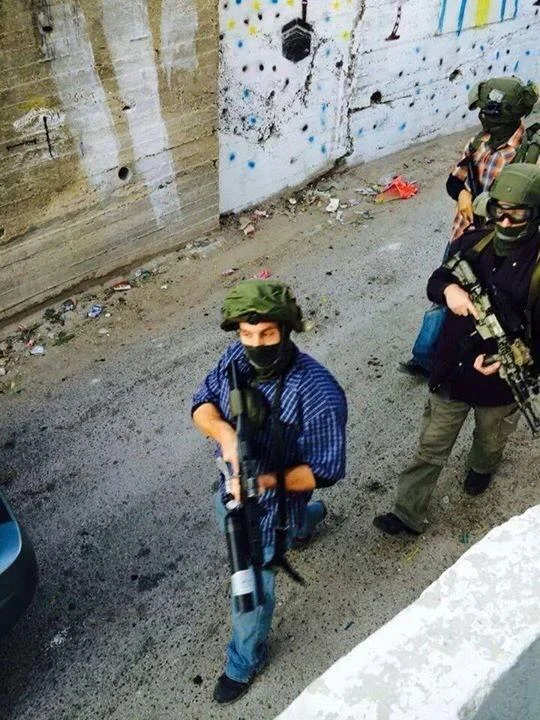
LIVE BLOG: Jerusalem on the brink

Round-up of events overnight:
- Amid heavy Israeli police presence, hundreds of Palestinians attend funeral late Thursday in Jerusalem for Mu'taz al-Hijazi, the man allegedly behind the attempted assassination of right-wing rabbi Yehuda Glick on Wednesday
- The Al-Aqsa Mosque compound opened early on Friday for dawn prayers and was expected to stay open throughout the day
Live Updates
Ofer Zalzberg, of the International Crisis Group, has been outside the gates of al-Aqsa mosque in Jerusalem. He says the Old City is the tensest he’s seen it in years:
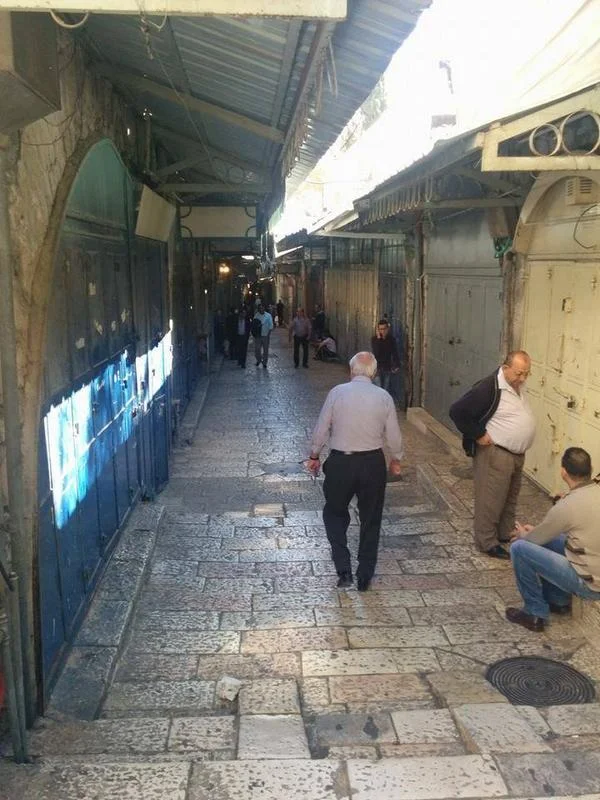
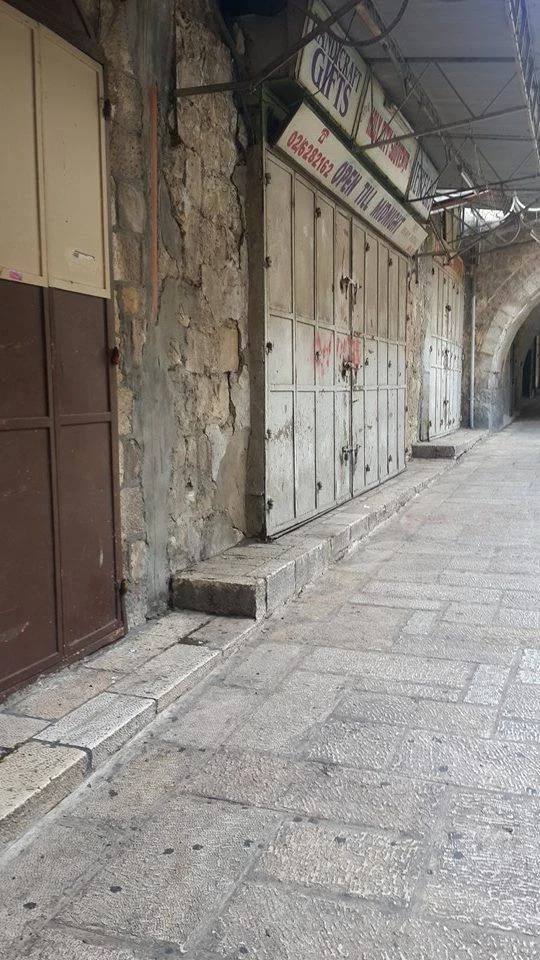
“90 percent of the shops are closed. The odd group of tourists wander by in what looks today like a ghost city. Police are everywhere. You see the older men who come to pray regularly, they stand outside the gate hoping it will open.They sit next to the barriers and talk and hope for a better day. The merchants didn’t even come. There were lots of warnings in the media not to come to the old city today.”
Zalzberg says wider mobilisation or a "third intifada" is unlikely:
So far I don’t see any real sign of mass mobilisation among Palestinians. Police presence in Jerusalem is so high now that it makes it very difficult to organise. But I think it will accelerate trends we are already seeing: Arab Muslim individuals, sometimes because of despair, loss or trauma, sometimes because they are part of an armed political faction, instigating specific attacks on Israeli citizens. I think this kind of sporadic, unstructured violence will become more common. People are now angrier with Israel for preventing so totally Muslim worshippers from accessing the site. In the last months we’ve seen more of what Israel calls 'dilution policy,' only allowing men over 40 and women inside. This gives Muslims the sense they are being punished collectively.
Sweden's Parliament voted to officially recognise the state of Palestine this morning.
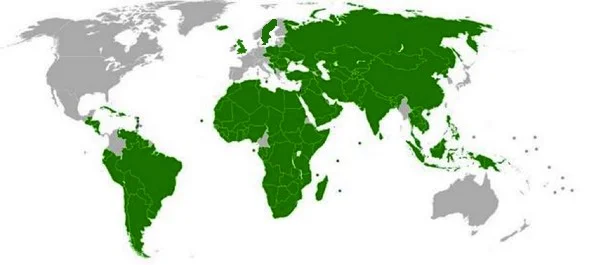
After the move, Israeli Foreign Minister Avigdor Liebermann dubbed the decision "deplorable."
The US also criticised the decision - it had previously warned Sweden against recognising Palestine as a state, calling it "premature."
A Swedish minister then responded to the criticism, saying that "the US does not dictate Swedish policy."
Mu'taz al-Hijazi, the man killed by Israeli forces in the Thawri neighbourhood of Jerusalem this morning, was suspected of being behind yesterday's alleged assassination of Yehuda Glick, a prominent right-wing activist calling for Jewish prayer to be allowed at al-Aqsa Mosque.
Glick was shot by a suspect riding a motorcycle as he gave a speech outside the Menachem Begin Centre in East Jerusalem.
Hijazi worked at the centre's restaurant, the Reuters correspondent in Palestine reported on Thursday morning.
There are reports of fierce clashes in the area surrounding Hijazi's home, after he was killed in a shoot-out with Israeli forces.
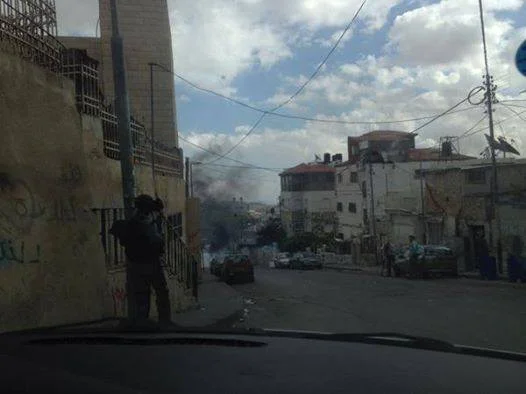
Dan Cohen, an independent journalist who visited the Hijazi family home after the killing, reported that he had been forced off the roof of the house by tear gas "pouring throughout the neighbourhood."
The Israeli police spokesperson Micky Rosenfeld alleged that "shots were fired" at security forces as they raided Hijazi's home this morning.
Eye-witnesses Cohen spoke to say that the "weapon" Hijazi was holding was a power tool, not a gun.
Hijazi was released in 2012 after serving 11 years in an Israeli prison, including some 10 in solitary confinement.
On his release, Hijazi said in a video interview: "I am very happy to be released… But what I am happiest about is being able to return to Jerusalem…and al-Aqsa with my family and my people.”
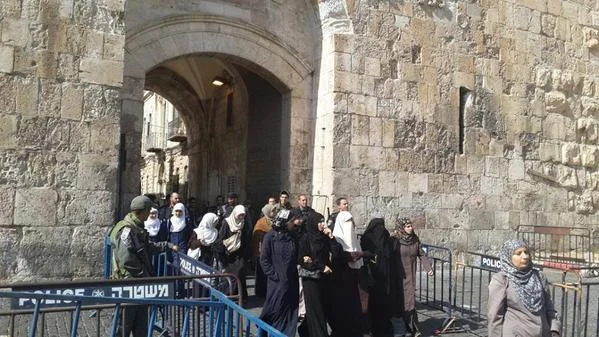
There have been violent clashes in Jerusalem, with disturbances concentrated in the Old City after the decision to close the al-Aqsa compound.
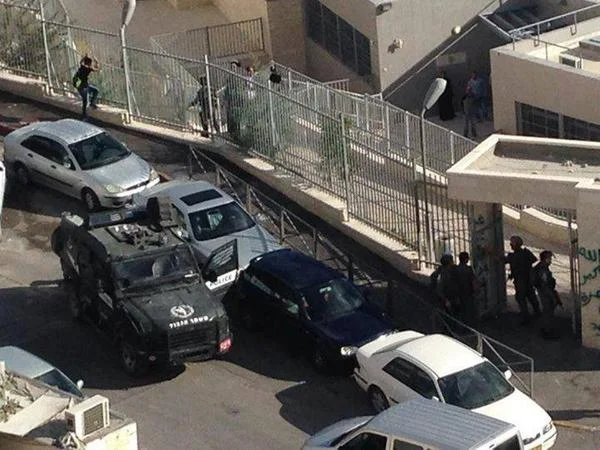
Hundreds of Israeli troops are deployed around the Old City, a 1 kilometre squared walled area in the east of Jerusalem.
Israeli forces expelled a group of Palestinian women, who had been guarding the compound, moving them outside the walls of the Old City, Palestine Information Centre reported.
A 20-year old was arrested after allegedly shooting fireworks towards Israeli troops in the Old City.
In Silwan, East Jerusalem, independent journalist Dan Cohen reported that tear gas was being fired into the air apparently at random.
As tension in East Jerusalem rose to simmering point, Palestinian Authority President Mahmoud Abbas said he holds Israel responsible for what he called the "dangerous escalation" in the city.
A strike in protest at the killing of Mu'taz al-Hijazi has now spread througout East Jerusalem, according to Palestine Information Centre.
Chris Doyle of the Council of Arab-British Understanding, reflects on the call made by Moshe Feiglin, a prominent lawmaker in Netanyahu's Likud party, for the Temple Mount to be opened for Jewish prayer following the shooting. Doyle says the violence will likely benefit Israel’s far right:
Calling on Jews to go and pray at al-Aqsa is a deliberately provocative reaction; it dares Palestinians to come out and clash, and it dares the Israeli authorities to stop the Jews from praying. Either way the Israeli right wins. If they get a violent reaction from the Palestinians then the Israeli authorities will be forced to take action, which further intensifies the situation, if they stop Feiglin from praying then he becomes a victim.
What you’re seeing is the Israeli coalition really attempting to make life tough for Netanyahu, they are goading him on: are you going to stop a member of the Knesset from praying on temple mount even at this most sensitive moment?
It’s in the interests of some on the Israeli right, in the settler lobby, to actually trigger a new wave of violence amongst Palestinians. In each and every single one of these cases, including the killing of the three Israeli teenagers over the summer, they (the Israeli far right) are seen ultimately to gain. It creates the conditions where Israel is seen as more isolated internationally, and where it has to show defiance, which ultimately will leads to more land grabs and settlements.
Palestinian authority President Mahmoud Abbas said on Thursday morning that the closure of al-Aqsa Mosque and the compound surrounding it is "an announcement of war", on the Palestinian people, according to AFP.
He had said in a speech on Wednesday night that "Jerusalem and the Islamic and Christian holy sites in it are a red line."
Responding to the closure of al-Aqsa, the Orthodox Bishop Ata Allah Huna said on Thursday morning: "We strongly deplore, in the name of Jerusalem's churches, Israel's closure of al-Aqsa."
Further underscoring the war of words between Israeli and Palestinian politicians, the Israeli tourism minister said on Thursday morning that Mahmoud Abbas is Israel's "primary enemy."
Israeli authorities have raised their "level of preparedness" to three. The highest possible level is four.
There were huge deployments of Israeli troops and police personnel on Thursday morning, with reports that a school in the East Jerusalem district of Silwan was raided.
Hamas leader and spokesperson Hasam Bedran called on Thursday morning for Palestinians across the West Bank to support Jerusalem in the current "battle."
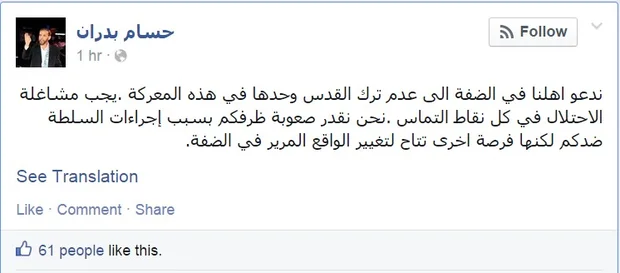
Translation: We call on our people in the West Bank not to leave Jerusalem's side during this battle. We must engage with the occupation on all points of contact. We appreciate the difficulty of your circumstances due to restrictions imposed on you by the authorities, but they give us a fresh opportunity to change the bitter status quo in the West Bank.
A second Hamas spokesperson on Thursday said that the attempted assassination of Yehuda Glick yesterday was a "natural" reaction to violations of al-Aqsa, which have seen groups of Israeli settlers, often accompanied by armed guard, enter the Islamic holy site.
Commenting on the events of the morning, Islamic Jihad said that closing the al-Aqsa compound for the first time since 1967 is "a dangerous act of emnity in the context of plans to divide the site."
Palestinian Information Centre reports that, alongside violent clashes in many parts of the city, shopkeepers in the Old City of Jerusalem, Hijazi's home neighbourhood, have gone on strike.
Translation: Trader strike in the Old City of occupied Jerusalem after Israeli forces kill freed prisoner Mu'taz al-Hijazi in al-Thawri neighbourhood
Sheikh Omar al-Kaswani, who heads the administration of al-Aqsa Mosque, told Sky News Arabia that the decision to completely close the site this morning "threatens the security of the entire region."
Kaswani pledged to stay inside the locked-down site until Israeli authorities reverse their decision - authorities announced this morning that the site will be closed "until further notice."
Seven people, including Kaswani, were allowed access to the site this morning.
Many others completed the dawn prayer in the streets outside the compound.
Member of the Israeli Knesset [Parliament] Moshe Feiglin this morning attempted to pray at the contested site. He was prevented from accessing the site, which is closed to worshippers of all religions. Feiglin, who is head of the "Jewish Leadership" faction of Prime Minister Benjamin Netanyahu's governing Likud party, later compared the decision to bar Jews as well as Muslims from the site to the events of 11 September 2001, reported independent journalist Dan Cohen.
Glick, who has long advocated for rights to Jewish prayer at the Islamic holy site, was speaking on Wednesday evening at an event titled "Israel Returns to the Temple Mount" when he was shot by a suspect riding a motor-bike.
al-Aqsa Mosque is the name Muslims use to refer to the site - Jewish worshippers call the same site, which they say was the location of two ancient Jewish temples, Temple Mount.
Israeli police have confirmed said that the suspect behind the shooting on Wednesday, Mu'taz al-Hijazi, was shot and killed on Thursday morning.