

LIVE BLOG: The Middle East as it happens

- Kurdistan Regional Government unanimously votes to send fighters, weapons into Syria's Kobane
- Baby killed, eight wounded when driver hits pedestrians in Jerusalem. Israeli police are calling the incident a 'terror attack'; Ma'an News says Palestinian driver lost control of car.
- Explosion reported outside of Egypt's Cairo University
- Two Israeli soldiers reportedly injured as Israeli army begins on Tuesday to deploy troops on the Israel-Egypt border.
- Six Jordanian opposition parties call for their government to withdraw from the US-led coalition battling the Islamic State militant group
Live Updates
A more than 24-hour standoff between Tunisian National Guards and alleged "terrorists" in the east of the capital Tunis is now over, having left six people dead.
Five of the casualties were women, who had been trapped in the house during the confrontation, and the sixth was one of the suspected "terrorists."
A child and another alleged assailant were also injured - two other people who had been trapped in the house were able to leave after the end of the operation.
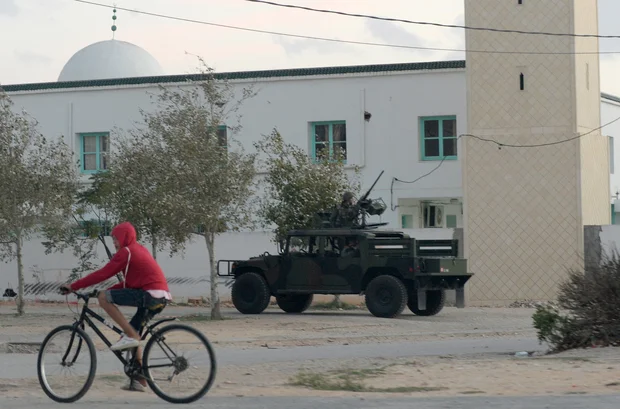
Tunisian National Guards raided the house early on Thursday morning, after they were given information by two people arrested after a brief armed confrontation in the south of the country.
The violence comes just days before millions of Tunisians are expected to take to the polls - expatriate Tunisians have already begun voting.
Ministry officials said in a press conference yesterday that the violence is linked to the elections, and that militants are attempting to foil the country's democratic transition.
Yusra al-Ghannoushi, international spokesperson for Tunisia's al-Nahda party, told MEE that "these attempts to derail the democratic process and sow division between Tunisians will fail, just as they have failed in the past.
"At this time, we need to demonstrate unity and commitment to the success of our democracy."
Israel's ambassador in Jordan, Daniel Nevo, has said that strategic relations between the neighbours are developing.
He said that it would be impossible for Israel to "dream of a neighbouring country better than Jordan."
Nevo was speaking during a Thursday morning interview on Israeli radio ahead of the 20th anniversary of the signing of the Israel-Jordan peace agreement on 26 October 1994.
He also sought to play down recent criticisms by Jordan, which have centred on Israel's policies at the sacred site of al-Aqsa in Jerusalem.
Jordan's Foreign Minister last week urged the international community to put pressure on Israel to stop illegal practices and violations at the site, which has for decades been a flashpoint for tension between Arabs and Israelis.
This morning it was announced that Israeli authorities will be continuing to restrict access to the mosque, considered the third holiest site by many Muslims - no men under the age of 40 will be allowed to access al-Aqsa.
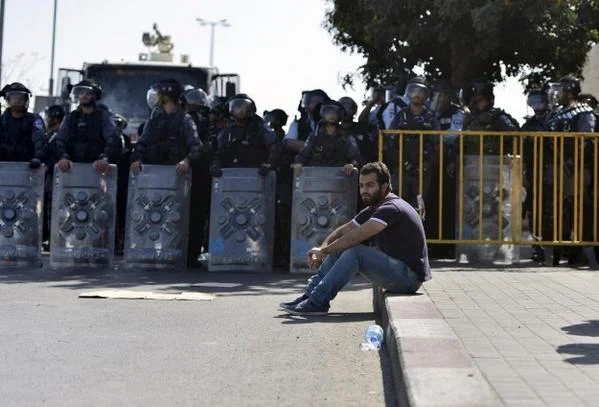
Despite recent public criticisms, Israel and Jordan have important ties.
Jordan is one of only a handful of Middle Eastern countries to have full diplomatic relations with Israel, and in September it was announced that an Israeli company was to become Jordan's largest supplier of natural gas, signing a 15-year contract.
In the midst of fears about ebola, with the first diagnosis of a healthcare worker in New York this morning, CNN is being lambasted for its diagnosis of a very different problem: Sudden Jihad Syndrome.
The diagnosis came in a report about Wednesday's shooting in the Canadian parliament, which left a guard and the shooter dead and raised fears in Canada over reprisals over its role in the US-led anti-IS coalition airstrikes in Iraq and Syria.
CNN reporter Deborah Feyerick wondered whether the shooter, said by Canadian police to have been "mentally unstable", might have been a victim of online radicalisation, or possibly of "Sudden Jihad Syndrome."
Feyerick's comments reference the term coined by Daniel Pipes, a conservative US scholar who argues that, due to the possibility of followers of the faith suddenly becoming radicalised, all Muslims should be considered potential terrorists.
CNN's use of the phrase has sparked a storm of ridicule on Twitter, with many Muslims describing the everyday annoyances that could, according to Pipes and CNN, cause them to turn to "jihad."
Others used the phrase to highlight other less well-publicised meanings of "jihad." In Islamic tradition, jihad, which comes from the same Arabic root as words like "strive" and "exhaust oneself", can take many forms. These include jihad of the heart, jihad of the tongue and jihad of the pen.
Washington has said publicly for the first time that Syrian President Bashar al-Assad is buying oil from Islamic State.
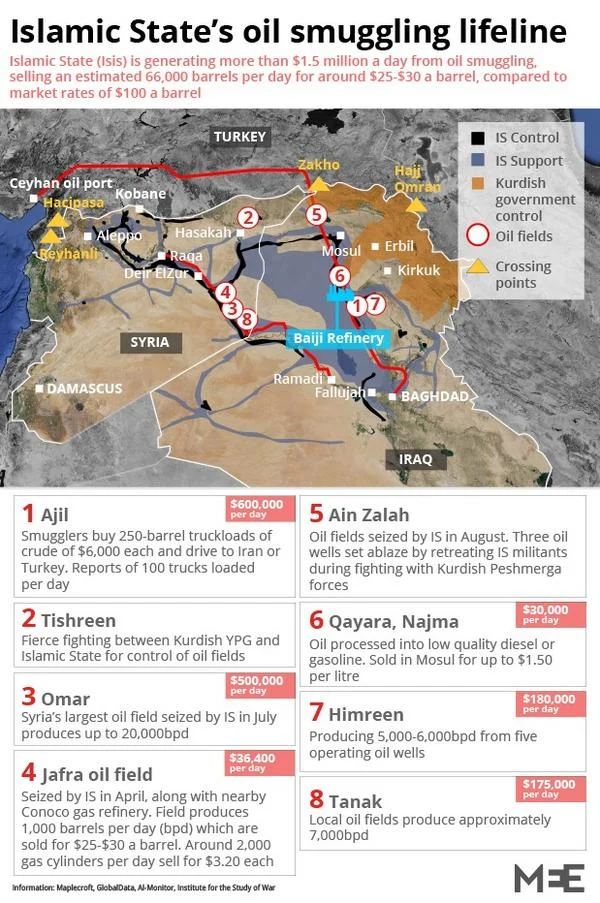
David Cohen, Under Secretary for Terrorism and Financial Intelligence, told the Carnegie Endowment for International Peace in Washington that IS are able to amass wealth at an "unprecedented pace" thanks to black-market oil sales totalling up to $1m a day.
Cohen said that the group is selling oil to a wide range of buyers, among them Iraqi Kurds who then resell the oil in Turkey.
"It also appears that the Syrian government [of Bashar al-Assad] is making arrangements to buy oil from IS, in a further indication of the corruption of Assad's regime."
The US is strongly opposed to Assad's government, but Congress voted down a proposal in 2013 to launch military intervention in support of rebels.
However, US politicians did vote on 18 September to authorise the training of rebel groups it deems moderate - a full list of such groups, compiled by activist George Sabra Nott, can be found here.
IS, unlike other militant and extremist groups, are not forced to rely on trans-national funding, due to the vast profits they are able to reap from oil smuggling as well as taxation of areas under their control and kidnappings.
The Upper House of Ireland’s parliament on Wednesday passed a motion calling on the government to recognize a Palestinian state.
It is the third European country (after Sweden and the UK) in less than a month to throw its weight behind Ramallah’s statehood bid.
Ireland was the first European country to recognize the Palestine Liberation Organization and has traditionally been one of Israel’s bitterest critics in the EU.
Speaking in the Seanad, Senator Averil Power, from the center-right republican party said: “By joining Sweden and other EU states in recognizing Palestine.. we will create pressure on Israel to pursue a genuine peace process that has a real prospect of delivering peace and justice for both Israelis and Palestinians alike.”
The Israeli embassy in Dublin tweeted its disapproval.
“Today, a Palestinian man murdered a 3 month old (!) Jewish baby in Jerusalem [a]nd yesterday the Irish Seanad has passed a motion calling on the Government to recognise the state of Palestine without direct peace negotiations between Israel and the Palestinians,” the statement read
US officials say the Islamic State has become the world's wealthiest terror group.
The group generating tens of millions of dollars a month from black market oil sales, ransoms and extortion and $1 million a day alone by selling crude oil from fields it captured across Iraq and Syria earlier this year, according to David Cohen, Treasury undersecretary for terrorism and financial intelligence.
Earlier this month France's foreign minister said the Islamic State was selling oil to the government of Bashar al-Assad in Syria.
A Wall Street Journal article describes how IS smuggles the oil out:
The route begins with oil fields run just a few years ago by Western energy giants and now controlled, along with fuel-smuggling operations in Syria, by the Islamic State.
The militants truck oil drawn from those fields or stolen from pipelines to rudimentary refineries... The refined products are sent to the Turkish frontier, where they're hauled over the border by trucks, horses or mules, according to these accounts. Fuel has also been floated across rivers on rafts or pumped through underground pipelines before finding its way to markets across southern Turkey.
Initially, Turkey largely turned a blind eye to the illicit fuel trade, which ramped up at the start of the Syrian uprising in 2011 along smuggling routes that have existed for decades.
Crude from these fields, as well as oil stolen from tapped pipelines and from other fields across the country, is processed into low-quality fuels, including diesel, in a number of makeshift refineries in Islamic State-controlled Raqqa province
Clashes between Houthi rebels and local tribesmen have killed three people on Thursday afternoon, reports Anadolu Agency.
A security source told the agency that clashes broke out in the central province of al-Bayda.
The latest violence comes hours after Ansar al-Sharia, an al-Qaeda affiliate active in Yemen, claimed responsibility for IED's that killed 18 Houthi supporters in central Yemen.
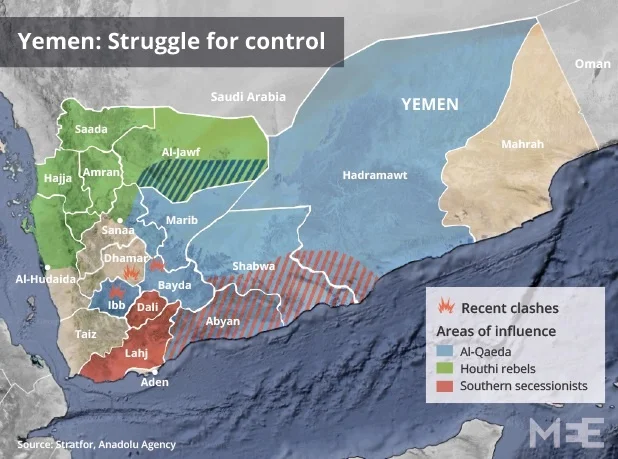
Bayda, where three were killed on Thursday afternoon, has traditionally been an al-Qaeda stronghold, and the group's supporters have largely been confined to areas around Bayda since the government launched a large-scale bombing campaign against the group in May.
However, after the Houthi takeover of the capital Sana'a in September, the rebels have been moving southwards and encroaching on territory traditionally held by al-Qaeda.
Prominent Iraqi cleric Muqtada al-Sadr has demanded that Saudi Arabia release Sheikh Nimr al-Nimr, a religious leader and figurehead for many opposed to Saudi’s current rulers.
Nimr, a driving force behind 2011 protests in Saudi Arabia’s marginalised eastern province, was sentenced to death by a Saudi court last Wednesday last Wednesday over accusations of “sedition” and “seeking foreign meddling.”
He was also charged with inciting violence and firing on Saudi security services.
Sadr’s office on Wednesday demanded that the Saudi authorities review the ruling on the Shiite cleric, warning that carrying out the death sentence could ignite existing sectarian tensions in the region.
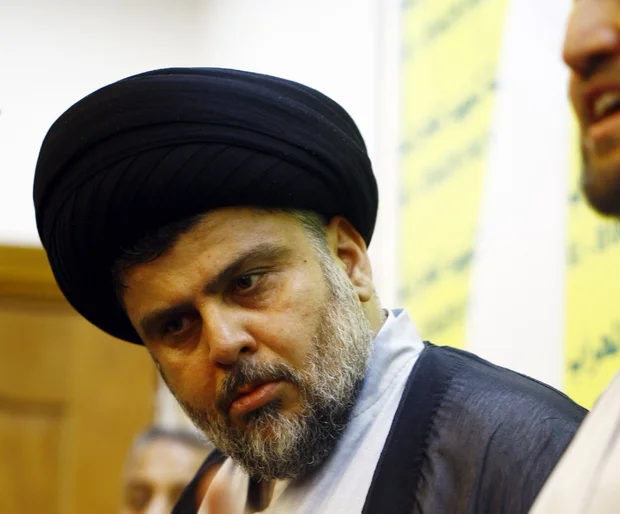
The warning comes after a Shiite group in Iraq, Tha’ar Hizb Allah, warned on Sunday that Saudi interests in Iraq and the wider region would be targeted if authorities do not review the decision.
The decision has also attracted condemnation from Iran.
Iran’s deputy foreign minister, Hossein Amir Abdollahian, warned on 19 October that Nimr’s execution would lead to “fatal consequences.”
A Reuters reporter in Lebanon has tweeted that a health minister informed him of a suspected case of ebola in Lebanon.
Associated Press has found itself under assault from the Israeli twitteratti who have been outraged over the news agency's “ISRAELI POLICE SHOOT MAN IN EAST JERUSALEM” headline.
They have a started a #HowAPWouldReport hashtag satirising AP's coverage of the killing of a Palestinian man in Jerusalem who had just killed an Israeli child in a hit and run.
The Arab League has expressed its support for Libya's "legitimate institutions", and stressed the urgency of finding a solution to the country's present crisis.
In a statement issued on Wednesday, the body stated its hope that members of the elected House of Representatives, which is locked in a legitimacy dispute with the outgoing General National Congress, will be able to bring boycotting members back into the fold.
A number of HoR members have been boycotting the parliament's meetings in the far-eastern cities of Tobruk and al-Bayda, stating that national dialogue initiatives are illegitimate because they do not include all parties active in Libya, like the militia group Libya Dawn.
In their Wednesday statement, the Arab League called on the international community, including countries neighbouring Libya, to take all possible steps towards establishing national dialogue.
Turkey's transportation, maritime affairs and communications minister, Lütfi Elvan, said on Thursday that the government plans to open tenders for the privatization of the state-owned railway system.
He said the transition into private railways would be finished before the end of 2015.
Officials have separately said that state personnel working on the nationalised rail lines would be dismissed with a severance package worth 40 percent of their annual salary, according to Today's Zaman.
Human Rights Watch has released a report entitled “‘I Already Bought You’: Abuse and Exploitation of Female Migrant Domestic Workers in the United Arab Emirates" documenting the brutal conditions of some domestic workers in the UAE.
“The UAE’s sponsorship system chains domestic workers to their employers and then leaves them isolated and at risk of abuse behind the closed doors of private homes,” said Rothna Begum, Middle East women’s rights researcher at Human Rights Watch.
“With no labor law protections for domestic workers, employers can, and many do, overwork, underpay, and abuse these women.”
The group criticised the new move of the International Labour Organisation to accept the UAE on its governing board.
“As it takes its seat on the ILO’s governing body, the UAE needs to make labor rights a reality at home, including for migrant domestic workers,” Begum said.
Saudi Arabia has jailed four women for "preparing some of their sons to fight in conflict areas believing that it is required by Islam" according to the Saudi Press Agency.
They were also found guilty of "supporting Al-Qaeda", accessing blocked Internet sites, and downloading "audio-visual material related to fighting."
Though little detail has been given about the arrests, it is presumed they are Saudi nationals
Anadolu Agency:
Two Tunisians, including a policeman, have been killed in clashes with militants in Tunisia.
A policeman was killed in clashes between security forces and "terrorists" late Wednesday in Wadi al-Layl in western Tunisia, Interior Ministry spokesman Mohamed Aroui told reporters on Thursday.
According to eyewitnesses, the clashes between the two sides were still raging on Thursday.
A guard was also killed in similar clashes between militants and security forces in the southern town of Kebili, a security source said.
According to the source, security forces have managed to arrest two militants and seized a cache of weapons during the confrontation.