Live: Israeli soldiers kill unarmed Palestinians as they surrender in Jenin

Live Updates
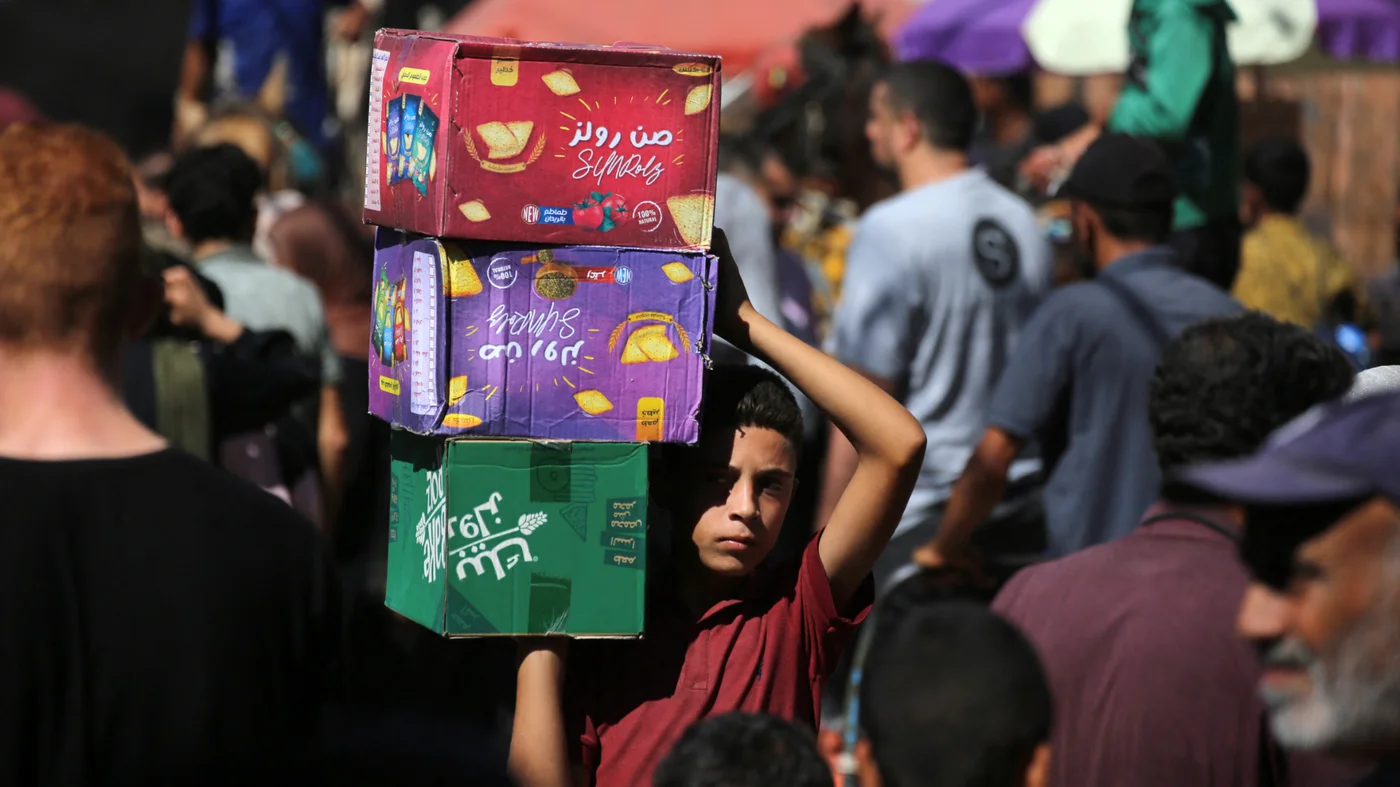
In supermarkets that reopened across Gaza following a ceasefire that ended two years of war, Monther al-Shrafi finds shelves overflowing with chocolate, soft drinks, and cigarettes, items that once felt like a “dream” during the famine.
But as these luxuries return in abundance, he says the essentials are still missing, including basic foods like eggs and vital medicines such as antibiotics.
“Can you imagine that there is chocolate in Gaza while there are no antibiotics? Or there are fruits but no wound dressings or sutures?” Shrafi, a resident of Gaza City, told Middle East Eye.
“Here in Gaza, there is a shortage, or even near absence, of essential items that the human body needs, such as meat, chicken, fish, and eggs, which are basic components of a healthy diet.”
After the ceasefire between Israel and Hamas took effect on 10 October, Israeli authorities partially reopened the Kerem Shalom border crossing in southeast Gaza.
Ready more: ‘They’re forcing us to gain weight’: Select foods allowed in Gaza as essentials remain missing

Israeli settlers have looted olive crops from Palestinian farmers in the town of Attara, northwest of Ramallah, in the latest act of settler violence targeting Palestinian livelihoods.
Wafa news agency reported that settlers from an illegal outpost built on the town’s land raided the fields east of Attara on Tuesday evening, stealing freshly harvested olives in the occupied West Bank.
The attack is part of a growing wave of settler assaults during this year’s olive harvest season. The United Nations has warned that 2025 is on track to become the most violent olive-picking season in more than ten years.
For tens of thousands of Palestinian families, the olive harvest is not only a cornerstone of their economy but also a symbol of resilience and attachment to their land.
The Israeli army says the Red Cross has received the body of one Israeli captive from Gaza as part of the ongoing ceasefire deal with Hamas.
“According to information provided by the Red Cross, a coffin of a deceased hostage has been transferred into its custody and is on the way to IDF troops in the Gaza Strip,” the military said.
Israel’s military has used the handover of bodies to justify renewed aggression in Gaza, despite the fragile truce, as it continues to violate ceasefire terms while maintaining its blockade on aid and movement.
United Nations humanitarian chief Tom Fletcher has sounded the alarm over a sharp rise in attacks by Israeli settlers on Palestinians in the occupied West Bank, warning that Israel’s culture of impunity must end.
“The failure to prevent or punish such attacks is inconsistent with international law. Palestinians must be protected,” Fletcher wrote on X, demanding accountability for the escalating settler violence.
UN data shows that more than 1,000 assaults were recorded in the first eight months of 2025 alone, marking one of the most violent years for Palestinians in the occupied territory. Rights groups say Israeli forces often protect settlers rather than hold them accountable.
The violence has also devastated the olive harvest, a vital source of income for Palestinian families, as settlers destroy trees, steal crops, and terrorise farming communities across the West Bank.
Yemen’s Houthi leader, Abdel-Malik al-Houthi, has ordered his forces to prepare for an inevitable confrontation with Israel, accusing Israel of defying the ceasefire and continuing its massacres in Gaza.
“We are inevitably heading towards more confrontation with the Israeli enemy,” Houthi declared in a televised address, adding that the region will never see peace while Israel occupies Palestine.
He said the United States, as a guarantor of the ceasefire, “is a partner in Israel’s crimes in Gaza”, and condemned Muslim governments for failing to take a firm stand against Israel.
Houthi accused regional states of echoing Israeli demands to disarm Hezbollah, while Washington “has provided full support to the Israeli enemy and is a complete partner in injustice, genocide, and aggression”.
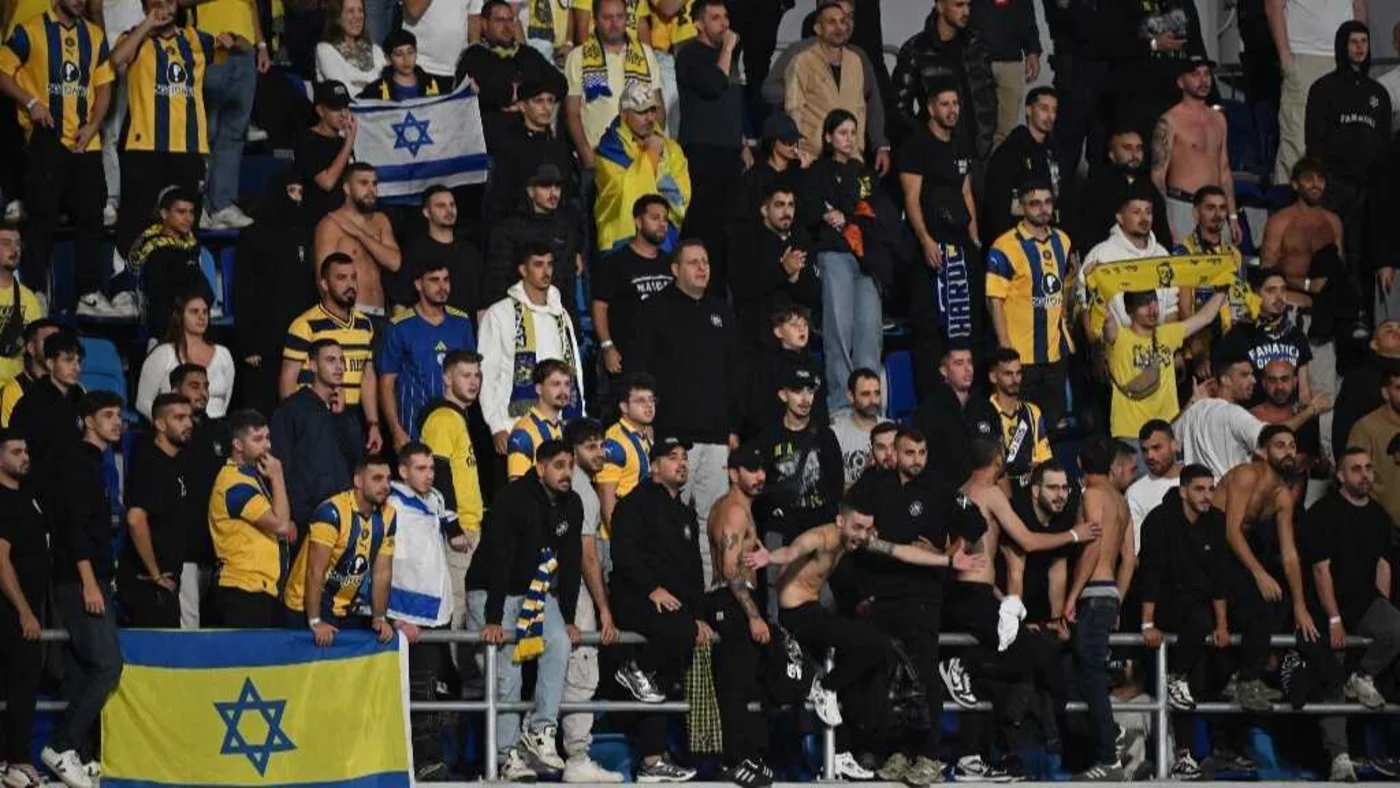
Dutch police told their British counterparts that over 200 Maccabi Tel Aviv football fans who wreaked havoc in Amsterdam in November 2024 were "linked to the Israel Defense Forces [IDF]", and that hundreds more were "experienced fighters", "highly organised" and "intent on causing serious violence", Middle East Eye can reveal.
The recent ban on fans of Israeli club Maccabi Tel Aviv from a 6 November fixture at Aston Villa in Birmingham triggered a political furore and was denounced as antisemitic last month by the British government.
But the West Midlands Police assessment which led to the ban was based on intelligence provided by Dutch police about the conduct of Maccabi fans during a match in Amsterdam last November.
The Guardian reported on 21 October that the police assessment "concluded the biggest risk of violence came from extremist fans of the Israeli club".
Now, as the match approaches, MEE can reveal new details of the police assessment which have not been previously reported, and which raise further questions about claims made by government ministers.
Read more: Exclusive: Violent Maccabi fans were organised fighters 'linked to IDF', UK police found

The Israeli army says the Red Cross is en route to collect the body of an Israeli captive from Gaza, after Hamas’s Qassam Brigades announced it had located the remains and was preparing to hand them over.
The exchange comes under the terms of the fragile US-brokered ceasefire, which Israel continues to violate through deadly air strikes and aid restrictions.
Only seven percent of displaced families in southern Gaza have managed to return home since the ceasefire began, while the vast majority remain trapped in overcrowded shelters.
A survey by the United Nations Office for the Coordination of Humanitarian Affairs (Ocha) found that those who returned did so to homes that were only partially habitable, driven mainly by the need to reunite with relatives or access basic services.
Most displaced families, however, have nowhere to go. Entire neighbourhoods lie in ruins after Israel’s relentless bombardment, leaving people with no safe or livable homes to return to.
According to the UN’s satellite agency, about 81 percent of Gaza’s buildings have been damaged or destroyed, evidence of the scale of devastation Israel’s war has inflicted.
The World Food Programme (WFP) says it has delivered food parcels to one million people in Gaza, well short of its target of 1.6 million, three weeks after the ceasefire took effect.
The agency said families are receiving just one food basket every ten days because of severe shortages, warning that Israel’s restrictions on border access are strangling aid deliveries.
Currently, only two crossings into Gaza are open under Israeli control, drastically reducing the flow of humanitarian assistance.
The WFP stressed that all crossings must be reopened immediately to expand aid access, particularly to northern Gaza, where the closure of key routes has forced convoys to take long, dangerous detours.
Palestinian Foreign Minister Varsen Aghabekian Shahin met Singapore’s Foreign Minister Vivian Balakrishnan in Ramallah to discuss “the ongoing humanitarian catastrophe in the Gaza Strip despite the ceasefire”.
Shahin thanked Singapore for its continued solidarity with Palestinians and urged it to take the next step, formal recognition of the State of Palestine, saying such a move would “provide practical support for the two-state solution”.
According to a statement from the Palestinian Foreign Ministry on X, Balakrishnan reaffirmed Singapore’s commitment to the two-state framework and offered technical and institutional support to strengthen Palestinian governance.
Dutch police told their British counterparts that over 200 Maccabi Tel Aviv football fans who wreaked havoc in Amsterdam in November 2024 were "linked to the Israel Defense Forces [IDF]", and that hundreds more were "experienced fighters", "highly organised" and "intent on causing serious violence", Middle East Eye can reveal.
The recent ban on fans of Israeli club Maccabi Tel Aviv from a 6 November fixture at Aston Villa in Birmingham triggered a political furore and was denounced as antisemitic last month by the British government.
But the West Midlands Police assessment which led to the ban was based on intelligence provided by Dutch police about the conduct of Maccabi fans during a match in Amsterdam last November.
The Guardian reported on 21 October that the police assessment "concluded the biggest risk of violence came from extremist fans of the Israeli club".
Now, as the match approaches, MEE can reveal new details of the police assessment which have not been previously reported, and which raise further questions about claims made by government ministers.
This comes days after the police and Birmingham's safety advisory group upheld the ban on Maccabi Tel Aviv fans from attending the match – after government criticism – although Maccabi Tel Aviv had eventually decided not to sell tickets to its fans for the fixture.
The original police assessment, seen by MEE, records that Dutch police informed their British counterparts that "over 200" Maccabi Tel Aviv fans in Amsterdam last year were "linked to the Israel Defense Forces", Israel's army.
Read more: Violent Maccabi fans were organised fighters 'linked to IDF', UK police found

Hamas' armed wing said it would hand over the remains of an Israeli captive on Tuesday evening.
The Qassam Brigades "will hand over the body of one of the occupation's prisoners, which was found in the Shujaiya neighbourhood east of Gaza City, at 8:00 pm Gaza time (1800 GMT)," the group said on its Telegram channel.
Of the 28 deceased captives Hamas agreed to hand over to Israel under the ceasefire deal, it has so far returned 20 - including 18 Israelis, one Thai national and one Nepali.
The death toll in the Gaza Strip since the beginning of the Israeli genocide in October 2023 has risen to 68,872, the Palestinian health ministry said on Tuesday. At least 170,677 others have been wounded.
Four bodies, including one that was recovered from under the rubble and three that were recently killed, were brought to hospitals in Gaza over the past day.
Since the ceasefire went into effect on 11 October, at least 240 Palestinians have been killed by Israeli forces and a further 607 wounded.
In supermarkets that reopened across Gaza following a ceasefire that ended two years of war, Monther al-Shrafi finds shelves overflowing with chocolate, soft drinks, and cigarettes, items that once felt like a “dream” during the famine.
But as these luxuries return in abundance, he says the essentials are still missing, including basic foods like eggs and vital medicines such as antibiotics.
“Can you imagine that there is chocolate in Gaza while there are no antibiotics? Or there are fruits but no wound dressings or sutures?” Shrafi, a resident of Gaza City, told Middle East Eye.
“Here in Gaza, there is a shortage, or even near absence, of essential items that the human body needs, such as meat, chicken, fish, and eggs, which are basic components of a healthy diet.”
After the ceasefire between Israel and Hamas took effect on 10 October, Israeli authorities partially reopened the Kerem Shalom border crossing in southeast Gaza.
For the first time since the Israeli army sealed the borders on 2 March, pushing the Strip into a state of starvation that has claimed the lives of hundreds of Palestinians, goods and international aid were allowed in.
Alongside some fruits and vegetables, the permitted items included carbohydrates and starches such as wheat flour, semolina, rice, pasta, canned corn, and potatoes; sugar like chocolate, candies, and jam; fats such as butter, processed cheese, and canned cream; and other secondary goods including cigarettes and soft drinks.
Read more: Select foods allowed in Gaza as essentials remain missing
The architect of the controversial Generals' Plan, retired Israeli general Giora Eiland, is expected to participate in a conference organised by the left-wing Israeli party The Democrats to mark the 30th anniversary of the assassination of the late Prime Minister Yitzhak Rabin.
The conference is expected to take place on Friday at a teacher training seminar in Tel Aviv.
According to the conference programme, Yair Golan, head of The Democrats, will deliver a speech after a recorded message by President Isaac Herzog.
Afterwards, a discussion will be held on the subject of "Responsibility and Leadership" with Eiland, alongside former Prime Minister Ehud Barak and former mayor of Beit Shemesh, Aliza Bloch.
According to Uri Weltmann, an activist in the left-wing Jewish-Palestinian group Standing Together, Eiland's participation in the conference "at the very least indicates that there are people in the leadership of the party who do not feel the need to distance themselves from statements that support starvation or support a sweeping attack on civilian population".
"A left-wing position, a peace-seeking position, which I think should be supported, are positions that deny harming an innocent civilian population," Weltmann told Middle East Eye.
Eiland headed a group of former Israeli security officers who called in September 2024 for the implementation of a military plan in the northern Gaza Strip known as the Generals' Plan.
Read more: Architect of plan to starve Gaza invited to Israeli left-wing conference