Live: Gaza death toll nears 50,700

Live Updates
Israel confirmed on Saturday night that it had received the proposal by Egypt and Qatar and it had made a counteroffer on Saturday afternoon.
The Prime Minister Benjamin Netanyahu's office said the new offer was made “in full coordination with the US.”
Top Hamas official Khalil al-Hayya said the group “dealt positively” and “accepted” a proposal by Egypt and Qatar to stop the fighting in the territory, according to Al Jazeera.
Israeli media outlets have earlier reported that the deal would involve the release of five Israeli captives in exchange for resuming the truce the first day of Eid.
The Palestine Red Crescent Society said on Saturday that the fate of nine crew members in the Gaza Strip remains unknown nearly a week after Israeli forces had hit ambulances.
The gunfire in Rafah city's Tal al-Sultan neighbourhood came just days into a renewed Israeli offensive in the southern area, close to the Egyptian border, after the military resumed its bombardments of Gaza on 18 March.
The Red Crescent in a statement accused Israeli authorities of refusing to allow search operations to locate the missing workers. "For the seventh consecutive day, the fate of nine Palestine Red Crescent EMTs remains unknown after they were besieged and targeted by Israeli forces in Rafah," it said.
"We condemn Israel's deliberate obstruction of search efforts and hold it fully responsible for the lives of our team members," the statement added.
The emergency response service said that "initial reports from the crew at the time of the incident confirmed they came under heavy gunfire from Israeli forces, resulting in multiple injuries."
The Israeli military says that ground operations have begun in al-Jnaina, a neighbourhood in southern Gaza’s Rafah.
Meanwhile, Al Jazeera reported that an Israeli strike has killed two people and injured several others in Deir al-Balah.
Israeli soldiers have opened fire on a French infantry unit serving with the UN peacekeeping force, Unifil, according to Lebanese media reports.
Lebanon’s National News Agency said the French troops were inspecting a dirt mound that Israeli troops had put up near the border village of Rmaish.
We previously reported that the Palestinian communities in the occupied West Bank are at risk of forced displacement amid renewed Israeli settler attacks on Jinba village in Masafer Yatta.
Allegra Pacheco, from the UK charity West Bank Protection Consortium, told Middle East Eye that “Area C is vital to the viability of a Palestinian state because it connects the As and Bs, but it is also the breadbasket, home to water wells, and the natural expansion area for all of Areas A and B”.
“If Area C is lost, then it really erases the question of whether a Palestinian state could be viable,” she warned.
Under the Oslo Accords, the West Bank was divided into Areas A, B, and C, with major Palestinian population centres in Areas A and B. Area C surrounds and fragments these enclaves, containing smaller Palestinian communities and nearly all Israeli settlements.
New figures from the West Bank Protection Consortium reveal that 46,099 Palestinians - up from 39,252 - across 195 communities the organisation assists in the West Bank now face high or imminent risk of forced displacement.
The number of at-risk communities has also risen from 162 to 177, with nearly 600,000 dunams (60,000 hectares) of land now under threat. Between January 2023 and March 2025, at least 2,220 Palestinians - including 637 children - have been forcibly displaced, affecting 43 communities, 21 of which have been fully evacuated.
Since 7 October 2023, 92 percent of these forced transfers have taken place.
Hamas has accepted Egypt's proposal for a 50-day ceasefire to begin over Eid in exchange for the release of five living captives, an Israeli official told Walla News.
The official said the bodies of deceased captives would also be returned during the truce but did not specify a number.
Israel is expected to submit a counter-offer, making it unlikely that a deal will be finalised before Eid, which begins Sunday or Monday, the official added.
The report follows earlier reports by Egyptian officials to a Qatari outlet that Hamas had agreed to the proposal.
Israeli settlers have raided Jinba village in Masafer Yatta, the occupied West Bank, following days of settler attacks on Palestinian communities.
Five Palestinians have been injured so far in what has been reported as a major destruction of property.
The latest assault comes after a major attack on Friday, during which settlers beat Palestinians with iron bars, leaving at least two people with serious head injuries. Israeli forces responded by arresting 22 Palestinians - but no settlers.
Allegra Pacheco, from the UK charity West Bank Protection Consortium, said that of the 195 communities the organisation assists in the West Bank, 38 have been "partially to fully forcibly transferred" since October.
"We estimate 58,000 Palestinians in [the 195] communities are at risk, and the majority are at imminent risk of forcible transfer," she told Middle East Eye.
The Israeli army issued an expulsion order for Palestinians in the Khan Younis area where mortars were reportedly launched on Israeli troops.
The military's Arabic-language spokesman, Avichay Adraee, said this was a "final warning" before they would carry out strikes there.
#عاجل ‼️ إلى جميع سكان قطاع غزة المتواجدين في منطقة عبسان والقرارة وخربة خزاعة
— افيخاي ادرعي (@AvichayAdraee) March 29, 2025
🔴هذا انذار مسبق وأخير قبل الغارات!🔴
⭕️تعود المنظمات الإرهابية وتطلق قذائفها الصاروخية من بين المدنيين.
⭕️لقد حذرنا هذه المنطقة مرات عديدة.
⭕️من أجل سلامتكم عليكم الانتقال بشكل فوري غربًا نحو مراكز… pic.twitter.com/aZ3CLDr0iY
Three mortars were fired at Israeli troops near Khan Younis, southern Gaza, the Israeli army said.
The army added that an armoured bulldozer was hit by an explosive planted in the ground in the same area.
No injuries were reported.
Tens of thousands of Israelis are expected to take to the streets on Saturday to demand a deal to free the captives held by Hamas and to oppose the renewal of Israeli Prime Minister Benjamin Netanyahu's judicial overhaul, The Times of Israel reports.
I usually wake up at 6am (3am GMT) - if I have managed to sleep at all.
The sounds of bullets and tear gas are a nightly ordeal in my neighbourhood in Bethlehem, where Israeli soldiers conduct regular raids - sometimes every night for weeks at a time. It is terrifying.
I constantly worry about my family, friends, and neighbours. It is not uncommon to find out that a neighbour or someone I know has been arbitrarily detained following a raid.
In Palestine, our communities are close-knit, so every incident is deeply personal.
Raids were common even before 7 October, but they have become far more frequent and violent since then.
The recent ceasefire in Gaza has triggered a new surge in Israeli military raids across the West Bank, with dozens killed so far and many more arrested.
READ MORE: 'The sounds of Israeli military raids keep us awake at night', testimony from Riham Jafari
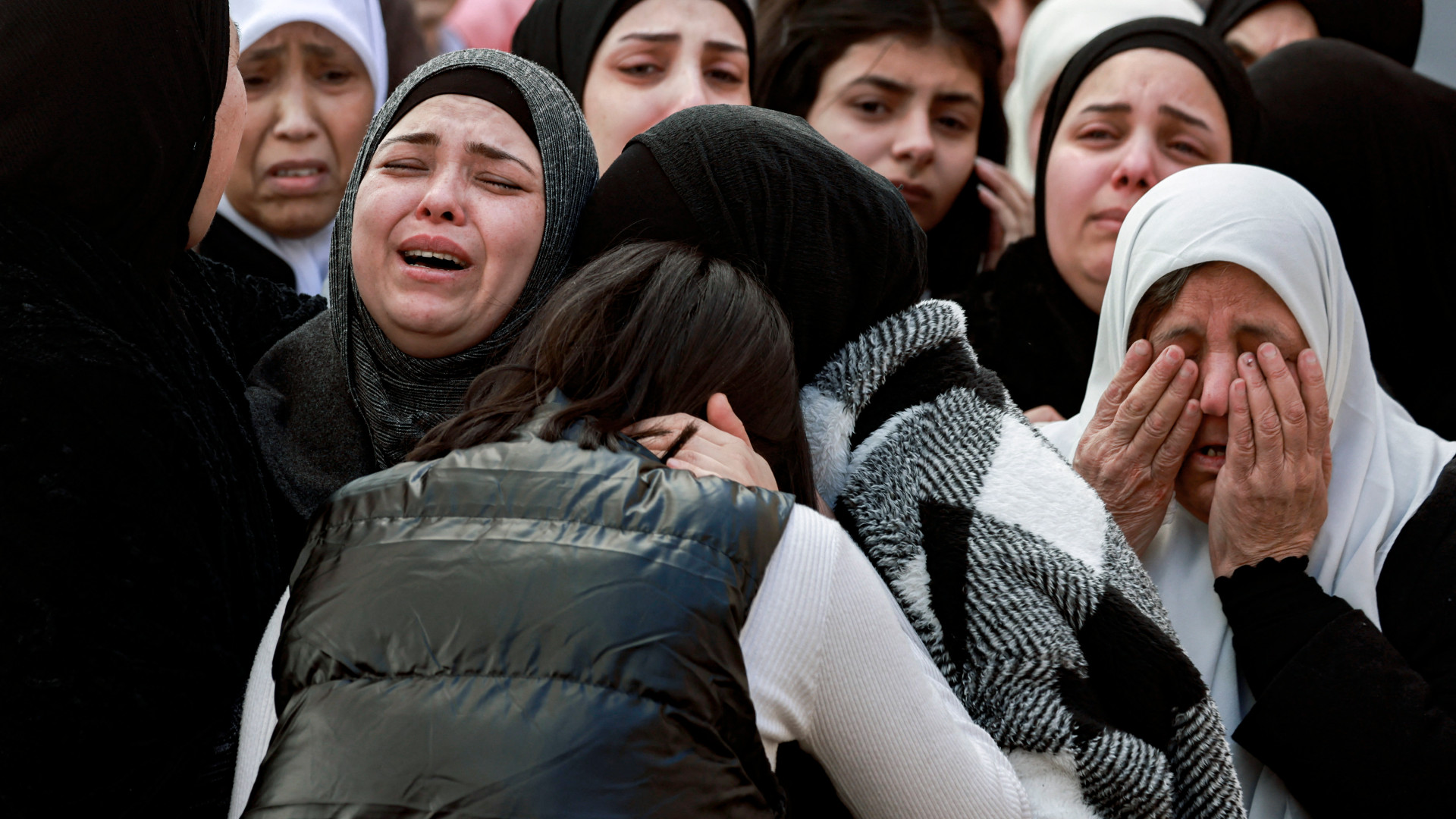

The number of people killed by Israel's bombing of a tent encampment in Khan Younis has risen to five, Al Jazeera's correspondent has said.
The toll reportedly includes a woman and a child.
The Israeli army has acknowledged firing on ambulances and fire trucks in southern Gaza last Sunday, saying they were deemed "suspicious vehicles".
The military said in a statement that its forces initially "opened fire toward Hamas vehicles and eliminated several Hamas terrorists".
"A few minutes afterwards, additional vehicles advanced suspiciously toward the troops … The troops responded by firing toward the suspicious vehicles, eliminating a number of Hamas and Islamic Jihad terrorists."
Following a preliminary inquiry, the army concluded that “some of the suspicious vehicles … were ambulances and fire trucks”.
The statement adds the Israeli military's claim that armed groups in Gaza use ambulances for "terrorist purposes" without providing evidence.
Huda Helles enjoyed a brief respite during the first days of the latest two-month ceasefire between Israel and Hamas.
She lived with her family of eight in a makeshift tent in Al-Wihda Street, central Gaza City, after their house in al-Shujaiya was bombed by an Israeli air strike in 2023. She and her family had a plan for the various dishes they wanted to cook during Ramadan.
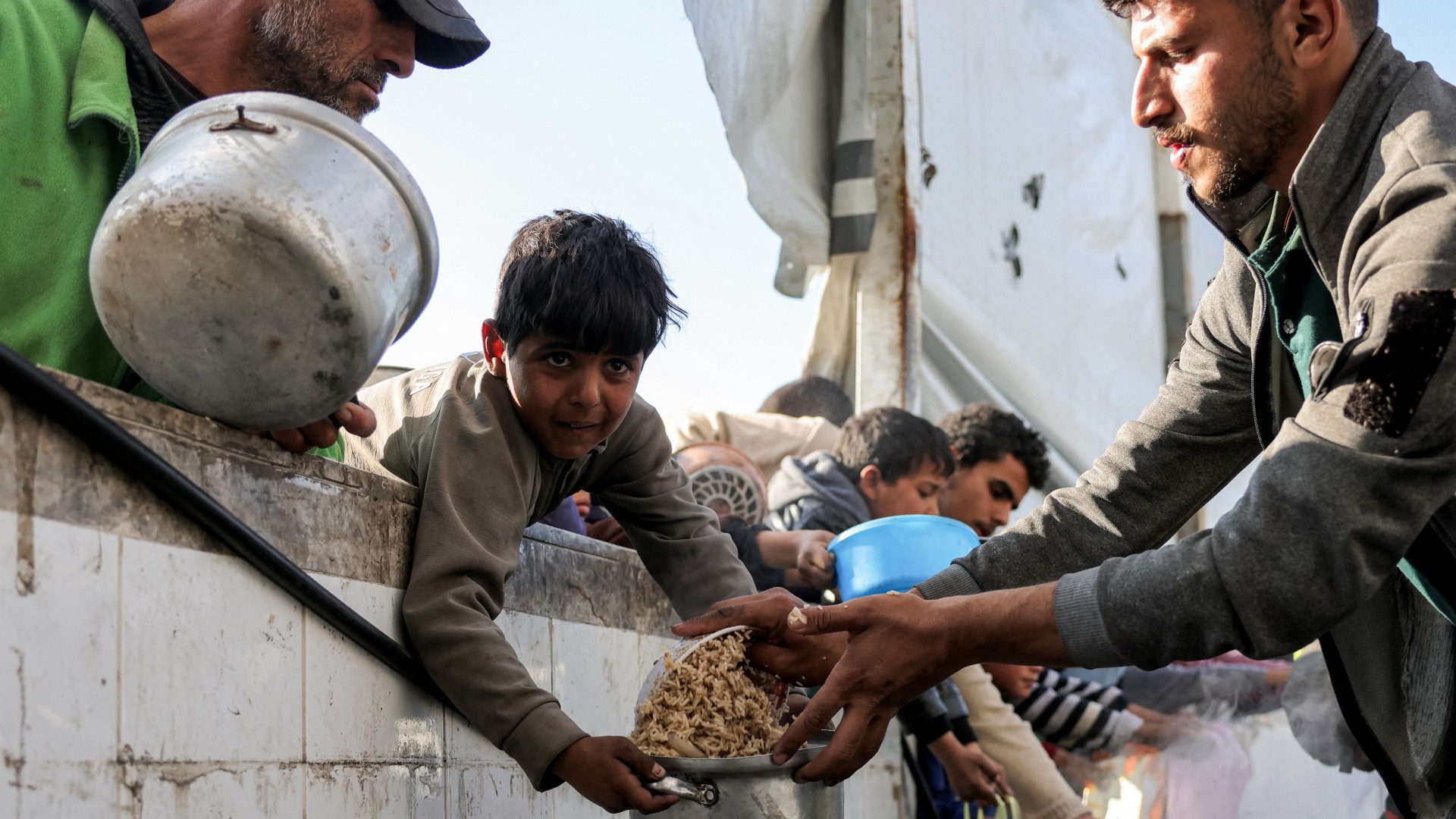
That plan was turned upside down on 2 March, when Israel closed the borders, halting the entry of all humanitarian aid, food, and goods into Gaza. The renewed blockade has brought the enclave to the brink of famine once again.
“We used to cook a variety of dishes every day, but now, for over 20 days, all we’ve had is rice,” Huda said. “Now it’s starting to give me severe stomach cramps.”
Read More: Palestinians starve as Israel continues full ban on humanitarian aid