Live: At least 75 killed in Israeli strikes on second day of Eid al-Adha

Live Updates
Gaza's health ministry says the newly formed Gaza Humanitarian Foundation (GHF) aid distribution hubs have become "Israeli death traps" and are a new mechanism for the forced displacement of Palestinians in Gaza.
In a statement published on Telegram, the ministry said that everyone that arrived at hospitals following Sunday's attack on Palestinians at an aid distribution hub in Rafah sustained one gun shot wound to the head or chest.
It noted that this confirms the Israeli "insistence on brutally killing civilians".
Dr Munir al-Barsh, the ministry's director, condemned “the international silence regarding the massacres being committed against the starving residents of the Gaza Strip," adding that severe shortages of medical supplies in the territory are producing "dire conditions" at hospitals.
He noted that 3000 trucks carrying badly needed medical supplies are currently stalled at the border.
He further accused Israel of "deliberately spreading infectious diseases and epidemics” by the blockade.
Gaza doctor, Hamdi al-Najjar, has succumbed to injuries sustained in an Israeli attack on his family home in Khan Younis on 23 May that killed nine of his 10 children.
He leaves his wife, paediatrician Alaa al-Najar, who was at work at Nasser Hospital at the time, and his 11-year-old son who was the sole survivor of the attack and is now in critical condition.
Al-Najar received the bodies of her nine children which were charred beyond recognition while at work in the emergency room.
Gaza's government media office has said that at least 32 Palestinians have been killed and 200 others wounded in Israeli attacks at GHF-run aid points in Rafah and near the Netzarim Corridor in central Gaza.
In addition, the enclave's health ministry reported that five bodies of people killed in previous Israeli attacks were recovered from the rubble.
The latest casualties have pushed the overall toll of Palestinians killed in Israeli attacks in Gaza since October 2023 to 54,418, with another 124,190 injured.
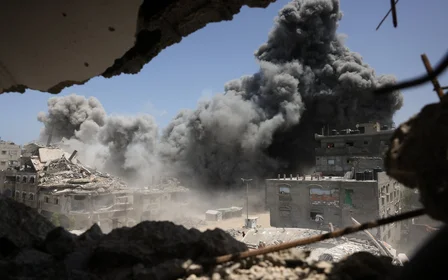
Al Jazeera Arabic is reporting that Israeli strikes have flattened three residential buildings in the Sheikh Radwan and al Saftawi areas north of Gaza City.
This comes shortly after Israel issued fresh forced expulsion orders for residents in Gaza City's northern neighbourhoods.
Mahmoud Ismael was one of the desperate Palestinian aid seekers who gathered outside the GHF-run Rafah aid distribution point before Israeli quadcopters and tanks fired on them. He had walked miles on crutches to get there.
“I came to get a sack of flour… a sardine tin or anything,” he told AFP.
“There is no food in my house, and I can’t get food for my children,” he said.
Sameh Hamuda walked from Gaza City and spent the night with relatives in a tent near Rafah before heading to the aid point.
“They began distributing aid, but suddenly quadcopter drones opened fire on the people, and tanks started shooting heavily. Several people were killed right in front of me,” he told the AFP news agency.
“I ran and survived. Death follows you as long as you’re in Gaza.”
" I don’t understand why they call people to the aid centres and then open fire on them,” he said. “What are we supposed to do?” Abdullah Barbakh said.
One person has been killed in an Israeli drone strike targeting a motorcycle en route to the village of Arnoun in Lebanon's Nabatieh governorate, the country's National News Agency is reporting.
The Israeli military claims to have killed dozens of fighters and razed around 100 Hamas structures in Khan Younis, southern Gaza.
It said that its troops destroyed a 700-metre-long (2,296-feet-long) Hamas tunnel.
Eight Palestinians have been killed and others injured in an Israeli attack on a car in southern Gaza's Khan Younis, Wafa news agency is reporting.
According to the report, Israeli fighter jets targeted a vehicle near the Tahliyah roundabout in Jurat Al-Lout area east of Khan Younis.
Meanwhile in Gaza City, an Israeli air strike hit a residential building in the Sheikh Radwan neighbourhood. This came shorty after Israel issued fresh forced expulsion orders for the city's northern neighbourhoods.
The death toll of Palestinian aid seekers who were shot by Israeli forces near a Gaza Humanitarian Foundation (GHF) distribution point in Rafah has reached 39, with another 220 wounded, according to the Palestinian Medical Relief Agency.
At least one other person was killed in a separate attack at another GHF aid site on the Netzarim Corridor, according to Al Jazeera.
The Palestinian Red Crescent Society said its teams had transported the bodies of 23 Palestinians killed at the site in Rafah, along with 23 other injured people, to hospital.
It added that its teams also transferred 12 injured people from the other GHF aid point in central Gaza.
Hala Sabbah’s team has spent weeks trying to source a bag of flour in Gaza.
“We’re not finding flour - or at least clean flour. It’s all infested or mixed with sand,” she told Middle East Eye, speaking from London.
Sabbah works with a Palestinian-led mutual aid group, coordinating with local volunteers who purchase and distribute supplies in Gaza, using funds raised through the project.
Over a year ago, Sabbah and two other members of the Palestinian diaspora launched the Sameer Project - a grassroots initiative named in honour of Sabbah’s uncle, who was killed by Israeli forces in Gaza.
Amid Israel’s ongoing blockade of the Gaza Strip since 2 May, which has cut off all aid and forced many NGOs to suspend their services, their work has become even more challenging.
With flour scarce, the group has turned to rice distribution, but Sabbah is still doing all she can to find a bag of flour.
“People in Gaza really prefer bread. If you give them a plate of rice or a piece of bread, they will always take the bread,” Sabbah explained to MEE.
On Tuesday, a fledgling US-backed initiative to distribute aid via private contractors descended into chaos, as Israeli forces opened fire on starving Palestinians near the aid hub, killing three and wounding at least 46 others.
The Gaza Humanitarian Foundation (GHF) said it distributed just 14,000 boxes - each containing only 1,750 calories - well below the 2,100-calorie per day minimum set by the World Health Organization (WHO) for emergency meals.
For Sabbah, the contents of the GHF parcels were not just inadequate, but “offensive".
“There were no vegetables, no meat, no fruit - nothing fresh,” Sabbah said.
The entire enterprise runs starkly counter to the work she and her colleagues have been doing over the last year - working closely with Palestinians in Gaza and adapting quickly to respond to the needs of those on the ground.
Read more: Amid Gaza food distribution chaos, Palestinian-led group steps up
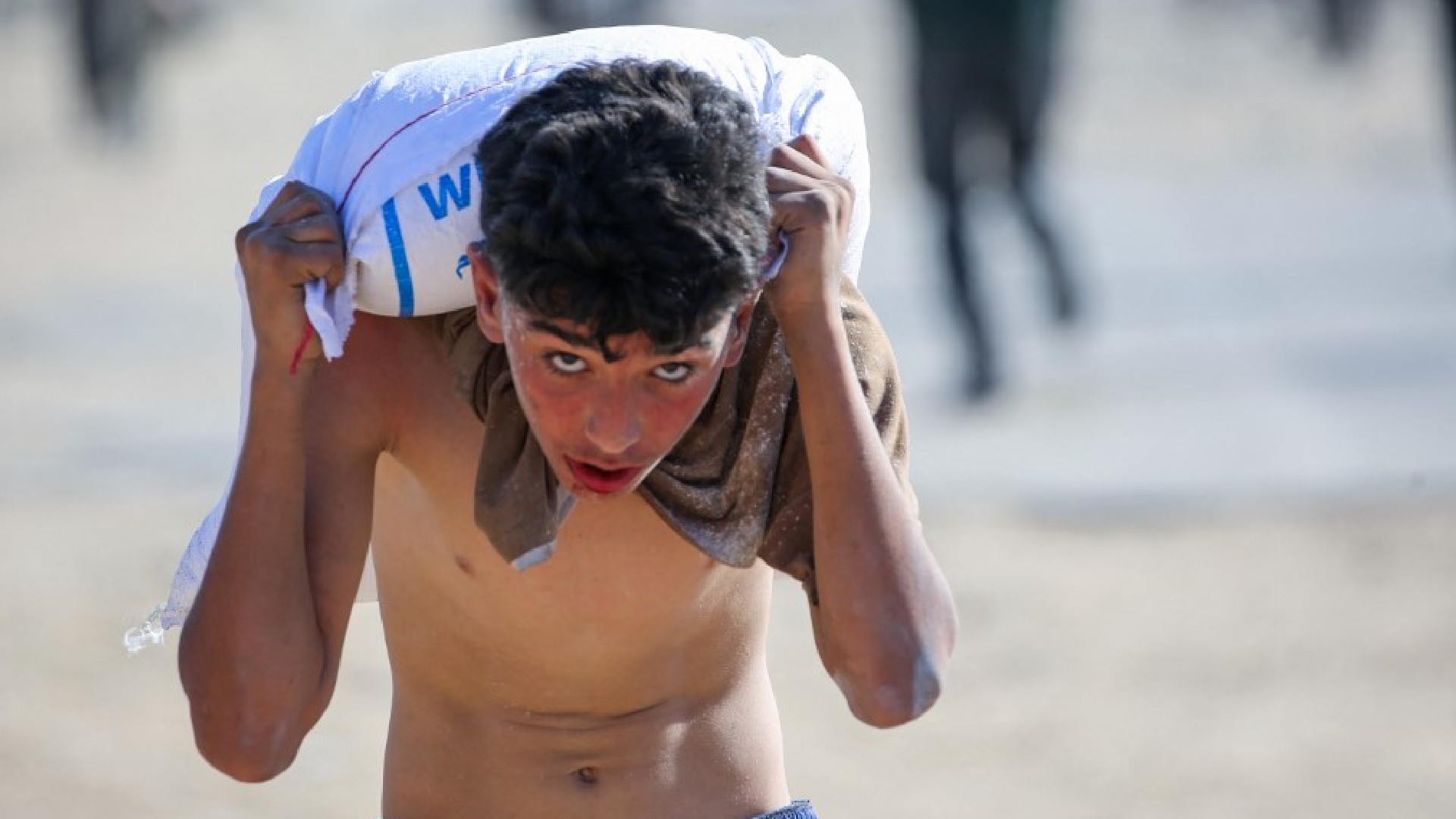
The Israeli military has issued a statement on Telegram claiming it has no knowledge of the deadly attack at an aid distribution point in Rafah early on Sunday.
Israeli forces opened fire on Palestinians gathered at two aid distribution points run by the US-backed Gaza Humanitarian Foundation (GHF) in Gaza City and Rafah, killing at least 35 people.
In its statement the army said it was “currently unaware of injuries caused by [Israeli troops] fire within the humanitarian aid distribution site” and that the incident was still under review.
The GHF denied the reports of deaths, claiming that Israeli soldiers fired "warning shots".
Israeli soldiers are reportedly barring ambulance access to the site in Rafah.
This follows a week of similar attacks at the GHF run aid points since it began its operations in Gaza on Monday.
Good morning Middle East Eye readers, here are the latest updates:
-
Israeli forces shot and killed at least 31 Palestinians at US-backed aid distribution sites in Rafah and Gaza City
-
The US-backed group running the sites, the Gaza Humanitarian Foundation, is denying the reports of deaths, saying that Israeli soldiers fired "warning shots'"
-
Israeli forces are barring ambulances from reaching the Rafah site, according to the Gaza ambulance director
-
Hamas has condemned the attack as a "brutal massacre", which "confirms the fascist nature of the occupation and its criminal objectives behind this mechanism"
-
Hamas has proposed key changes to a US-backed Gaza ceasefire proposal, which US envoy Steve Witkoff has dismissed as "unacceptable".
Good evening Middle East Eye readers,
We will be pausing our coverage for the evening. Here is everything you need to know:
-
The death toll in the besieged enclave since 7 October 2023 is 54,381, including 4,117 killed since Israel broke the ceasefire on 18 March.
-
More than 124,054 Palestinians have been wounded overall. At least 10,000 people are still missing, likely dead and buried under rubble.
-
At least 60 Palestinians have been killed and another 284 injured in Israeli attacks across Gaza in the last 24 hours, the enclave's health ministry is reporting.
-
Israel has blocked the entry of a delegation of Arab foreign ministers planning to hold a meeting in the Palestinian administrative capital of Ramallah in the occupied West Bank, Israeli media is reporting.
-
Hamas announced on Saturday that it has officially responded to the latest Gaza ceasefire proposal brokered by the United States, a plan that has drawn criticism for allegedly favouring Israel.
-
Addressing a protest in Haifa on Saturday, Ayman Odeh, a prominent Arab Israeli lawmaker and head of the Hadash movement, called for an immediate end to the war and the creation of a Palestinian state.
-
The Israeli army has claimed it killed Mohammad Sinwar, Hamas’s commander in Gaza, during a strike on 13 May.
Israeli Prime Minister Benjamin Netanyahu sharply criticised Hamas’s reaction to the latest ceasefire proposal, aligning with US envoy Steve Witkoff’s stance.
In a brief statement, Netanyahu said: “While Israel has agreed to the updated Witkoff outline for the release of our hostages, Hamas continues to adhere to its refusal. As Witkoff said, Hamas’ response is unacceptable and sets the situation back. Israel will continue its action for the return of our hostages and the defeat of Hamas.”
Francesca Albanese, the UN special rapporteur on human rights in the occupied Palestinian territory, has cautioned against blaming only Israeli Prime Minister Benjamin Netanyahu for the destruction in Gaza.
“The problem will not be resolved by scapegoating him, ignoring the rest,” Albanese posted on social media.
She emphasised that Israel’s broader policies—ranging from occupation and annexation to apartheid and what she called acts of genocide—must be confronted and dismantled.
Albanese’s comments highlight growing criticism of efforts to reduce the crisis to one individual’s actions, without addressing the systemic violence driving the assault on Gaza.
Now that the wind is changing and everyone starts to oppose the Gaza meat-grinding:
— Francesca Albanese, UN Special Rapporteur oPt (@FranceskAlbs) May 31, 2025
Netanyahu did not commit the genocide by himself. The problem will not be resolved by scapegoating him, ignoring the rest.
1. End genocide.
2. End occupation/annexation.
3. End apartheid.