Live: ‘A shame and a disgrace’: Netanyahu rails against Palestinian turnout in Israeli elections

Live Updates
Israel’s far-right National Security Minister Itamar Ben-Gvir commented on the possibility of Gadi Eisenkot’s Yashar party forming a government, saying that it “will be paralysing our work”.
Speaking to supporters at his Otzma Yehudit party’s headquarters, Ben Gvir also praised its performance in Tuesday’s election.
“We are very proud of our journey,” he said, recalling a time when the party did not exist on the political landscape.
Otzma Yehudit, or Jewish Power, is projected to win six or seven seats in the 120-seat Knesset.
Neither Israeli Prime Minister Benjamin Netanyahu nor the Zionist opposition parties have enough seats to form a government following a huge surge in voting from Palestinian citizens of Israel, exit polls suggested on Tuesday.
After polls closed at 10pm local time, public broadcaster Kan said Netanyahu’s bloc is projected to win 50 seats with the opposition set to take 53 - far short of a 61 seat majority.
The Joint List and Ra'am, two slates representing Palestinian citizens of Israel, are projected to pick up 18 seats, which would be a record number of Arab MPs in Israel’s parliament, the Knesset.
It was clear througout polling day that turnout would be high in the first election since the Gaza genocide and various Israeli wars in the region since the 7 October Hamas-led attack.
Read more: Israeli exit polls show huge Palestinian gains block Netanyahu from forming government
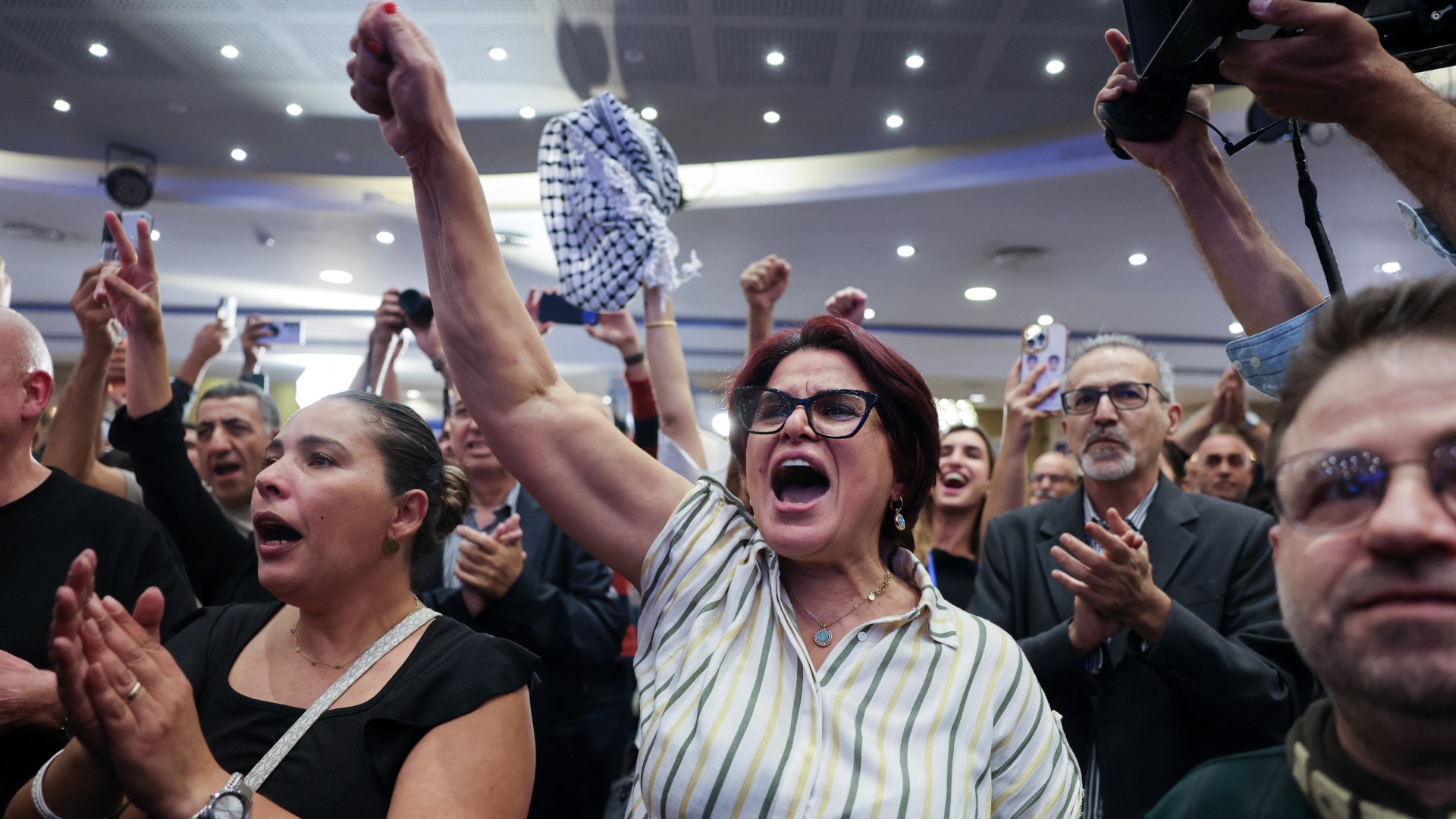

Ameer Fakhoury, an analyst at Israel's Vanleer Institute think tank, meanwhile describes the mobilisation of Palestinian citizens in this election a "truly historic development".
"They went to the polls in extraordinary numbers to confront a political leadership responsible for what they regard as the gravest crimes against their people: devastation in Gaza, ethnic cleansing in the West Bank, and years of persecution and intimidation at home," he told MEE.
Fakhoury said the election results are not merely a question of replacing Netanyahu, Israel's longest-serving prime minister. "It is a choice between perpetuating apartheid and beginning political and moral repair."
"History has placed Palestinian citizens of Israel in an extraordinary position. Having mobilised first and foremost to protect their own people, they may now also help rescue Jewish Israelis from their country's destructive trajectory," he said.
"The question is whether Jewish Israeli political leaders are prepared to accept that possibility - or prefer the continued descent into a militarised, ethnocratic Sparta."

Veteran political commentator Meron Rapoport declared the results "the end of the Netanyahu era".
"He cannot be the next prime minister, that’s 100 percent sure. His Likud party appears to be the largest in parliament but this has no meaning if his coalition is very far from the 61 seats needed to form a government,” he told Middle East Eye.
“It is not clear what kind of government we will have. Maybe there will be new elections if no government can be formed.”
Rapoport noted that key opposition leaders Naftali Bennett and Avigdor Lieberman are very hostile to Palestinians and have ruled out sitting in a coalition with them.
“But putting ideology aside, if politicians see the chance to form a majority of 70 seats while Netanyahu has 50, I think they will be almost suicidal to go for another election that gives Netanyahu another chance.”
Israeli opposition leader Yair Lapid has said Prime Minister Benjamin Netanyahu suffered a “crushing defeat” in Tuesday’s election.
Former military chief Gadi Eisenkot, meanwhile, said the results showed a “lack of confidence” in Netanyahu.
Prime Minister Benjamin Netanyahu’s Likud party is projected to win 25 seats in Israel’s parliament, more than any other party, according to an exit poll by Channel 13.
Former military chief Gadi Eisenkot’s Yashar party follows with 23 seats. The opposition bloc is projected to hold a narrow lead over Netanyahu’s bloc.
The poll projects the following distribution of the 120 seats in the Knesset:
-
Likud: 25
-
Yashar: 23
-
Together: 14
-
Joint List: 10
-
Democrats: 9
-
Yisrael Beiteinu: 7
-
United Torah Judaism: 7
-
Ra’am: 7
-
Shas: 6
-
Jewish Power: 6
-
Religious Zionism: 6
Neither Israeli Prime Minister Benjamin Netanyahu nor the Zionist opposition parties have enough seats to form a government following a huge surge in voting from Palestinian citizens of Israel, an exit poll suggested on Tuesday.
After polls closed at 10pm local time, Channel 13 said Netanyahu’s bloc is projected to win 50 seats with the opposition set to take 53 – far short of a 61 seat majority.
The Joint List and Raam, two slates representing Palestinian citizens of Israel, are projected to pick up 17 seats, which would be a record number of Arab MPs in Israel’s parliament, the Knesset.
This is a developing story…
Read more: Israeli exit polls show huge Palestinian gains block Netanyahu and Eisenkot from forming majority

The opposition “Change” bloc led by former Israeli military chief Gadi Eisenkot is projected to win more seats than Prime Minister Benjamin Netanyahu’s bloc, according to an exit poll by Israel’s Channel 11.
Exit polls also show strong gains for Palestinian-led parties in Tuesday’s election.
Eisenkot leads the Yashar party, while Netanyahu heads Likud.
Israel's election ended in an apparent deadlock on Tuesday, exit polls by major television networks showed, with neither Prime Minister Benjamin Netanyahu nor his main rival Gadi Eisenkot on track for a majority in the 120-seat Knesset.
Nearly 89 percent of eligible prisoners and detainees held in Israeli prisons cast their ballots in Tuesday’s election, the Israel Prison Service said.
Voting in prisons ended at 8pm local time, it added.
Israel’s Central Election Committee plans to announce the official results of Tuesday’s election by Wednesday evening, Israeli state-run radio reported.
Polling stations are due to close at 10pm local time, but the committee said they will remain open if voters are still queuing to cast their ballots.
Israeli news channels will broadcast exit poll projections once voting ends.
Voter turnout in Israel’s election reached 74.3 percent by 8pm local time on Tuesday, surpassing the total turnout of 70.6 percent in the 2022 election, according to the Central Elections Committee.
The committee said it was the highest turnout recorded at that hour since it began tracking voting by time of day.
More than 5.4 million people had cast their ballots by 8pm, around 655,000 more than in the entire 2022 election.
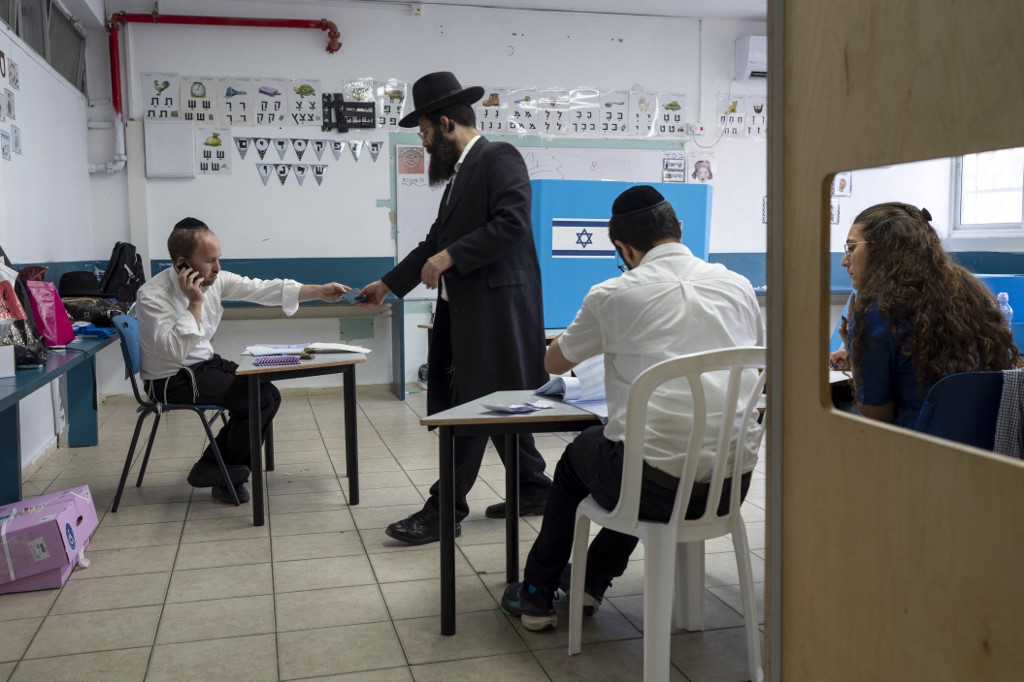
Palestinian Bedouin voters reported waiting more than four hours to cast their ballots in Shaqib al-Salam, a Bedouin town in the Southern District of Israel, with some leaving as hundreds queued outside a polling station, Haaretz reported.
Some travelled dozens of kilometres to vote.
Israel's Central Elections Committee on Tuesday rejected a request by Prime Minister Benjamin Netanyahu's party to extend voting beyond 10pm local time.
"High nationwide turnout across all sectors of society reflects strong public engagement in the democratic process, and no need to extend voting hours was identified," a commission statement said.
Israel’s far-right Finance Minister Bezalel Smotrich has urged right-wing voters to cast their ballots, claiming that unprecedented turnout among Palestinian citizens of Israel could help bring a “dangerous left-wing government” to power.
“Do not despair! It is still possible to win,” Smotrich said in a post on X.
Palestinian politicians have accused right-wing figures of incitement against Palestinian citizens of Israel, who make up 20 percent of the country’s population.