LIVE: UN overwhelmingly votes to condemn Russian invasion of Ukraine, demands withdrawal

Live Updates
European Union foreign policy chief Josep Borrell has expressed concern that the crisis triggered by Russia's invasion of Ukraine could spill into neighbouring countries, including Moldova, Georgia and the Western Balkans.
'We are afraid that Russia is not going to stop in Ukraine'
- Josep Borrell, EU foreign policy chief
"We are worried about what may happen in the region," Borrell told a news conference in Brussels after a virtual meeting of EU foreign ministers on the crisis.
"We are afraid that Russia is not going to stop in Ukraine, and the Russian influence can start working in the neighbouring countries."
Belgium has become the latest European country to offer weapons to Ukraine to support its fight against Russia's invasion.
Belgium plans to send thousands of machine guns and hundreds of anti-tank grenade launchers, Ukraine President Volodymyr Zelensky has announced.
"It was nice to learn that in addition to yesterday's agreements, Belgium is sending us another 3,000 machine guns and 200 anti-tank grenade launchers," Zelensky tweeted, thanking Belgium Prime Minister Alexander De Croo.
Earlier, Sweden also announced that it would step up with military aid, including anti-tank weapons, helmets and body armor. The move marks the first time it has sent weapons to a country in armed conflict since the Soviet Union’s 1939 invasion of Finland, said Prime Minister Magdalena Andersson.
"Sweden is now proposing direct support for Ukraine’s armed forces. It includes 135,000 field rations, 5,000 helmets, 5,000 body shields and 5,000 anti-tank weapons," Andersson said.
Germany announced on Friday that it planned to send anti-tank weapons and missiles to Ukraine, which also represents a major reversal of its policy of not exporting arms to conflict zones.
Swiss President Ignazio Cassis has said that it is "very probable" that neutral Switzerland will follow the European Union (EU) on Monday in sanctioning Russia and freezing Russian assets in the country.
Cassis, interviewed on French-language Swiss public television, said that the seven-member Federal Council would meet on Monday and review recommendations by the departments of finance and economy.
Asked whether Switzerland - a major financial centre and commodities trading hub - would follow the EU in freezing Russian assets, he said: "It is very probable that the government will decide to do so tomorrow, but I cannot anticipate decisions not yet taken."
The Czech Republic national team joined Poland and Sweden on Sunday in declaring its refusal to play Russia in upcoming World Cup qualifying matches, citing Russia's invasion of Ukraine.
The schedule calls for the Czechs to meet Sweden and Russia to face Poland on March 24. The winners of the two games will play on March 29 for a berth in the 2022 World Cup, to be held this fall in Qatar.
"The Czech FA executive committee, staff members and players of the national team agreed it's not possible to play against the Russian national team in the current situation, not even on the neutral venue," the Czech soccer federation said in a statement. "We all want the war to end as soon as possible."
The soccer federations of Poland and Sweden announced their intentions on Saturday.
The European Union has banned Russian news outlets Russia Today and Sputnik, according to its top diplomat Josep Borrell.
Borrell, the EU's High Representative for Foreign Affairs and Security Policy, said that the bloc would ban the two outlets in a bid "to fight" Russian disinformation.
"Today we are taking a crucial step to turn off the tap for the Russian's information manipulation in Europe by banning Russia Today and Sputnik from broadcasting in the European Union," Borrell said.
"We are killing the snake on its neck."
Russian forces are adopting siege tactics near Kyiv, the Pentagon said Sunday morning.
A senior Defense Department official, who spoke on the condition of anonymity per Biden administration guidelines, told reporters that Russian forces were displaying "siege mentality" around the historic city of Chernihiv, northeast of the capital.
"Any student of military tactics know that when you do [that], it increases the likelihood of collateral damage to civilian life and infrastructure," he said.
The official also said Russia's earlier decision to put the country's nuclear "deterrence forces" on high alert was "unnecessary and escalatory" and said that President Vladimir Putin had put in play the chance that a "miscalculation could make things much more dangerous".
The official also noted that Russia still has not managed to achieve air superiority over Ukraine.
The United Nations Security Council will meet at 3 pm (EST) on Sunday to call for a rare emergency special session of the UN General Assembly on Russia's invasion of Ukraine. The 193-member UNGA session would be held on Monday, diplomats said.
The resolution to call this meeting is procedural and requires only nine votes and cannot be vetoed.
Only 10 such emergency special sessions of the General Assembly have been convened since 1950.
The request for a session on Ukraine comes after Russia vetoed on Friday a draft UNSC resolution that would have deplored Moscow's invasion. China, India and UAE abstained, while the remaining 11 members voted in favour.
"The use of force by one country against another is wrong & against the Charter," Sergiy Kyslytsya, the Permanent Representative of Ukraine to the UN, said in a post on Sunday.
"Today’s defending Ukraine is defending the Charter."
About 2,500 Ukrainian Jews have asked to emigrate to Israel “immediately” following Russia’s invasion of Ukraine, the Jewish Agency said.
The non-profit organisation set up a special hotline on Thursday - when Russia launched a full-scale operation in Ukraine - to help those interested in leaving the country for Israel as well as Israelis who have relatives in Ukraine.
The hotline is being operated out of Jerusalem in conjunction with International Fellowship of Christians and Jews (IFCJ).
So far more than 5,000 Ukrainian Jews have called the hotline, with about half of the callers expressing interest in moving to Israel immediately, Haaretz reported on Sunday.
The Jewish Agency said the first group of Ukrainian immigrants to Israel crossed into Poland in the early hours of Sunday. It posted a video on Twitter showing the immigrants en route from Lviv to the border with Poland, adding that they will be put up in Warsaw for the next few days before flying to Tel Aviv.
In anticipation of a spike in requests in the coming days, the agency has said it would open six document-processing stations at the Ukrainian border crossing points with Poland, Moldova, Romania, and Hungary to accommodate the demand.
An estimated 200,000 Ukrainians are eligible to emigrate to Israel and would receive automatic citizenship under the Law of Return.
In recent decades, the largest number of immigrants to Israel have come from Ukraine and Russia, according to Haaretz.
In 2021, a total of 3,100 Ukrainians emigrated to Israel.
About 80 percent of the immigrants from Ukraine landing in Israel in recent years have been coming via the IFCJ Fellowship, which pays for their flights and provides them with small stipends, the newspaper reported.
Ukraine said on Sunday it would hold talks with Russia at its border with Belarus - near the Chernobyl exclusion zone - after a call between President Volodymyr Zelensky and Belarus leader Alexander Lukashenko.
"The politicians agreed that the Ukrainian delegation would meet the Russian one without preconditions at the Ukraine-Belarus border, near the Pripyat River," Zelensky's office said.
Zelensky has said he will not hold talks with Russia on the territory of Belarus, where some Russian troops were stationed before invading through Ukraine's northern border.
But Kyiv said Lukashenko assured Zelensky that "all planes, helicopters, and missiles stationed on Belarus territory will remain on the ground during the travel, negotiations, and return of the Ukrainian delegation".
Russian President Vladimir Putin has said that a Russian delegation was currently in the Belarusian city of Gomel.
Moscow has wanted to hold the talks in Kremlin-aligned Belarus.
Zelensky, refusing to travel to Minsk, said Kyiv had proposed "Warsaw, Bratislava, Budapest, Istanbul, Baku" as options to Russia.
Turkish Foreign Minister Mevlut Cavusoglu said on Sunday it was implementing an international pact on naval passage to the Black Sea.
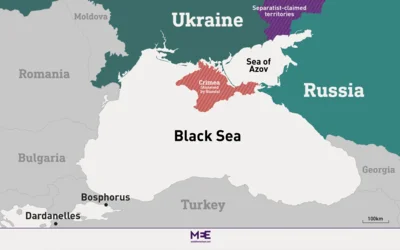
Under the 1936 Montreux Convention, Turkey has control over the Dardanelles and Bosphorus straits that connect the Mediterranean and Black seas and can limit the passage of warships during wartime or if threatened.
Cavusoglu made the comment in a live interview with broadcaster CNN Turk. Turkey earlier called Russia's invasion of Ukraine a "war" on Sunday in a rhetorical shift that opened the way for the move.
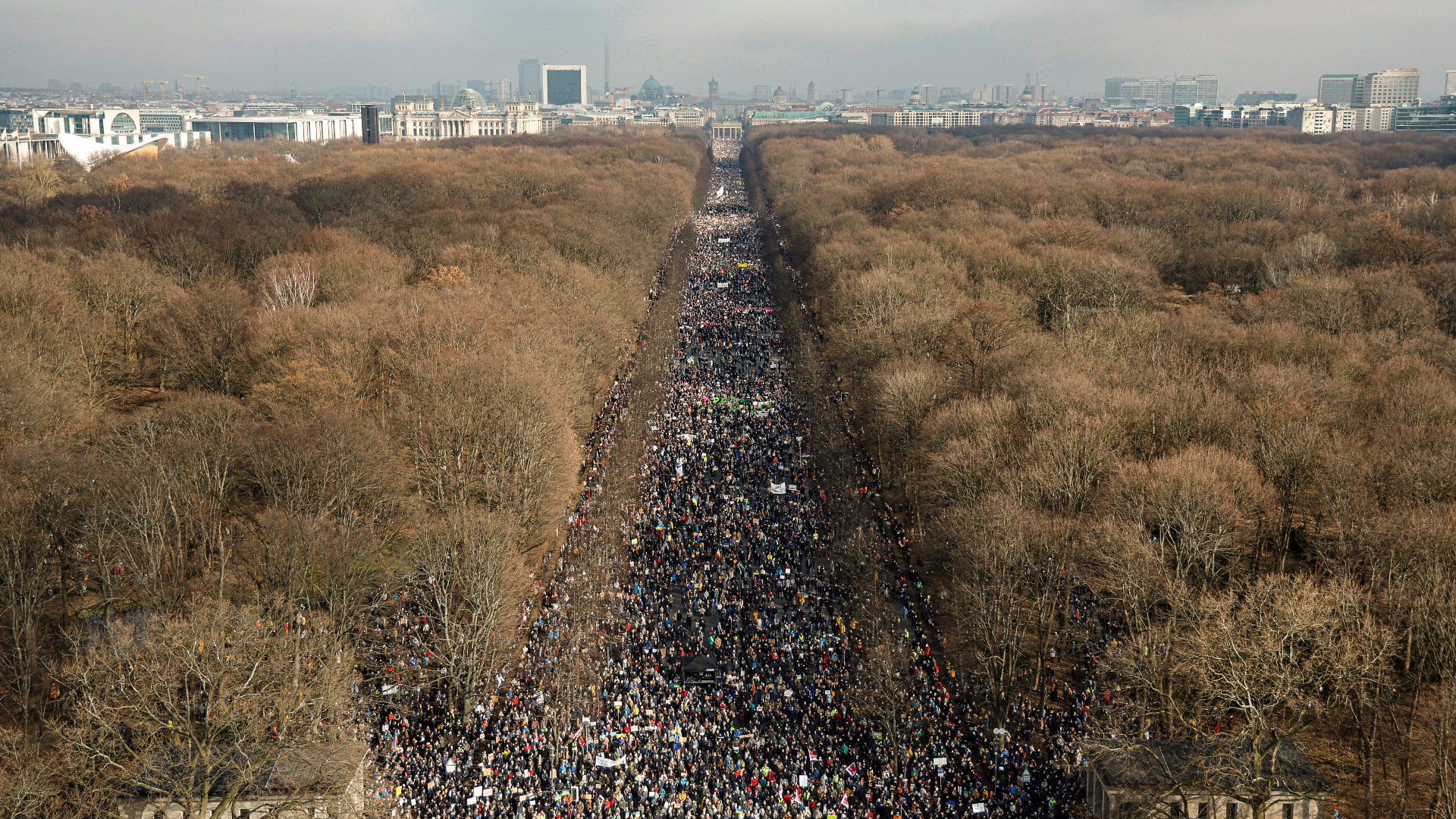
More than 100,000 people attended a Ukraine solidarity march in Berlin on Sunday, police said, with many protesters dressed in the blue and yellow colours of the Ukraine flag.
Police estimated the turnout at "at least a low six-number figure", while organisers of the march said half a million had turned up.
Bearing posters like "no World War 3", "Stop the killer", or "Berlin at 640km from the frontlines", the protesters massed at the Brandenburg Gate, a stone's throw away from the imposing Russian embassy.
"It is important to me for Germany to show that it is standing for democracy in Europe," said Hans Georg Kieler, 49, who had turned out at the demonstration.
He voiced approval for Germany's decision to begin delivering armaments to Ukraine, but said he thought "we could have helped Ukraine more".
Ukrainian Valeria Moiseeva, 35, was also at the march.
"I am personally disappointed by Russia, I hate Russia, I hate all Russians," she said, adding that her mother was now sitting in a cellar in Kyiv in fear of bombs.
She said she had to be at the demonstration because "I can't do more than that".
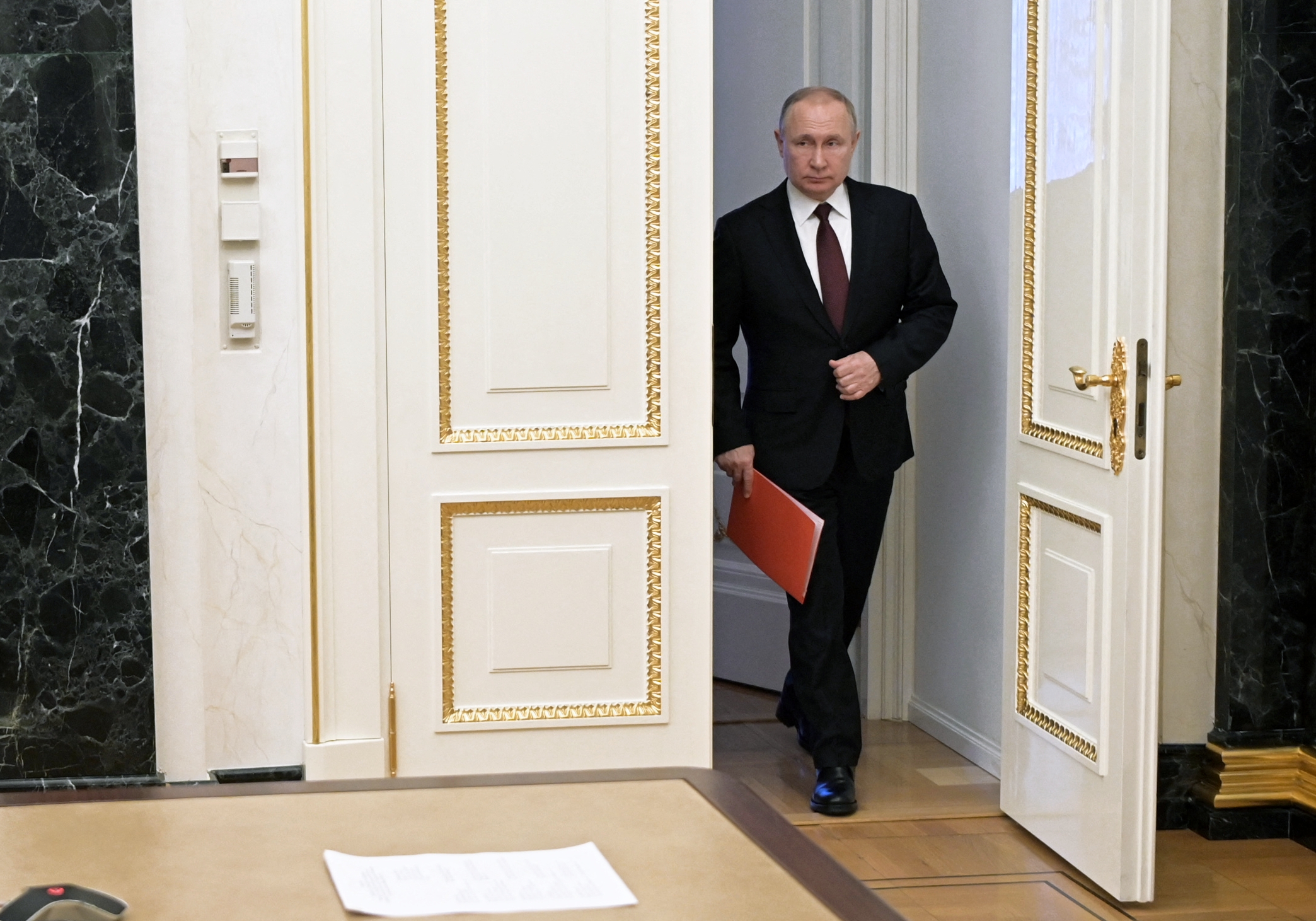
Russian President Vladimir Putin ordered his defence chiefs to put the country's nuclear "deterrence forces" on high alert on Sunday and accused the West of taking "unfriendly" steps against his country.
Moscow has the world's second-largest arsenal of nuclear weapons and a huge cache of ballistic missiles which form the backbone of the country's deterrence forces.
"I order the defence minister and the chief of the general staff of the Russian armed forces to put the deterrence forces of the Russian army into a special mode of combat service," Putin said.
"You see that Western countries are not only unfriendly to our country in the economic sphere - I mean illegitimate sanctions," he added, in a televised address.
"Senior officials of leading Nato countries also allow aggressive statements against our country."
Defence Minister Shoigu replied: "Affirmative."
Ukrainian authorities warned Friday that radiation levels had increased in the Chernobyl exclusion zone since it was seized by invading Russian troops, but the UN's nuclear watchdog said it currently "posed no danger".
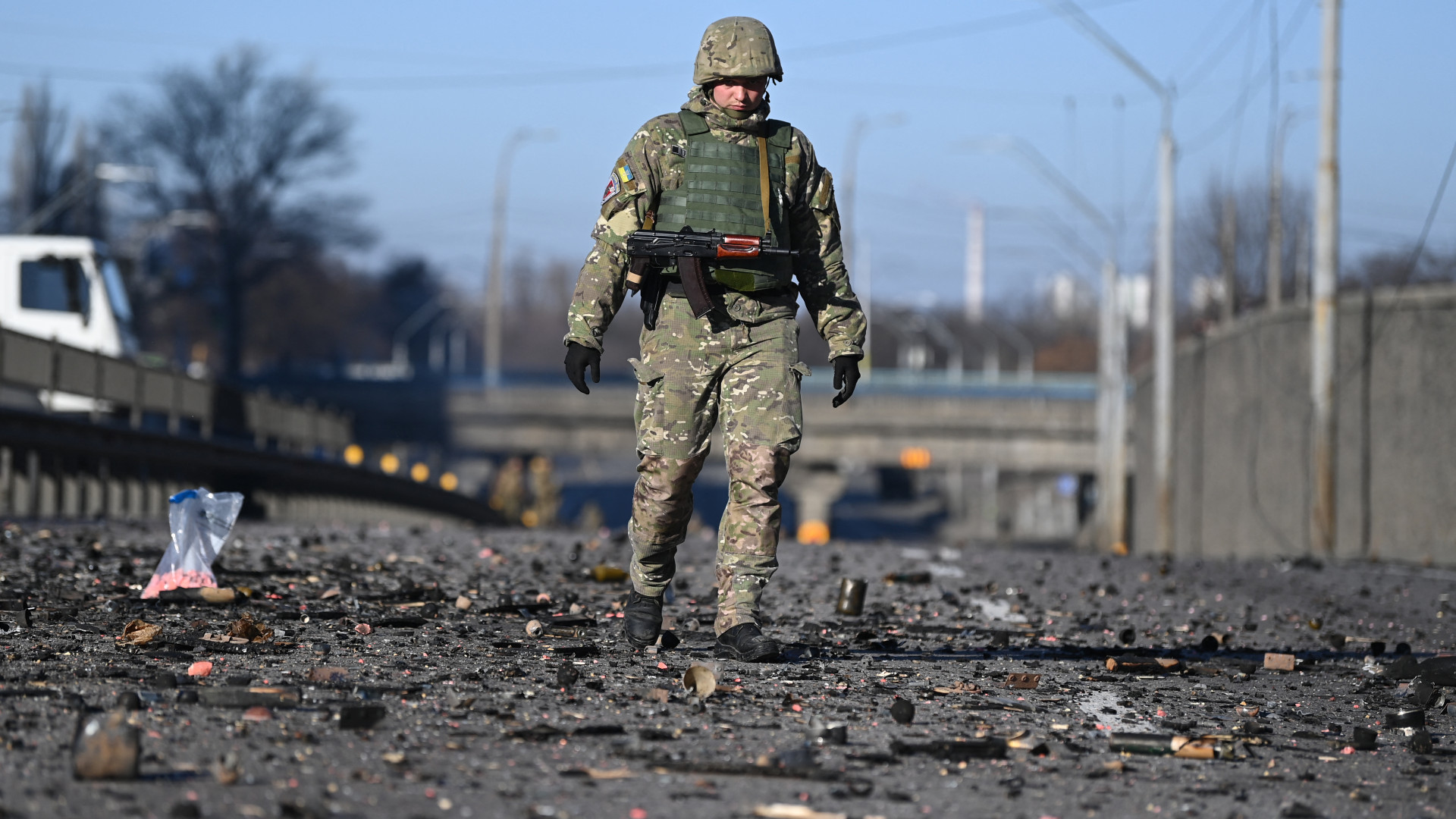
Russian ground forces have pressed into Ukraine from the north, east and south but have encountered fierce resistance from Ukrainian troops, the intensity of which has likely surprised Moscow, according to Western sources.
Ukrainian authorities describe some Russian troops as demoralised and exhausted, claiming that dozens have surrendered.
UK Foreign Secretary Liz Truss has said that she would "absolutely" support Britons travelling to Ukraine to join the country’s fight against the Russian invasion.
In an interview on the BBC’s Sunday Morning programme, Truss was asked whether she would back anyone wanting to volunteer to help the Ukrainians fight against Russia.
“Absolutely, if people want to support that struggle I would support them in doing that,” she told the programme.
“That is something people can make their own decisions about. The people of Ukraine are fighting for freedom and democracy, not just for Ukraine but for the whole of Europe,” Truss said.
UK foreign secretary would back Britons travelling to Ukraine to fight
Turkey called Russia's invasion of Ukraine a "war" on Sunday in a rhetorical shift that could pave the way for the Nato member nation to enact an international pact limiting Russian naval passage to the Black Sea.
Under the 1936 Montreux Convention, Turkey has control over the Dardanelles and Bosphorus straits that connect the Mediterranean and Black seas and can limit the passage of warships during wartime or if threatened.
Balancing its Western commitments and close ties to Moscow, Ankara has said the Russian attack is unacceptable but until Sunday had not described the situation as a war.
"On the fourth day of the Ukraine war, we repeat President (Tayyip) Erdogan's call for an immediate halt of Russian attacks and the start of ceasefire negotiations," presidential spokesperson Ibrahim Kalin said on Twitter.
Fahrettin Altun, Turkey's communications director, tweeted "we are witnessing yet another war in our region", and repeated Erdogan's offer to mediate
Kyiv has appealed to Ankara to block any more Russian warships from passing toward the Black Sea, from which Moscow has launched one of its incursions on Ukraine's southern coast.
But Turkey's foreign minister said on Friday that Russia had the right under Montreux to return ships to their home base, which could limit any Turkish policy shift.
Turkey has cultivated good ties with both Russia and Ukraine. Any step too far against Moscow could harm its heavy energy and commodity imports and its tourism sector at a time of domestic economic turmoil.
Israeli Prime Minister Naftali Bennett said on Sunday that his country would send humanitarian aid to Ukraine, as the Kremlin announced Israel had offered to mediate in the crisis with Russia.
Speaking on television after a weekly cabinet meeting, Bennett said his government was proceeding “with moderation and responsibility” on the Russia-Ukraine conflict.
“We pray for the wellbeing of the citizens of Ukraine and hope that further bloodshed is prevented,” he added.
The Kremlin said on Sunday that Bennett offered his country's services as a mediator to bring peace to Ukraine in a telephone conversation with Russian President Vladimir Putin.
It said the conversation had been an Israeli initiative.
Israel sends aid and 'offers to mediate' to stop fighting