Live: Over 100,000 bodies found in mass grave near Damascus

Live Updates
A French delegation arrived Tuesday at the country's embassy in Damascus, the first visit of diplomats from France since Bashar al-Assad's overthrow, AFP reported.
The delegation arrived outside the mission which has been shuttered for years, the latest foreign diplomats to visit Syria after rebel forces seized Damascus on 8 December.
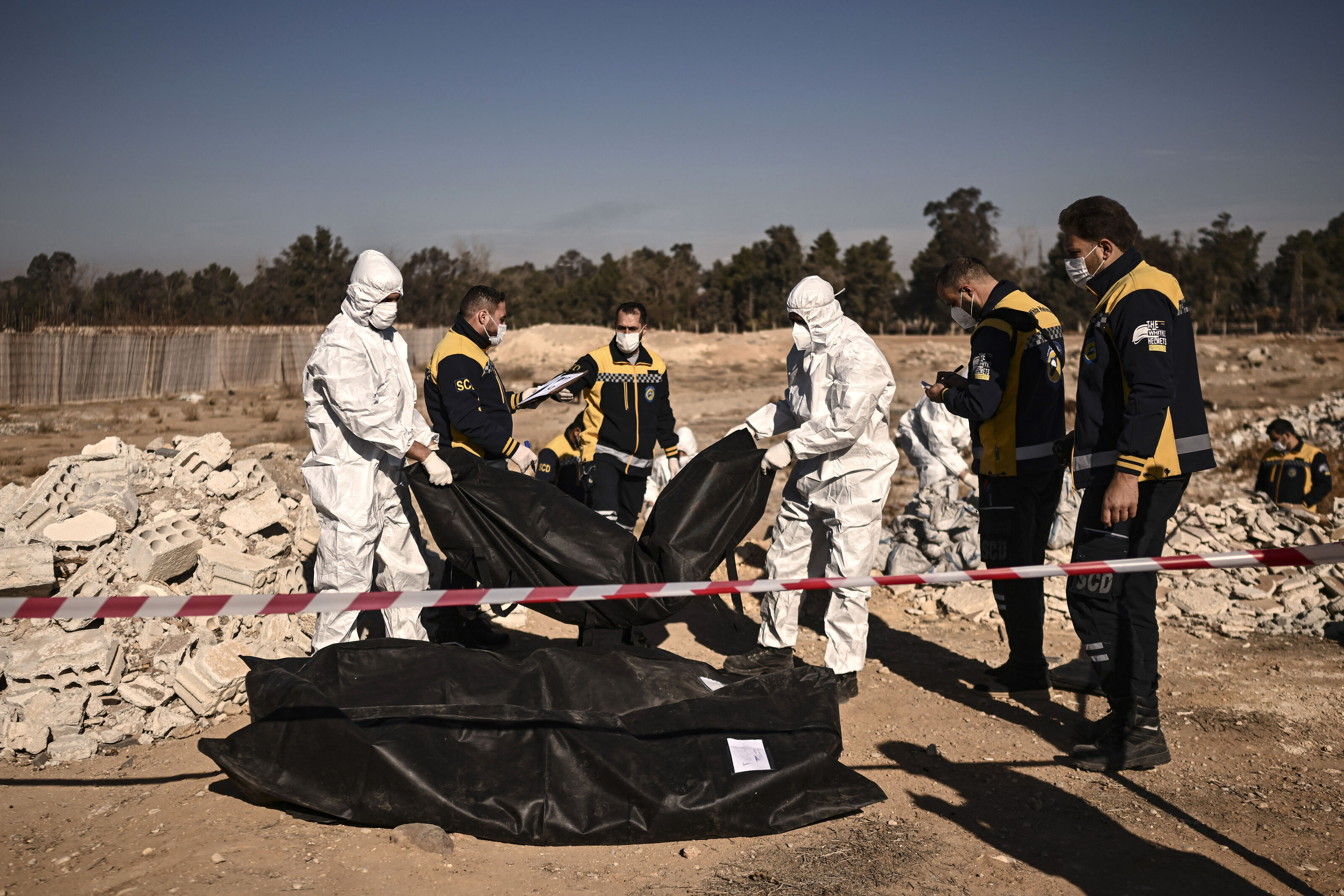
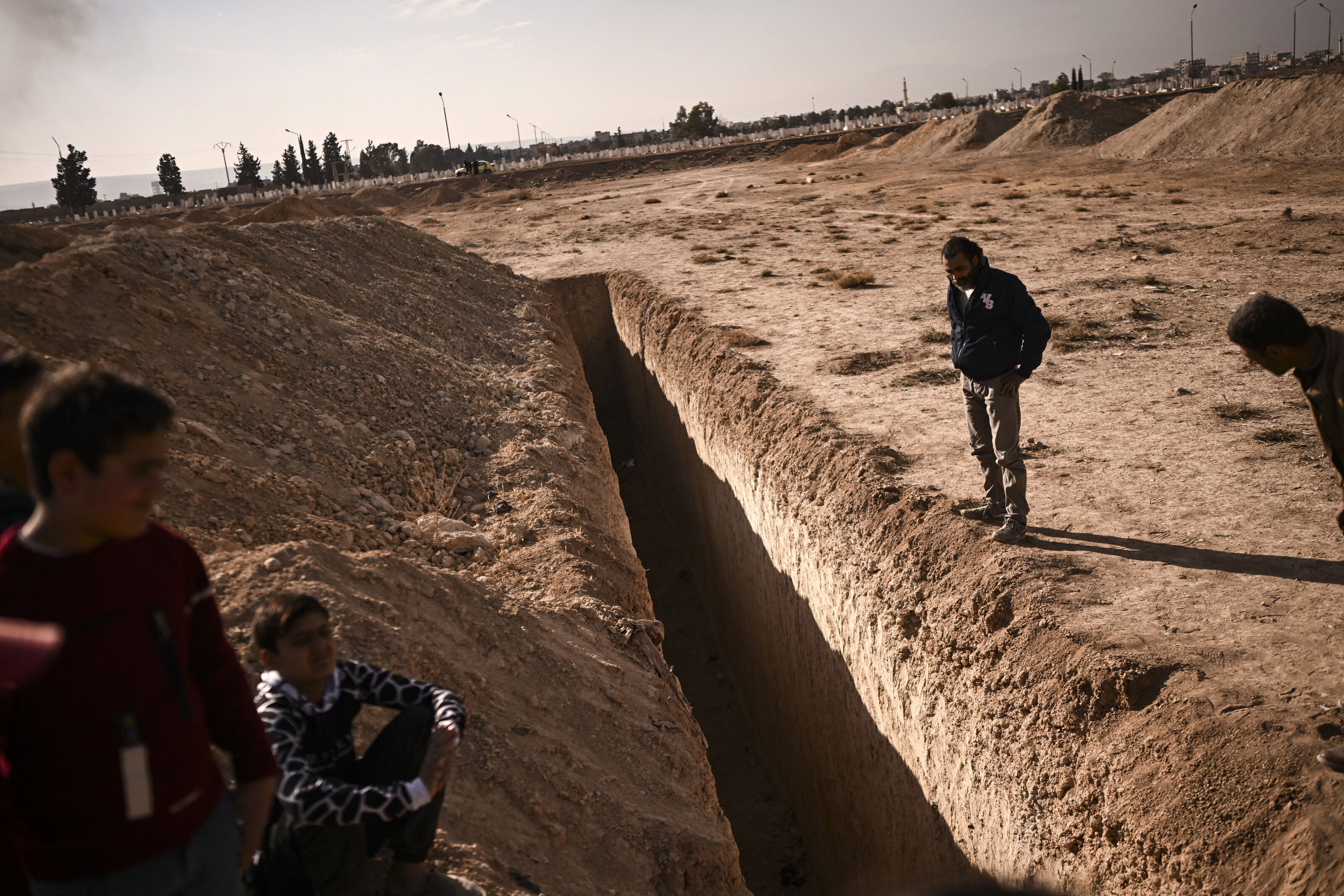
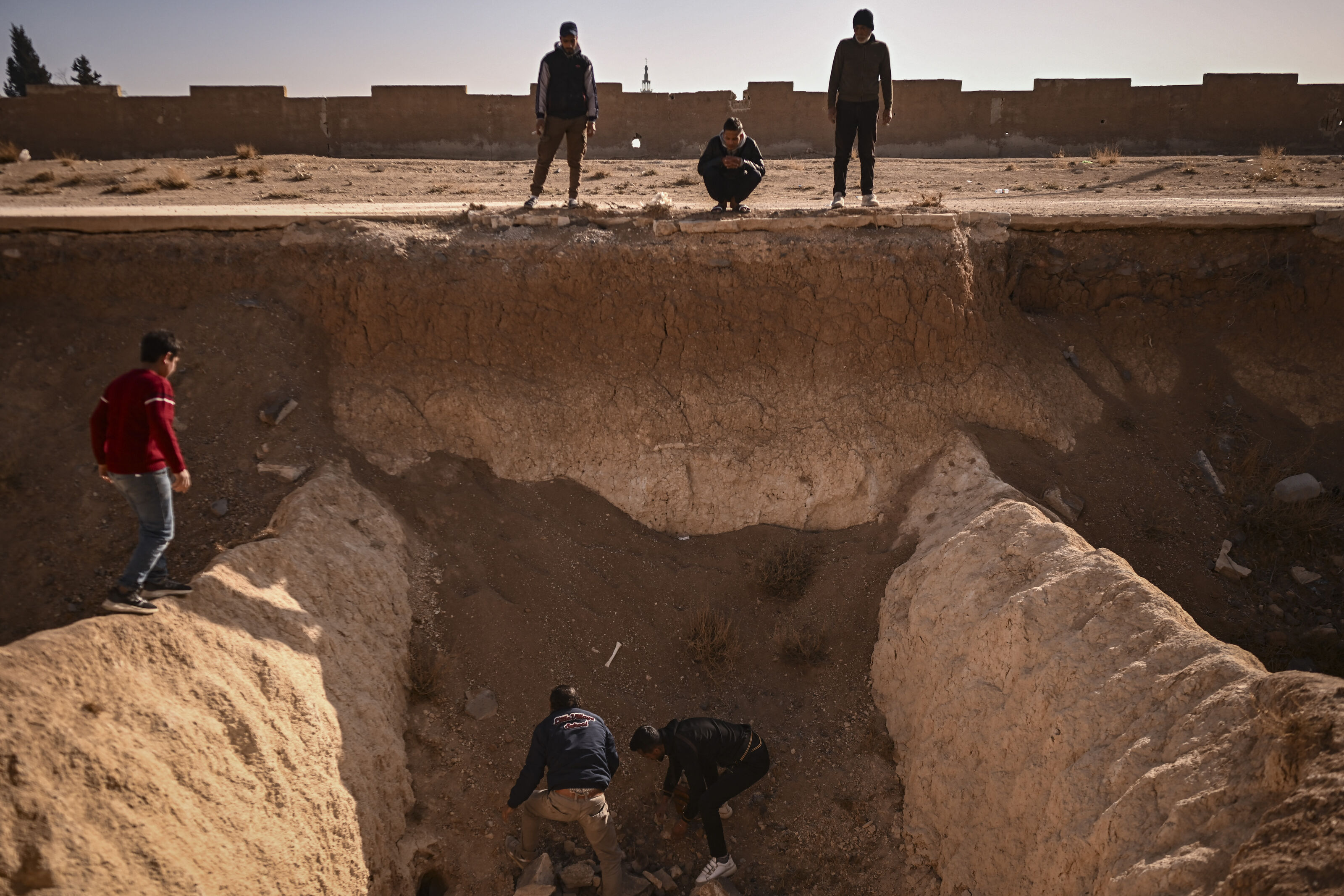
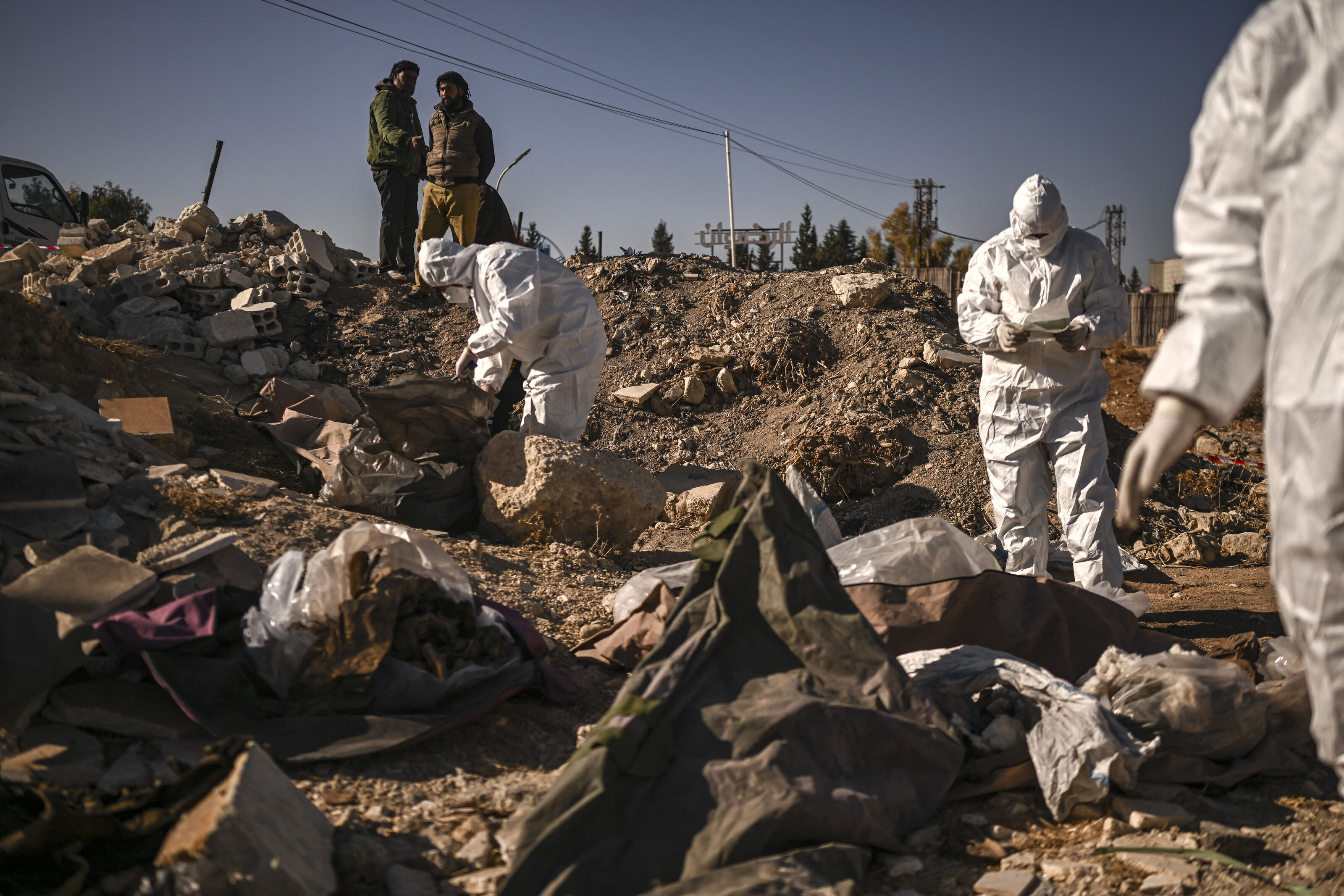
The state of a mass grave in Damascus and statements by people living in the surrounding area suggest that the area is a mass crime scene and may have been the site of other summary executions, Human Rights Watch (HRW) said on Tuesday.
HRW visited the site in the southern Damascus neighbourhood of Tadamon on 11 and 12 December, finding scores of human remains both at the location of an April 2013 massacre and strewn throughout the surrounding neighbourhood.
Transitional Syrian authorities should take steps to urgently secure and preserve physical evidence across the country of grave international crimes by members of the former government.
“Without immediate Syrian and international efforts to secure and preserve likely sites of mass crimes for coordinated exhumations and forensic investigations, there is a serious risk that critical evidence for accountability will be lost,” said Hiba Zayadin, senior Middle East and North Africa researcher at Human Rights Watch. “The loved ones of people so brutally killed here deserve to know what happened to them. The victims deserve accountability.”

Good morning Middle East Eye readers,
Here are the latest updates from Syria:
-
HTS leader Abu Mohammed al-Jolani, the leader of the group that toppled Bashar al-Assad said Monday that rebel factions in war-torn Syria would be "disbanded" and their fighters placed under the defence ministry, and called for sanctions to be lifted so refugees can return.
-
A mass grave outside of Damascus contained the bodies of at least 100,000 people killed by the former government of ousted President Bashar al-Assad, said US-based Syrian advocacy organisation The Syrian Emergency Task Force on Monday. The group called for the grave sites to be preserved to safeguard evidence for investigations.
-
The prisoner who was found and filmed by CNN being released by rebels from a Damascus jail was a former intelligence officer with the deposed Syrian regime, according to local residents, and not an ordinary citizen who had been imprisoned, as he had claimed, the channel's investigation confirmed the findings of Syrian fact-checkers investigation.
- Members of the Turkish Disaster and Emergency Management Authority (Afad) began searching Sednaya prison near Damascus with advanced equipment on Monday for hidden underground cells.
Good evening Middle East Eye readers,
Our live blog is about to finish for the evening. Here are some of the most important developments today:
- Syria’s ousted leader has reportedly issued his first statement since his removal, declaring that the country is now “in the hands of terrorism”
- Jordan has strongly criticised Israel’s decision to expand settlements in the occupied Syrian Golan Heights, describing it as a “blatant violation of international law”
- The Turkish foreign ministry issued a statement condemning Israel’s decision to expand illegal settlements in the occupied Syrian Golan Heights
- The Syrian Observatory for Human Rights has confirmed that Israeli air strikes have targeted military facilities in Syria’s coastal Tartous region, describing them as the most intense in over 10 years
- Lebanese Prime Minister Najib Mikati has ordered the reopening of Lebanon's embassy in Damascus, his office said in a post on X on Monday
- German diplomat Michael Ohnmacht has been assigned to facilitate communication between the European Union and Syria’s new caretaker government
- EU officials have stated that Russia and Iran should have “no place” in Syria’s future, reflecting Western opposition to their influence in the region
- As diplomatic efforts intensify, there are rising calls to lift Western sanctions on Hay'at Tahrir al-Sham (HTS), the group currently controlling parts of Syria
- Israel’s plans to expand settlements in the occupied Golan Heights have drawn widespread condemnation from multiple countries, further complicating regional tensions
Jordan has strongly criticised Israel’s decision to expand settlements in the occupied Syrian Golan Heights, describing it as a “blatant violation of international law.”
On Sunday, the Israeli government approved a proposal by Prime Minister Benjamin Netanyahu to double the number of settlers in the Golan Heights, allocating over 40 million shekels (£9 million) for the plan.
In a statement issued on Monday, Jordan’s Foreign Ministry called the move “an entrenchment of the occupation,” condemning it as a violation of UN Security Council resolutions. “The Golan Heights is occupied Syrian Arab land, and its occupation must come to an end,” the statement declared, urging the international community to hold Israel accountable and demand compliance with international law.
Jordan also reiterated the importance of safeguarding Syria’s territorial integrity and unity, emphasising that the Golan Heights remains under illegal Israeli control.
Syrian Christians held mass in Damascus on Sunday for the first time since the fall of Bashar al-Assad.
— Middle East Eye (@MiddleEastEye) December 16, 2024
One church-goer described the occasion as “marking the first week of a new Syria, an independent Syria”. pic.twitter.com/bIlWsZhYOl
As Bashar al-Assad's rule collapsed in Syria, Iranian authorities watched in surprise and shock as the rebels advanced across the country in less than two weeks, taking cities one by one with little to no resistance.
An Iranian establishment source told Middle East Eye that Tehran did not expect the Syrian army to fold so quickly.
But when Hezbollah fighters left Syria to battle Israel in Lebanon, their 15 or more checkpoints on the borders with rebel-held territories were mostly not re-occupied by the army, he said.
"We couldn't offer anything since the skies were in the hands of Israel," another source close to the Tehran government told MEE, referring to frequent Israeli air raids in Syria, which have struck Iranian and Hezbollah targets over the past few months.
"Even the day before Assad's fall, senior officials called for the protection of sacred sites, and efforts were made to send forces to safeguard them, but this too was unsuccessful."
As the rebels approached Damascus on 7 December, Iranian state TV changed its tone. It began referring to the rebels as "armed groups", whereas just a day before, they had been "terrorists".
Read more: Iranian establishment split on Syria as fall of Assad leaves Tehran turning
Lebanese Prime Minister Najib Mikati has ordered the reopening of Lebanon's embassy in Damascus, his office said in a post on X on Monday.
After 24 years in power, Syrian rebels have toppled Bashar al-Assad, ending his family's 54-year rule. But Bashar was never meant to be president, that was intended for his more charismatic brother Bassel.
— Middle East Eye (@MiddleEastEye) December 16, 2024
So how did the doctor turned dictator rise to power? pic.twitter.com/pJL7KBveJ4
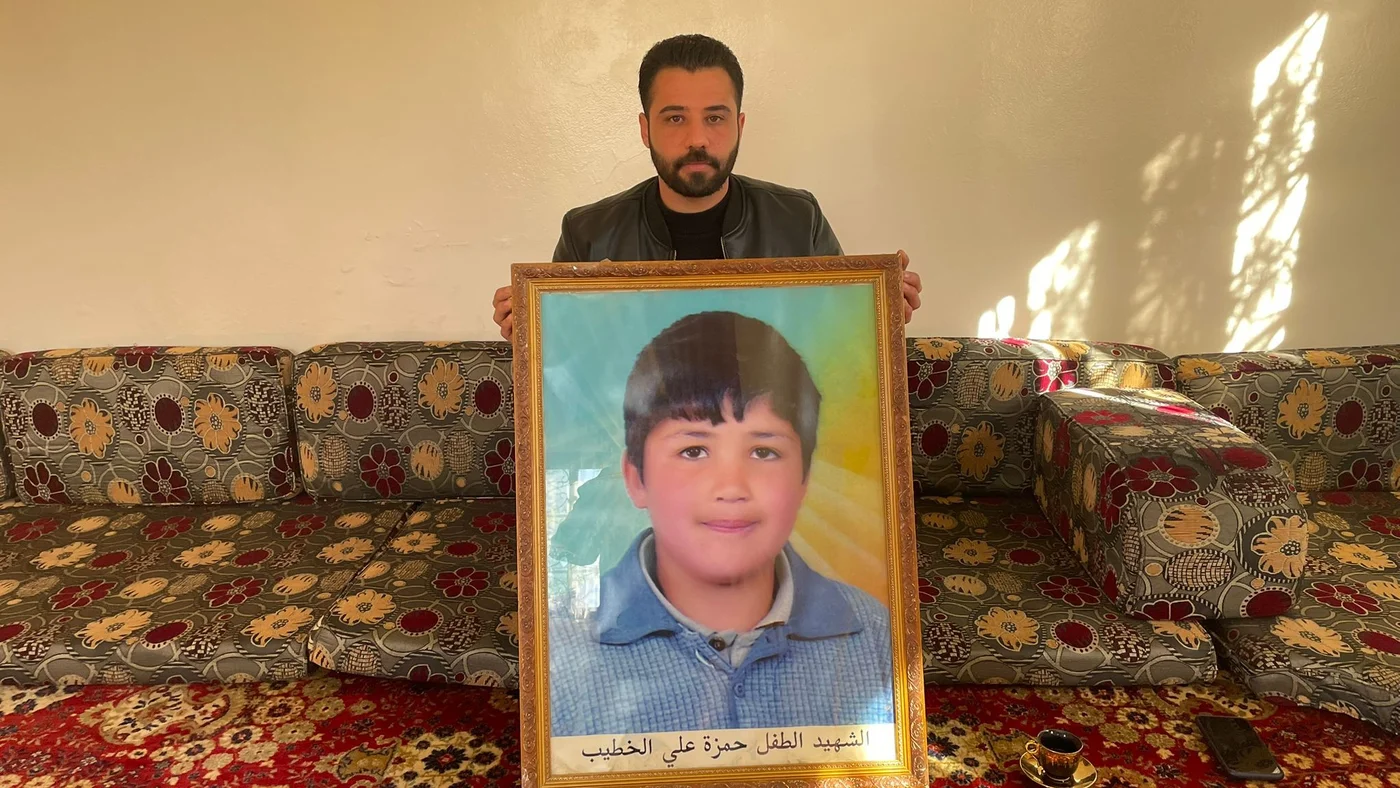
Suraqa al-Khatib was 11-years-old when he followed his older brother, Hamza, to the protest.
Syria’s revolution was nascent. Daraa, a rural city near the southern border with Jordan, had become its epicentre. And Bashar al-Assad’s troops were besieging it, trying to crush the uprising before it had barely begun.
On 29 April 2011, various members of the Khatib family joined a rally heading towards Daraa from its eastern countryside.
Gathering on the roads flanked by olive groves, the protesters approached the town of Saida. Khatib’s father sent him back home, and it’s just as well he did.
Soldiers under the command of Maher, Assad’s brother, opened fire.
“The protesters just wanted food,” Khatib, who is now 24, recalls as he sits in his family home in the village of al-Jiza, outside Daraa.
“Everyone was so poor, so all the villages rose up so the government would give them something to eat.”
In the chaos, Hamza, aged 13, disappeared. The government had cut all electricity as well as the phone lines, but his family learnt he had been detained.
“We had no idea how to get him back,” Khatib says. “My mother stood at the doorstep every day waiting for Hamza to return.”
When he did, 26 days later, Hamza was dead and badly mutilated. The 13-year-old showed evidence of horrific torture. He had been burnt, shot, shocked with electricity and had his kneecaps smashed.
You can read Daniel Hilton and Omar al-Aswad's full report from al-Jiza, Syria, below.
Read more: Hamza al-Khatib was a symbol of Syria’s revolution. His family paid the price
Syria's deposed president released a statement on Monday, his first since being overthrown, claiming that he remained in Damascus until the early morning of December 8 and left the country only in the evening.
The description of the statement published on the Facebook page of the former presidency said that "after several unsuccessful attempts to release the statement through Arabic and international media outlets, the only viable option was to publish it on the social media accounts of the former presidency."
"My departure from Syria was neither planned nor did it occur during the final hours of the battles, as some have claimed. On the contrary, I remained in Damascus, carrying out my duties until the early hours of Sunday, December 8, 2024," Bashar al-Assad said in the statement
The deposed president said he arrived at a Russian military base in Latakia "to oversee combat operations" after HTS entered Damascus, and Moscow only requested the base's immediate evacuation to Russia on the evening of Sunday 8 December when the base came under intensified attack by drone strikes.
The head of Russia's Chechnya region, Ramzan Kadyrov, on Monday suggested removing Syria's Hay'at Tahrir al-Sham from Russia's list of "terrorist organisations."
Kadyrov made the suggestion on his official Telegram channel and said Russia and Syria should organise contact groups once the designation was removed to establish bilateral ties.
The Turkish foreign ministry issued a statement condemning Israel's decision to expand illegal settlements in the occupied Syrian Golan Heights.
"This step by Israel is a source of grave concern, taken together with Israel's entry into the area of separation in violation of the 1974 Disengagement Agreement, its advance into adjacent areas and air strikes in Syria," the statement said.
"Israel's ongoing actions seriously undermine the efforts to bring peace and stability to Syria and further increase tensions in the region."
Regarding Israel's Decision to Expand Illegal Settlements in the Occupied Golan Heights https://t.co/G58r0p5KHi pic.twitter.com/RvgqOAjJls
— Turkish MFA (@MFATurkiye) December 16, 2024
The man a CNN crew claimed to have found in a secret prison in Syria was actually an air force intelligence officer who had been arrested due to disputes with his colleagues over profit sharing, according to Verify-Sy, a Syrian fact-checking group.
CNN has now launched an investigation into the report.
Verify-Sy said the real name of the detainee is Salama Mohammad Salama, who is known as Abu Hamza, a man reportedly "notorious for his activities in Homs".
He managed several security checkpoints and was involved in theft, extortion, and coercing residents into becoming informants, the group said.
The man told CNN that he had been arrested three months ago, but "according to locals, his recent incarceration lasted less than a month" and was "due to a dispute over profit-sharing from extorted funds with a higher-ranking officer. This led to his detention in one of Damascus's cells, as per neighbourhood sources."
The former detainee, released from prison without identification, was reunited with a relative in Damascus, the Syrian Red Crescent said.
Chechnya's Russia-backed leader Ramzan Kadyrov has said he is ready to step in if necessary and ensure that Syria gets the wheat it needs in what he said was the unlikely event that Russian wheat supplies to the country were disrupted.
Russian and Syrian sources told Reuters on Friday that Russian wheat supplies to Syria had been suspended due to uncertainty about the new government there after two vessels carrying Russian wheat for Syria failed to reach their destinations.
In a message posted on his Telegram channel on Sunday, Kadyrov said that the two rerouted vessels had been carrying "commercial" wheat and that Russian state-backed supplies to Syria had not been affected.
"Even if for some impossible and incredible reasons this does happen, I, as the head of the Chechen Republic, am ready to take responsibility and ensure the necessary amount of wheat for Syria," Kadyrov wrote.
Russia, the world's largest wheat exporter, supplies wheat to Syria through complex financial and logistical arrangements, circumventing western sanctions imposed on both countries.