Turkey-Syria earthquake: As it happened

Live Updates
Turkey's Foreign Minister Mevlut Cavusoglu said the country is working on opening two more border gates to Syria to enable flow of humanitarian aid to its earthquake-hit neighbour.
Cavusoglu said damage on the Syria side of the road leading to Cilvegozu border gate, which is solely open for humanitarian aid as part of UN Security Council authorisation, is causing difficulties in responding to the disaster.
"There are some difficulties in terms of Turkey's and the international community's aid (reaching to Syria). For this reason, efforts are being made to open two more border gates," he told reporters.
The World Health Organization (WHO) has declared the earthquakes a "Grade 3" level emergency, the highest possible grading for a natural disaster that requires a "maximum" response from the UN health body.
"Each disaster is different. And of course, the work going on to get people is extremely important," Margaret Harris, a spokesperson for the organisation, told Sky News.
She added that the scale of the losses from both Turkey and Syria will not be known for "quite some time."
"And the important thing is to prevent people who've injured or have been affected by this."
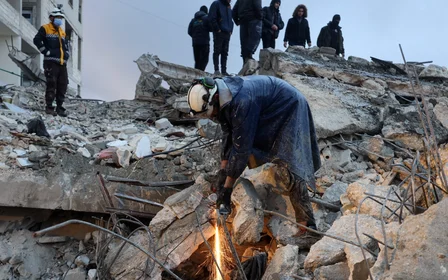
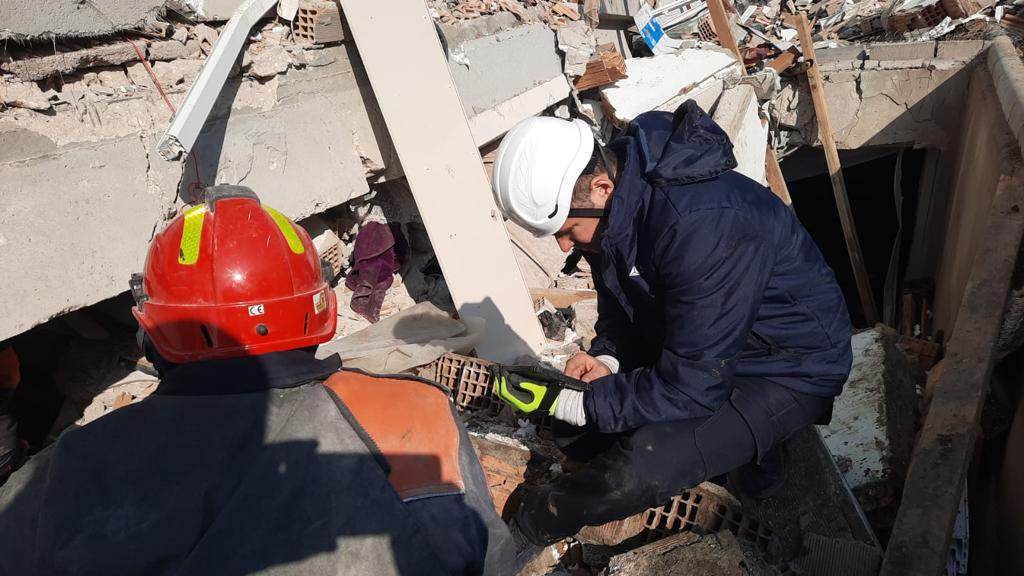
Turkish search and rescue teams are racing against time to save thousands of survivors who are stuck under the rubble in 10 cities across the country since Monday’s quakes.
The teams often have difficulty detecting the people underneath the concrete blocks pancaked on top of each other, and they try to locate the victims often by shouting at them.
Now a Turkish state defence company has started to deploy a special system to find out the whereabouts of the survivors by using something they call DAR (Through the Wall Radar).
STM, the producer of the DAR, usually sends this system to military and other security forces for their operations. But the same system can be used for disasters as part of the emergency response.
Turkish Red Crescent chief Kerem Kinik had warned that the first 72 hours were critical in search and rescue efforts but pointed to complications of "severe weather conditions". The combined death toll both in Turkey and Syria is now well over 12,000.
Read more: Turkey deploys 'through the wall radar' to locate survivors
As the world pitches in to help Turkey’s earthquake victims, the continued suffering of the Syrian people is being fuelled by domestic political factors in the US and a myopic view of the country. This week, State Department spokesperson Ned Price said that 'the US approach to the Assad regime has not changed', and reiterated the US stance to refuse talks with the Syrian government on disaster relief.
Yet no one has asked the Americans to negotiate with Syrian President Bashar al-Assad; the issue is about assisting the people of Syria. While the UAE, Algeria, India and others rush to help Syrians, Washington is still caught up in the politics of aid, as analysts criticise the agencies and foreign governments that are providing aid to the Syrian government.
Read more:
This is not about Assad. Syrians simply need aid
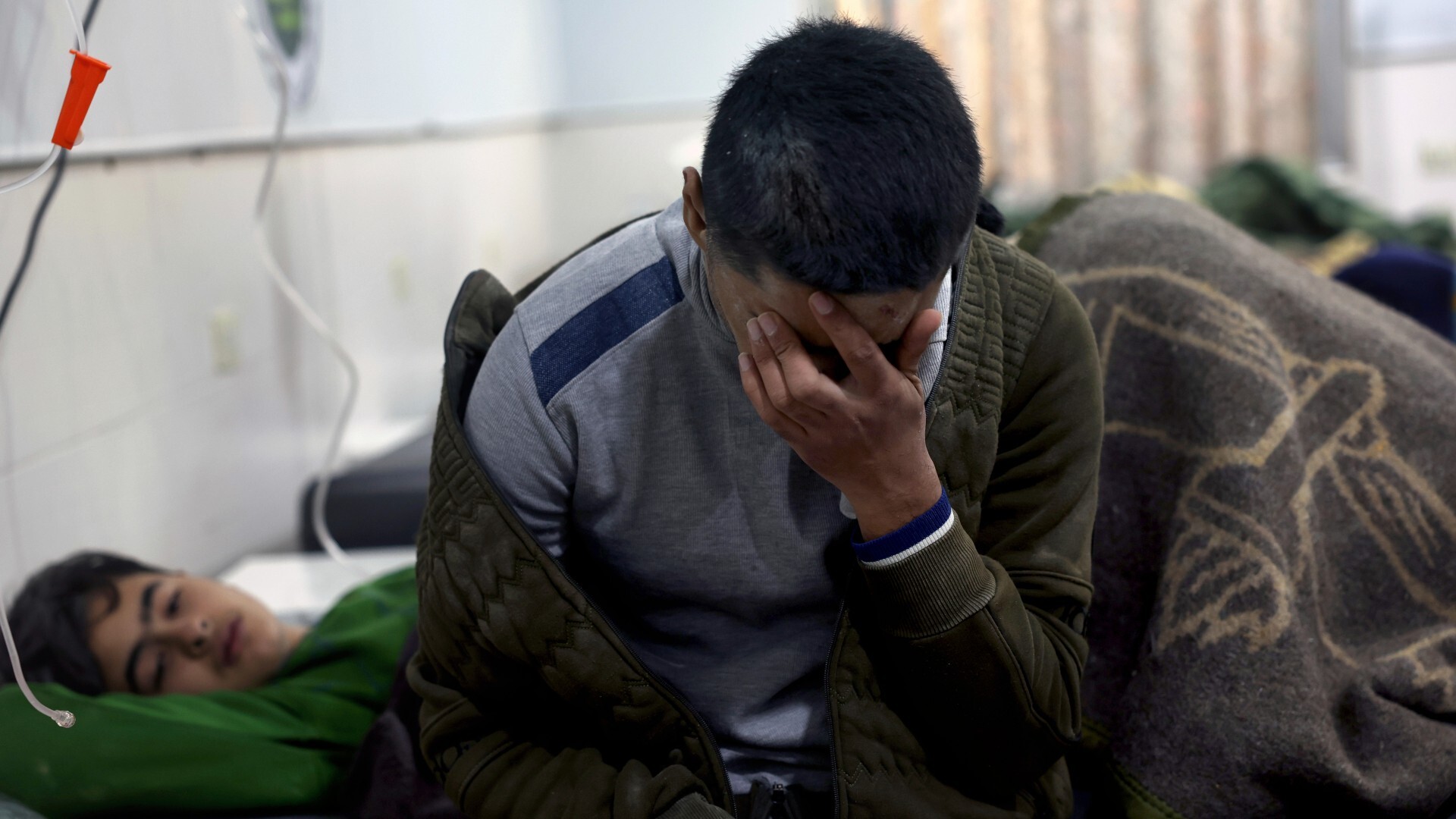

UN aid is not reaching opposition-held territory in northwest Syria due to customs officials at the Turkish border being personally impacted by Monday’s earthquake, officials and humanitarian workers have told MEE.
More than 11,000 people have died after a 7.8-magnitude quake struck the southeastern Turkish city of Gaziantep on Monday morning. A second, 7.5-magnitude earthquake hit Turkey's Kahramanmaras province shortly after.
The death toll was at least 8,579 in Turkey and 2,530 in Syria, as of Wednesday.
Highways in southern Turkey were severely damaged by the quake, including ones leading to Bab al-Hawa, the only international aid corridor from Turkey into Syria.
Read more:
Aid not reaching northwest Syria as border guards affected

Turkish President Recep Tayyip Erdogan on Wednesday said there had been "shortcomings" in his government's response to Monday's earthquakes.
"Of course, there are shortcomings. The conditions are clear to see," he said, speaking to press from the southeast of the country, the area most afflicted by the disaster.
"It's not possible to be ready for a disaster like this."
There has been mounting criticism of the speed at which the government responded to the quakes.
Many eyewitnesses, speaking to MEE, have said that the aid efforts particularly in Hatay were insufficient in the first 48 hours of the disaster.
Turkey says that the death toll from Monday's quakes has hit 9,057, with a further 52,979 people injured.
Turkish President Recep Tayyip Erdogan made the announcement on live TV on Wednesday afternoon as he visited areas afflicted by the quakes.
The Syrian government and Civil Defense teams also said the death toll in Syria had reached at least 2,662.
Overall, more than 11,700 people have died in total from the quakes, with aid groups expecting the figure to rise even further.
The Turkish government has imposed restrictions on Twitter across the country in the wake of Monday's earthquakes, provoking an outcry from campaigners that the move could hinder rescue efforts in the afflicted southeast.
Web monitoring site NetBlocks confirmed the move on Wednesday.
"Real-time network data show Twitter has been restricted in Turkey; the filtering is applied on major internet providers and comes as the public come to rely on the service in the aftermath of a series of deadly earthquakes," said the organisation in a tweet.
A number of users said their access to the site was completely blocked without a VPN, while others said their access had been severely slowed.
Read more:
Twitter restricted across country, complicating rescue efforts
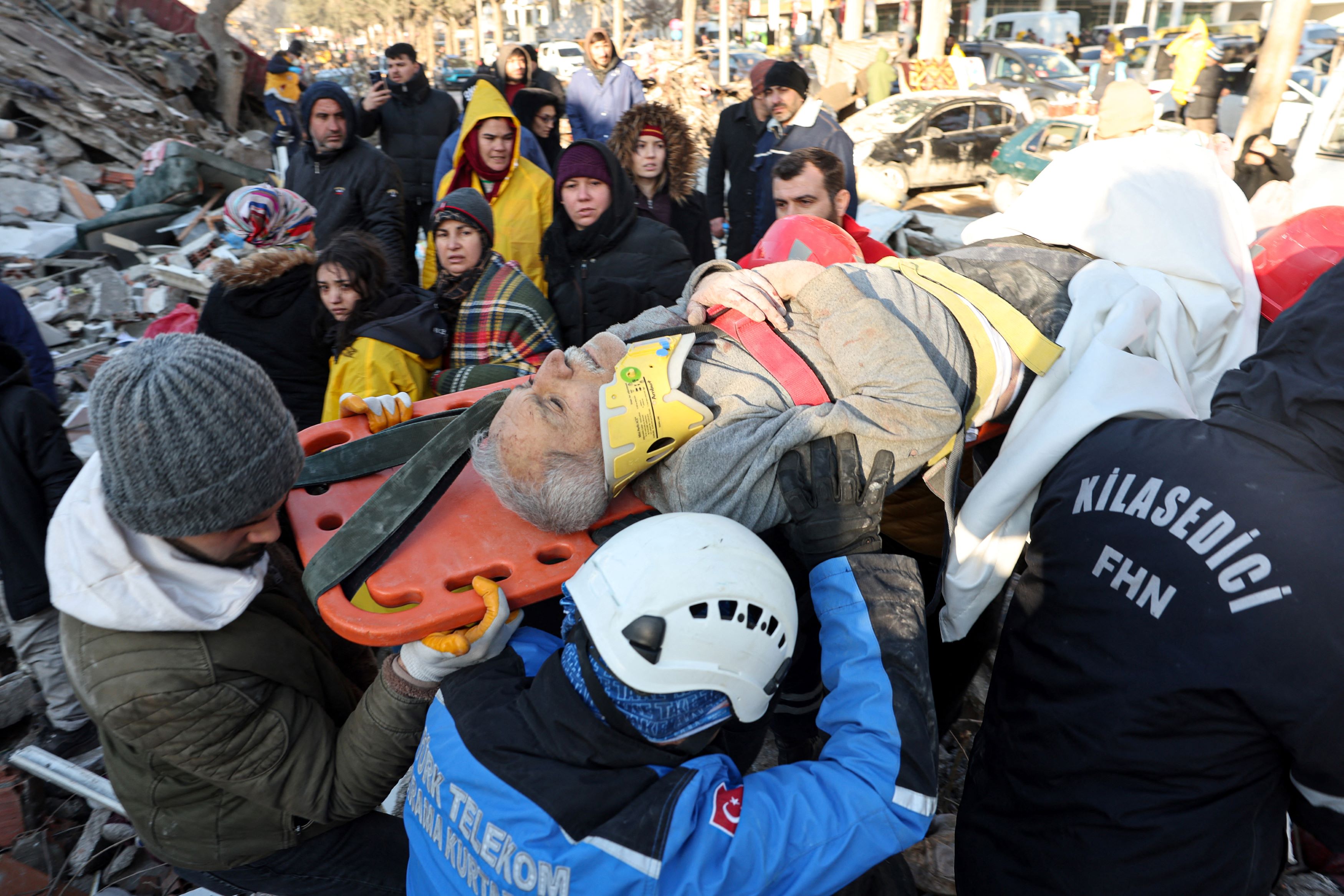
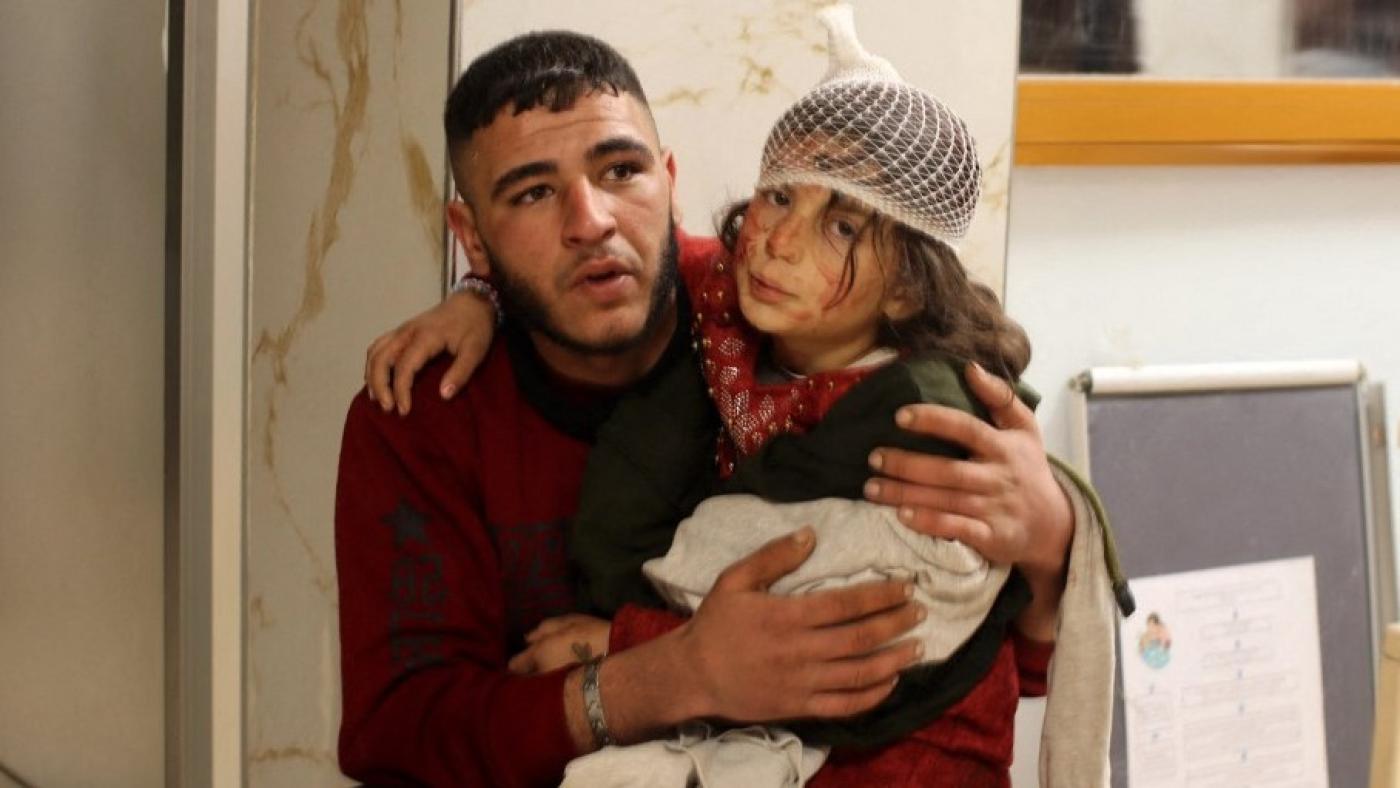
Countries from across the world have rushed to dispatch aid to Turkey and Syria after a powerful earthquake and several aftershocks killed over 11,000 people, injured tens of thousands, and left countless people homeless.
The earthquake toppled thousands of buildings, including hospitals, schools and apartment blocks. Rescue efforts continue across wide areas of devastation in both countries.
Read more:
The countries that offered help
Turkey's stock exchange suspended trading on Wednesday for the first time in 24 years following the deadly earthquakes that put the benchmark BIST index into free fall.
Borsa Istanbul stock exchange did not say when it would resume trading. Experts said it should be closed until next week.
The benchmark index lost 16 percent this week after twin quakes rocked southern Turkey on Monday, killing more than 11,000 people so far in Turkey and neighbouring Syria.
The stock market was closed for a week in 1999 after a strong earthquake hit Izmit's Golcuk, killing more than 17,000 people.
When trading began on Wednesday morning, the stock market immediately posted a seven percent loss. Two circuit breakers couldn’t stop the fall and trading was completely halted around 11am local time.
Read more in this report by Middle East Eye's Turkey bureau chief Ragip Soylu:
Turkey's stock exchange suspends trading after earthquake losses

The Turkish government has restricted Twitter across the country, according to tech activists and users online.
Turkey's government regularly places restrictions on social media following disasters or bomb attacks, purportedly as a means of restricting disinformation.
"Access to Twitter can be done via VPN, but it is cut off after exiting the VPN," tweeted Fatih Kadir Akin, from Teknasyon Tech.
"Currently, it is one of the most important media where communication with the earthquake zone is provided. There may still be people under the rubble who can deliver a call for help, if there is an obstruction on our side, please remove it."
Rescue teams are racing against the clock to save people trapped under the rubble in Turkey and Syria.
Charities have warned that the next 36 hours will be critical in finding survivors.
"It's now a race against time," says Tedros Adhanom Ghebreyesus, the World Health Organisation chief. "Every minute, every hour that passes, the chances of finding survivors alive diminishes."
Read below for some of the organisations that are operating on the ground and accepting donations:
How you can help earthquake victims in Turkey and Syria
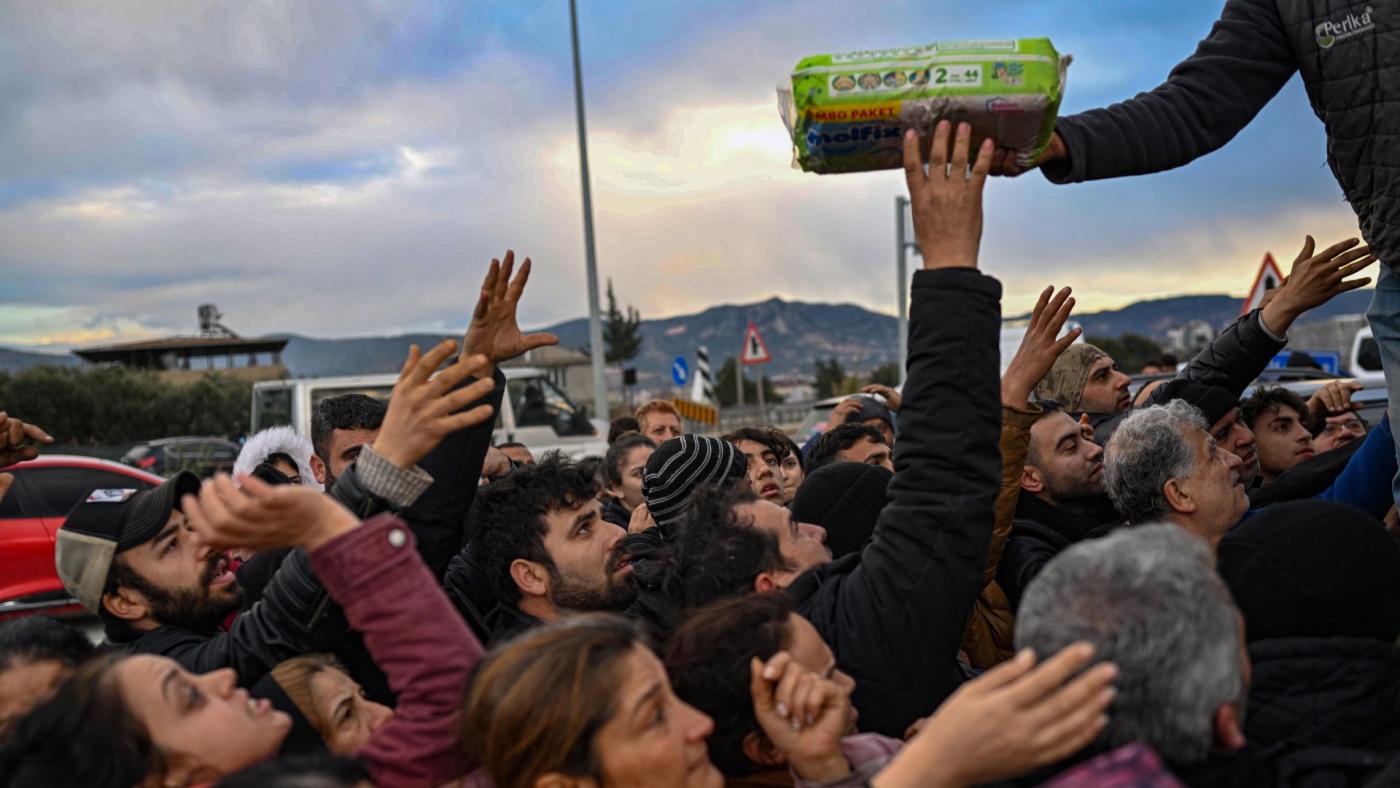
Turkey’s rescue efforts after the quake have been boosted by international aid.
But in northwest Syria the situation is more complicated, Syrian doctor and health expert Abdulkarim Ekzayez writes in a column for Middle East Eye.
“This is due to the protracted nature of the conflict, the governance vacuum in opposition-controlled areas, and the politicisation and manipulation of humanitarian assistance by the Syrian government in areas it controls,” Ekzayez argues.
“Their suffering might be overlooked due to the chronicity of the conflict and the vast scale of the earthquake in southern Turkey.”
Turkey-Syria earthquake: Are Syrian victims being overlooked?