Turkey-Syria earthquake: As it happened

Live Updates
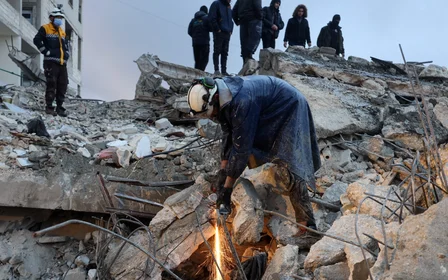
It didn’t take long after the devastating earthquake that ripped through southern Turkey and northwestern Syria on Monday morning for desperate appeals to flood social media.
Those unable to contact their loved ones began posting too: images of their relatives and their addresses, pleading for someone to see if they can be found.
The scheme did have some success. One man tweeted that he, his mother and his brother were under rubble in Hatay, one of the worst-hit cities near the Syrian border. After receiving thousands of retweets in less than hour, the family was rescued by people living nearby.
Another man also posted his address. “Please help! We are under debris. There are many people here,” he appealed. One hour later, he announced that he and his mother had been rescued, but his father was not as fortunate.
By Monday evening, at least 1,498 people had been killed in Turkey by the 7.8-magnitude earthquake, and another 810 fatalities were confirmed over the border in Syria.
Read more here:
Trapped victims cry for help on social media
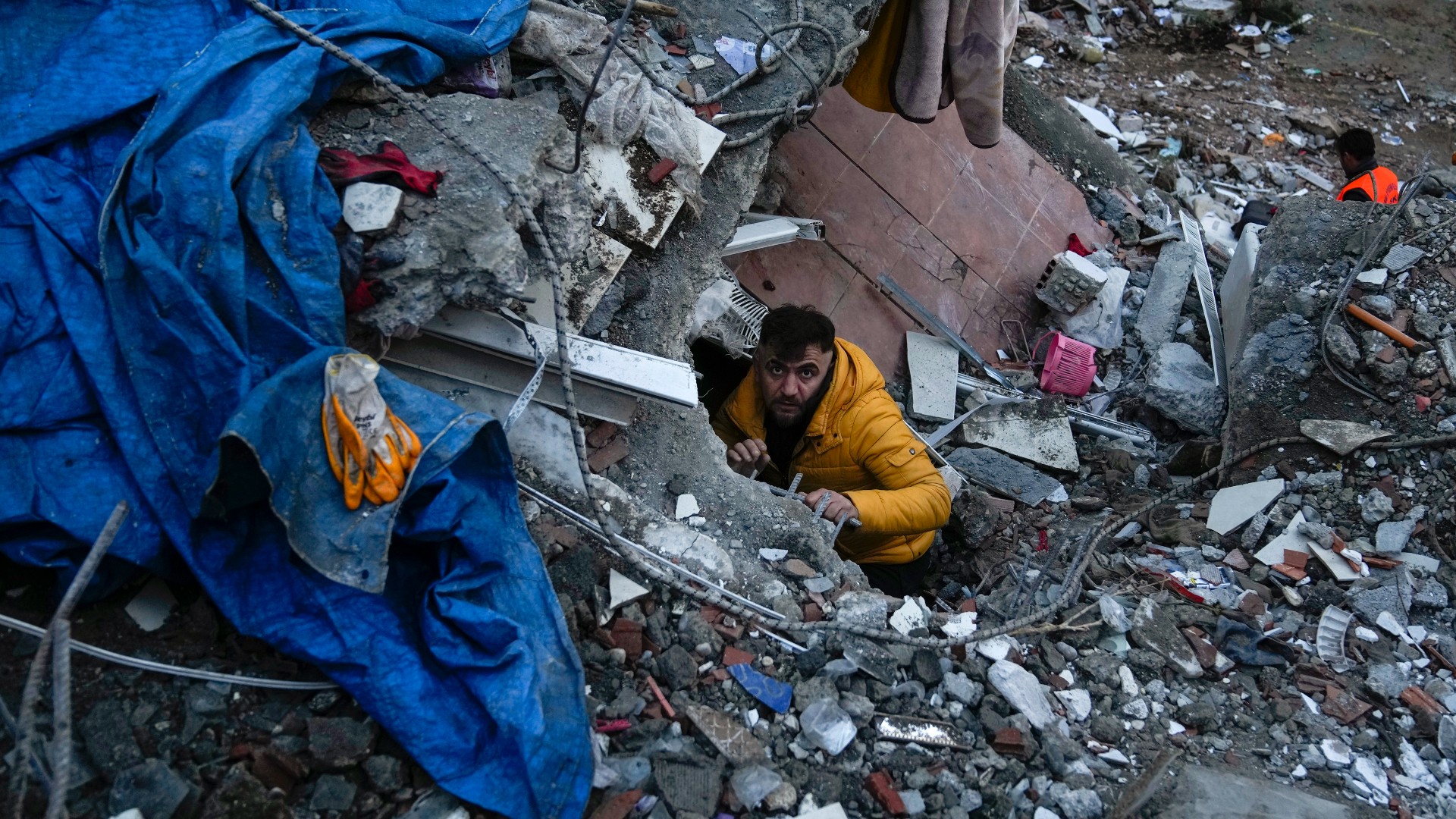
The earthquakes that shook Turkey and Syria on Monday have so far killed more than 2,300 people, but the number is expected to rise dramatically, as hundreds remain under the rubble and thousands are reportedly injured.
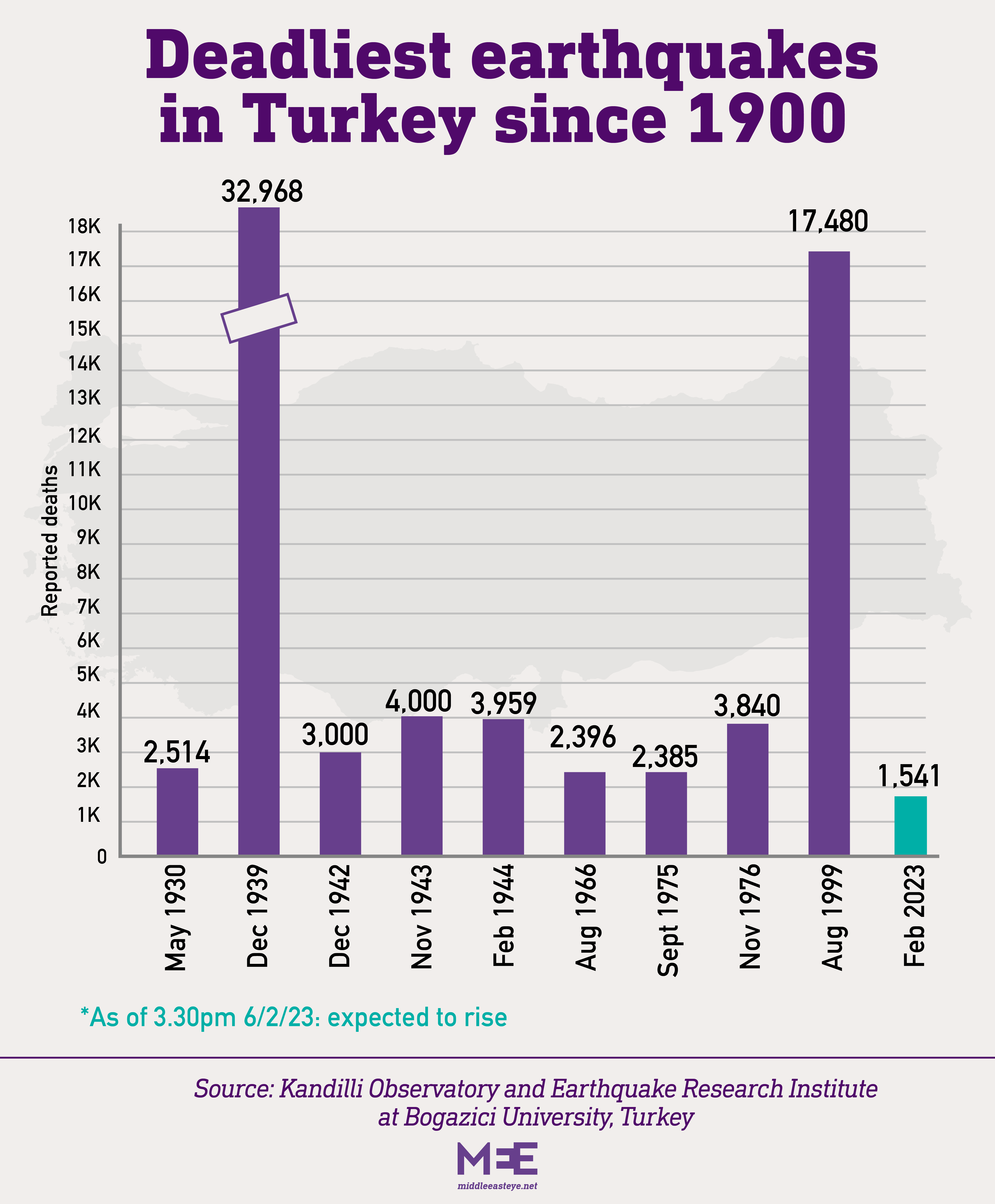
Below is a a graph that shows the deadliest earthquakes that hit Turkey since 1900.
The United Nations General Assembly has observed a minute's silence for the victims of Monday's earthquake.
“Our teams are on the ground assessing the needs and providing assistance," UN Secretary-General Antonio Guterres said in a statement.
"We count on the international community to help the thousands of families hit by this disaster, many of whom were already in dire need of humanitarian aid in areas where access is a challenge."
Fires have broken out at the port of Iskenderun in Turkey's Hatay province following Monday's earthquake.
According to Turkish media, emergency services were attempting to tackle the blaze.
Turkey's high propensity for earthquakes is due to its location at the crossroads of three different tectonic plates.
These land masses, which make up the outermost shell of the Earth, are constantly moving and bumping into each other.
Earthquakes most often occur at the plate's fault lines, which are large fractures on the planet's surface.
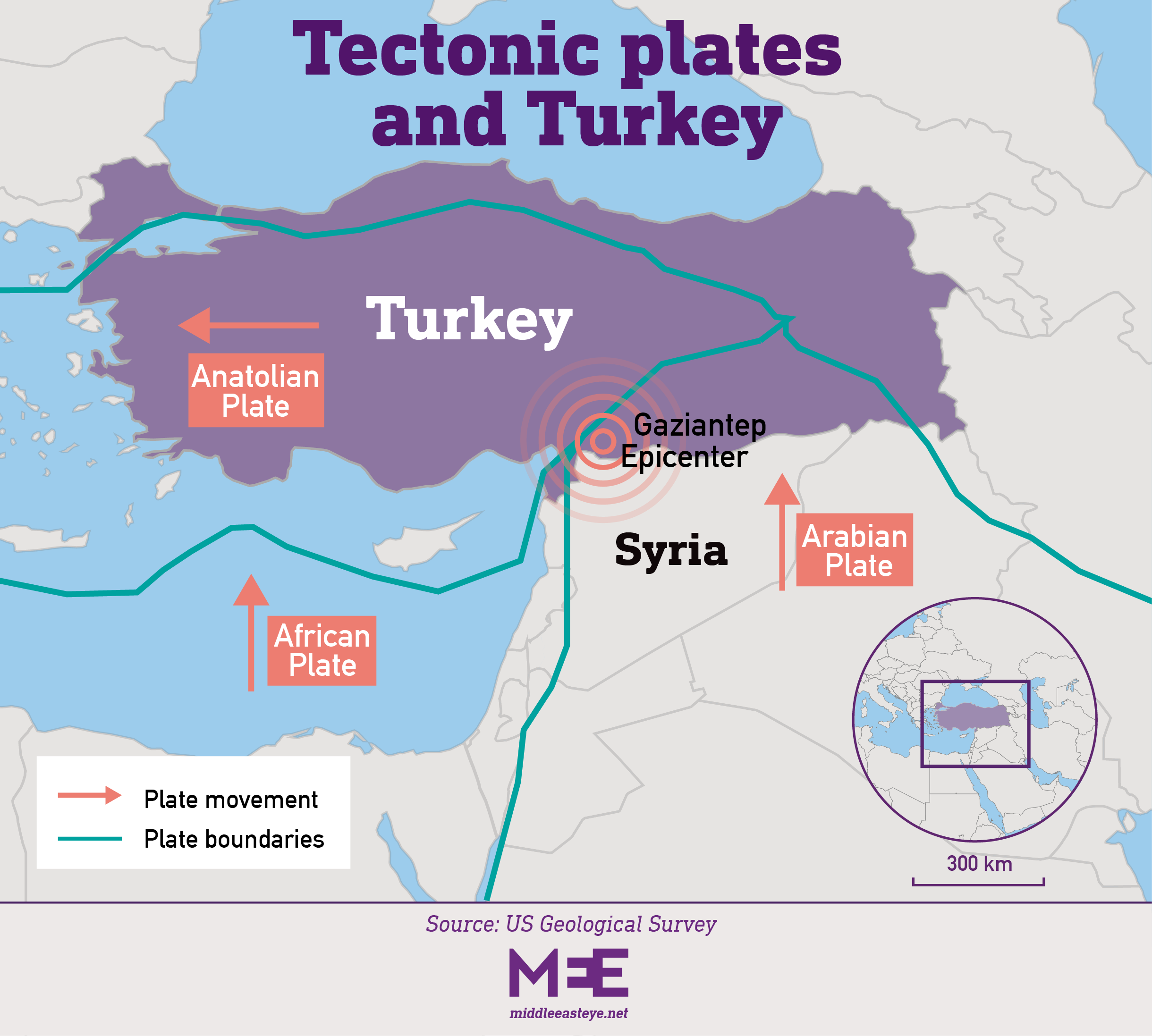
Most of Turkey is located on the Anatolian tectonic plate, which sits between the major Eurasian and African plates and a minor one, the Arabian.
As plates are forced up against and under each other, two plates can get "stuck" due to friction.
When these plates finally get "unstuck" as a result of a build-up of pressure, they release a huge amount of energy that is felt in the form of earthquakes, or tsunamis when tectonic plates converge under water.
More than 2,300 have died as a result of Monday's earthquake across Turkey and Syria, according to official sources.
Turkey's emergency services said on Monday afternoon that at least 1,498 people had died in the 7.8-magnitude earthquake
Along with another 810 confirmed fatalities in neighbouring Syria, the total dead stands at 2,308.
An ancient castle in the Turkish city of Gaziantep has been largely destroyed by the devastating earthquake that hit the region this morning.
For over 2,000 years, Gaziantep Castle stood strong, its structure remaining intact despite waves of invasion and conquest that saw it controlled by a series of Middle Eastern empires.
Known locally as Gaziantep Kalesi, the historic stone castle was first constructed as an observation point by the Hittite Empire during the second millennium BC.
Photos shared online showed the castle with its iron railings collapsed, meanwhile local media reported that the walls of the historic Sirvani Mosque, which sits beside the castle, have also partially collapsed.
Hospital buildings collapse in Hatay province
Two hospital buildings in the Hatay cities of Iskenderun and Antakya have collapsed following Monday's earthquake.
Turkish media reported that a 6-storey building at Iskenderun State Hospital which housed the intensive care unit had collapsed, with patients evacuated to a nearby garden.
HaberTurk reported that search and rescue teams were still going through the wreckage.
Meanwhile, the governor of Hatay said Antakya's state hospital had also collapsed.
“There are ruined buildings in Antakya and Kirikhan. State hospitals in Iskenderun and Antakya were destroyed. The police station was also destroyed," said Rahmi Dogan, speaking to press.
"There is some trouble on the airport runway, there is a problem in landing the planes. We are coordinating the activities with our existing facilities. There are those who lost their lives, and we have many injured.”
Syrians in rebel-held northwest Syria, where at least 380 have been killed, have been speaking to MEE contributor Harun al-Aswad.
Abu Rawad lives in Idlib province after being displaced from southern Daraa province by the war.
“I live in a tent, so I was not affected by the earthquakes. I was sleeping and woke up when the ground was shaking under me. I fled with my wife and four children and dozens of displaced people towards the plains and lands surrounding the tents,” he told Middle East Eye.
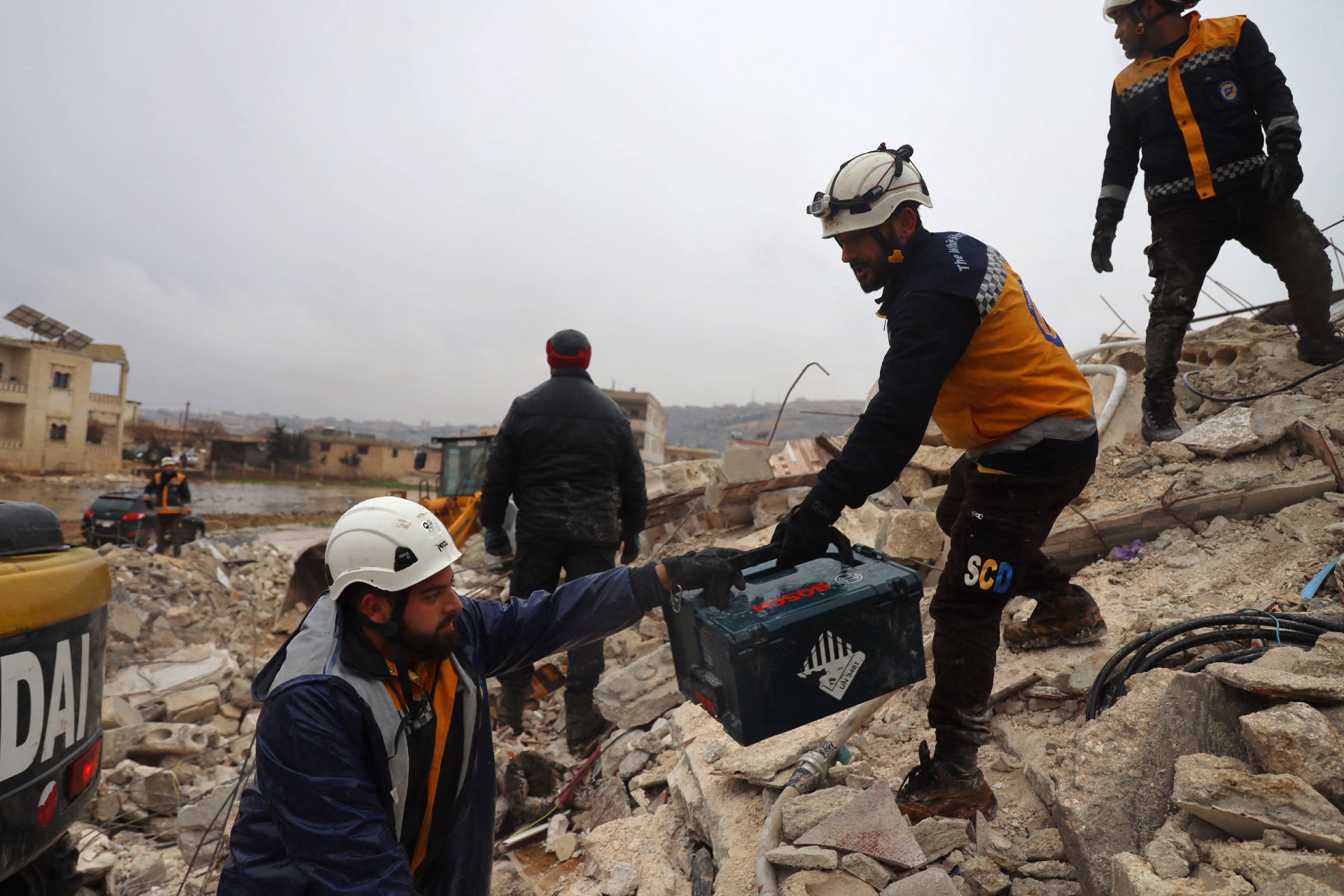
“After a few hours, we came to the city of Sarmada and found all our relatives under the rubble. The Civil Defence is still trying to find them.
“One of my cousins was rescued with broken hands and feet as a result of the collapse of the apartment above him. His wife and children are still under the rubble. My other cousin, his wife and children are still under the rubble. We are impatiently waiting, hoping that God will save them all.”
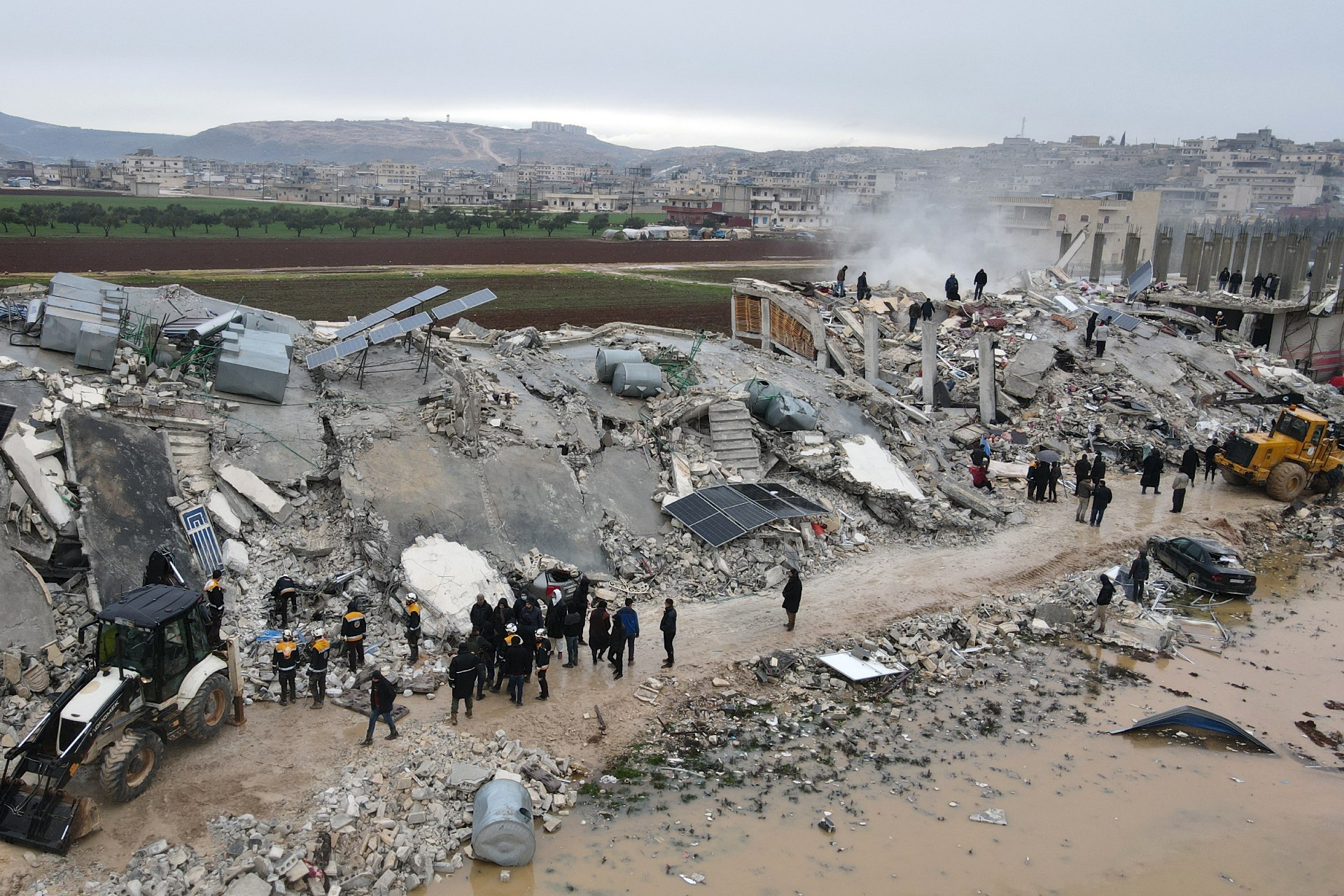

Before the Syrian war, Sarmada was a modest village with a few thousand residents. Over the ten years of conflict, it has turned into the largest commercial centre of rebel-held Syria. Once-deserted streets now teem 24/7 with shoppers.
Close to the Turkish border, Sarmada has largely escaped bombing from pro-Syrian government forces. That has encouraged rapid urban development, and the construction of poor-quality buildings which have collapsed in the earthquake.
"The destruction in Sarmada is huge. One of my friends and his family is trapped under the rubble,” Abu al-Laith al-Homsi, a displaced person from the city of Homs, told MEE.
"As soon as the earthquake happened, I pulled my children and fled with my wife to the street in the city of Atarib west of Alleppo province, near Sarmada. We were not affected a lot there, but many of my neighbours were and the Civil Defence is trying to help them."
Top Turkish league contender Hatayspor's left-winger Cristian Atsu and sporting director Taner Savut are trapped under collapsed buildings in the team's base-city Hatay following a 7.5 magnitude earthquake that has wreaked southeast Turkey.
Atsu, who has played for Ghana's national team 65 times, signed for Hatayspor last summer on a free transfer. He scored the winning goal for his team the evening before the earthquake. He had also played for Chelsea and Newcastle United, and Porto, among others.
Another two players and two members of the coaching staff were also trapped under rubble, but they were later rescued and are in good health, according to local media.
The club's manager Volkan Demirel took to social media to send an emotional plea for help, where he asked for "as much help as possible, not just for Hatay, but also for neighbouring areas" before bursting into tears.
Hatayspor is currently 14th in the Super Lig table. Turkey's Minister of Youth and Sports Mehmet Kasapoglu announced that all national sporting events have been suspended until further notice following of the disaster.
Turkish and Syrian officials have said the death toll jumped to at least 1,797.
In Turkey, 1,014 have been killed and some 2,824 buildings destroyed, the head of the disaster and emergencies management agency (Afad) Yunus Sezer said.
Syria's ministry of health said 403 were killed and 1,284 were injured in government-controlled areas. The volunteer rescue group Syria Civil Defence in the opposition-held northwestern region said 380 were killed and more than 1,000 were injured.
Survivors of the earthquake in Syria described scenes and feelings of horror in the aftermath of the first shock.
"I woke up from being shaken off my bed, and everyone got evacuated out," a resident of Latakia told told Middle East Eye's Ayah El-Khaldi.
In Syria, the initial quake struck the provinces of Idlib, Aleppo, Latakia, Tartus and Hama. The aftershocks hit the capital Damascus.
"It’s been almost two hours now and I still haven't calmed down. I feel as if I am walking on a sponge and my anxiety is insane," a resident of Damascus told MEE.
"When I managed to speak to my children I burst into tears."
Syrian health officials and volunteer rescue workers said 783 have been killed and more than 2,000 injured as rescue efforts continue.
Former national team footballer Nader Joukhadar and his son Taaj were among those who died in Jableh city, the Syrian Football Association said.
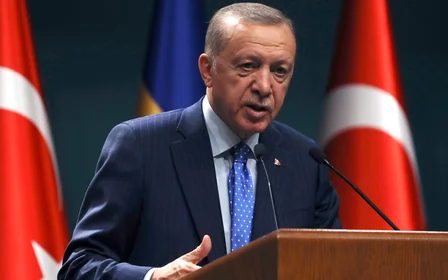
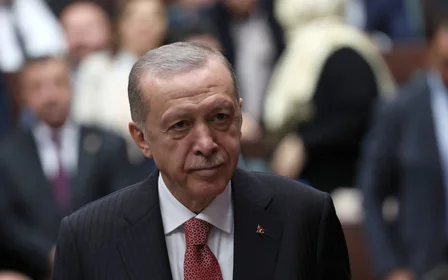
Turkish President Recep Tayyip Erdogan said the earthquake was the strongest since 1939, when a 7.9 quake hit the eastern city of Erzincan and killed more than 30,000 people.
Erdogan said 9,000 personnel are carrying out search-and-rescue operations, a number constantly increasing as people try and access the affected areas.
Erdogan said: "As well as Nato and the European Union, we have received aid offers from 45 countries."
In Turkey, residents of the quake-hit south have been speaking to MEE contributor Yusuf Selman Inanc.
“It’s a disaster, much worse than people think,” a doctor at a public hospital in Kahramanmaras told Middle East Eye in a constantly interrupted phone call. “Roads are blocked. Everybody is doing his and her best. But we don’t know what will happen.”
Ahmet Furkan Oguz, a resident of Adana, described his horror at the moment of the earthquake: “That minute felt like years. We managed to exit the building as soon as it finished. The first aftershock was almost as powerful as the previous. We heard the buildings cracking.”
Kerem Kocalar, head of Gaziantep branch of Turkey’s official Anadolu Agency said at least 530 buildings in the city have collapsed. “There is a traffic jam in the city as people want to leave for somewhere safe.”
As aftershocks continue to rock the area, “even some rescuers are trapped under debris”, Kocalar said.
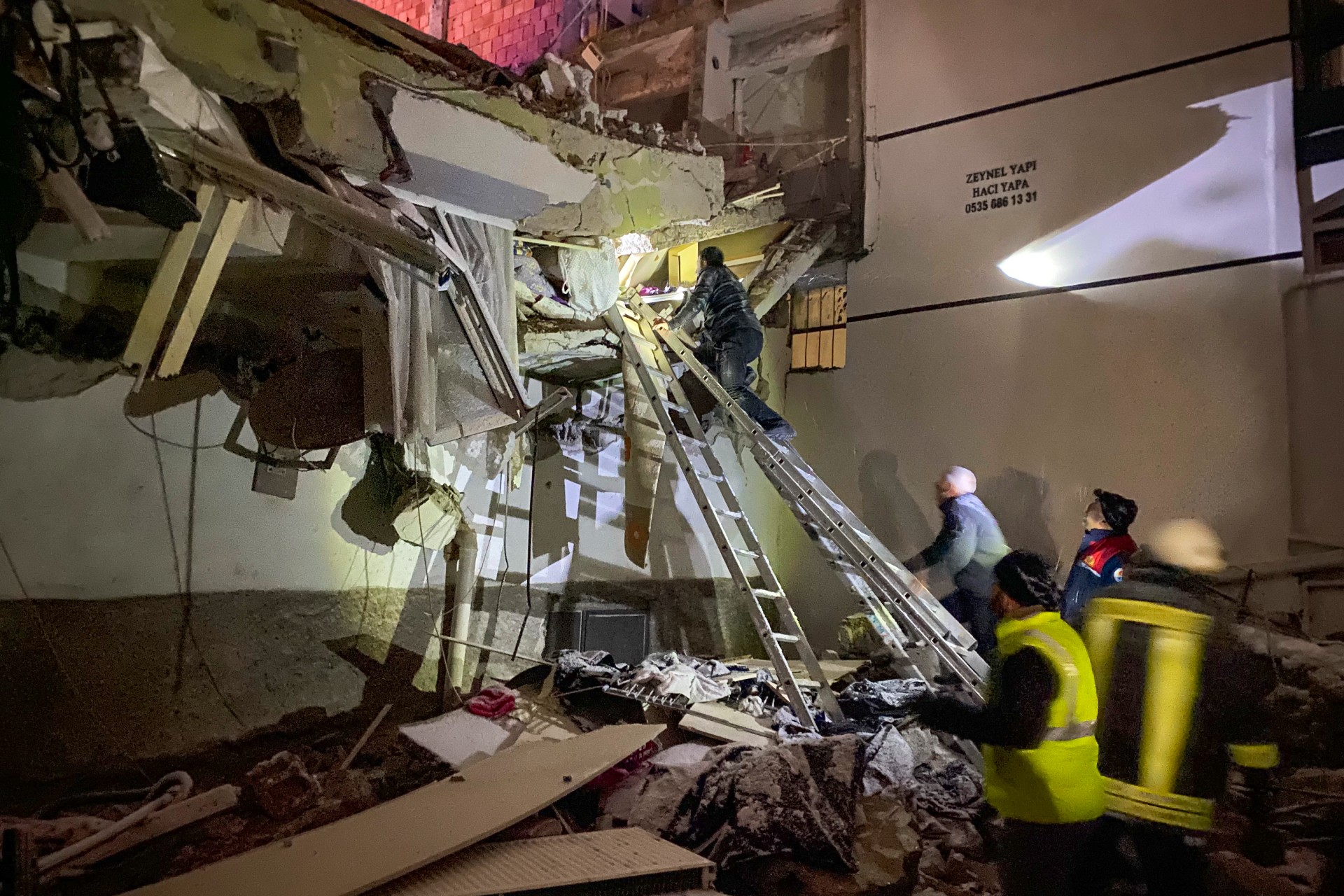
Ahmet Tuncay Cakar was sleeping at home in Malatya, one of the worst-hit cities. “When the earthquake ended, I told myself Malatya must be wiped off the map. It was horrendous.”
His house was badly damaged, so Cakar and his family fled to a relatives’ bungalow in nearby village.
“All of our relatives are here, now. It is a disaster. The rescue operations are interrupted due to the snow. It snows ceaselessly. The roads are closed.”