Turkey-Syria earthquake: As it happened

Live Updates
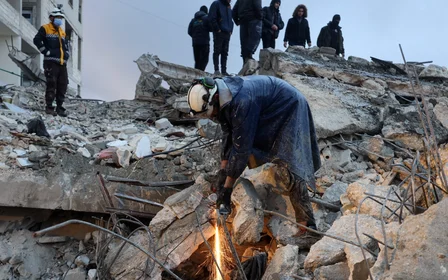
The confirmed death toll in Turkey reached 20,213 people and 80,052 others were injured by two strong earthquakes, Turkey’s Health Minister Fahrettin Koca said on Friday.
A 7.8-magnitude quake struck the southeastern Turkish city of Gaziantep on Monday, followed by a 7.5-magnitude quake in the Kahramanmaras province shortly after.
Turkey's death toll has now surpassed the estimated death count from the 1999 Kocaeli earthquake that struck in the northwest part of the country, close to the city of Istanbul. Monday's earthquake is now the deadliest in Turkey since 1939.
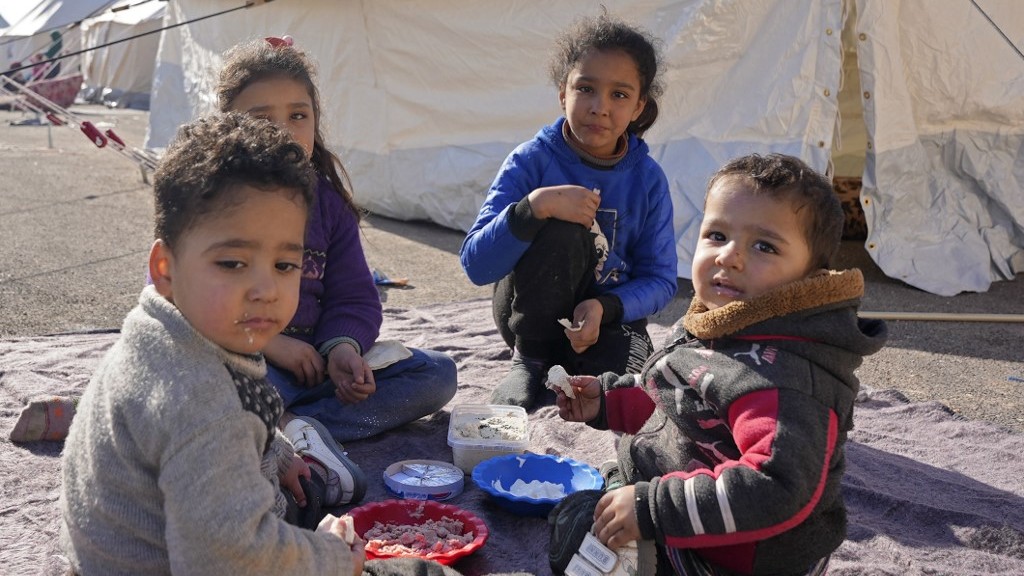
Up to 5.3 million people in Syria may have been made homeless by the devastating earthquake which rocked the region this week, a United Nations official said on Friday
"As many as 5.3 million people in Syria may have been left homeless by the earthquake," the Syria representative of the UN High Commissioner for Refugees, Sivanka Dhanapala, told a press briefing.
"That is a huge number and comes to a population already suffering mass displacement," he said.
Half of Syria’s pre-war population has already been forced from their homes as a result of the war that erupted in 2011. Many fled to Turkey, finding themselves at the epicentre of the quakes.
Syria’s economy was already on the verge of collapse. In a report this year before the quakes the UN warned that 15.3m people out of a total population of 22.1m would require humanitarian aid. The economy is grappling with a debilitating fuel shortage and has been battered by Western sanctions.
"For Syria, this is a crisis within a crisis,” Dhanapala said.
The UN Security Council is set to discuss the humanitarian situation in Syria as early as next week, the ambassadors in charge of the file said on Friday, amid growing calls to open other cross-border entry points into the country.
UN Under-Secretary-General for Humanitarian Affairs Martin Griffiths is due to visit earthquake-hit areas this weekend, including rebel areas in northwestern Syria.
Switzerland and Brazil, the non-permanent members in charge of the Syrian humanitarian dossier, have called for a Council meeting “as soon as possible from the beginning of next week” to hear the UN humanitarian chief’s assessment.
“Additional needs and additional mechanisms that the Security Council may discuss will depend on the assessment of the concrete situation on the ground,” added Brazilian Ambassador Ronaldo Costa Filho.
On Friday, Damascus approved international aid being delivered to rebel-held areas of northwest Syria. The only UN border crossing used by humanitarian convoys, known as Bab al-Hawa, was incapacitated by the quakes.
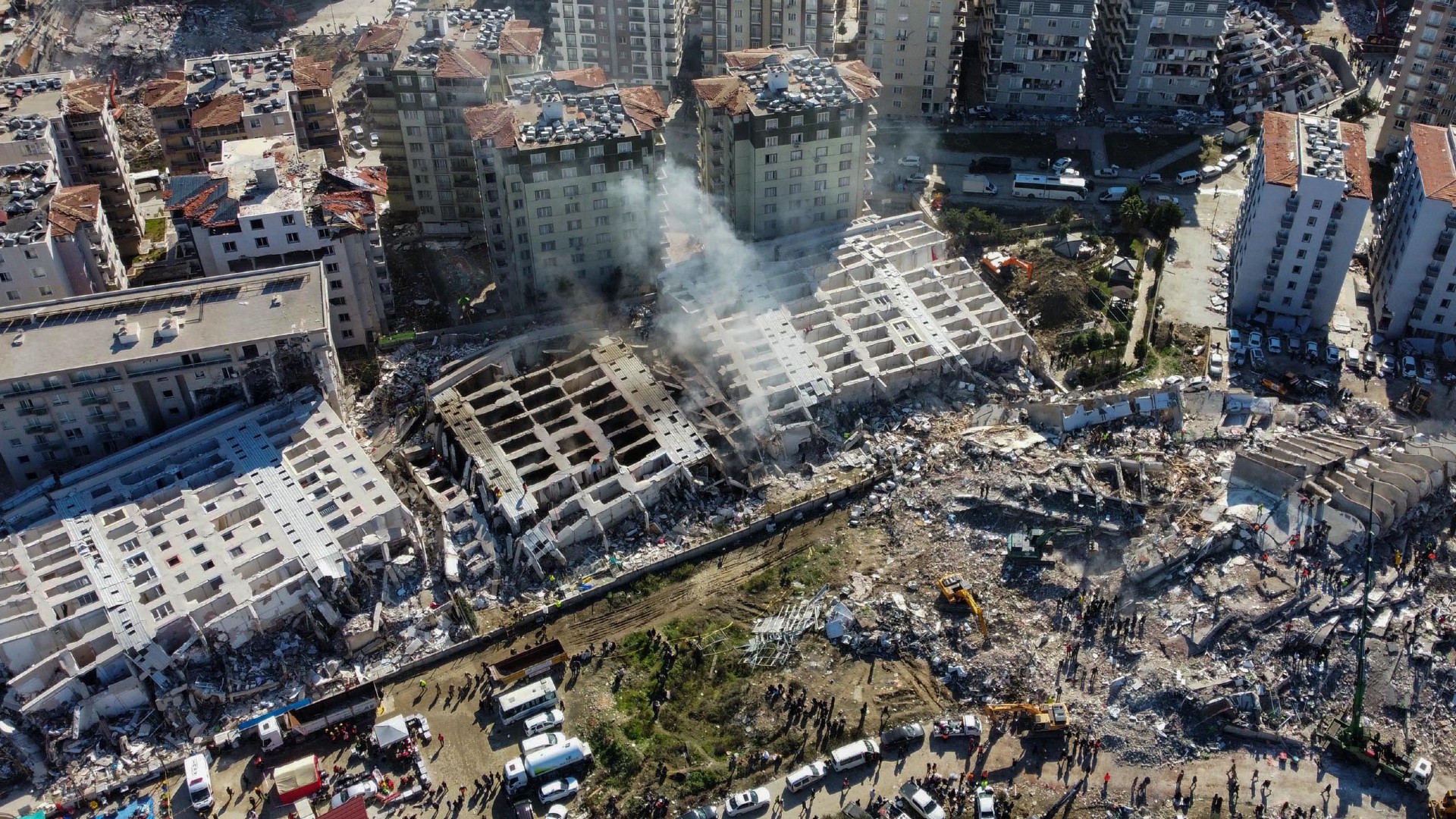
The owner of Renaissance Residence, an apartment complex destroyed by the quake in Turkey's Hatay province, has been detained at one of Istanbul's airports.
Mehmet Yasar Coskun was stopped at Sabiha Gokcen airport attempting to travel to Montenegro, Anadolu Agency reported.
The 12-storey Renaissance complex in Hatay's Antakya district was completely toppled after the earthquake. It had been advertised as a luxury residence project that complied with building regulations.
Coskun has yet to be officially charged.

Turkey's justice minister said on Thursday that a judicial investigation had been initiated over collapsed buildings during the quake.
The probe will seek to hold to account those who built the buildings or bore any responsibility for their collapse in the 10 most-affected provinces.
Owner of collapsed residential complex arrested at airport

The Syrian government of President Bashar al-Assad has approved international aid being delivered to rebel-held areas northwest of the country.
"The Council of Ministers approves... the delivery of humanitarian aid to all parts of the Syrian Arab Republic," said a cabinet statement on Friday.
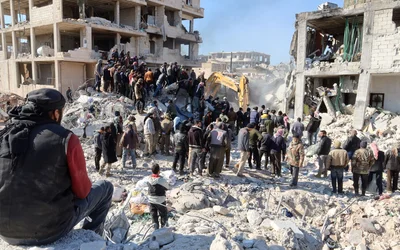
Damascus said assistance would arrive to those who need it most with the help of the UN, the Syrian Red Crescent and the International Committee of the Red Cross.
Prior to the announcement, the only path for international aid to arrive into rebel territory was through the Bab al-Hawa crossing between Syria's Idlib province and southern Turkey.
That crossing had been closed for several days due to the earthquake impacting guard officials in Turkey's Hatay province.
However, fourteen truckloads of UN aid were delivered through the crossing today, according to Anadolu Agency.
The powerful earthquake that destroyed significant parts of the ancient Turkish city of Antakya may also end the 2500-year-long Jewish existence in the city.
The devastating 7.5 magnitude earthquake that struck Turkey and Syria earlier this week has affected over 23 million people. The death toll has passed 22,000, tens of thousands are injured and countless people have been left without shelter.
The Turkish Jewish Community announced on Friday morning that Saul Cenudioglu, the head of the Jewish community in Antakya, and his wife Tuna have lost their lives under the rubble.
"Along with our [destroyed] Antakya Synagogue, the 2500-year-long Jewish life has come to an end with great pain," the community said on Twitter. "We are in deep pain from losing the veteran president of our Antakya Jewish community, the city's elder brother, symbol, our elder, the exemplary Saul Cenudioglu and his wife, Tuna Cenudioglu, in the Antakya Earthquake."
Read more in this report by Ragip Soylu:
Turkey earthquake: 2500-year-old Jewish presence in Antakya may come to an end

The devastating earthquakes that struck the Middle East on Monday have left devastation across Turkey and Syria, and have generated offers of support and aid from countries across the globe.
But while material support and manpower flow fairly smoothly into Turkey, there are numerous obstacles in getting aid into northern Syria.
The region, largely controlled by rebel groups opposed to the government of President Bashar al-Assad, had already been dependent on aid agencies to a large extent for many years, with its people enduring poverty, homelessness and repeated bombing campaigns by the government and its allies.
The earthquakes have exacerbated an already fragile situation, destroying much of the crumbling housing and infrastructure of the region as well as the routes that already existed for aid convoys.
But the destruction of physical routes into the region is just one of the many issues that have made providing aid to earthquake survivors so difficult.
In this explainer, Middle East Eye takes a look at the main problems facing Syrians in the wake of the disaster.
Syria earthquake: Why sending aid is complicated
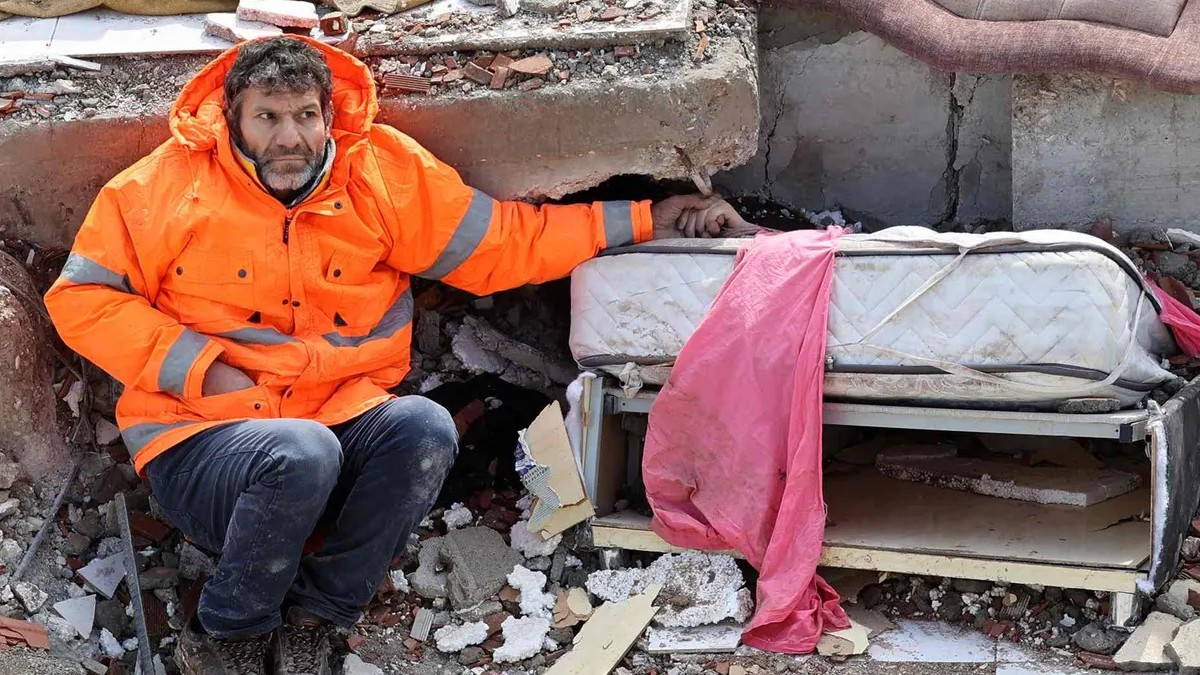
Amid widespread scenes of devastation, the image of Mesut Hancer holding the hand of his 15-year-old daughter Irmak in Kahramanmaras earlier this week captured the agony of thousands of families who lost a loved one.
Speaking to the German media outlet Bild, Hancer held his daughter's hand for two days, before she was pulled out of the rubble and later buried.
"I was working in the bakery when the earth trembled," Hancer told Bild. "I called my wife. She said that she, my two daughters and my son are safe."
Their youngest daughter Irmak, however, didn't sleep at home that night, instead staying over at her grandmother's.
When Mesut called the grandmother's house no one answered.
"I cried out to God, 'Please let our house be whole'…"
"I tried to dig up my princess with my bare hands. But in the end I had to abandon her to the rubble," said Mesut.
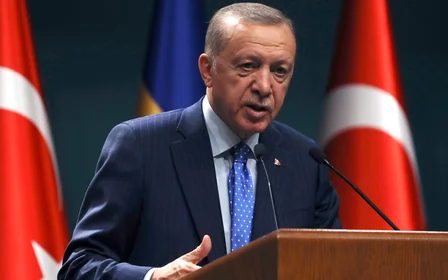
In a visit to earthquake-hit areas on Friday, Turkish President Recep Tayyip Erdogan said that the death toll from the two powerful earthquakes has climbed to 18,991.
In a press conference speaking from one of the worst-hit regions in the Adiyaman province, Erdogan said that the country is facing "one of the biggest disasters" in its history.
In Syria, at least 3,377 people have been killed, according to figures from the government and a rescue organisation operating in rebel-held northwestern Syria.
The total death toll to date stands at 22,368.
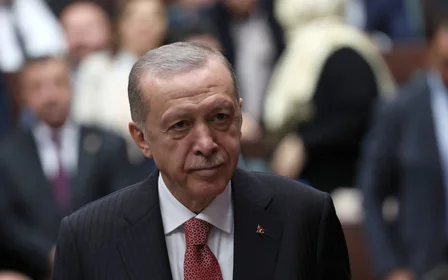
Turkish President Recep Tayyip Erdogan is expected to visit two cities in the earthquake-hit southern region of the country on Friday, according to the semi state-owned Anadolu Agency media outlet.
Erdogan is expected to visit Adiyaman and Malatya.
On Wednesday, Erdogan visited the earthquake-devastated regions of southern Turkey where he delivered a speech in which he promised new housing within a year for those left homeless in affected provinces.
The Turkish president acknowledged shortcomings in Ankara's response on Wednesday, saying: "It's not possible to be ready for a disaster like this."
On Tuesday, the Turkish government declared a three-month state of emergency in 10 provinces impacted by the earthquake.
Turkey is considering re-opening a border crossing into Syrian government territory, a Turkish official said on Friday, according to a report from Reuters.
It would enable earthquake aid to be sent directly to areas under President Bashar al-Assad's control after a decade of hostility between Ankara and Damascus.

The Turkish government is also looking at opening another crossing into Syria's opposition-held Idlib region, the official said.
Turkey and Syria broke off diplomatic ties after Assad responded with extreme violence to 2011 protests calling for greater freedoms and the overthrow of the regime.
In recent months Turkey and Syria have been engaged in several meetings in a bid to improve relations.
Turkish and Syrian defence ministers, along with their Russian counterpart Sergei Shoigu, met in Moscow in December, elevating contacts that had previously been held on a strictly intelligence level in an attempt to repair bilateral relations.
Last month two sources familiar with the issue told Middle East Eye that Turkey is pushing the Syrian government to send its foreign minister to Ankara for the second high-level meeting between the two countries in 11 years.
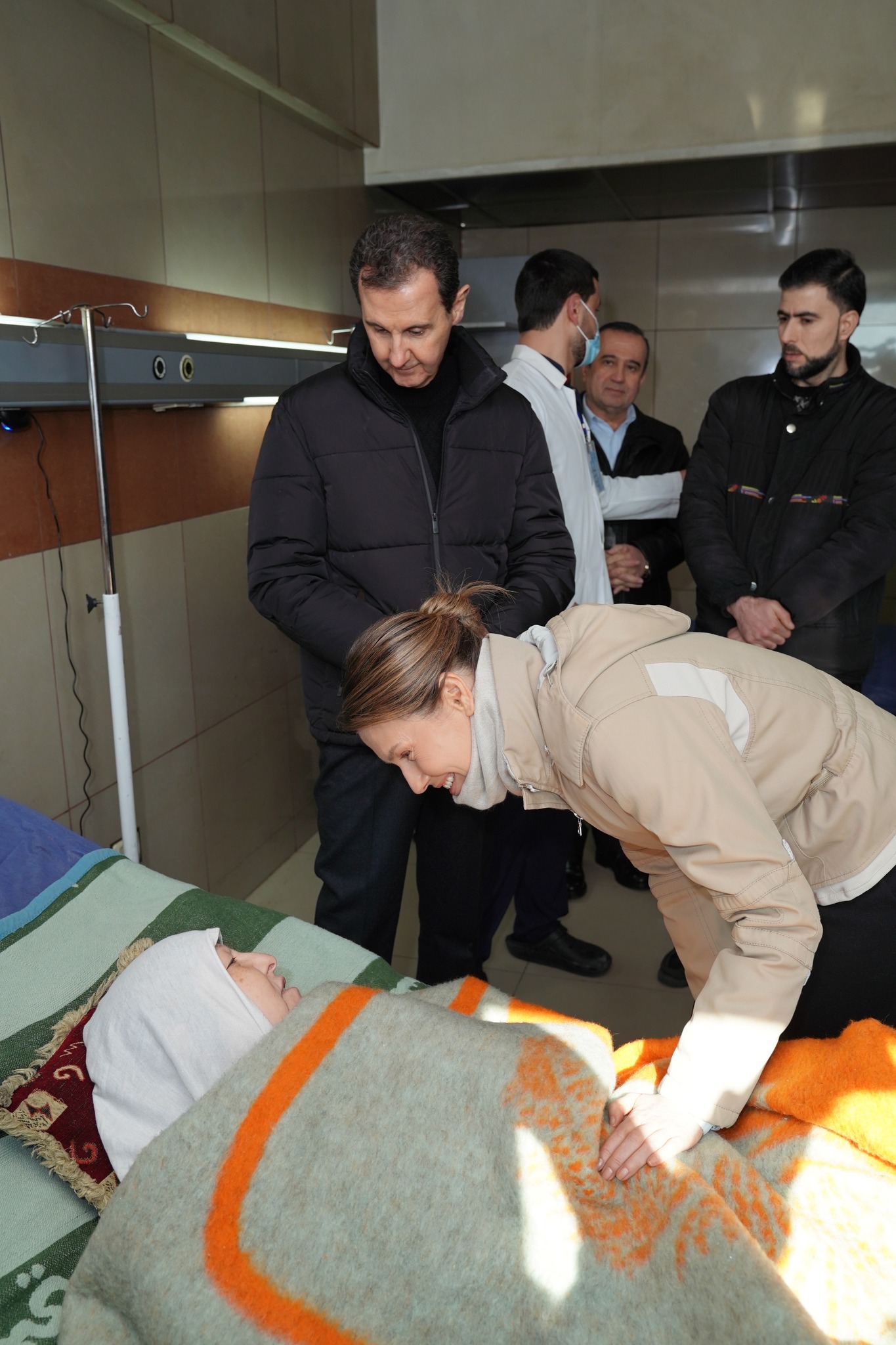
Syrian President Bashar al-Assad and his wife Asma are making their first visit to the northern province of Aleppo following the deadly earthquake.
Images published by the Syrian Presidency shows Bashar and his wife greeting hospital staff and patients at the Aleppo Teaching Hospital.
In Syria, at least 3,377 people have been killed, according to figures from the Damascus government and a rescue organisation operating in rebel-held northwestern Syria.
The US has ruled out working with Syria but has temporarily eased its sanctions policy.
The US Treasury Department's Office of Foreign Assets Control, which is in charge of sanctions, has issued "Syria General License (GL) 23", which it says will authorise any transactions that are otherwise prohibited by US sanctions on Syria if they are related to earthquake relief.
The European Union has asked member states to “respond favourably” to an official plea from the Syrian government.
Israel’s chief rabbi, David Lau, has given a religious edict to Israeli rescue workers to continue working through Shabbat, the Jewish holy day of rest which runs from sunset on Friday to sunset on Saturday.
“A terrible disaster occurred this week in Turkey,” Lau wrote. “A severe earthquake hit many cities and many buildings collapsed on their inhabitants.”
He added that “wherever there is any chance of saving lives and finding survivors, the engineering team must continue its activities.”
The head of Antakya's Jewish community in Turkey, Saul Cenudioglu and his wife Fortuna were found dead in the ruins of their home on Friday.
The announcement was made by the Turkish Chief Rabbinate Foundation.
The scale of just how strong the two earthquakes that struck Turkey and Syria were captured on CCTV in a video released on social media. The ground is seen shaking and increasing in intensity before the camera is cut off.