Live: US refuses visas for Iran UN delegation members

Live Updates
Footage released by Yemen’s Houthis shows what they say is a Saudi air strike targeting a local market in a village near the Bab al-Mandab Strait.
The Houthis now control strategic coastal areas overlooking the strait after seizing them from Saudi-backed government forces.
Footage released by Yemen’s Houthis shows what they say is a Saudi air strike targeting a local market near the Bab al-Mandab Strait, where the group now controls strategic coastal areas seized from Saudi-backed forces. pic.twitter.com/2N0O9X0C9I
— Middle East Eye (@MiddleEastEye) September 21, 2026
British Prime Minister Andy Burnham said on Monday he had agreed to a request from Saudi Arabia to provide defensive air-to-air refuelling for a limited time, a move he described as helping to stabilise the wider region.
Riyadh requested support after the Houthis, who control the most populous parts of Yemen, intensified their attacks on Saudi Arabia, a new front in the wider war that began with US and Israeli strikes on Iran in late February.
"We have received a request from the Kingdom of Saudi Arabia for military support, and on the advice of the defence secretary and the foreign secretary, last night I agreed to that request for defensive air-to-air refuelling," he told reporters as he travelled to New York for a meeting of the United Nations General Assembly.
"Because of course Saudi Arabia has been experiencing attack... and we need to keep those pathways open, and hence our agreement to the request," he said.
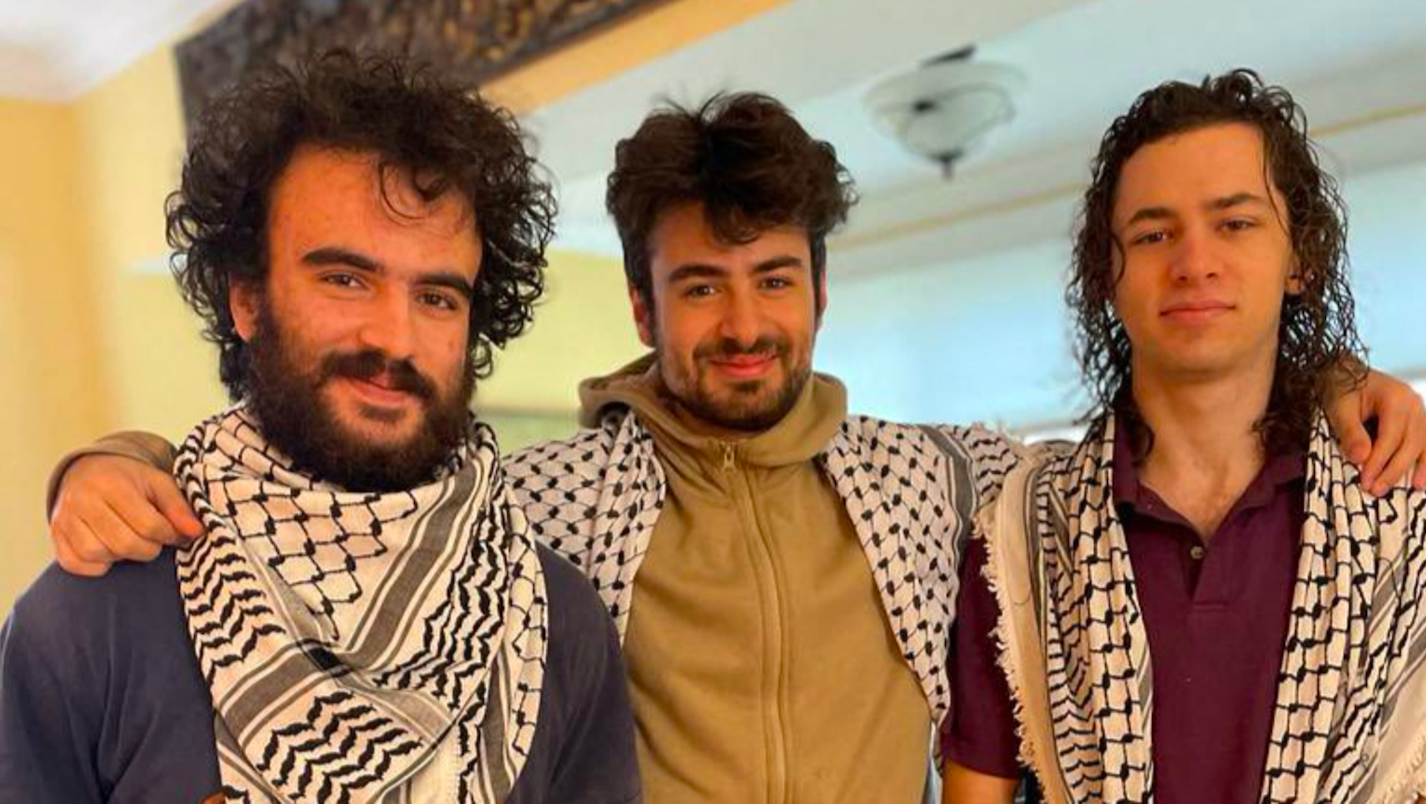
The man charged with shooting three young Palestinian college students in 2023 in the US state of Vermont was found guilty of three counts of attempted second-degree murder on Monday.
The victims, Hisham Awartani, Kinnan Abdel Hamid and Tahseen Ahmed, were on their way to a family dinner when they were shot by 51-year-old Jason Eaton. They were speaking in Arabic, and two of them were wearing keffiyehs.
Lawyers for Eaton had argued that he was suffering from delusions during the shootings, saying that he believed voices, which he thought were from CIA agents, told him to carry out the attack to protect a Jewish family in his neighbourhood.
The attack left Awartani, who was a student at Brown University at the time, paralysed from the chest down.
Read more: Vermont man found guilty of shooting three Palestinian students in 2023

Qatar is working to facilitate an agreement between Tehran and Washington in coordination with Pakistan, Al Jazeera reported, citing foreign ministry spokesman Majed al-Ansari.
“Doha is working to mediate and open a path for dialogue between Iran and the US,” adding that Qatar is striving to facilitate the possibility of reaching an agreement, even a short-term one.
The Trump administration has proposed investing $5bn in a new fund to help Middle East countries rebuild energy infrastructure battered in the Iran war and reduce their reliance on the Strait of Hormuz to transport oil and gas, the Wall Street Journal reported Monday, citing US and Middle Eastern officials and documents.
The report said the US plan seeks matching contributions from eight Middle Eastern partners: Saudi Arabia, the United Arab Emirates, Qatar, Bahrain, Kuwait, Oman, Iraq, and Jordan, adding that the talks about the fund are ongoing
US Secretary of War Pete Hegseth has come under fire for a military “Send Me Tour” that draws on biblical verses and Christian scripture to recruit new soldiers.
Hegseth visited Texas A&M University over the weekend as part of the tour, which is based on a well-known refrain from the Old Testament Book of Isaiah, Chapter 6, Verse 8, in which God asks, "Who shall I send?" and the prophet Isaiah replies, “Lord, I am here. Send me”.
Isaiah is a prophet for both Jews and Christians. Although the Quran does not explicitly mention him, some Islamic literature regards him as a prophet.
Hegseth was filmed in front of a group of young college students, invoking Isaiah’s biblical language for a war chant.
Read more: Hegseth slammed for 'blasphemous' use of Bible passage in military recruitment drive

US Treasury Secretary Scott Bessent said on Monday that Iranian airlines will struggle to operate globally in two days under the weight of American sanctions, as the Trump administration intensifies pressure on Tehran.
On 23 September, "all the Iranian airlines will be shut down around the world," Bessent told CNBC in an interview as the war launched by the US and Israel nears the seven-month mark.
"If they land, you cannot provide them with fuel, you cannot provide them with landing services, you cannot sell them tickets or you will be knocked out of the dollar system," he added.
The move follows earlier US sanctions on Iran's aviation industry and Bessent's "economic D-Day" threat on Iran and pledge to choke off Tehran financially.
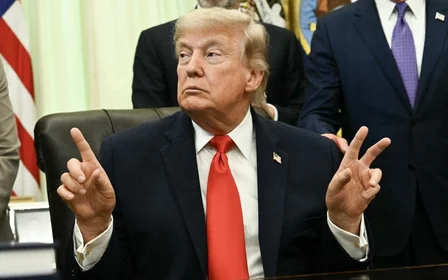
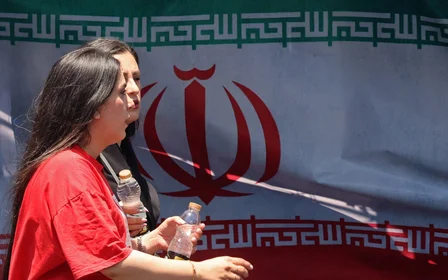
The United States has refused to issue visas to members of Iranian President Masoud Pezeshkian's delegation, including his communications team, for this week's trip to the UN General Assembly, Iranian state media reported Monday.
Pezeshkian will be the highest-ranking Iranian official to enter the US since the war began, with US-Israeli strikes on Iran in February.
"In an unprecedented hostile move by the US government, (US President Donald) Trump has denied US visas to certain members of the president's high-level delegation, including members of his communications team," state news agency IRNA reported.
The Mehr news agency also carried the story, citing a spokesperson for the Iranian presidency, and added that Pezeshkian would address the UN General Assembly on Wednesday.
Tunisian authorities on Saturday arrested at least 11 people who demonstrated to demand the release of previously detained pro-Palestinian activists, two lawyers, and an activist group said on Monday.
Lawyer Ghassen Besbes, who represents several of those detained, told AFP that authorities had arrested at least 11 protesters, while the pro-Palestinian group Maghreb Sumud reported 13 arrests.
No official figures have been released, and the exact number of arrests remains unclear.
Another lawyer, Fedy Snene, said a judge had extended the protesters’ detention by 48 hours.
Qatari Prime Minister Mohammed bin Abdulrahman Al Thani has said the Middle East needs a new "regional security framework" that includes Iran, adding that the war against the Islamic Republic should be a "wake up call" for the region.
"Iran is our neighbour," Al Thani told the Qatar Economic Forum in New York on Sunday.
"We have to act together responsibly as a region and to make sure that we are having good relations with Iran," he said.
"We are hoping this war is a wake-up call for everyone."
The Qatari prime minister's comments came hours after reports claimed the US was planning to restart direct attacks after months of reduced violence.
Read more: Gulf states need 'good relations' with Iran as part of new security framework, Qatar's PM says
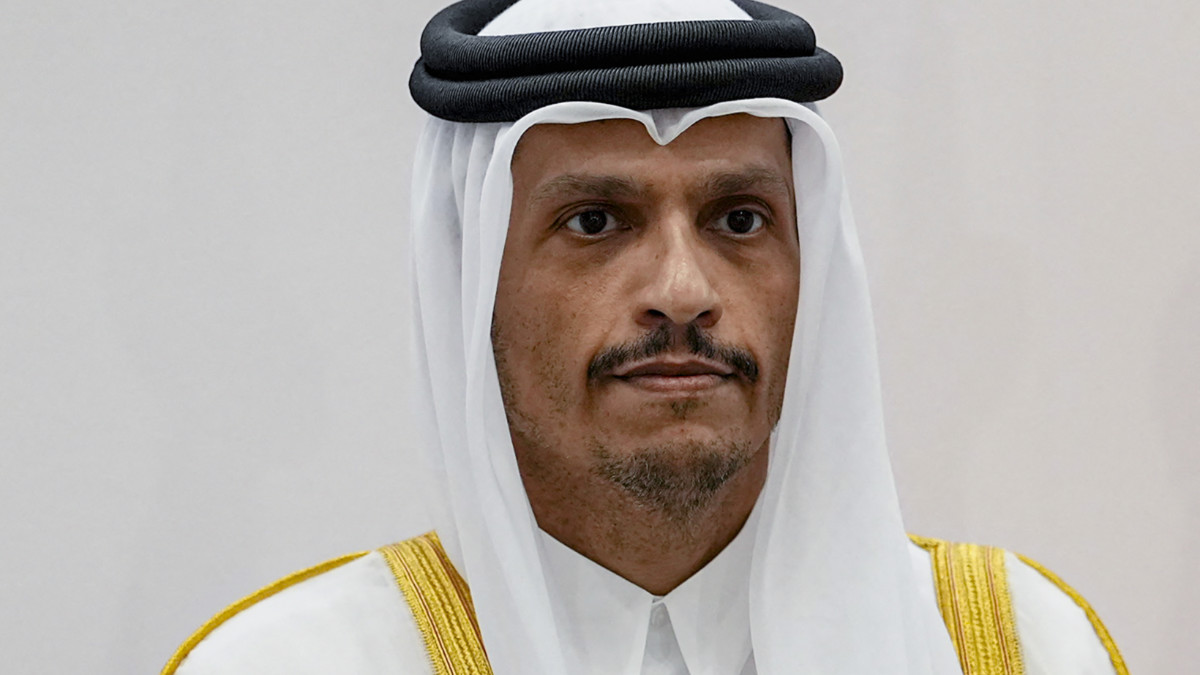
Yemen's government forces announced shooting down a Houthi drone in southwestern Taiz.
In a social media post, the armed forces said the aircraft was downed on the al-Kadha front in Taiz governorate.
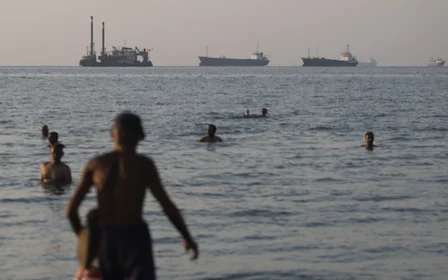
A LPG tanker transiting outbound of the Strait of Hormuz was hit by debris from unknown projectiles, the United Kingdom Maritime Trade Operations (UKMTO) said on Monday.
The UKMTO said the tanker would continue to its next port of call, adding that all crew were reported safe.
The Red Sea Film Festival has cancelled its sixth edition as the Israeli-US war on Iran and Saudi Arabia’s escalating conflict with the Houthis continue to disrupt the kingdom’s flagship international events.
The festival, the Arab world’s most prominent film event and market, had been scheduled to run in Jeddah from 3 to 12 December.
Organisers said it would instead return in the final quarter of 2027 with a “renewed vision and a program that continues to celebrate cinema and filmmakers from Saudi Arabia, the region and around the world,” according to a statement.
Read more: Red Sea Film Festival cancelled as Israeli-US war on Iran hits Saudi Arabia

Iran has warned of a broader military response if the US launches fresh attacks, with the IRGC saying the war is not over and claiming to have downed another US drone over the Strait of Hormuz.
Meanwhile, tensions remain high across Yemen, Lebanon, Gaza and Syria, as Qatar pushes for renewed US-Iran talks.
-
Iran’s IRGC warns of “significant changes” in its military operations if the US launches another attack
-
The IRGC says it downed another US MQ-1 drone over the Strait of Hormuz
-
An IRGC spokesperson says Iran is prepared for a prolonged war and has targets linked to US interests that have not yet been struck
-
Saudi-led coalition aircraft struck Yemen’s Taiz province as Houthi forces advance along the country’s western coastline
-
Houthi leaders warn Saudi Arabia that continued attacks and blockade could lead to strikes on energy infrastructure deep inside the kingdom
-
Qatar is pushing to revive US-Iran negotiations, saying it is working between capitals to reduce tensions and protect regional waterways
-
Israeli forces carried out overnight air raids and artillery attacks across southern Lebanon, according to Lebanon’s National News Agency
-
Four Palestinians were reported killed and 17 wounded in Gaza over the past 24 hours, according to the territory’s health ministry
-
Explosions at a military site in Syria’s Aleppo province injured at least four people, while authorities closed roads and placed emergency teams on alert
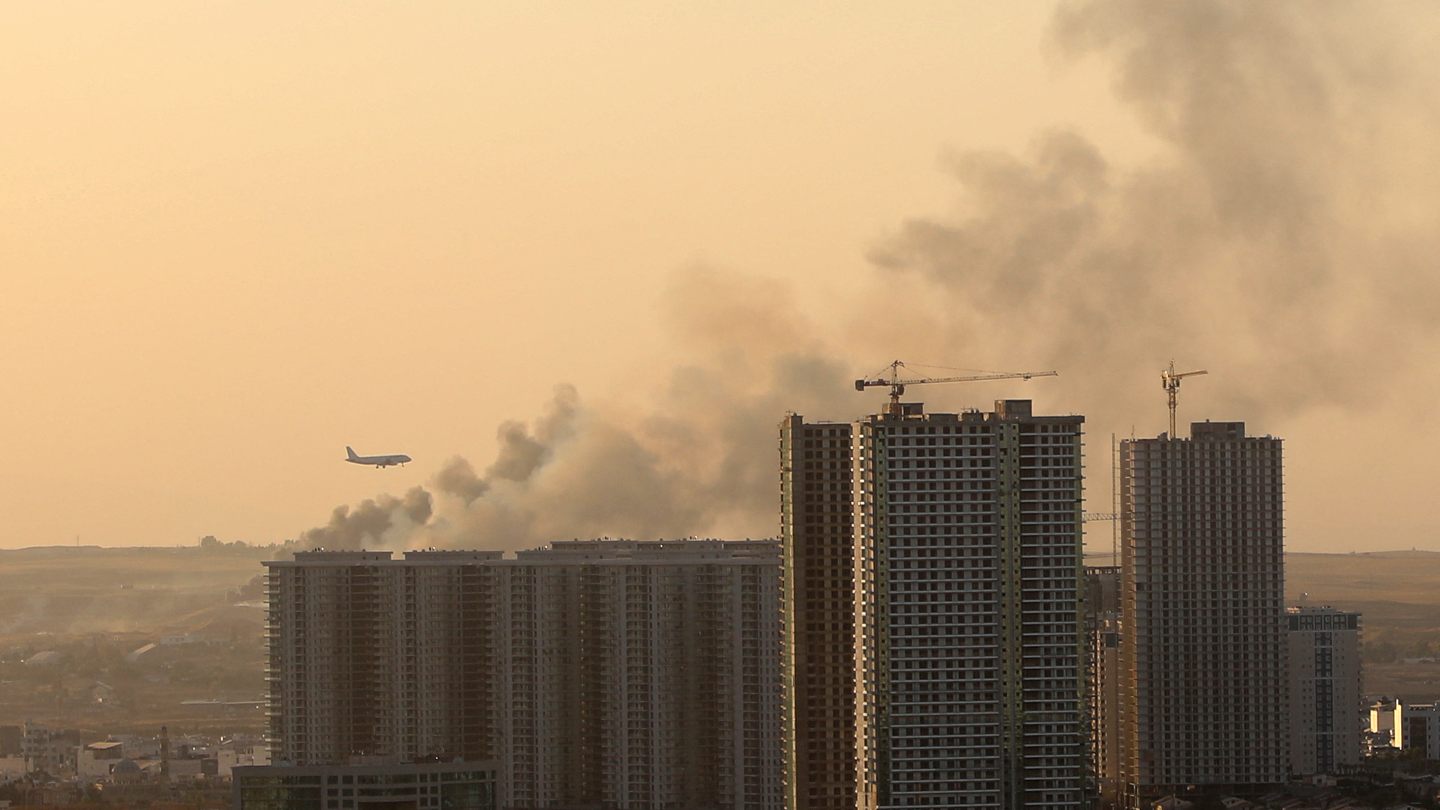
Saudi-led coalition aircraft carried out an air strike on the Hayfan district in Yemen’s Taiz province, Houthi-run al-Masirah television reported.
The report did not provide details on casualties or damage from the strike.
The air attack comes as Houthi forces have rapidly advanced across western Yemen, with the group claiming control of large parts of the country’s Red Sea coast and advancing towards areas near the Bab al-Mandeb Strait.
The United Nations has said hostilities in Yemen have displaced at least 125,000 people since the beginning of September.