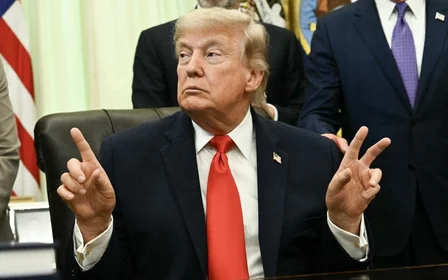

Live: Trump says US not seeking to extend interim deal with Iran

Live Updates
Israeli forces attacked agricultural land on Tuesday in the countryside of Syria’s Quneitra, according to local media reports.
"Israeli occupation forces targeted agricultural land around Hamidiya village in the northern Quneitra countryside with three shells," Alikhbariah TV channel reported.
Elsewhere in the province, Israeli troops set up a temporary military checkpoint in Kudna.
Turkey has joined the growing list of mostly Muslim-majority states that have condemned Colombia's decision to recognise Israeli sovereignty over the occupied Golan Heights.
In a statement reported by the state-run Anadolu Agency, Turkey's foreign affairs ministry said that it strongly condemns “the statement made by Colombia to legitimize the Israeli occupation of the Golan Heights, which is an integral part of Syria”.
“We reiterate our call for the international community to do its part to end Israel’s occupation of southern Syria, including the Golan Heights, and its attacks targeting the country’s sovereignty and stability,” the statement added.
Syria, Saudi Arabia, Qatar, Kuwait, Iraq and Palestine were among the states to also condemn Colombia's move earlier today.
Four US-based rights groups sued the Trump administration on Tuesday for its sanctions on the International Criminal Court (ICC).
In a statement, the American Friends Service Committee, the Center for Constitutional Rights, Human Rights Watch, and the Open Society Institute called the sanctions "blatantly illegal".
They said they are being forced "to curtail a wide range of human rights and legal work in violation of... First and Fifth Amendment rights under the US Constitution and under the Religious Freedom Restoration Act", given that anyone who appears to associate with ICC cases or officials could now face legal repercussions.
Just days after he assumed power in late January 2025, US President Donald Trump signed an executive order to sanction the ICC over its investigations into top Israeli officials.
British barrister Karim Khan, who was the ICC's chief prosecutor, was the only person named as a sanctioned individual.
He has since been removed through a member states' vote, albeit due to sexual assault allegations. Khan has denied them.
The executive order followed a White House visit by Israeli Prime Minister Benjamin Netanyahu, who is wanted by the ICC over alleged war crimes and crimes against humanity committed in Gaza since October 2023.
Read more: US rights groups sue Trump administration over ICC sanctions

Good evening Middle East Eye readers,
If you're just joining us, here's an update on the day's key developments:
-
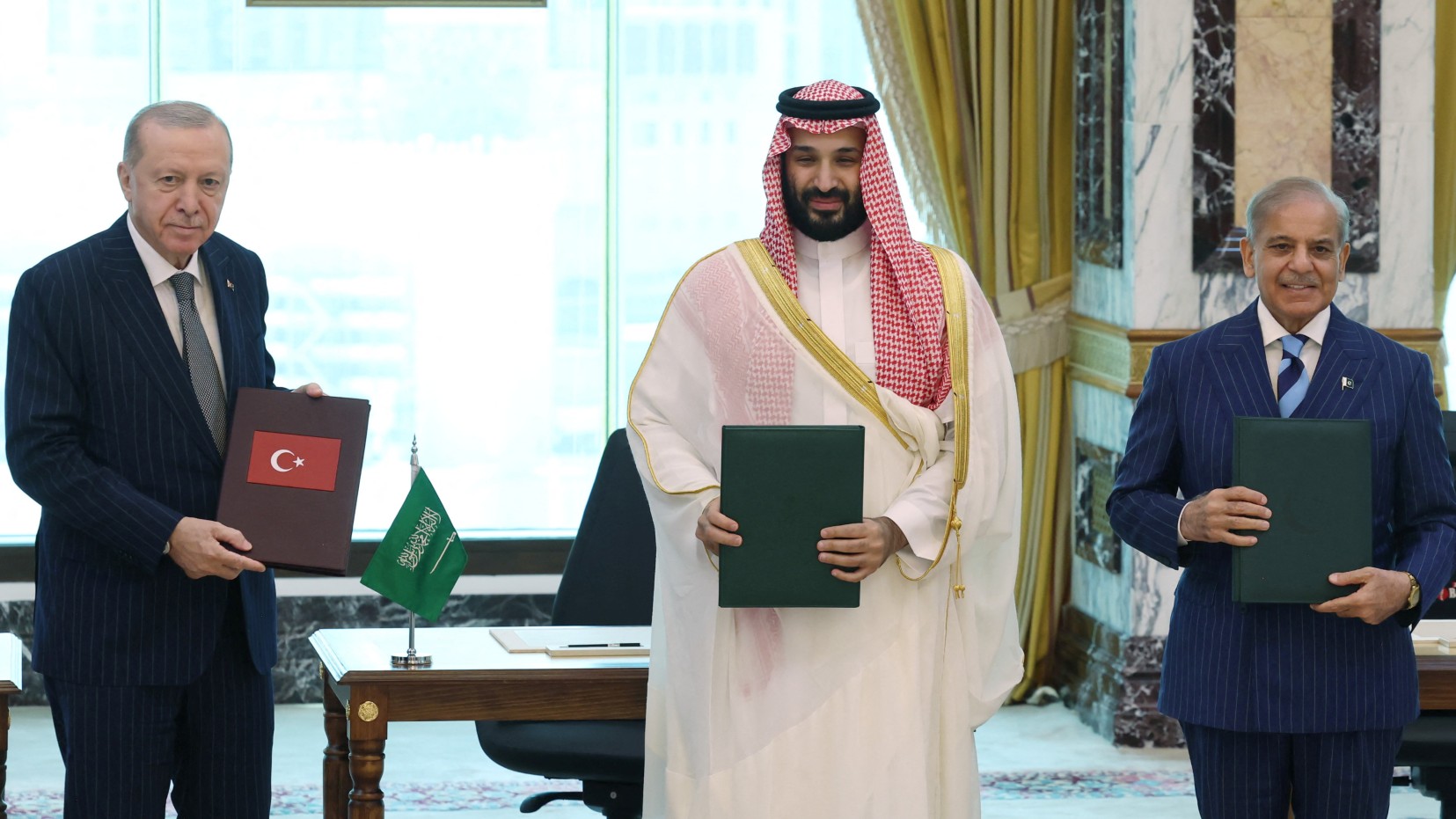
Saudi Arabia opposed Egypt joining the Mecca Joint Defence Agreement signed with Turkey and Pakistan last week, despite Ankara's push for Cairo to be included in the pact, Middle East Eye exclusively reported.
-
Pakistan's Defence Minister Khawaja Asif said that the US and Iran are close to "some sort of an arrangement".
-
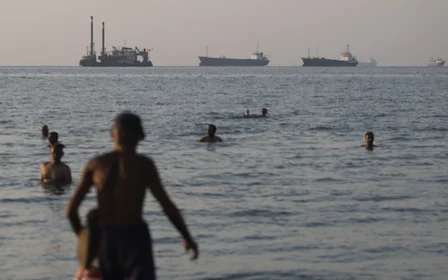
Yemen's coastguard has said that at least six people were killed in alleged strikes by the Houthi rebel group on a cargo vessel near the Bab el-Mandeb Strait on Tuesday.
-
The US, meanwhile, claimed an attack on a Panama-flagged cargo vessel that attempted to travel through the Gulf of Oman in violation of the unilateral US blockade of Iranian ports.
-
A Damascus court sentenced Syria's former president Bashar al-Assad, his brother Maher and former security official Atef Najib to death on Tuesday on charges of murder, torture and incitement to murder.
-
Israel and Venezuela have announced the restoration of their diplomatic relations after years of severed ties.
The US has claimed an attack on a Panama-flagged cargo vessel that attempted to travel through the Gulf of Oman in violation of the unilateral US blockade of Iranian ports.
"A US Navy MH-60 helicopter fired two hellfire missiles into the Vela Nova’s engine room after the ship’s civilian crew ignored repeated warnings from American forces," said a statement posted by the US Central Command on X.
"The ship is no longer transiting to Iran in violation of the US blockade, which remains in full effect," the statement added.
The US said that the attack, first reported earlier today by The Wall Street Journal, was one of 60 instances where the US has blocked ships attempting to transit through the blockade.
No casualties were reported.
Earlier today, CENTCOM forces disabled the steering gear of Panama-flagged M/V Vela Nova as the cargo vessel attempted to transit the Gulf of Oman and violate the U.S. blockade against Iran by sailing toward an Iranian port.
— U.S. Central Command (@CENTCOM) August 11, 2026
A U.S. Navy MH-60 helicopter fired two hellfire… pic.twitter.com/hqY1g2Ng8q
Yemen’s Houthis have said that they have attacked a Saudi ship carrying military equipment in the Bab el-Mandeb Strait, the Houthi-run Saba news agency is reporting.
This is a developing story. We'll bring you more information as soon as we have it.
Saudi Arabia opposed Egypt joining the Mecca Joint Defence Agreement signed with Turkey and Pakistan last week, despite Ankara's push for Cairo to be included in the pact, three Saudi sources familiar with the discussions told Middle East Eye.
One of the sources, a former senior adviser to the Saudi monarchy, said Riyadh did not want Egypt to join the agreement "at least for now".
All three sources, however, who spoke on condition of anonymity due to the sensitive nature of the issue, said the Saudi position was driven by a growing frustration with President Abdel Fattah el-Sisi's government and a belief in Riyadh that Egypt no longer offered the strategic or military value it once did.
The Mecca Joint Defence Agreement, which was signed in the Holy Muslim city of Mecca on Friday, commits Saudi Arabia, Turkey and Pakistan to regard an armed attack against any one of the three countries as an attack against all three.
Saudi officials have described it as a mechanism to strengthen joint defence capabilities, despite the agreement being vague on operational mechanisms, specific triggers, and how joint military assistance would actually be executed in a crisis.
According to the sources, the Saudi decision to oppose Egypt's entry was due to simmering tensions between Riyadh and Cairo.
They said that Saudi Arabia was the biggest financial supporter of Sisi's government after he seized power in a 2013 coup, initially spending around $25b to shore up Cairo's flagging economy, but Riyadh had become frustrated by what it regards as a lack of reciprocal support on key security issues.
Read more: Saudi Arabia opposed Egypt's inclusion in Mecca agreement, sources say
Israel and Venezuela have announced the restoration of their diplomatic relations after 17 years of severed ties.
In a statement posted on X, Israeli Foreign Minister Gideon Saar said the two countries had "agreed to establish a coordination mechanism that will enable the provision of consular services to citizens of both countries".
Venezuela originally severed its consular relations with Israel in 2009 under the leftist president Hugo Chavez.
Relations have improved under acting Venezuelan president Delcy Rodriguez, who has held office since the US abducted Chavez's successor, Nicolas Maduro, in January.
The announcement comes after neighbouring Colombia recognised Israeli sovereignty over the Israeli-occupied Golan Heights earlier today. Colombia's new far-right president, Abelardo de la Espriella, announced plans to normalise relations with Israel last month.
UK Foreign Secretary Ed Miliband has called on Israel to withdraw from Gaza and curb its settlements in the occupied West Bank, in his first call with his Israeli counterpart, Gideon Saar.
In a statement posted on X, Miliband said that he told Israel it "must crack down on settler violence and must immediately end blockages on aid into Gaza".
"I reiterated that Hamas must decommission its weapons, the IDF [Israeli military] should withdraw, and that we must see progress on the 20-point plan," the statement added, referring to the ongoing peace negotiations between Israel and Hamas.
The statement added that the two foreign ministers also discussed what Miliband called the UK and Israel's "vital strategic interest" in preventing Iran from obtaining a nuclear weapon, and reiterated the UK's "commitment" to reaching a two-state solution to the Israeli-Palestinian conflict.
Miliband, who was appointed as Foreign Secretary last month by the new UK Prime Minister Andy Burnham, has faced pressure from backbench MPs within his party to take a tougher stance on Israel's genocide in Gaza, where over 73,000 Palestinians have been killed since October 2023.
He is the first person of Jewish descent to hold the role of UK Foreign Secretary since his brother, David Miliband, served in that position from 2007 until 2010.
Today I had a frank and constructive first call with Israeli Foreign Minister Gideon Sa’ar ⬇️ pic.twitter.com/48pIdbvwXt
— Ed Miliband (@Ed_Miliband) August 11, 2026
Yemen's coastguard has said that at least six people were killed in alleged strikes by the Houthi rebel group on a cargo vessel near the Bab el-Mandeb Strait on Tuesday.
The coastguard, which is controlled by Yemen's internationally recognised government, also accused the Houthis of attacking a rescue mission evacuating the ship following the attack.
"The attack struck the site of the rescue operation and resulted in deaths and injuries among the forces participating in the response operation," the coastguard said in a statement.
Three Pakistani nationals and one Indonesian national were among the crew onboard the ship killed in the attack, the statement added.
Majed al-Ansari, the official spokesperson for Qatar's foreign ministry, has accused Israel of "foot-dragging" in its implementation of the US-brokered Gaza peace plan.
Speaking at a weekly press briefing, Ansari credited Hamas with achieving a "breakthrough in the agreement" by announcing on Monday that it would respect its side of the deal, according to a press release posted by Qatar's foreign ministry on X.
The US insisted on Monday that the ceasefire in Gaza, negotiated by the US-backed Board of Peace, remains operative despite it being rejected by Israeli Prime Minister Benjamin Netanyahu in a rare public split with Trump on Sunday.
Advisor to Prime Minister and Foreign Ministry Official Spokesperson @majedalansari : Israel's Rejection of Gaza Peace Plan Continues Foot-Dragging on Ceasefire Deal
— Ministry of Foreign Affairs - Qatar (@MofaQatar_EN) August 11, 2026
Doha | August 11, 2026
Advisor to the Prime Minister and Official Spokesperson for the Ministry of Foreign… pic.twitter.com/MK1ELgcWW8
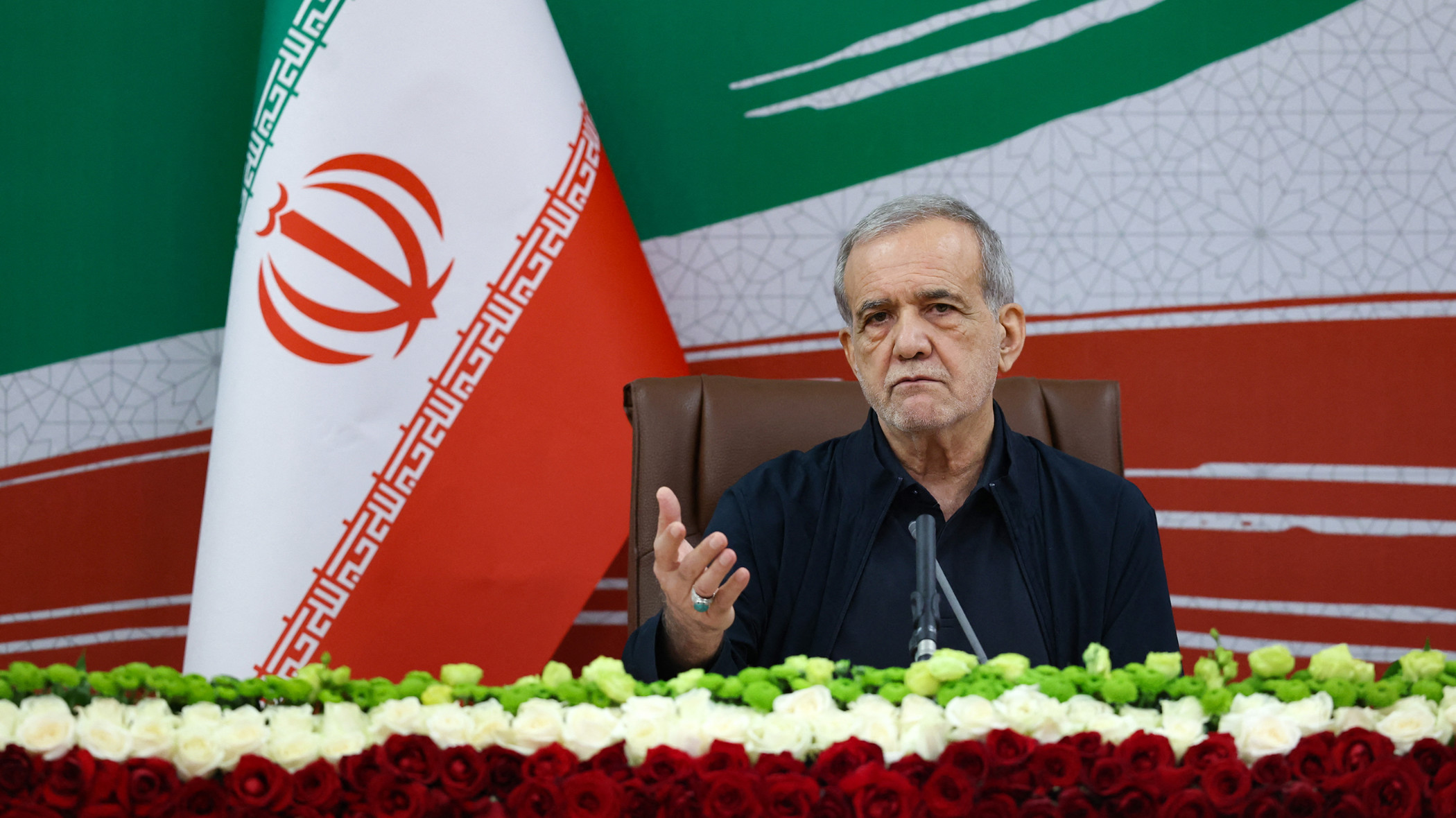
Iran’s political landscape appears to have entered a new phase as two competing camps emerge: those advocating a deal with the United States and those determined to block any agreement.
Principlists have intensified their pressure on reformist President Masoud Pezeshkian and conservative Parliament Speaker Mohammad Baqer Ghalibaf, both of whom are seeking to reach an agreement with Washington and bring an end to almost six months of hostilities.
Principlists fear that any deal could marginalise them politically and weaken their influence over Iran’s future direction.
It was in this climate that a leaked video of Mohammad-Bagher Kharrazi, the brother-in-law of Masoud Khamenei, the younger brother of Iran’s supreme leader, emerged as part of what critics describe as a broader hard-line campaign.
In the video, Kharrazi claimed that Supreme Leader Mojtaba Khamenei had “formally and publicly announced” that if Pezeshkian attempts to resign one more time, his resignation would be accepted.
Kharrazi said that Pezeshkian, who he said had threatened resignation “27 or 28 times”, “no longer dares” to raise the issue.
He added that Foreign Minister Abbas Araghchi had been completely sidelined from negotiations with the United States after an order from Khamenei.
Read more: Inside the growing rift between Iran’s dealmakers and ultraconservatives
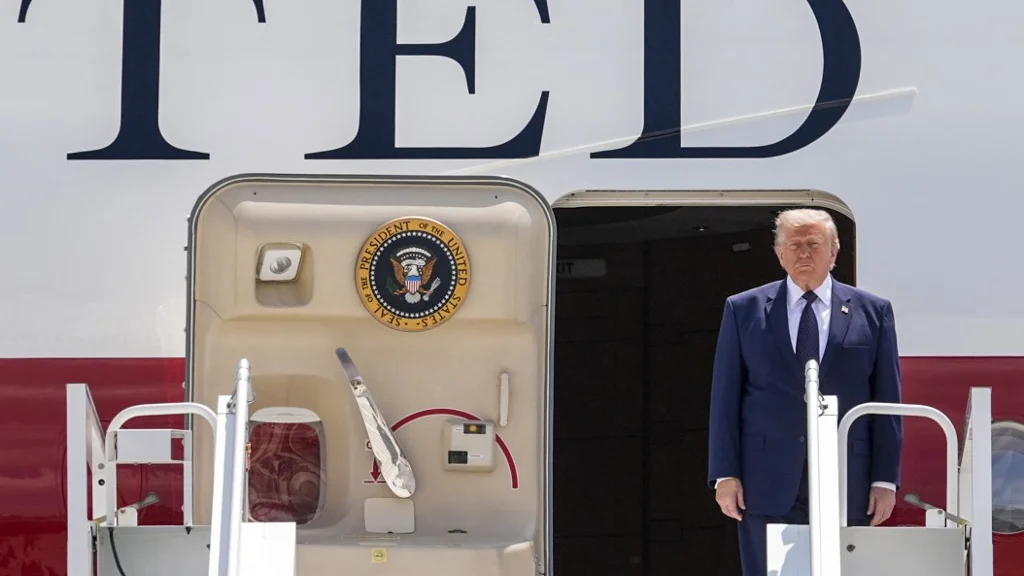
Turkish officials suspect that an Israeli intelligence report that said Iran planned to assassinate US President Donald Trump during the Ankara Nato summit last month was a ruse to undermine negotiations with Tehran, Middle East Eye has learnt.
It was around 2pm on 8 July when journalists heard that Turkish security forces were unusually deploying additional units to Ankara Airport, where Trump’s Air Force One was parked.
Ankara was under lockdown for the North Atlantic Treaty Organisation (Nato) summit on 7-8 July. Roads were blocked, pavements were closed, public servants had been granted a week of administrative leave, and the city was largely deserted.
The Turkish government had even transformed an airbase of the Turkish Air Force, Etimesgut Air Base, officially known as Ankara Airport, for the event, allowing heads of state to reach the summit venue within 10 minutes.
Against the backdrop of these extensive security precautions, US officials told their Turkish counterparts that they had received an intelligence report from Israel suggesting Iran could target Trump.
Read more: Turkey suspects Israel fabricated Trump Air Force One assassination plot to derail US-Iran deal
The Syrian foreign ministry said on Tuesday that it "categorically rejects and condemns" Colombia's recognition of Israeli sovereignty over the Golan Heights and said that the area "is an inseparable part of [Syrian] territory".
Meanwhile, Saudi Arabia said that Colombia's position “contradicts international law and relevant international legitimacy resolutions”.
The Saudi foreign ministry said the Gulf kingdom's firm position is that the Golan “is occupied Syrian Arab land”, and that any measures aimed at changing its status “do not create a right or confer legitimacy”.