
Live: US envoy Kushner meets Hamas leaders in Egypt

Live Updates
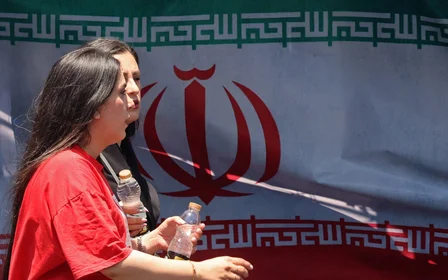
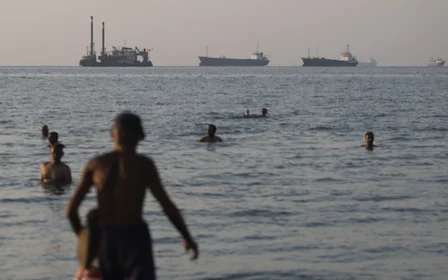
Iran has taken another step towards formalising its control of the Strait of Hormuz, as the US threatens unprecedented sanctions while struggling to sustain the war it launched alongside Israel.
An Iranian parliamentary committee has approved the principles of a strategic plan governing security and development in the strait and the Gulf.
Valiullah Bayati, a spokesperson for the parliament’s internal affairs and councils committee, said on Friday that the proposals would now advance for further consideration.
“The strategic action plan to ensure the security and progress of the Strait of Hormuz and the Persian Gulf was reviewed by the Councils’ Commission and, after hearing the opinions, its general outline was approved,” said Bayati to the Tasnim news agency.
The plan would prevent vessels and equipment belonging to the US, Israel and other countries Iran designates as hostile from passing through the waterway.
Read more: Iran formalises Strait of Hormuz control as US struggles to sustain war it launched with Israel
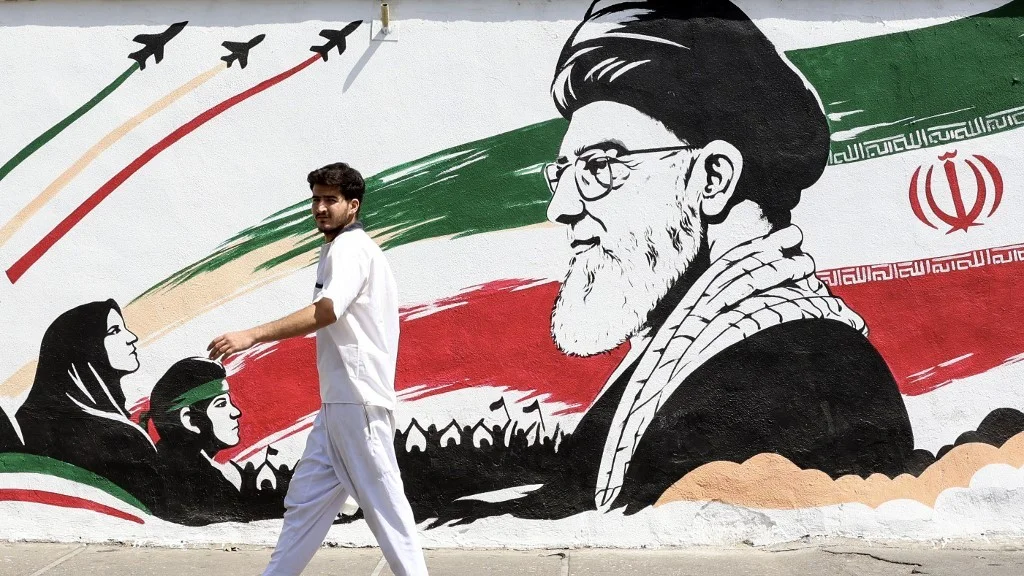

Mikhail Ulyanov, Russia's permanent representative to the United Nations, criticised US President Donald Trump's policy on the Strait of Hormuz in a post on X on Friday.
"The logic of Washington is not understandable. It wants freedom of navigation through the Strait of Hormuz, but this freedom was ruined by the US aggression against Iran," he said.
"Now they want to remove the consequences of their strategic mistake through the continuation of war. Something is wrong here."
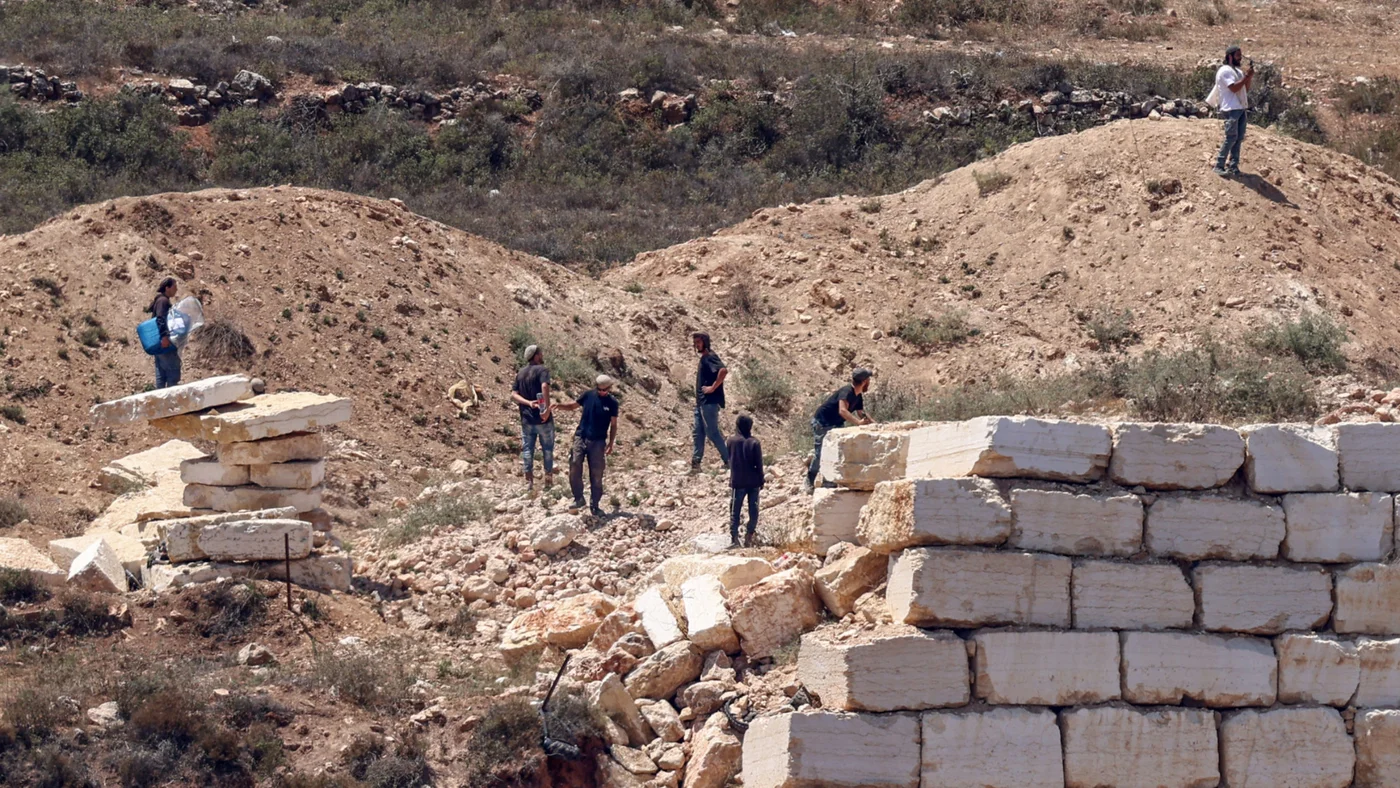
Palestinian families in the occupied West Bank village of Qusra have remained under siege by Israeli settlers for a sixth day, despite an Israeli army operation that was supposedly launched to remove the settlers.
Israeli activists attempting to deliver food to the families on Friday were stopped by Israeli forces, according to local media reports.
The siege began on Sunday, when a group of settlers surrounded three homes on a hilltop in Qusra, near Nablus. They erected tents at the entrances in what residents said appeared to be an attempt to force the families out and take control of their homes.
Residents said the settlers had cut off water and electricity to some of the properties, leaving families, including children, trapped inside and struggling to obtain food and medicine.
When the families called the Israeli army for help, soldiers arrived but, according to footage online, were seen drinking and praying with the settlers rather than removing them.
Read more: Palestinians in West Bank village remain under Israeli settler siege for sixth day
Israeli Defence Minister Israel Katz inaugurated an illegal new settlement in Jenin on Thursday, shortly after Israeli soldiers demolished Palestinian shops and properties on the same day
Israeli Defence Minister Israel Katz inaugurated an illegal new settlement in Jenin on Thursday, shortly after Israeli soldiers demolished Palestinian shops and properties on the same day pic.twitter.com/lQAqpOpMEb
— Middle East Eye (@MiddleEastEye) August 14, 2026
Israeli warplanes and drones have carried out repeated strikes on the wooded areas of Mansouri and Majdel Zoun in southern Lebanon, the national media agency NNA reports.
These strikes were accompanied by demolition operations in the wooded sector east of Mansouri, and machine gun fire also targeted the outskirts of the village of Mansouri.
At the same time, movements of Israeli military vehicles were reported in the village of Hadatha, with reports of an artillery shell landing as well, reported NNA.
Israel has continued its demolition and destruction operations in several villages and towns in southern Lebanon. During the night, there was a large explosion in the wooded area of Mansouri.
In his Beirut office, Dr Ghassan Abu Sittah is going over his operating list for the weekend: 11 children in total, with life-altering injuries from Israel’s wars on Lebanon and Gaza.
“There are two siblings who have shrapnel from the 2024 war that is now causing medical problems,” the prominent British-Palestinian plastic and reconstructive surgeon told Middle East Eye.
“A boy with a partial amputation of his foot that needs reconstruction, from this war, and another boy with an amputation.”
Dr Abu Sittah hopes to finish the stump so that the patient can begin prosthetic rehabilitation.
Another boy with an elbow injury needs a prolonged reconstructive procedure to salvage his elbow joint.
Read more: The paediatric war wounds Dr Abu Sittah tries to heal in Lebanon
The United Kingdom Maritime Trade Operations (UKMTO) organisation said a tanker had been hit by an unmanned aerial vehicle while transiting through the Strait of Hormuz on Thursday.
It added that while the vessel sustained minor damage, the whole crew was safe and accounted for, and no environmental impact has been reported.
Good morning Middle East Eye readers,
Here are the latest developments from across the regon:
-
US Vice President JD Vance said that keeping oil and gas prices low for Americans is now "goal number one" for Washington in its war on Iran. He added that the next primacy focus for the US is to "ensure that Iran never gets a nuclear weapon".
-
US Treasury Secretary Scott Bessent said that Washington is going to apply measures that have "never been seen" on Iran. "It will be a combination of economic isolation like the world has never seen before, and the continued blockade in the Strait of Hormuz that will keep anything from going in or out of the Iranian ports," he said during an interview on Newsmax's Rob Schmitt Tonight programme.
-
Air defence systems intercepted drones over the northern Kurdish province of Erbil early on Thursday, Iraqi security sources told Al Jazeera. Footage circulating online showed the remnants of drones falling over a residential area near Erbil international airport. There have been no reported injuries or casualties so far.
-
The United Arab Emirates on Friday condemned an Iranian attack it said targeted two vessels linked to state-owned Abu Dhabi National Oil Company (Adnoc) as they passed through the Strait of Hormuz. Adnoc confirmed "two of its vessels were attacked while transiting" the waterway on Thursday evening, adding the situation was "brought under control", the official WAM news agency reported.
-
The US Central Command (Centcom) has rejected reports surrounding the death of soldiers onboard the USS Abraham Lincoln during its deployment to the Middle East. "One report alleged seven Sailors died in a brawl aboard the aircraft carrier and others have recently suggested a spike in suicidal ideations. These reports are FALSE," a post by Centcom on X read.
The Israeli army continued to launch several attacks across south Lebanon, which included the dropping of bombs and artillery shelling.
According to Lebanon's state media, Beit Yahoun, Hadatha and Qounine experienced a large series of explosions, the sounds of which were heard in a number of coastal villages.
Another huge explosion was reported in Mashaa al-Mansouri, amid the Israeli army dropping a number of explosive barrels in the area.
This was accompanied by artillery fire on the outskirts of the towns of Majdal Zoun, al-Mansouri and their surrounding, as warplanes and drones flew over the towns.
The Israeli army also reportedly advanced towards the town of Hadatha in the Bint Jbeil district
US Vice President JD Vance said that keeping oil and gas prices low for Americans is now Washington's top priority in its war on Iran.
"I know that oil is down today and it's way down from the highs in the early days of the conflict," he said on Fox News. "That's goal number one - keep oil and gas cheap for Americans all over our country."
He added that the next primary focus for the US is to "ensure that Iran never gets a nuclear weapon".
US Senate Minority Leader Chuck Schumer voiced his demand for "completely incompetent" Defense Secretary Pete Hegseth to be removed from his position over his handling of the aircraft carrier USS Abraham Lincoln.
"When Pete Hegseth was nominated, everyone knew he was completely incompetent," he wrote on X. "Now our brave sailors are paying the price in a horrific and unfathomable way."
"Pete Hegseth must be fired immediately."
The US Central Command (Centcom) has rejected reports surrounding the death of soldiers onboard the USS Abraham Lincoln during its deployment to the Middle East.
"One report alleged seven Sailors died in a brawl aboard the aircraft carrier and others have recently suggested a spike in suicidal ideations. These reports are FALSE," a post by Centcom on X read.
"No service members aboard the aircraft carrier have died, and the one Sailor who fell overboard Aug. 3 was quickly and safely recovered," it added.
🚫 CLAIM: Over the past 48 hours, multiple media outlets have reported several false claims related to USS Abraham Lincoln's (CVN 72) deployment to the Middle East. One report alleged seven Sailors died in a brawl aboard the aircraft carrier and others have recently suggested a… pic.twitter.com/U1Hg6l1pjN
— U.S. Central Command (@CENTCOM) August 13, 2026
Turkish Foreign Minister Hakan Fidan warned on Thursday that Turkey, Qatar, and Egypt may be compelled to take "radical steps" if the United States does not pressure Israel to comply with the Gaza peace deal.
Fidan emphasised that while the Palestinian side has fulfilled its commitments, Israel has shown no progress in advancing to the second phase of the agreement.
“We naturally expect the United States to exert the necessary pressure on Israel.”
— Middle East Eye (@MiddleEastEye) August 14, 2026
Turkish Foreign Minister Hakan Fidan warned that Turkey, Qatar, and Egypt may take "radical steps" if the United States does not pressure Israel to comply with the Gaza peace deal pic.twitter.com/nbm15FGO2t
The director of the office of Iraqi Prime Minister Ali al-Zaidi has affirmed Baghdad's rejection of any infringement of its sovereignty during high-level security talks with Saudi Defence Minister Prince Khalid bin Salman.
Abdul Amir al-Shammari also stressed Iraq’s firm commitment not to pose a threat to neighbouring countries or to allow its territory to be used for attacks in the region, state media reported.
Turkish Foreign Minister Hakan Fidan accused Israel of aiming to expel all Palestinians from Gaza, adding that there must be immediate action to pressure Israeli Prime Minister Benjamin Netanyahu to comply with international demands.
During a joint press briefing in the Egyptian city of El-Alamein, Fidan said that Netanyahu "develops policies that trample human dignity".
The foreign minister also indicated that that Ankara and Cairo joined the Trump-backed Board of Peace to "stop the genocide in Gaza", adding that "thankfully, together we succeeded in this. We have stopped the genocide to a certain extent".
Israel has continued to launch attacks across the Gaza Strip, despite recent truce efforts.
The army has so far killed over 73,389 people in the besieged enclave, with thousands more missing and presumed to be beneath the rubble.