Live: Israel says it will control bridges and area south of Lebanon’s Litani River

Live Updates
The European Commission has called on member states to ease gas storage targets, warning that the Israeli-US war in the Middle East is fuelling price volatility across energy markets.
In a letter sent on Saturday, EU energy commissioner Dan Jorgensen asked governments to "consider reducing your filling target to 80 percent as early as possible in the filling season to provide certainty and reassurance to market participants", lowering the usual 90 percent benchmark.
Brussels appears to be moving to calm markets as supply fears intensify. Iran’s response to the US-Israeli war has included strikes on oil and gas infrastructure in Gulf states, disrupting flows and raising alarm over regional energy security.
The escalation has effectively shut the Strait of Hormuz to tanker traffic, a critical chokepoint for global energy supplies, sending fresh shockwaves through already strained markets.
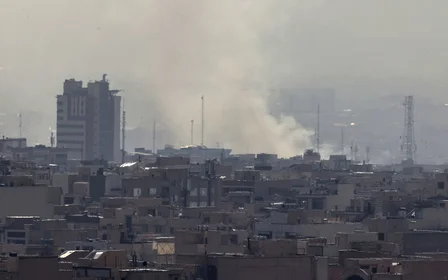
Fresh blasts have been heard near the city of Langroud in Gilan province, northern Iran, Iranian media is reporting.
At least 20,984 people have been wounded in US-Israeli attacks since they were launched on 28 February, Iran's health ministry said in a statement.
It added that, since the start of the hostilities, seven hospitals have been evacuated and 36 ambulances damaged.
Al Jazeera is reporting that fresh Israeli air strikes have struck the outskirts of Kfar Hamam and the vicinity of Qatrani in southern Lebanon.
Earlier, Israeli media reported that a missile fired from Lebanon struck the Nahariya area in northern Israel.
The US military has claimed attacks on over 8,000 Iranian military targets, including 130 vessels.
"Their Navy is not sailing. Their tactical fighters are not flying, and they've lost the ability to launch missiles and drones at the high rates seen at the beginning of the conflict," the head of the US military's Central Command, Adam Brad Cooper, said in a video posted on social media on Saturday.
Update from CENTCOM Commander on Operation Epic Fury: pic.twitter.com/8yTLrVy4jk
— U.S. Central Command (@CENTCOM) March 21, 2026
The IRGC has said its air defences struck an Israeli fighter jet flying in Iranian airspace this morning.
The Israeli military said that one of its fighter jets had been fired at, but that it had not sustained any damage.
New analysis seen by the Guardian has revealed that US-Israeli attacks on Iran have released five million tonnes of greenhouse gas emissions in the last two weeks alone.
The first climate analysis of the assault found that the attacks were draining the global carbon budget faster than 84 countries combined.
According to the report, the destruction of buildings have contributed the most to the emissions. The Iranian Red Crescent has reported that some 20,000 civilian buildings have been damaged in the assault, producing an estimated 2.4m tonnes of CO2 equivalent (tCO2e) in emissions.
Fuel, used to power US heavy bombers flying to Iran, is the second biggest emitter. The report estimates that, in the last 14 days, 150m and 270m litres of fuel were consumed by aircraft, vessels and vehicles.
Additionally, the analysis found that attacks on oil facilities - which in Tehran have produced toxic acid rain and exposed millions to toxic pollution - has emitted an estimated 1.88m tCO2e.
Fred Otu-Larbi, the study's lead author, from the University of Energy and Natural Resources in Ghana, said: "We expect emissions to increase rapidly as the conflict proceeds, mainly due to the speed [at] which oil facilities are being targeted at an alarming rate."
"We all need to live with the climate aftermaths. Just what are the costs, no one really knows, that is why studies like this are so vital. Burning up the annual emissions of Iceland in two weeks is something we really cannot afford."
The findings contribute to reporting in the last week of the public health and climate risks posed by increasing targeting of oil and gas infrastructure in the conflict.
Analysis by the Conflict and Environment Observatory (CEOBS) showed that the attacks will likely take a heavy civilian toll, with the public health risks likely to be long lasting.
US-Israeli attacks on oil facilities in Tehran on 7 March produced columns of thick black smoke, which CEOBS said contained a pollutants including carbon monoxide, sulphur dioxide, nitrogen oxides and volatile organic compounds (VOCs), alongside particles composed of soot, organic material and trace metals.
It said that one particle of concern is black carbon which can lead to respiratory disorders, particularly for high risk groups like those with asthma and the elderly.
Rights groups are sounding the alarm over the legality of UK involvement in US military strikes on Iran, following the government's decision to allow American use of its military bases.
In a letter to the prime minister, attorney general and foreign secretary seen by Middle East Eye, Human Rights Watch UK director Yasmine Ahmed demanded "urgent clarification" on the steps taken by the government to ensure that US military strikes conducted from its bases are compliant with international humanitarian law.
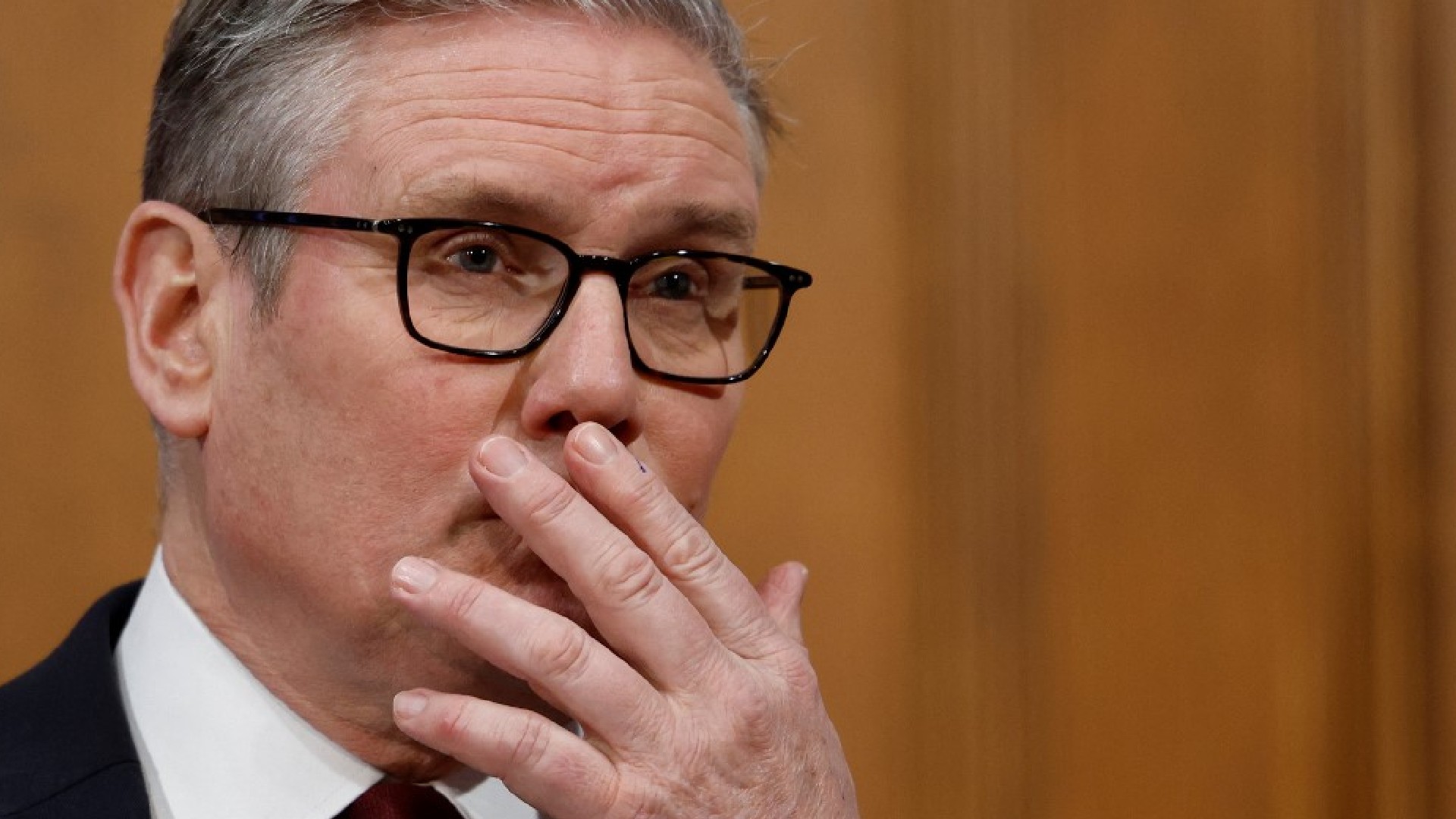
Prime Minister Keir Starmer confirmed in early March that the UK had agreed to allow the US to use its military bases for what he said were defensive purposes.
On Friday, Downing Street announced that the agreement had been expanded to allow for the US to launch strikes from UK bases on Iranian sites targeting the Strait of Hormuz - also invoking "collective self-defence" of Gulf state allies as a legal basis for the decision.
Ahmed said that, while the government's legal justification for the move invokes self-defence, it fails to mention issues related to international humanitarian law.
Read more: UK allowing US use of military bases could violate international law, rights groups warn
Israel's army has reported that a fresh wave of ballistic missiles launched from Iran are headed towards the country.
The Times of Israel is reporting that sirens are due to sound in the south.
Iranian President Masoud Pezeshkian has said in a statement that Tehran is not seeking conflict with neighbouring Gulf states and other Muslim-majority countries, whom he referred to as "brothers".
In a message on X, Pezeshkian said: "To Islamic countries and our dear neighbours: you are our brothers and we are not engaged in any conflict with you. The only beneficiary of our disagreements is the Zionist entity."
"This year, more than ever, we need Nowruz," Pezeshkian continued, referring to Iran's new year.
"The Nowruz that showcases unity, cohesion and national harmony in our culture. Let us join hands to guide our Iran through the storms it has fallen into, emerging proud and triumphant."
إلى الدول الإسلامية وجيراننا الأعزاء، أنتم إخوتنا ولسنا في صدد أي نزاع معكم. المستفيد الوحيد من خلافاتنا هو الكيان الصهيوني.
— Masoud Pezeshkian (@drpezeshkian) March 21, 2026
نسأل الله في #عيد_الفطر أن يمنحنا القوة والوحدة بالعمل بتعاليم #رسول_الله لنيل رضاه.
The US military has said that US-Israeli attacks on an Iranian underground weapons facility has "degraded" the country's ability to control the Strait of Hormuz.
The Commander of US Central Command said in a video statement posted on X:
"We not only took out the facility, but also destroyed intelligence support sites and missile radar relays that were used to monitor ship movements," further claiming that the attack had undermined "Iran's ability to threaten freedom of navigation in and around the strait of Hormuz".
"We will not stop pursuing these targets," he said.
Fresh explosions have been heard in Bahrain's capital of Manama, according to AFP.
Air defence systems intercepted two missiles, while several blasts rocked the city after air sirens were activated.
This came shortly after Bahrain's Ministry of Interior issued a directive to residents to seek shelter.
The UK has agreed to let the US use its bases for its war on Iran, following an apparent Iranian missile strike against Diego Garcia.
Iran fired two intermediate-range ballistic missiles at the US-UK military base in the Indian Ocean but did not hit it, the Wall Street Journal reported on Friday, citing multiple US officials.
One of the missiles failed in flight, while a US warship fired an SM-3 interceptor at the other. It could not be determined if the interception succeeded, the WSJ report said.
On Friday, the UK said it had agreed to allow the US to use British bases to launch strikes on Iranian sites, a decision reportedly made after the unsuccessful Diego Garcia attack.
Downing Street said that ministers had approved the action to help protect ships in the Strait of Hormuz.
Read more: UK allows US to use bases for Iran war after missiles fired at Diego Garcia
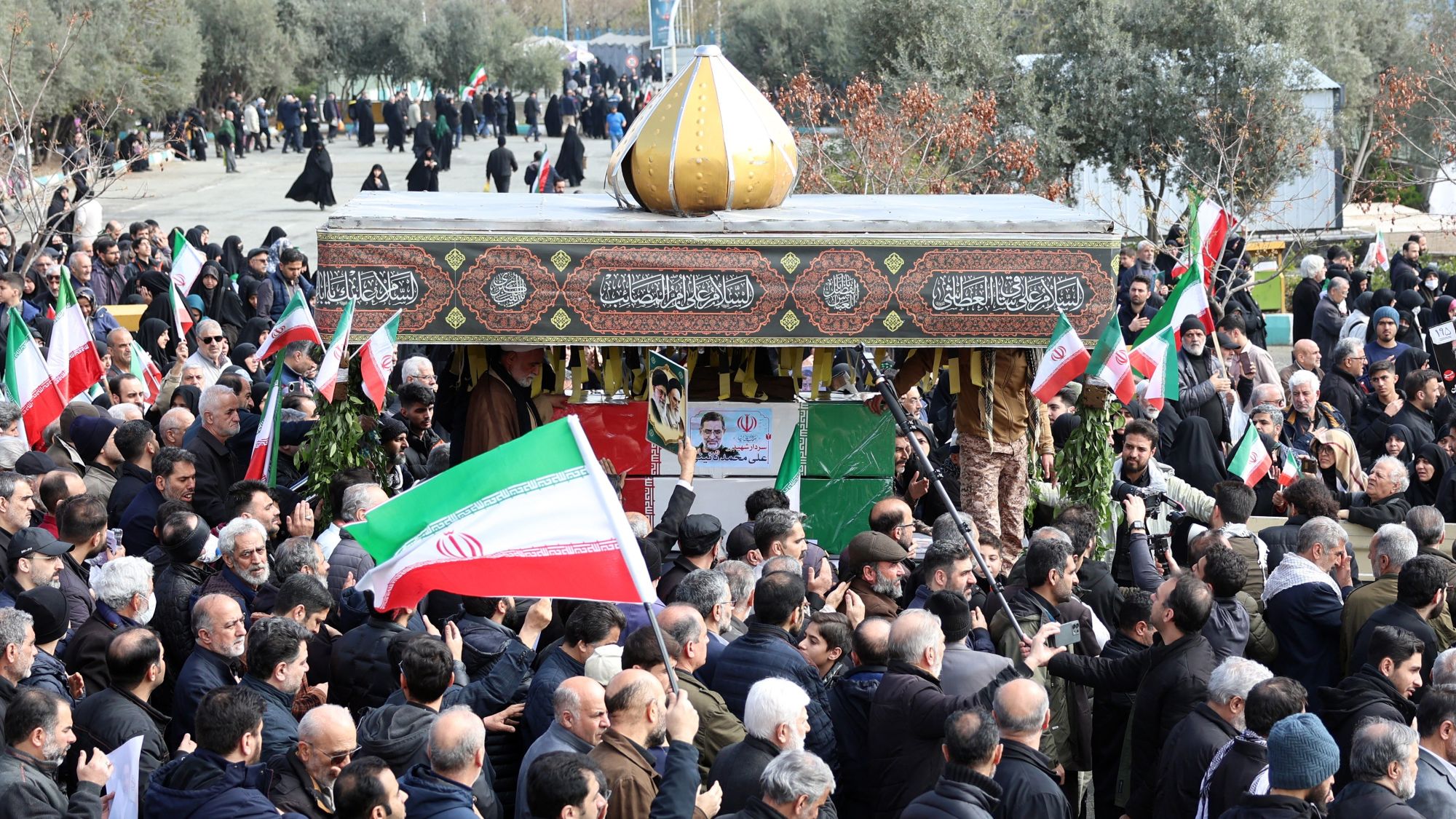
A child has been killed in a US or Israeli attack on the city of Ahvaz, in Iran's southwestern Khuzestan province, Mehr news agency is reporting.
Valiullah Hayati, a deputy governor of the province, said the child's parents were also wounded in the attack, adding that an unexploded projectile had also struck a residential house in Aghajari, another city to the east. No casualties were reported in the second strike.
Hayati said that rescue workers were working to remove debris from the targeted sites.
A couple and their child have been killed in a US-Israeli attack on Iran's Ramsar city, the coastal city's governor, Mehdi Younesi, has said.
Younesi told reporters at a news conference that the family had been killed in an attack on their home.
"Targeting defenceless citizens reflects the peak of helplessness, and helplessness of the perpetrators of this attack," he said. "Such violent acts will not only not weaken the will of the Iranian nation, but will also increase national solidarity and cohesion."