
How Andy Burnham stood up to Starmer over Israel and could now reshape UK foreign policy

UK Prime Minister Keir Starmer faces a fight for his premiership after former Manchester mayor Andy Burnham won the Makerfield by-election on Thursday, returning him to parliament and allowing him to stand for leader of the Labour Party.
Starmer has been on the ropes for a while. Many thought he would go after the Peter Mandelson scandal earlier this year, when sordid details emerged about the now-former ambassador to the US, an ally of the prime minister and his friendship with financier and convicted sex offender Jeffrey Epstein.
Labour also suffered stunning losses in May's local elections, not least in traditional strongholds in northern England and London.
But Starmer clung on. No one wanted to replace him before the local elections, sources in the Labour Party told Middle East Eye.
Now, less than two years after his landslide general election victory, the prime minister faces two main challengers: Burnham and former Health Secretary Wes Streeting.
New MEE newsletter: Jerusalem Dispatch
Sign up to get the latest insights and analysis on Israel-Palestine, alongside Turkey Unpacked and other MEE newsletters
On 14 May, Streeting resigned as health minister, saying that he had lost "confidence" in Starmer's leadership and that "where we need vision, we have a vacuum. Where we need direction, we have drift".
Hours later, Labour MP Josh Simons resigned his seat in Makerfield, northern England, triggering a by-election to allow Burnham to stand for parliament (under Labour Party rules, only an MP can run for leader).
Burnham won resoundingly on Friday morning, taking 55 percent of the vote in a region where Labour has haemorrhaged support to the far-right Reform UK party, led by Nigel Farage.
Whoever emerges victorious in the likely Labour leadership race, British foreign policy is likely to shift, particularly towards Israel, with which the UK has maintained long-standing military and political cooperation.
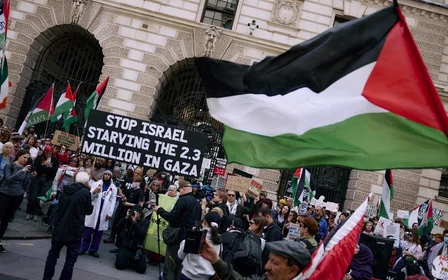
As a foreign policy issue, Israel has been significant in Britain over the past two-plus years because of its genocide in Gaza. And in the past few months, the US-Israeli war on Iran has had a significant economic impact on Britain.
The pollster John Curtice has noted that the Green Party, the leading political voice against British support for Israel, inflicted far more damage on the Labour vote than Reform in the local elections.
In the Makerfield by-election, Burnham was reticent to speak about foreign policy. According to sources within Labour, he and his team believed it would not help him win in Makerfield, a largely white working-class seat.
But Burnham will now be forced to turn seriously to the topic of foreign policy if he wants to appeal to the Labour membership, who overwhelmingly support stronger policies on Israel.
He will also be keen to respond to the Green insurgency and win back left-wing voters.
This could mean a much stronger response to Israeli war crimes in a bid to inject new meaning and purpose to the Labour government, while trying to take the wind out of the Green Party's sails.
Since resigning from the cabinet, Streeting has spoken extensively about Gaza, depicting himself as having been a private critic of Starmer's foreign policy.
But many voters will not forget that Streeting publicly followed the leadership's line throughout most of Israel's genocide in Gaza. Significantly, he opposed calls for a ceasefire for months after 7 October 2023.
By contrast, Burnham has historically diverged most significantly from Starmer's position on Israel.
Labour Friend of Israel and Palestine
Burnham, highly popular within the party and considered to be on the soft left, voted in favour of the British invasion of Iraq in 2003 when he was MP for Leigh under Tony Blair's government.
He also joined Labour Friends of Israel (LFI), a pro-Israel group within the party, in 2015. This established him as a non-radical figure in contrast to colleagues who were strongly pro-Palestinian, such as Jeremy Corbyn.
Running unsuccessfully to be Labour leader in 2015, Burnham said his first overseas visit would be to Israel. He called the Boycott, Divestment and Sanctions movement "spiteful" and said he opposed it.
At a leadership hustings, Burnham praised Israel as a “democracy that has a long history of protecting minorities and promoting civil rights” and said that the Balfour Declaration represented “an example of British values in action”.
He added that he would want to see the declaration's centenary anniversary celebrated with events in schools to demonstrate how Britain “played a role in the establishment of a democracy in the region”.
But Burnham also marked himself out as a critic of the Israeli government.
Less well-known than his membership of LFI is that he visited the occupied West Bank in 2012 with Labour Friends of Palestine and the Middle East.
In March 2015, he reacted to Benjamin Netanyahu's reelection as Israeli prime minister by calling the news "depressing" in a post on X.
"Netanyahu elected on pledge to build more settlements," he said.
"Palestine will need more international support."
Burnham told the Palestine Solidarity Campaign in July that year that he backed recognising Palestinian statehood, saying it was "not a gift to be given but a right to be recognised".
He called for "an end to occupation and illegal settlement building by the Israelis, and an end to the rocket and terror attacks by the terrorist group Hamas", adding: "Labour recognises that the settlements and their continued expansion remain key obstacles to resolving the conflict."
On boycotting settlement goods, Burnham said the party under his leadership would "maintain domestic action to introduce labelling transparency, and will seek a Europe-wide approach to settlement products".
Breaking ranks with Labour leadership
Burnham took a bold stance after the Hamas attack on Israel on 7 October 2023, amid Israel's ensuing siege and bombardment of Gaza.
Labour, then in opposition, full-throatedly supported Israel alongside the Conservative government.
On 11 October 2023, Starmer even declared his backing for war crimes over what he described as Israel's "right" to totally cut power and water supplies to Palestinians in Gaza.
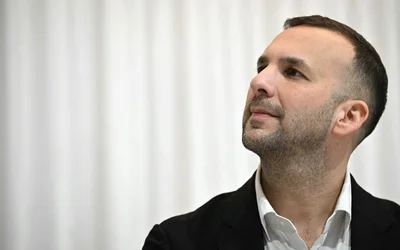
Burnham, as mayor of Greater Manchester, carefully distinguished himself from his party leader two days later by releasing a statement that, while condemning "the appalling attacks" by Hamas, said Israel had the right "to defend itself, and protect its citizens, in line with international law".
This language avoided giving Israel carte blanche, and Burnham said: "We support the call of the UN for humanitarian assistance for civilians in Gaza and for continued access to water, food and other essential supplies."
But just weeks later, as the death toll surged in Gaza, Burnham went further and broke ranks with the Labour leadership by calling for a ceasefire, in tandem with London mayor Sadiq Khan and Scottish Labour leader Anas Sarwar.
At this point, Starmer was resisting pressure from MPs to back a ceasefire. Burnham issued a statement on 27 October with other leaders of Manchester councils adding to the "growing international calls for a ceasefire by all sides and for the hostages to be released unharmed".
The statement expressed "profound concerns about the loss of thousands of lives in Gaza, the displacement of many more and widespread suffering through the ongoing blockade of essential goods and services".
Criticising 'war on terror'
Explaining his decision in a column in The Independent, Burnham warned Starmer not to "brand" MPs who disagreed with the leadership on the issue "as disloyal or as if they don’t care about innocent lives".
On Israel's response to 7 October, he said: "If the goal is to end terrorism, my experience tells me that action should be as targeted as possible and avoid any sense that it is disproportionate or indiscriminate."
Significantly, Burnham criticised the US-led "war on terror" and the Iraq war that he had voted for, saying he had learnt from the Blair government's actions.
"While there remains a case for the removal of Saddam Hussein," he said, "I can’t justify the rage, the rhetoric, the haste with which it was done, nor the lack of a plan for the aftermath.
"Because of that, the US-UK action resulted in huge harm to innocent civilians and the sense of injustice recruited some to the terrorists’ cause. If the response to 9/11 was supposed to root out terrorism, it is hard not to conclude it did anything but."
After two Jewish men were stabbed in Golders Green last week, UK Prime Minister Keir Starmer called out pro-Palestine protests. Are these horrific attacks being weaponised by Starmer to shut down the right of protest in the UK? pic.twitter.com/IfrsEF7Wgl
— Middle East Eye (@MiddleEastEye) May 5, 2026
Burnham also criticised the Blair government's introduction of "detention without charge".
Electorally, positioning himself against Starmer's policy paid off. In the May 2024 local elections, Labour lost a third of its vote share in areas with Muslim majorities.
In Greater Manchester, by contrast, Burnham comfortably retained his position. So did Khan in London. Both mayors had a significant number of Muslim constituents.
Streeting and Rayner
Over the next two years, Burnham did not speak a huge deal about Israel and Palestine - unsurprisingly, since he was a mayor and not part of running the national government.
But at times, he emerged as a strong voice pushing the government, as with the recognition of Palestine.
Burnham joined three other party figures in June 2025, urging the government to recognise Palestinian statehood "without further delay or equivocation".
He said: "It is fitting that the UK and France, which conspired together to carve up the Ottoman Levant through the infamous Sykes-Picot agreement, should now endorse that Palestinian right [to self-determination] unconditionally."
The Labour government recognised Palestine in September.
Burnham also continues to be a prominent supporter of the Council for the Advancement of Arab-British Understanding, an organisation that (among other things) takes MPs on visits to the occupied Palestinian territories.
His positioning on the topic is thus significantly different from that of Rayner, Miliband and Streeting, who have been closely associated with the party's official position on Gaza.
Although diplomatic relations have been strained between Britain and Israel under Labour, with the UK introducing a partial arms embargo on the country, Starmer's government continued to collaborate militarily with it throughout its genocide in Gaza.
Miliband is considered by Labour insiders to be more left-wing on foreign policy and to have privately pushed hard against Britain joining the US-Israeli war on Iran just before it began.
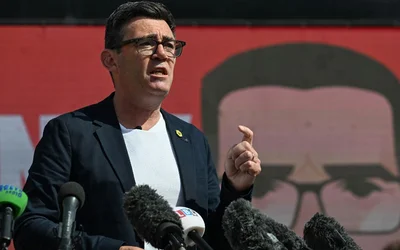
Streeting, meanwhile, came close to losing his seat in the 2024 election to the then-23-year-old British Palestinian independent candidate, Leanne Mohamad, winning only 528 more votes than her.
In February, Streeting released private text messages between himself and Mandelson from July 2025 in which he had said that Israel was "committing war crimes before our eyes".
He said: "Their government talks the language of ethnic cleansing, and I have met with our own medics out there who describe the most chilling and distressing scenes of calculated brutality against women and children."
Streeting added that he had "never been a shrinking violent [violet] on Israel". He said he had supported LFI "for over 20 years".
He accused Israel of "rogue state behaviour," saying: "Let them pay the price as pariahs with sanctions applied to the state, not just a few ministers."
Streeting has not publicly urged sanctions on Israel or accused it of committing war crimes. However, last September, he said that Israeli President Isaac Herzog "needs to answer the allegations of war crimes, of ethnic cleansing and of genocide that are being levelled at the government of Israel".
If Starmer resigns or is forced out, his replacement is likely to ramp up criticism of Israel.
The British government could finally take the step of sanctioning goods from the illegal settlements in the occupied West Bank.
Burnham's path to the premiership is riddled with obstacles.
But if he can overcome them, he is considered to be the contender most likely to move Labour back towards its traditional centre-left roots.
Whatever happens, all candidates for the leadership will be obliged to declare their hand on Starmer’s handling of Gaza.
A new approach to Britain's foreign policy is likely to emerge in the months to come.
Middle East Eye delivers independent and unrivalled coverage and analysis of the Middle East, North Africa and beyond. To learn more about republishing this content and the associated fees, please fill out this form. More about MEE can be found here.