Can Iran negotiate between Saudi Arabia and the Houthis?

As the conflict between Saudi Arabia and the Houthis continued to escalate, Iran, a longstanding ally of the Yemeni group, offered to mediate between the two sides on 11 October.
Eleven days later, neither side has accepted Iran’s offer.
There is little indication that either the Houthis or Saudi Arabia are prepared to return to the negotiating table in the near term.
Yahya Saree, a spokesperson for the Houthis - officially named Ansar Allah - reaffirmed on Monday that attacks on Saudi Arabia will continue until Riyadh ends the “financial and economic siege on the Yemeni people”, which the group says has been imposed on Yemeni ports of entry for nearly 12 years.
Saree also said the attacks would continue until Saudi Arabia halted its military operations against the group.
New MEE newsletter: Jerusalem Dispatch
Sign up to get the latest insights and analysis on Israel-Palestine, alongside Turkey Unpacked and other MEE newsletters
Analysts believe Riyadh is probably unwilling to meet these demands.
"I do not foresee the Saudi-led coalition or Yemen’s internationally recognised government conceding to Houthi demands for full control over Yemen’s airspace and maritime access, along with billions of dollars of compensation," Mohammed Basha, an expert on Yemeni affairs, told Middle East Eye.
"Such concessions would effectively reward the Houthis militarily, politically and financially without securing meaningful guarantees for lasting peace."
In the meantime, the Houthis are likely to continue escalating attacks, while Saudi Arabia leverages its regional and international partnerships to defend its territory.
Fighting between the Houthis and Saudi-backed government forces has intensified across several fronts, including in Taiz and Marib, further complicating the prospects for a durable settlement.
Even if Saudi Arabia and the Houthis find enough common ground to begin negotiations, which appears unlikely, the most likely outcome is a fragile ceasefire.
"Beyond the restrictions on airports and ports and economic compensation, the Houthis’ demands include access to oil and gas revenues, and importantly, political recognition," Alex Jalili told MEE.
"I would therefore distinguish between a temporary cessation of attacks, which could certainly emerge from negotiations, and a more durable settlement."
Diverging interests
According to a statement by Iran's Foreign Minister Abbas Aragchi on Tuesday, both the Houthis and Saudi Arabia have yet to respond to Tehran’s offer of mediation.
For Riyadh, the decision to accept Iranian mediation would carry implications beyond the immediate conflict with the Houthis.
Demonstrating deterrence against the Houthis and other Tehran-linked groups has been a key priority for Riyadh amid the US-Israeli war on Iran. This was particularly evident when Saudi Arabia and the US launched joint air strikes on Iraq on 29 July, targeting Iran-linked groups there.
At the same time, as the ongoing conflict reshapes the regional balance of power, Riyadh is also attempting to demonstrate its position in the emerging security order, including through the signing of the Mecca Pact with Turkey and Pakistan.
'Iran wants to preserve the leverage that the Houthis provide without allowing that leverage to produce an uncontrollable escalation'
- Sina Toossi, analyst
Accepting Tehran’s mediation in a conflict with the Houthis, which Riyadh characterises as an Iranian proxy, would probably undermine both objectives.
Beyond this, Houthi-Saudi Arabia negotiations can be managed by other regional interlocutors.
“Riyadh already has established channels of communication with the Houthis including through Oman. Accepting Tehran as mediator could also reinforce the perception that Iran is the ultimate guarantor of Houthi behaviour, something Riyadh has little interest in legitimising,” Jalili told MEE.
Still, Riyadh’s reluctance to accept Iranian mediation over the Houthi conflict should not be conflated with an unwillingness to engage with Tehran more broadly. Last Thursday Saudi Arabia’s deputy minister for public diplomacy confirmed that Riyadh maintains direct communication with Tehran.
The Houthis also appear to assess that further attacks on Saudi Arabia will increase their leverage in later negotiations.
“The Houthis have demonstrated that they can threaten critical infrastructure, disrupt economic activity and exploit vulnerabilities in Saudi air defences. That gives them considerable leverage, which they are unlikely to relinquish in exchange for marginal concessions,” Jalili added.
As a result, the Houthis are unlikely to accept Iranian mediation until they believe they have made sufficient military gains to strengthen their position in negotiations.
Iran’s objectives
Mediating the conflict between Saudi Arabia and the Houthis would probably allow Iran to shape the terms of a ceasefire while leaving the door open to renewed conflict.
"Iran would likely favour a comprehensive agreement that builds on the 2022 ceasefire, including arrangements over Yemen’s ports, airports, salaries and reconstruction, alongside credible Saudi security guarantees," Sina Toossi, a senior non-resident fellow at the Centre for International Policy, told MEE.
Yet a comprehensive agreement would not necessarily produce a durable settlement. A fragile truce that preserves the Houthis’ ability to resume hostilities could ultimately better serve Tehran’s strategic interests amid the US-Israeli war on Iran.
The renewed hostilities have also provided Tehran with another means of pressuring Riyadh. On 20 July, the Houthis announced a maritime embargo against Saudi Arabia in response to Saudi air strikes on Sanaa International Airport and what they describe as a wider blockade of Yemen's airports and ports.
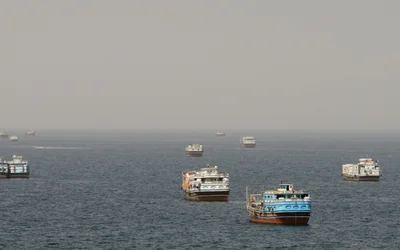
With Iranian threats to shipping in the Strait of Hormuz compounded by Houthi threats around Bab el-Mandeb, Tehran has additional means of exerting pressure on regional energy exports.
Tehran, like Riyadh and other regional capitals, is also attempting to shape the emerging post-war order in the region. A stronger Houthi position in Yemen could also help preserve Tehran's regional influence as the war reshapes the balance of power.
At the same time, Iran needs to ensure that the road to a ceasefire does not prompt a wider regional conflagration.
“There is a fundamental tension here: Iran wants to preserve the leverage that the Houthis provide without allowing that leverage to produce an uncontrollable escalation,” Toossi told MEE.
Such an escalation would probably further undermine Tehran’s already fractious relationship with Saudi Arabia. Indeed, Riyadh has already accused Tehran of encouraging the Houthi escalation in violation of its commitments under the 2023 rapprochement agreement.
While unlikely on current indications, an uncontrolled escalation might include offensive campaigns by Turkey or Pakistan, signatories of the Mecca Pact, against the Houthis, or a UK entry into the conflict beyond defensive support for Saudi Arabia.
Such a scenario could see Iran-linked groups in Iraq, which have had close cooperation with the Houthis for several years, drawn into the conflict.
And the failure to contain such a regionalisation of the conflict could plausibly push some Gulf states to take a more aggressive stance against Tehran, undermining prospects for any renewed negotiations between Iran and the US.
For Tehran, the challenge will therefore be to preserve the strategic leverage afforded by the Houthis without allowing the conflict to undermine its wider regional and diplomatic interests.
Middle East Eye delivers independent and unrivalled coverage and analysis of the Middle East, North Africa and beyond. To learn more about republishing this content and the associated fees, please fill out this form. More about MEE can be found here.