The Caspian gamble: Iran-Ukraine tensions widen the 'geography of instability'

Nima Moradi was a 23-year-old sailor on his maiden voyage aboard Anna, a commercial ship in the Caspian Sea, carrying iron from Russia to Iran.
He was from the port city of Bandar Anzali in northern Iran and had dreamed of becoming a mariner since he was a child.
The boat he was travelling on was hit by a Ukrainian long-range drone on 25 July - Moradi was killed in the attack, and another crew member was wounded.
In a post on social media, Moradi's father Masoud wrote: “My son, I can’t believe the sadness your absence brings – you left me... we are in pain without wet tears.”
After the incident, Iran’s Foreign Minister Abbas Araghchi described the attack as “a blatant UN Charter violation done at Israel's behest to drag Europe into its war”.
New MEE newsletter: Jerusalem Dispatch
Sign up to get the latest insights and analysis on Israel-Palestine, alongside Turkey Unpacked and other MEE newsletters
Israel has remained silent about the strike, however.
Iran had vowed to respond and was reportedly planning to launch ballistic missile attacks on three sites in Ukraine.
For the moment, further escalation has been avoided following an apology from Kyiv, although Iran is still seeking financial reparations for the fatal attack.
Two Wars Merging
According to Trita Parsi, vice president of the Quincy Institute for Responsible Statecraft, the Ukrainian attack on the Iranian vessel was not completely unexpected.
“Narratives were being formed on the Ukrainian side for some time portraying Iran and Russia as being completely aligned, and viewing those two wars as a single war,” Parsi told Middle East Eye.
There was also some resentment from Ukraine that the US-Israel war on Iran took away attention and resources from its conflict with Russia.
“The Ukrainians knew from the outset that that war was going to come at their expense,” Parsi said.
“We have examples of munitions and Patriot batteries that were sent to Ukraine which had to be taken back and given to the Israelis.”


For Parsi, the possibility of Iran getting pulled into a war with Ukraine could still materialise.
“I don’t believe that Iran has truly called it off. I think they’re putting a pause on it because they’re dealing with other issues. They don’t want to do something now that would see them walk into a trap if they strike back at Ukraine,” he said.
Parsi believes that Ukrainian President Volodymyr Zelenskyy was taking a gamble on merging the Russia-Ukraine war with the US-Israel-Iran war.
“I don’t think Ukraine is doing particularly well right now. The narrative in the media is that they’re winning but I don’t see clear signs of that,” he said.
“Because of [US President Donald] Trump’s vulnerability in the Iran war, the Ukrainians have found an opportunity to say to him – ‘we can be helpful to you here if you help us in Ukraine’.
“The benefit is that if you merge these two wars, it leads to the US becoming part of the Ukraine war, and that’s what Ukraine has wanted from the outset - but something that the Iranians obviously do not want.”
The US has consistently refused to get dragged into direct confrontation with Russia. Former President Joe Biden rejected Ukraine’s demands for American ground troops and F-16 fighter jets, as well as their request for a no-fly zone over their country.
In attacking the Iranian commercial ship however, the Ukrainians are trying to present themselves as an asset to the US in their war on Iran.
“The Ukrainians are trying to offer the type of horizontal escalation that the Iranians have effectively used against the US when they’ve struck many of the Gulf Cooperation Council states,” Parsi said.
“They can help the US create a new front in the Caspian Sea to the north of Iran and escalate that way, which would stretch the Iranians, while showing the utility they can play to the US.”
Reframing Israel’s war on Iran
Merging these two wars could not only benefit Ukraine, but also Israel, according to Parsi.
“First of all it would prolong the war between the US and Iran, which is something Israel is constantly trying to do,” Parsi explained.
“It would also bring the Europeans into the war in a way they haven’t been so far, which Israel would also be happy about.
“But perhaps most importantly, it would give the Israelis the opportunity to reframe the war - defeating Iran would no longer be about defending Israel, it would be about defending Ukraine, and given how much Israel has plummeted in public opinion in the United States while Ukraine still enjoys significant support, this would be a helpful way for the Israelis to lessen their own centrality in this war.”
Israel has already entered the stage in the Caspian region – last June and in March of this year, they hit Iranian naval assets and military infrastructure there.
“It wouldn’t be an unprecedented situation if the Caspian ended up becoming a front in this war, but there would be a difference in terms of how the war has been conducted over the last few weeks, and it certainly would be different if Ukraine were to enter it with their long-range drone capabilities,” Parsi observed.
“If Ukraine were to have their own name on this war, it would carry a lot of weight in Europe. The Europeans are already very upset with Iran for being a supporter of Russia in the Ukraine conflict.”
Russia and Iran: From suspicion to pragmatism
Historically, Iran and Russia have not always been allies.
In the 19th century, Iran lost almost a fifth of its territory due to the expansionism of the Russian Empire, which seized the South Caucasus region.
Twentieth-century relations were defined by how the two countries dealt with common challenges and changes to the international order, according to Professor Lana Ravandi-Fadai, head of the Eastern Cultural Centre at the Institute of Oriental Studies of the Russian Academy of Sciences.
“For a long time in Iranian historical memory, Russia was not a partner but a great power located uncomfortably close to Iran’s borders, and one that had repeatedly interfered in the country’s internal affairs,” Ravandi-Fadai explained.
'The Ukrainians are trying to offer the type of horizontal escalation that the Iranians have effectively used against the US'
- Trita Parsi, the Quincy Institute for Responsible Statecraft
During World War Two, Iran was invaded by the Soviet Union and the British, who wanted to secure a supply route for Western military aid and prevent Nazi Germany from seizing control of the region's oil fields.
“Although Iran formally declared neutrality in the war, its leadership was strengthening relations with Germany, who viewed Tehran as a possible 'third force' capable of balancing British and Soviet influence,” Ravandi-Fadai said.
During Mohammed Reza Pahlavi’s reign (1941-79), Iran grew more aligned with the West, particularly after the CIA-backed coup which overthrew Mohammad Mosaddegh’s government in 1953 and reinstalled Pahlavi as Shah.
While initially regarding the Soviet Union as a threat, the Shah’s attitude towards them changed from the 1960s onwards.
“He remained an ally of the United States, but at the same time developed economic cooperation with the Soviet Union,” Ravandi-Fadai said.
“The Soviet Union participated in the construction of the Isfahan steelworks and contributed to the development of engineering, mining and energy infrastructure – in return, Iran supplied natural gas to them.”
After Iran’s Islamic Revolution in 1979, relations became more hostile, with Supreme Leader Ruhollah Khomeini condemning Russia as the “Lesser Satan” (America being “The Great Satan” and Israel “Little Satan”).
“The leadership of the Islamic Republic regarded both liberal capitalism and Soviet atheistic communism as alien to the Islamic model,” Ravandi-Fadai said.
Iran also opposed the Soviet invasion of Afghanistan in the 1980s, but at the time was itself dealing with an invasion by Iraq, something which the Soviet Union, which had supplied arms to then Iraqi President Saddam Hussein, found unsettling.
“In Moscow, concern grew that the fall of Saddam’s regime might lead to the spread of the Iranian revolutionary model into the Arab world and destabilise the regional balance,” Ravandi-Fadai said.
Turning point
Akbar Hashemi Rafsanjani’s presidency (1989-97) marked a change in Iran-Soviet relations.
“In 1989 Rafsanjani visited Moscow, where major agreements were reached in the fields of military, technical and economic cooperation. This marked an important transition from a revolutionary and ideologically driven foreign policy towards a more pragmatic approach to cooperation with the East,” Ravandi-Fadai observed.
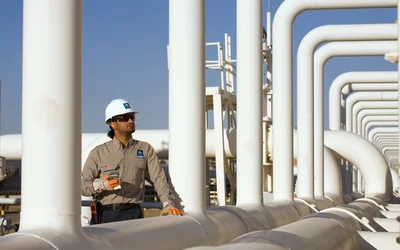
Proximity between the two countries continued to grow over the subsequent decades. Both states formed a military coalition to protect Bashar al-Assad's government in Syria from collapsing in 2015, and Iran has aligned itself with Russia during the Ukraine war, providing it with Shahed drone technology.
Last year’s signing of the 20-year Treaty on Comprehensive Strategic Partnership by Iran and Russia formalised cooperation between the two countries, including on military and security matters.
“Moscow and Tehran are trying to adapt to a new multipolar international order in which states seek to diversify their economic and political partnerships,” Ravandi-Fadai said.
Russia and Iran have both faced international isolation and have been impacted by Western sanctions. In many ways, the treaty represents a pragmatic partnership between two major regional powers who have been forced to reduce their financial and political dependence on the West, according to Ravandi-Fadai.
It may also have played a part in Trump’s decision to go to war with Iran, just a few months after it was signed.
Warfare on waterways
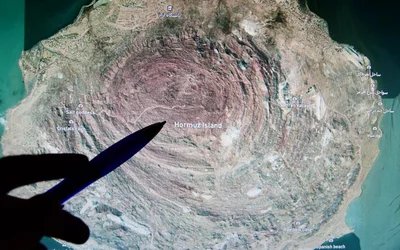
Both the Strait of Hormuz and the Caspian Sea have afforded Iran a considerable amount of leverage in this year’s war.
'It would bring the Europeans into the war in a way they haven’t been so far, which Israel would also be happy about'
- Trita Parsi, the Quincy Institute for Responsible Statecraft
By blocking the Strait of Hormuz, Iran has been able to severely disrupt global trade, drive up energy prices and target US military assets in the region.
The Caspian is also part of Iran’s resilience architecture, that is, a key element of their defensive shield against the threat from Western powers.
It is the largest landlocked body of water in the world, bordered by Iran, Russia, Azerbaijan, Kazakhstan and Turkmenistan, all of whom have a share in it.
Under the 2018 Convention on the Legal Status of the Caspian Sea, external states are prohibited from establishing a military presence there.
The Caspian also contains major offshore oil and gas fields, as well as ports and pipelines that connect Central Asia to global markets.
Furthermore, it is an important area for energy cooperation and trade between Iran and Russia, who have used the waterway to bypass western sanctions and military blockades.
“For centuries, it has served simultaneously as a border, a trade route and an arena for strategic competition,” Ravandi-Fadai explained.
“It’s a geopolitical bridge between Europe, the Middle East and Asia – whoever controls the major transport routes across the Caspian gains significant economic and political advantages.
“While the conflict in Ukraine spilling into the Caspian region, even in isolated incidents, does not necessarily mean the two wars are merging into a single conflict, it should be taken as a warning: we are witnessing an expansion of the geography of instability.”
Bypassing the Strait of Hormuz
For Parsi, the Caspian offers a way for Iran and other countries to circumvent the unpredictability in the Strait of Hormuz.
“One of the things that has happened as a result of this war is that other countries are building pipelines that would bypass Hormuz, and the Iranians too are investing further in railways and other means of trading with China and the East, through Central Asia,” he said.
“I think you’re going to end up seeing an ecosystem of supply chains that will reduce the significance of the Strait of Hormuz – it will take 10 to 15 years for it to be effective but it will not just be driven by other countries, it will be driven by the Iranians themselves in order diversify their supply chain and reduce their vulnerability in the Strait, and any attempts by the United States to try to choke them off.”
'The conflict in Ukraine spilling into the Caspian region should be taken as a warning: we are witnessing an expansion of the geography of instability'
- Lana Ravandi-Fadai, Institute of Oriental Studies of the Russian Academy of Sciences
Despite the strategic advantages and leverage the Iranians have with these two bodies of water, Parsi believes that they alone aren’t enough to sustain Iran in this war.
“Yes, the Iranians have managed to inflict the strategic defeat on Israel and the United States in this war, but in the longer term, if Iran can only trade with Russia, China and a few Asian states, that’s not going to be enough for Iran to really be able to live up to its full potential or for it to be able to prepare itself for any future confrontation with the US or Israel,” he said.
“In that sense, sanctions relief is essential from an Iranian standpoint not only to grow its own economy but also to restore its own defences and deterrence.”
Days after the Iranian ship was attacked in the Caspian, Iran launched a drone attack on the Egyptian port city of Damietta, which according to Parsi was an attempt by Iran to showcase their asymmetrical warfare capabilities.
“That was probably aimed at deterring the US from going down the path of escalation in the Caspian, and showing that the Iranians have even greater escalation potential - which probably gave planners in Washington pause, because this is a completely different escalation, far beyond bringing the Caspian back into the war,” he remarked.
Middle East Eye delivers independent and unrivalled coverage and analysis of the Middle East, North Africa and beyond. To learn more about republishing this content and the associated fees, please fill out this form. More about MEE can be found here.