Crimson Thread: The new Israeli separation wall that cuts through the 'breadbasket of Palestine'

Khairallah Bani Odeh feels as if he's living in a giant prison.
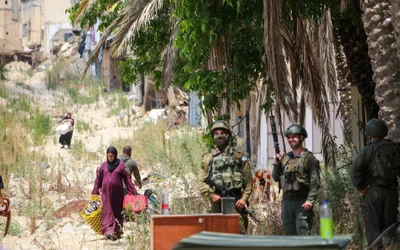
Forced to leave his lands in the village of Atouf in the northern Jordan Valley, he relocated to the town of Tammoun, south of Tubas, after a combination of settler attacks, water shortages and sweeping Israeli land grabs made life unbearable.
Like many Palestinians in the northern Jordan Valley, Bani Odeh relied on sheepherding and farming for his livelihood.
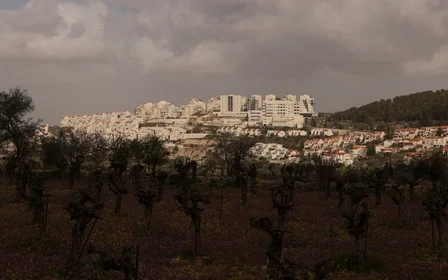
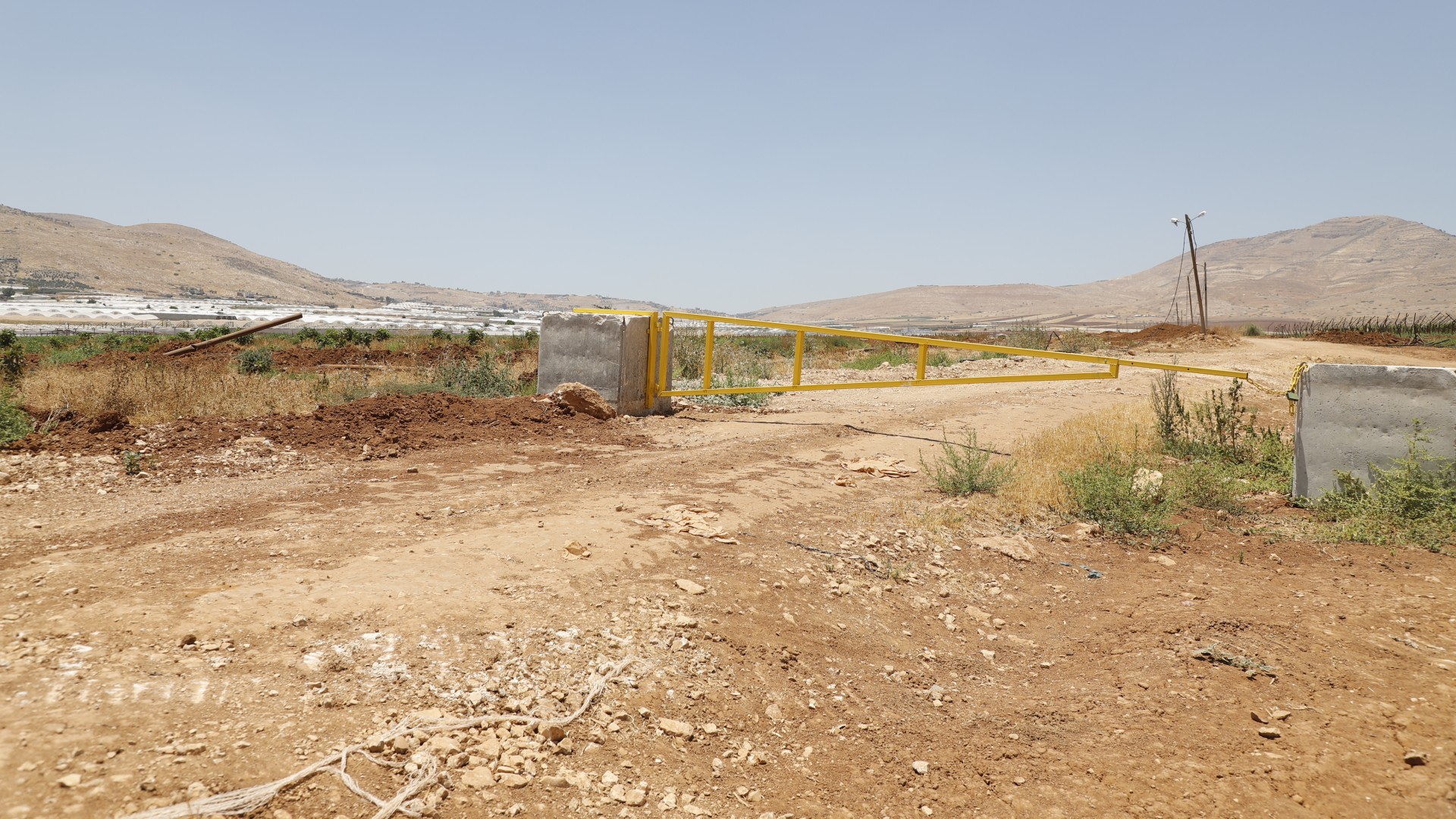
But since Israel began construction on a new separation wall and road that will cut through the Buqe'aa Plain, large areas of land have been swallowed up, reshaping daily life for residents.
Israel has named the project "Crimson Thread". It involves the construction of a 22-kilometre-long and 50-meter-wide separation wall and accompanying road along the eastern lands of Tubas.
New MEE newsletter: Jerusalem Dispatch
Sign up to get the latest insights and analysis on Israel-Palestine, alongside Turkey Unpacked and other MEE newsletters
The project will leave large parts of the Buqe'aa Plain and eastern Atouf behind the road and wall, making it impossible for farmers and shepherds to access their agricultural land and grazing areas.
Bani Odeh told Middle East Eye that when construction began, Israeli settlers used bulldozers to destroy water lines supplying hundreds of hectares of farmland in the plain, causing crop damage and leaving livestock without water.
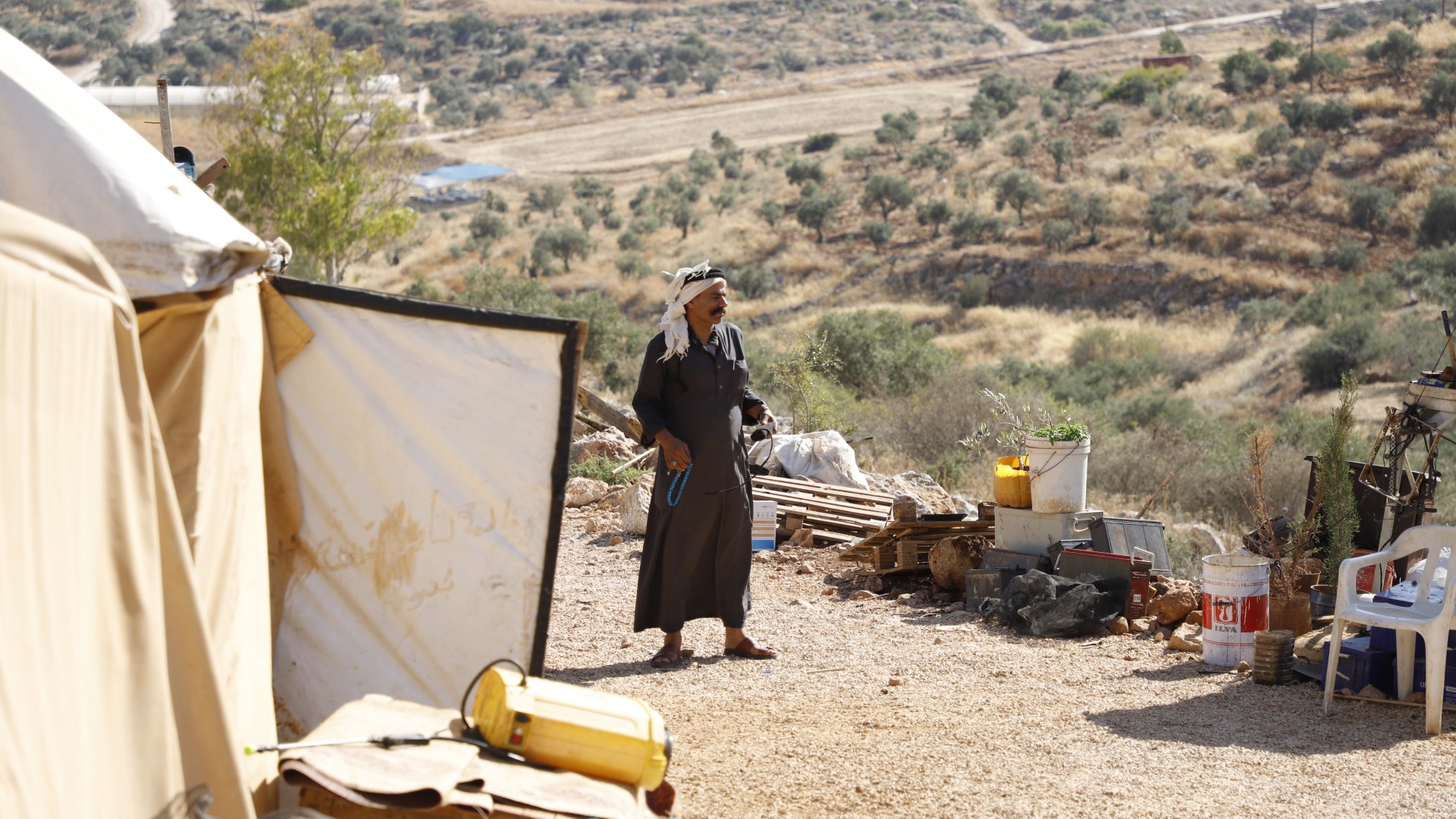

For many families, it was the final push to leave.
"They cut off our water supply, so I had to buy water from neighboring villages for the livestock. I used to walk long distances to fetch water. Then they burned the barley and made our lives unbearable, so we were forced to leave," he added.
Dozens of families, including Bani Odeh's, depended on livestock farming in Atouf, while hundreds more relied on agriculture across the plain. Residents say both sources of income have been devastated by the new project.
Three months after leaving Atouf, Bani Odeh says he still feels trapped. He struggles to find grazing land for his livestock and dreams of returning home every day.
Crops left to wither
Local estimates indicate that more than 20,000 dunams (2000 hectares) are threatened by drought or damage because of water shortages.
Many families in Atouf and Ras al-Ahmar depend on livestock farming. As pastureland shrinks and access to water becomes more limited, farmers fear declining livestock numbers and rising production costs.
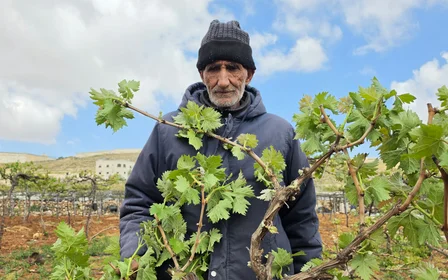
Anis Bisharat once carefully tended fields of melons, okra, cucumbers and zucchini. But after water lines were cut, his crops began to wither as irrigation became impossible, resulting in significant losses.
"In addition to the water cut, they closed the road we used to reach the plain. Now we have to travel twice the distance and pay twice the fuel cost," he told MEE.
Muhammad Gharaibeh, another farmer, says a settler established an outpost on a hilltop overlooking the Buqe'aa Plain and has repeatedly targeted local agriculture.
"This plain is the breadbasket of Palestine, and most of the fruits and vegetables distributed in the West Bank come from here," he said.
"But now they have a massive plan that not only involves building a road but also seizing more than 70,000 dunams. Our losses are enormous because the crops need irrigation and care, and they've been left to suffer," he added.
Farmers are attempting to save nearby crops with whatever water they can access, but fields farther away have largely been left to dry out.
"More than 40,000 dunams of crops are now without water. My crops have been without water for two weeks, and this is just the beginning of the scorching summer season, which means the entire harvest will be lost," he lamented.
According to preliminary data from the Atouf Village Council, 24,000 dunams belonging to about 300 farmers are facing drought and damage because of the ongoing bulldozing operations.
The affected area represents roughly a quarter of the Buqe’aa Plain, which covers 96,000 dunams.
'Nothing remains'
Last November, the Israeli newspaper Haaretz revealed details of the "Crimson Thread" project, describing it as a military road and separation wall stretching across Palestinian land from the village of Ein Shibli in the central Jordan Valley to the Tayasir military checkpoint.
Following the report, Israeli authorities issued military seizure orders for 1,042 dunams of Palestinian land along the route of the planned barrier.
Since the beginning of this year, bulldozers have been carrying out continuous work on the project, which residents and experts say will isolate vast areas of land and place thousands more dunams beyond Palestinian access.
'The annexation process is taking place on the ground in full view of the entire world. It has been halted in the media, but it hasn't stopped on the ground'
- Mu'taz Bisharat, settlement expert
The Israeli human rights organisation B’Tselem said in a report published in April that the Jordan Valley is among the areas where Palestinian presence is most heavily restricted, despite accounting for approximately 30 percent of the occupied West Bank.
According to the report, 62 Palestinian communities in Areas B and C, home to more than 4,100 Palestinians, had been displaced by April as a result of a combination of settler violence and Israeli restrictions.
The rights group also reported that 53.4 percent of the Jordan Valley has been designated as "state land," 45.7 percent as military firing and training zones, and about 20 percent as nature reserves.
Settlement expert Mu'taz Bisharat told MEE that developments in the Jordan Valley amount to a tightening of Israeli control over large areas and are threatening the continued presence of Palestinian communities there.
He said many families have already been displaced and described the destruction of water infrastructure as an attack on the foundations of life in the region.
"There is no agriculture left," he said.
"Today, 70 percent of the land in this area has been lost due to the compounded crimes committed by the Israeli occupation against the Palestinian people, the Palestinian presence, and Palestinian agriculture. Nothing remains for the Palestinian citizen," he added.
Bisharat believes the new road is intended to establish new boundaries in the Jordan Valley and further separate the area from the rest of the occupied West Bank.
"Today, the annexation process is taking place on the ground in full view of the entire world," he said.
"It has been halted in the media, but it hasn't stopped on the ground."
Middle East Eye delivers independent and unrivalled coverage and analysis of the Middle East, North Africa and beyond. To learn more about republishing this content and the associated fees, please fill out this form. More about MEE can be found here.